A deep dive into one of the market's most resilient dividend machines — and why the next 3–5 years could be its most transformative yet.
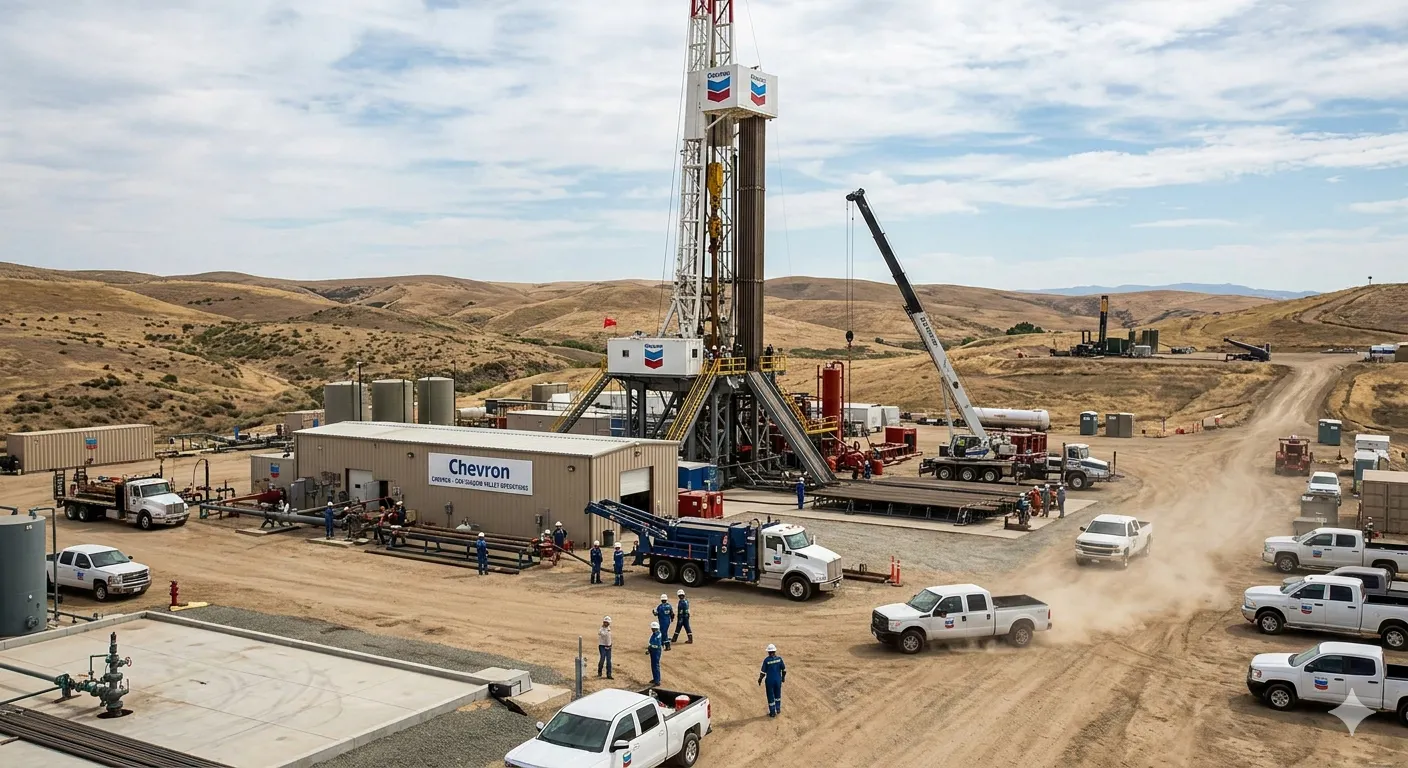
The energy sector rarely generates headlines for the right reasons. It's either the villain in the climate conversation, the poster child of boom-and-bust cycles, or the forgotten corner of a portfolio that everyone tolerates but few actively want to own. And yet, if you look past the noise and dig into the fundamentals of Chevron Corporation (NYSE: CVX), you find something that's increasingly rare in today's market: a genuinely world-class business trading at a reasonable price, with a clear multi-year growth story that the market hasn't fully priced in yet.
This is not a hot take or a momentum play. This is a structured fundamental analysis of one of the world's five largest oil companies — and what you find might surprise you.
The Company Behind the Ticker
Chevron is an integrated energy major, which means it operates across the entire oil and gas value chain. From drilling wells in the Permian Basin to refining crude into jet fuel in California, marketing Texaco-branded gasoline in Europe, and shipping liquefied natural gas from Australia to Japan — Chevron does it all, in over 180 countries.
But not all of Chevron's businesses are created equal. The upstream division — exploration and production of crude oil and natural gas — is the engine. It generates the vast majority of profits and sets the tone for everything else. The downstream refining and marketing operations serve as a partial natural hedge: when oil prices fall, refiners benefit from cheaper feedstocks, which cushions the blow to the overall business.
Post the completion of its $53 billion acquisition of Hess Corporation in July 2025, Chevron's production profile transformed materially. The combined company now produces approximately 3.83 million barrels of oil equivalent per day — making it the clear second-largest U.S. oil producer, narrowing the gap with ExxonMobil. More importantly, the Hess deal came with a prize that fundamentally changes Chevron's long-term trajectory: a 30% stake in Guyana's Stabroek Block.
Why Guyana Changes Everything
If you haven't been following the Guyana story, here's the short version: it's one of the most significant oil discoveries of the 21st century. The Stabroek Block holds over 11 billion barrels of discovered recoverable resources, and production is ramping rapidly — from roughly 600,000 barrels per day in 2024 toward a projected 1.3 million barrels per day by 2030. The fourth FPSO vessel (Yellowtail) came online in 2025, with a fifth and sixth already in development.
What makes Guyana exceptional isn't just the size of the resource — it's the economics. These are ultra-low-cost, high-margin deepwater barrels that generate substantial free cash flow even at $60 oil. For Chevron, each 100,000 additional barrels per day of production at $70 Brent adds roughly $1.5–2 billion in annual free cash flow. Over the next five years, the Guyana ramp alone could add $5–8 billion per year in incremental cash generation.
That's the kind of growth runway that most companies would give anything for — and Chevron acquired it at a price that, in hindsight, looks increasingly shrewd.
Date
March 9, 2026
Topic
Value Stocks
0 comments
Would you like to be the first to write a comment?
Become a member of Dividend Growth Stocks🚀 and start the conversation.