Putting the end of the civil rights era in historical perspective: How it transformed the nation, how it was toppled by a raging reaction, and what comes next
By Thomas Zimmer, May 17, 2026
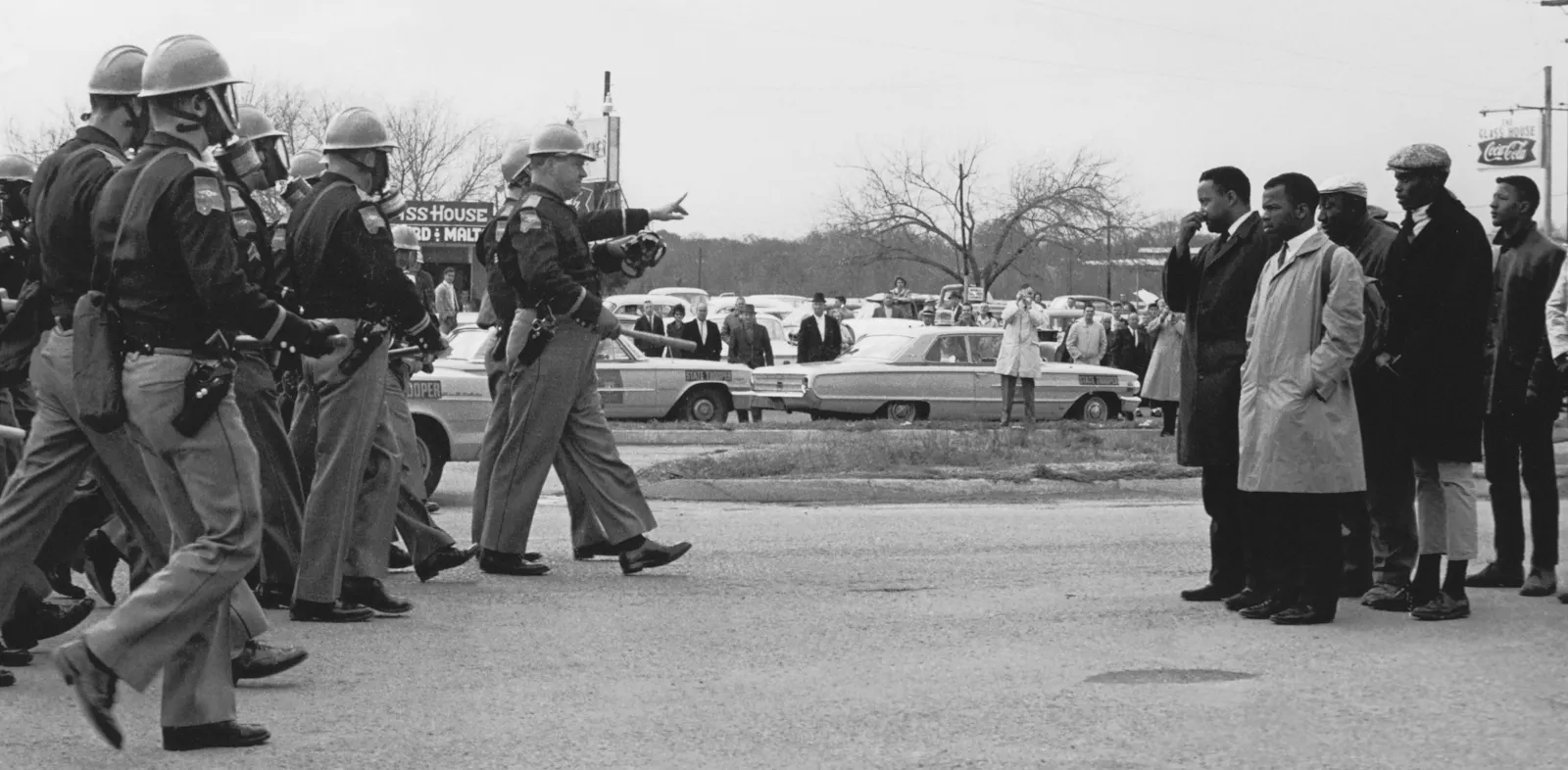
This is Part II of my history of multiracial democracy in America. In last week’s Part I, which you find here (Abre numa nova janela), I focused on the fate of the first attempt at biracial democracy after the Civil War, and on the political implications of the Reconstruction era for today.
In this Part II, I look at America’s Second Reconstruction that was codified in the civil rights legislation of the 1960s, reflect on why this had such a transformative impact on politics and society – and examine why this current moment really marks a profound cesura in U.S. history: The end of the civil rights era.
This is coming out a little later than I had hoped or anticipated – and for that, I want to apologize. But I really wanted to do this story justice. It is fitting, therefore, that this is by far the longest essay I have ever published on Democracy Americana. An attempt to really put into perspective what a profoundly important – and disturbing - moment in U.S. history we are currently witnessing.
Only the extended intro to this piece is free for everyone. If you want to read more than the preview or gain access to the audio version of the essay, please consider becoming a paid member of Democracy Americana, which is solely funded by readers and constitutes my main source of income as an independent writer.
Without your support, I will not be able to continue this work. Please know that I am immensely grateful for your generosity!
Not ready yet for a paid membership? You can subscribe to the free version of the newsletter:
It has been a horrifying, yet entirely predictable spectacle. Since the Supreme Court functionally nullified the 1965 Voting Rights Act on April 29, Republicans have rushed to gerrymander majority-minority districts out of existence. The euphoric zeal they are displaying while extinguishing Black political representation across the South reveals precisely what is going on here.
Finally, Bennie Thompson’s “reign of terror” (Abre numa nova janela) over Mississippi’s second congressional district was coming to an end, Mississippi Governor Tate Reeves declared on May 13. Thompson is the sole Black person and the only Democrat among the state’s congressional delegation. He has represented his majority-Black district in Congress since 1993, regularly receiving two thirds of the vote. But that doesn’t matter to Governor Reeves: Thompson’s “reign” is illegitimate because the people who vote for him don’t count, or they shouldn’t, and now that the Roberts Court has opened the door for that, Republicans in Mississippi will make sure they won’t.
In Alabama, Governor Kay Ivey celebrated (Abre numa nova janela) the chance to dilute and obliterate Black voting power because “Alabama knows our state, our people and our districts best,” and this “win for Alabamians,” as she put it, “enables our values to be best represented in Congress.” It is certainly not a “win” for the 27 percent of the population that are Black – but those simply don’t count among the “Alabamians” Ivey cares about. Two out of the state’s seven congressional districts are currently represented by Black Democratic lawmakers. That will now change. “Our state.” “Our people.” “Our values.” People of color not included.
“For too long,” Tennessee Representative Andy Ogles raged on May 7 (Abre numa nova janela), “Tennessee politics has been dominated by cosmopolitan communists and race hustlers imposing their corrupt will on a deeply rural and conservative state.” Tennessee is about 77 percent white and 17 percent Black. Eight out of its nine Congressional districts are represented by white Republicans. It is Tennessee’s ninth district that Ogles was enraged about, the one around Memphis: 60 percent of the population is Black, about 9 percent Hispanic. Kamala Harris received around 70 percent of the vote here in 2024. And over 70 percent sent Stephen Ira Cohen to Washington, a white Democratic progressive, the first Jewish person to represent Tennessee in Congress. That’s who Ogles refers to when he bemoans “cosmopolitan communists”; and the “race hustlers,” that’s just people of color. Their numbers are irrelevant; majorities built on their votes don’t count. And so they won’t: Republicans have already enacted a new map (Abre numa nova janela) that carves up the ninth district, distributing minorities across three districts in a way that leaves only white-dominated ones. One of the new districts stretches about 200 miles north-east all the way to the outskirts of Nashville: That’s how far they had to go to find enough white people to make sure Black voting power was sufficiently diluted.
None of this is subtle. None of it is new. And even the rhetoric has always been the same. White supremacists presented exactly these arguments to justify their struggle to undo Reconstruction after the Civil War: They were fighting against an evil imposition of Northern tyranny, against outsiders and intruders illegitimately put in charge of the South. Those who fought against de-segregation and civil rights in the 1950s and 60s made the same claims. In his inaugural address (Abre numa nova janela) as governor of Alabama in January 1963, George Wallace vowed to defend “segregation now, segregation tomorrow, and segregation forever” not because of racism, no! But to defend the “freedom” of the South and its true people. “Let us rise to the call of freedom-loving blood that is in us,” Wallace declared, “and send our answer to the tyranny that clanks its chains upon the South.” Yet again, just like after the Civil War, when “the South was set upon by the vulturous carpetbagger and federal troops,” it was time to take a stand and “sound the drum for freedom.” It is a particular kind of freedom, Wallace was concerned with – the same “freedom” Reeves, Ivey, and Ogles are defending now: The freedom of white people to dominate and rule, and to curtail the freedom of others.
The first task for observers, analysts, and citizens alike is to understand, acknowledge, and describe clearly and honestly what is happening around us. And here I will allow myself to write angry…
Data
17/05/2026
5 comentários
Gostaria de ver os comentários?
Torne-se membro de Democracy Americana para participar no debate.