In December’s subscriber-exclusive interview, Anna Chilvers & Clare Shaw — editors of Book of the Month The Book of Bogs: Stories from a Yorkshire Moor and other Peatlands (Opens in a new window) — speak to Tallulah Brennan about bogs as living presences, the need to restore our visceral connection with the land, and the suck and ooze of the peat.
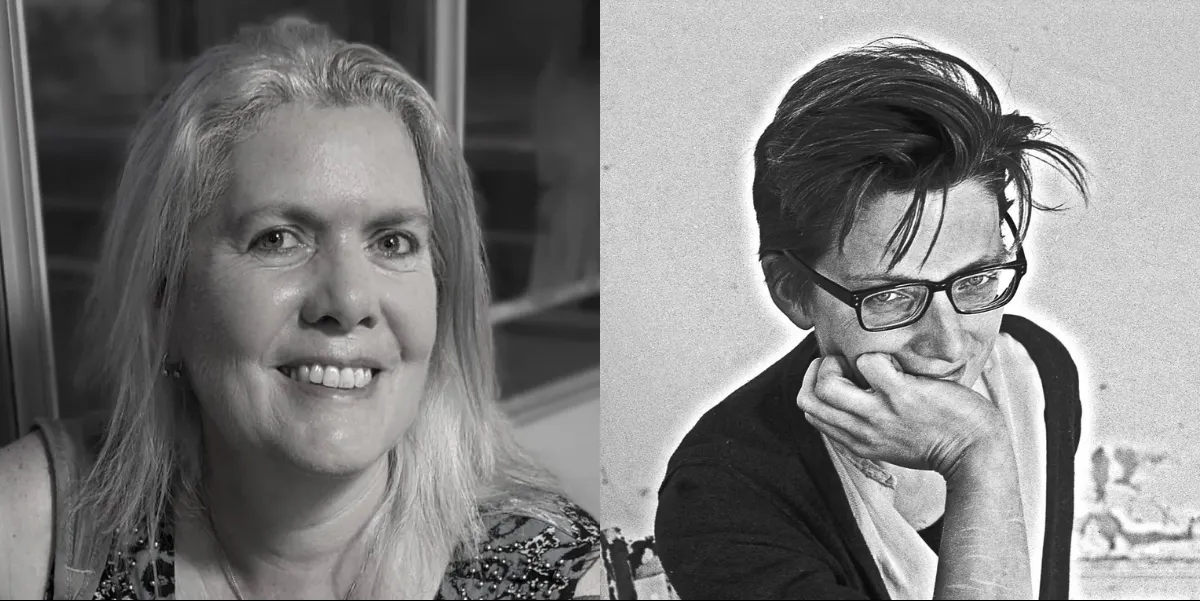
To start, a couple of quick-fire questions.
Which, for each of you, was the first bog or moor that led to your attachment to these landscapes?
Clare: I grew up in Burnley, in East Lancashire, close to the border with West Yorkshire. It’s a former mill and mining town — terraces and derelict mills — and it’s overshadowed by Pendle Hill, and ringed by high moors — Downham, Worsthorne, Extwhistle, Rombald’s and Crown Point. From childhood I loved those moors with a passion, though it wasn’t until my residency on the raised bogs of South Lancashire that I came to truly understand them. It was a process of maturing, I guess — passing from a romantic idealisation of their wild and wuthering heights, to an informed appreciation of their complicated, vital ecology and the multiple threats they face.
Anna: I knew about bogs before I met them. I was living in Suffolk and encountered a lot of saltmarsh, but not bogs particularly. At the time my partner was becoming a bit of a bog expert. His work was surveying for particular species of sphagnum and liverworts and he’d go off for a week or two weeks to visit bogs in Northumberland, Wales, and Lincolnshire. So I learned about them by proxy. It was only when we moved to Hebden Bridge and started walking the moors, that bogs and I became personally acquainted. It wasn’t love at first sight. I was, and still am, quite wary of them. But the birds I knew from the Suffolk estuaries were there — curlew, lapwing, redshank — their plaintive calls travelling across land which shifts and changes shape each time you visit, mudflats and bogs alike. There is something about the loneliness of moorland bogs, the space they create between land, water and sky which opens you, lungs and heart and mind, to new possibilities.
Gregory Norminton, one of the writers in the collection, writes ‘moss is dross’. This, for him, is why you won’t see government promotions of people poking around in moss, but you will see people pictured with plastic casing around newly planted trees. How do we make the case for moss and bogs and moors as attractive, enticing places for, and deserving of, action?
Both: How? Through art, of course! Trees, mountains, rivers — they have an obvious, loud beauty. They command our attention and appreciation very easily — they stand tall, they have movement and sound, they shine and flutter and sing. The attractions of bogs are less obvious. Though a raised bog might be ten metres deep — that’s ten thousand years of growth — we can only see the surface. And the life forms which live there are, on the whole, very small. To bring them to people’s attention we can literally take people out onto the bogs, as Emma Linford does, and bring them face to face with the multifarious lifeforms that live there. Or we can do it through art — visual art and writing. We can enter the world of the bog in poetry, painting, photography and story, we can learn their intricacies through science. In all of these there is the opportunity to magnify — to look up close at sphagnum through a hand lens, tardigrades under a microscope, to portray the incredible beauty of these lifeforms with pencil, pen and words. This is one of the things we are hoping this book will do — moss and bogs writ large for all to see. It engages our emotions so that we don’t just know about bogs, we feel them and see them; we care about them. It is seeing and knowing, and learning to care, that moves people to action.
Date
December 23, 2025
Topic
Author interviews
0 comments
Would you like to be the first to write a comment?
Become a member of Caught by the River and start the conversation.