Scope Creep and the Infinite Sadness
Okay, as you know, we love to demystify role-playing games. We’ve taken our fair share of criticism, often deserved, when we downplayed the artistic value of RPG design (Opens in a new window). But at the same time, we want to highlight what it means to run a crowdfunding campaign from a creative integrity perspective. Because of the very mechanisms that generate funding, you know what the project looks like when you start the campaign, but you have no idea what it’ll look like when you’re done. Besides the identity issues that can dangerously distort the original vision, you also face operational nightmares and miscalculated costs.
Stretching too thin.
Stretch goals are a marketer’s dream. You can utilize percentages, numbers, positive feedback, and gamification to generate a substantial amount of revenue, potentially even through community challenges that enable you to share the campaign for free across social circles. The problem? Marketers aren’t the ones who have to design, write, or produce this stuff afterward, and such things have a cost.
Because most stretch goals (not the fake ones, like “unlock a base class at 130%,” which was already planned months before the campaign) aren’t free, you have to get new quotes from printers and manufacturers, recalculate box dimensions and shipping costs, and pay writers and artists to produce it. That cute little custom die shaped like a hoopoe? It may look like a fun plastic trinket, but it can cost thousands of euros and delay delivery by months.
Despite many publishers claiming otherwise, these decisions are often made on the fly while trying to maintain momentum during the campaign and keep the hype alive. It’s an understandable reaction: you see the numbers rising, and you know that the following three or four stretch goals could boost pledges by tens of thousands of euros. At that moment, they feel inexpensive: a good idea, some appealing graphic design, and a catchy description. Unfortunately, one day those things will have to be produced, and without careful analysis, you risk running into some very, very unpleasant surprises.
Some projects break promises, sure, but not out of malice. They can’t keep up with the bloated scope created during the campaign. Just check the updates of major projects, and you’ll see the reality. If we had a cent for every time a creator complained about unexpected costs and delays due to added content, we wouldn’t be millionaires. However, we could still easily afford a first-edition Italian print of Fist of the North Star to keep as a precious relic.
Only one person drives the car. The others should enjoy the ride.
We love feedback. Other people’s opinions are essential to avoid spiraling into arrogance and solipsism, and ending up spending a fortune to buy a dying social network and build a nazi AI.
However, feedback during a crowdfunding campaign can be tricky. It’s subjective, reflecting individual sensitivities, and lacks the comprehensive vision or necessary skills to make an active contribution to the project.
Unfortunately, when you ask for funding, you trade in a traditional customer for a backer, someone who’s financially invested in your project and feels like a co-author of its success. That can be a good thing, sure, but it also puts immense pressure on creators. To cater to your passionate backer, maybe you could change some minor game mechanics, some bit of lore, or even a core theme. Allowing users to steer the creative direction can compromise the project’s integrity and lead to a confused, inconsistent game driven by conflicting expectations.
“But I won’t be persuaded, so it’s a matter of mindset, not crowdfunding itself.” Fair. However, be aware that not listening to backers, or pretending to listen, also has consequences. Ignoring the community, the very people who could fund or sink the campaign, is extremely risky. The traditional market accepts the product, evaluates it, and maybe buys it. Crowdfunding markets, on the other hand, comprise hundreds or even thousands of people who actively comment every single day.
Classic Monkey’s Paw Situation.
The problem with crowdfunding is that you’re not investing money and energy in your project; you’re doing it for the sake of the campaign itself. The goal isn’t the product, it’s the ROI of your crowdfunding adventure. Stretch goals become more important than sound project management, and even the most unusual user requests turn into “positive opportunities” for User-Generated Content and community engagement.
You got your wish: you raised a ton of money. But in exchange, you’ve got a worse game than what you originally envisioned, bloated with unplanned material to produce.
Congratulations, I guess?
Omae wa mō shindeiru
As we mentioned earlier, crowdfunding splits your product strategy into two distinct parts. Until the crowdfunding starts, you’re mainly focused on building something flashy and functional: a campaign that hits all the right emotional buttons and makes people want to be part of your creative journey.
Then, once the funds are in and the project’s scope is finalized, a second phase begins, one with entirely different rules, tied to publishing logistics. From the end of the campaign to the actual release (assuming it even makes it to release), you’re usually looking at six months to over a year, during which all sorts of things can happen.
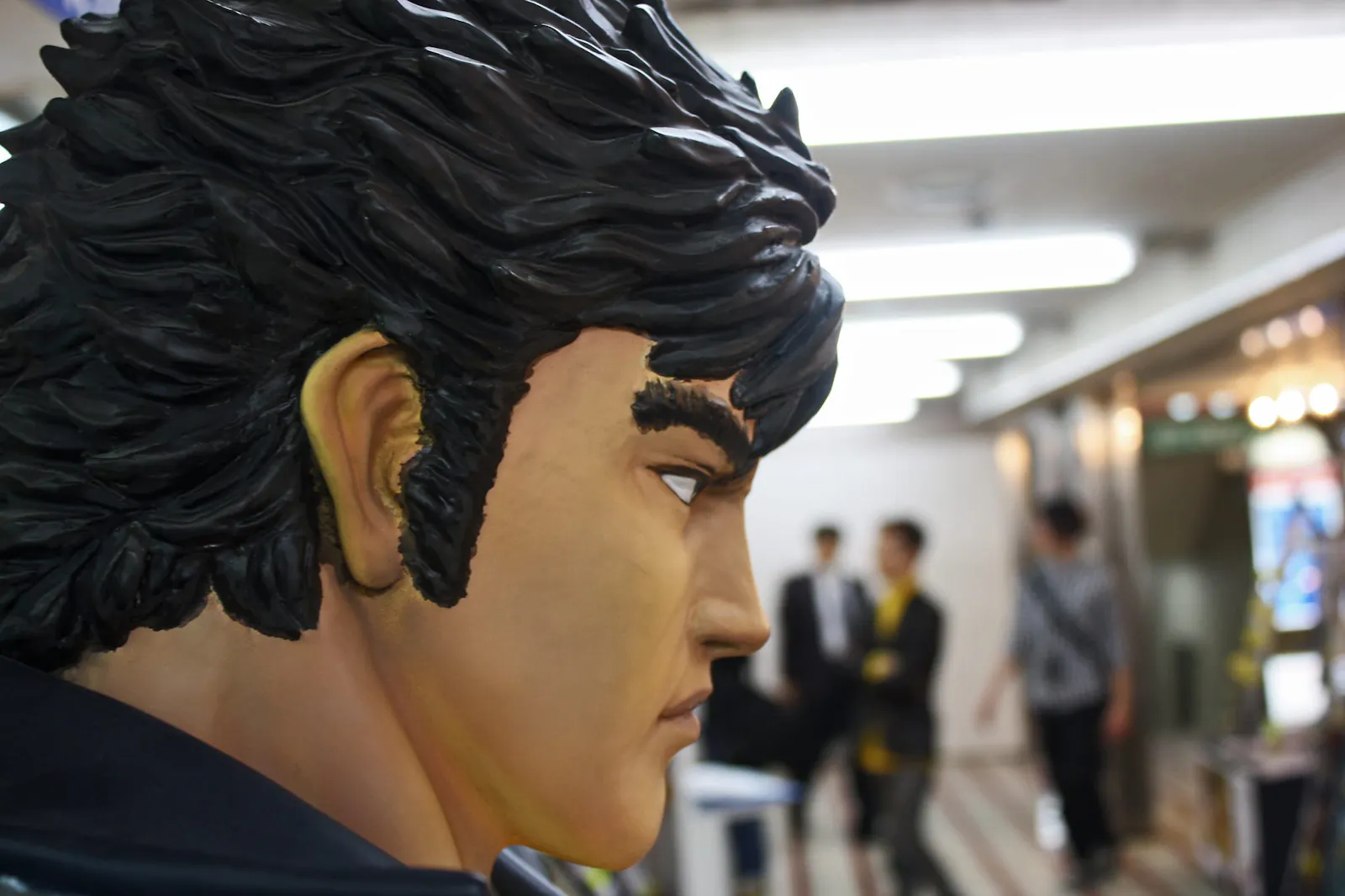
For example, your project may become old news before it even hits the shelves. “You’re already dead,” as Kenshiro would say. (We swear, that’s the last Fist of the North Star reference.)
You Can’t Use the Same Trick Twice
Typically, when promoting a project, you follow a media cycle that builds maximum hype right as the product is ready for release or pre-order. Since converting someone into a buyer is often a multi-step process, you assume they’ll hear about your project across various channels (or touchpoints, for the marketing dorks): podcasts, social media, niche platforms, subreddit discussions, etc.
Except that this process usually only works once per project. You won’t get the same buzz again, no matter how much you spend.
You’ve probably guessed the problem with crowdfunding from this angle. You burn your five minutes of fame to push the campaign on Kickstarter, then, 18 months later, the game finally ships to backers. The rest of your potential audience (which is way larger than even the most successful campaign can reach) likely won’t hear a peep about it again. Unless the game is a masterpiece, or gets picked up by a big-name content creator, or happens to align perfectly with the zeitgeist (which, let’s be honest, is impossible to predict one or two years out), it’s already forgotten.
Ironically, everyone hears about your crowdfunding campaign, yet almost no one hears about the actual game.
Shelf Undeath
You ship your game to backers, and they’re happy. They discuss it briefly; perhaps you can squeeze in a few late pledges or store sales. But for many indie games, that’s where the journey ends. Most of them rely on digital stores to stay afloat. At the same time, the physical copies sit in your basement or get lost in the purgatory of independent distribution, just another drop in the ocean of monthly releases.
If you’re lucky, a distributor might take four (4) copies... which then collect dust in a warehouse for years. Copies that, frankly, you could have sold yourself outside a grocery store in a matter of hours. True story: we’ll talk about it another time.
In short, your product strategy may have perfectly calculated the number of guest writers for stretch goals and produced a Quickstart that’s so tasty you could spread it on toast… but once the game’s out, you’re stuck with dead stock and no clear path to get people playing or buying, aside from the occasional con.
A product with no shelf life is a market aberration, and yet that’s precisely what happens with tons of crowdfunded titles.
The typical response from creators is to print fewer copies, keeping a small cushion for conventions and the occasional brand-store order. Sure, it minimizes waste, but I don’t believe anyone can make a sustainable living off RPGs, or really anything, without some long-term cash flow from reliable “classics” from their catalogue.
Many publishers who have had multiple campaigns raise over €200,000 are just two underperforming campaigns away from shutting down forever. That doesn’t sound like a viable system, especially not for those trying to make a career out of it.
How Is It Going, Fellow Kids?
Way too much time passes between the crowdfunding campaign and the actual game release. Enough time for trends to shift, public taste to change, and new genres or mechanics to rise in popularity.
Sometimes your game still smells of fresh ink, but it already feels outdated in the eyes of the community.
Or you (well, your backers) invested in a system based on third-party rules... which are now either hated or embroiled in some niche drama that flares up every so often.
Imagine launching a 5E-based sourcebook during the OGL fiasco, for example.
Scratch that: you don’t have to imagine it. Dozens of them dropped during that time, most funded via Kickstarter months (or years) earlier.
Honestly, how are you supposed to design a product with confidence, something that should respond to market conditions and reader preferences, when your release date is so far out?
Without high-paid consultants running predictive models, you can see why we’re a bit wary of crowdfunding.
Everything’s Wrong, Start Over?
As we said at the beginning, our view of crowdfunding doesn’t align with our projects or creative instincts. We prefer to focus on small, boutique-style games, optimizing costs and keeping the game itself at the forefront. We believe that for independent role-playing game designers, it is essential to understand that this is a personality-driven market, in an online economy increasingly driven by content creators rather than so-called influencers. We believe you should give value to your reader without asking anything in return before approaching your public, cap in hand, and asking for money.
We love digital formats because they allow us to pivot mid-development, keep projects alive indefinitely (we just updated the Hellsquad (Opens in a new window) rulebook, nearly a year after its release, and that’s the third time we’ve done it), and eliminate a significant cost driver that often ends up gathering dust alongside too many deserving games.
We want to stay in control of our ideas, while still incorporating helpful feedback, and we don’t want to flood the world with more junk.
We’re considering trying itch.io (Opens in a new window)’s funding system, since it has no deadlines and lets us set realistic funding goals without playing the “funded in 5 minutes” game (where that tiny goal doesn’t even cover print costs for the softcover edition).
Does that mean crowdfunding is a broken model? No. Not at all. The past few years have shown that some crowdfunded projects can be major publishing successes.
Our issue is the obsession with making crowdfunding the only revenue stream for indie creators, with retail treated as an afterthought and online presence limited to lead nurturing and community reactivation, like those friends who only message you when they need something.
As one arrow in a well-stocked quiver of strategies, crowdfunding can be a fantastic growth tool. But as your only weapon, you should hope that the next dire economic crisis in our hobby is not resistant to it.
Toybox: More Alphakyllers!
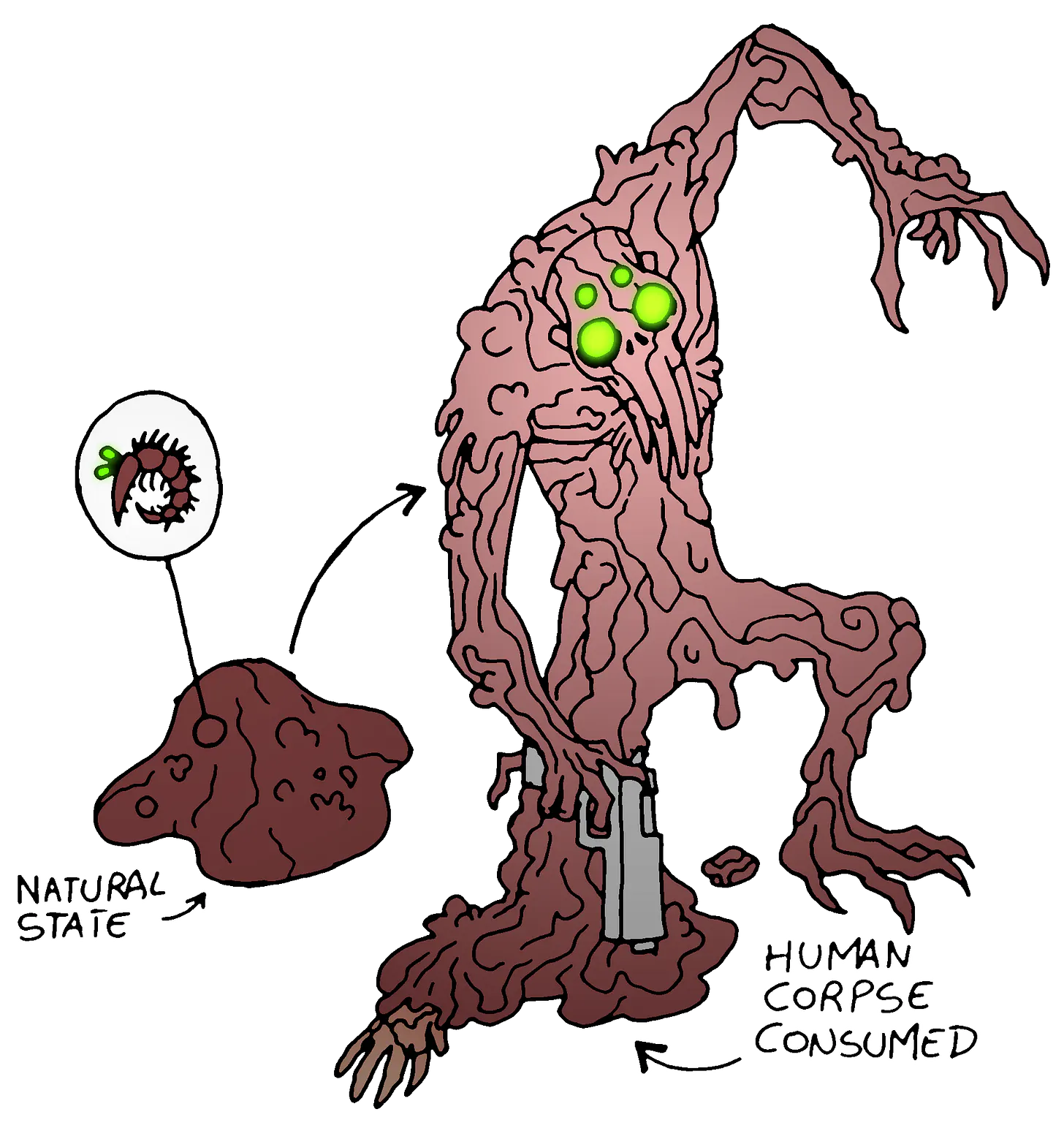
Barely enough time to figure out how to dodge a dental surgery from a burly Devilhander before our clones find themselves facing fresh, mysterious, deadly, and utterly baffling creations from the Alphakyllers.
In this freebie, you’ll find half a dozen new monsters to spice up your missions against the ineffable empire of these sorry sons of shrimps.
Hellsquad is our best-selling OSR game with a Starship Troopers-style twist (or Helldivers—same vibe), putting you in the boots of a clone army tasked with defending humanity from an invasion of highly intelligent and ill-intentioned Crustaceans. Although it was released last year, we’re still updating it and adding new free adventures and monsters all the time. To grab your copy, head over to itch.io (Opens in a new window) or DriveThruRPG (Opens in a new window).
Things we loved (or hated) this month
Even though we still suck at it, we’ve always cared about making our web content accessible (okay, maybe the contrast ratio could be way better, but we said it: we suck!). This also means providing decent text alts for illustrations and photos which is anything but easy. Helping us out is the new Draw Steel’s Art Description Guide (Opens in a new window), designed to make the reading experience enjoyable and straightforward for low-vision and blind communities.
Although it is a simple presentation, this post from a Chinese gaming community (Opens in a new window) reminded us of the almost entirely untapped potential of this market. It would be something worth exploring, although we might ask ourselves whether it is always the best choice for a politically driven author. For a queer designer, for example, is it okay to bring a product to a country that is not exactly open on the LGBTQIA+ subject?
In the world of Shonen, something has broken (Opens in a new window). Have Japanese tastes changed, or has the way they (and we) approach boys’ manga — which for decades have represented the backbone of Japan’s publishing industry — changed?
Date
July 1, 2026
Topic
Tales from the Odd Ones