February 2024
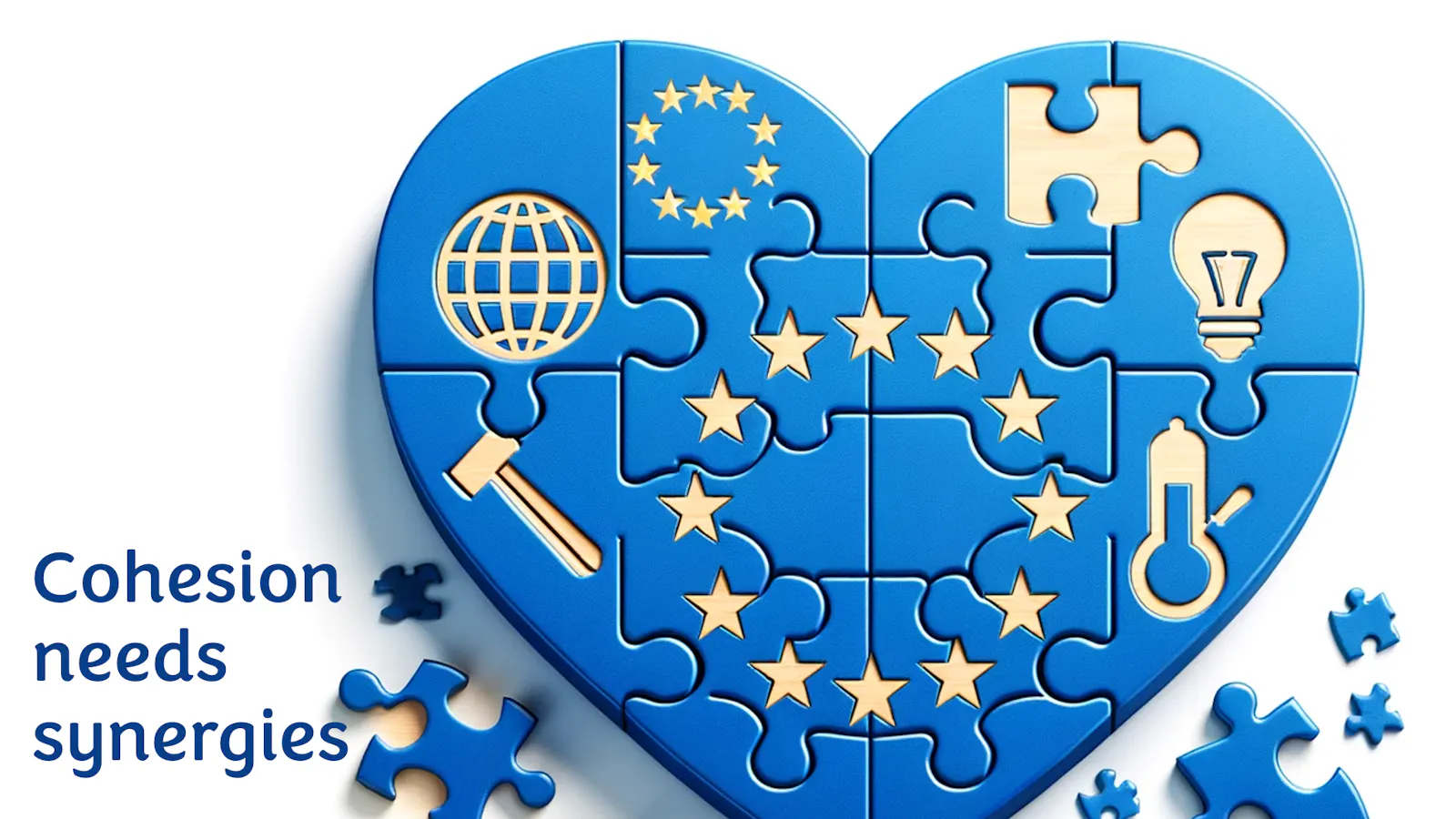
EU Cohesion Policy is not just an economic instrument. It is also about unity and solidarity in the EU. It's designed to reduce disparities, foster balanced development, and ensure that all places and people can benefit from the EU's collective progress. In an era marked by complex challenges and rapid technological advancements, this policy becomes even more significant. It stands at the forefront of the digital, green and demographic transitions, as well as the fight against rising Euroscepticism, promoting a sense of belonging and shared prosperity. By making the benefits of EU membership tangible and widespread, it reinforces a strong, cohesive Europe.
Cohesion Policy increasingly needs to evolve to address interconnected European challenges. The policy's effectiveness hinges on its synergy with other EU policies. Whether it’s combating climate change, driving digital transformation, mastering demographic change or fostering social inclusion, these challenges transcend borders and sectors, necessitating a coordinated response. The interplay between various policies, from environmental to technological, underpins the EU's ability to deliver comprehensive and equitable progress for all its regions.
Cohesion Policy contributing to other policy objectives
Cohesion Policy operates in conjunction with other EU and national policies. It plays a vital role in realising EU objectives and contributing to a range of broader EU objectives. Very early on, it contributed to sustainable development and more recently to reaping potential in regions, strengthening their resilience to emerging challenges and accompanying them in transitions. This includes current transitions and challenges, such as:
Green Transition. The EU's commitment to a sustainable future is unwavering. Cohesion Policy supports this through investments in clean energy, environmental conservation, and climate resilience. However, the true potential of these efforts can only be realised through a unified approach with other policies, such as environmental, climate, innovation, transport and industrial policies. This requires a blend of local action and EU-wide initiatives, ensuring that each place's unique green transition challenges are addressed while contributing to the broader goal of a carbon-neutral society. Cohesion Policy invests massively in infrastructure to ensure a cleaner and safer environment. Interreg programmes and macroregional strategies bring cooperation to the green transition where challenges and solutions clearly extend beyond national boundaries.
Digital Transition. The digital divide remains a critical issue, with varying levels of access and digital literacy across regions. Cohesion Policy's investment in digital infrastructure and the development of new services and economic activities is vital, but aligning these efforts with EU-wide digital strategies can magnify their impact. Enhanced digital connectivity and skills are not just about technology; they're about empowering communities, fostering innovation, and opening up new economic and social opportunities. There Cohesion Policy is support for digitalisation in firms and the public sector, access to e-government and e-health, enhancing digital skills and improving broadband in remote and rural regions so no EU region is left behind. Cohesion Policy also improves access to training and upskilling for new jobs and tasks to ensure that people can keep up with technological change and reap the benefits it brings.
Innovation. Innovation is key to economic vitality and competitiveness. Cohesion Policy's support for research and development, particularly in underdeveloped regions, sparks local innovation. However, when integrated with EU-wide innovation strategies, these efforts can have a ripple effect, stimulating growth and progress across Europe. This synergy can transform local innovations into significant drivers of EU-wide development. Cohesion Policy invests in innovation with interventions driven by smart specialisation strategies (S3). These have been gradually integrated into the policy and are now recognised as contributing to reinforcing regional ecosystems and economic diversification. This is linked to territorial capacity to keep and attract high value-added and high-productivity economic activities as well as people with high education levels and innovation potential, by addressing the whole value chain and providing support for the ambitious industrial agenda, the Green Deal Industrial Plan.
Demographic Changes. The EU's demographic landscape is shifting, posing unique challenges to different regions. By 2050 the working age population will shrink by some 35 million. The Commission Communication ‘Harnessing Talent in Europe’s Regions’ has noted the corresponding challenges, analysed risks for cohesion and identified several regions facing talent traps. The role of Cohesion Policy in addressing these challenges will need to be reinforced with mitigation and adaptation measures. Greater integration with broader EU strategies on ageing, migration, and workforce development can lead to more effective solutions. This approach ensures that demographic challenges are met with comprehensive, well-rounded policies that consider the diverse needs of Europe's regions.
Skills Gap. The skills gap is a critical issue, impacting the EU's global competitiveness and internal equity. Skills must correspond to changing needs and improve innovation capacity in the EU. Cohesion Policy's focus on education and skill development is crucial, but it gains greater significance when intertwined with EU-wide education, training, and labour market policies. Reforms to education and training need to be accompanied by investments at all levels as well as equal access to quality education and training, including upskilling, reskilling and lifelong learning for all. Beyond education, investment in children and young people will be crucial for long-term growth. Cohesion Policy should ensure that all regions can counteract skill shortages which could hinder their capacity to address these challenges and help support their development.
International value chains. In recent years changing international value chains have posed new challenges to many enterprises and policy makers. This is linked to issues such slowbalisation, friendshoring and the need more of a strategic autonomy in critical industries. Cohesion Policy is a vital instrument for increasing economic resilience and supporting regional economic ecosystems. Measures include investments in economic diversification, smart specialisation strategies, research and innovation, especially in cutting-edge sectors, critical infrastructure, education and skills development. All this supports the European industrial strategy aims to ensure that European industry can lead the way as we enter this new age.
In a similar way Cohesion Policy supports the objectives of a wide range of other EU policies or at least has the potential to do so by creating relevant synergies. Other possible policy fields are rural development, energy security and defence.
Most of these policies can create uneven regional and social effects, requiring Cohesion Policy to smooth the road and ensure a greener, more innovative, resilient, and sustainable EU. This uneven impact can challenge the viability — from a political, social, and economic perspective — of the objectives. This must also better understand the territorial impacts of EU policies furthering the transitions.
Beyond ‘do no harm to cohesion’
Synergies are not just about what Cohesion Policy can do to support the objectives of other policies. Synergies are also about what other policies can to do support the EU aim of economic, social and territorial cohesion. All EU policies impact local and regional development, influencing cohesion within a territory, see also earlier blog posts (Opens in a new window) on this matter.
In 2022, the European Commission introduced the 'do no harm to cohesion' principle. It calls on other policies to be aware of their impacts and contribute to – or at least not harm – cohesion where possible under their own objectives.
However, the magnitude of development and cohesion challenges require more from other policies than just not harming cohesion. While the objective of Cohesion Policy is to reduce territorial inequalities between regions, achieving cohesion solely through this policy is an overwhelming task (especially given the available resources). This is asking too much from Cohesion Policy, in terms of ‘repairing’ the very asymmetric impacts of space-blind policies (such as macro-structural ones) on different territories.
Therefore, defining synergies and complementarities between policies and Cohesion Policy is essential, especially concerning aspects of Cohesion Policy that other policies require. Establishing connections between cross-border cooperation and the Single European Market as well as aligning regulatory systems for convergence, are important. Cohesion Policy should emphasise that the free market does not effectively address cohesion or prevent territories from falling into development traps. Policy interventions and investments are necessary to bridge the gap.
The need to strengthen synergies between policies goes beyond the Single Market. It also concerns industrial policies, research and innovation, transport, security and rural development policies. For example, complementarities between Cohesion Policy and the new EU Industrial Policy must be defined, particularly the Net-Zero Industry Act. This policy – as with many other EU policies – risks creating additional economic, social, and territorial imbalances because, when translated into territorial impact, it primarily supports thriving places in countries that can afford substantial state aid.
Synergies with other policies are not limited to EU policies and EU economic governance. They also concern member state policies, both financial and non-financial.
Conclusion
The quest for synergistic policies faces obstacles, such as varying regional priorities and the complexity of aligning multi-level governance structures. However, these challenges open doors to innovation in policy design and implementation. Embracing an integrated approach can lead to more resilient, inclusive, and sustainable regional development strategies. These opportunities for synergy not only enhance the effectiveness of individual policies but also foster a sense of collective purpose and unity within the EU.
The future of EU Cohesion Policy lies in its ability to effectively intertwine with other EU and national policies. This approach is vital for addressing the multifaceted challenges facing Europe today. By embracing synergies, the EU can ensure that its policies are not just effective in isolation but transformative in their collective impact. The ongoing policy debate is crucial in shaping a Cohesion Policy that is dynamic, responsive, and inclusive, reflecting the diverse needs and aspirations of all European regions.
In an environment of increasing financial constraints, it is important to take a closer look at potential synergies between policies. Many objectives cannot be achieved by a single policy but require various policies to play together. The EU but also the member states need to increase policy coordination to identify and utilise synergy potential – see also earlier blog post (Opens in a new window). Cohesion Policy can play a vital role in this as it has links to a wide range of other policies and most of them will not be able to achieve their objectives without considering the territorial diversity and cohesion in the EU, and vice versa.
by Kai Böhme
https://steadyhq.com/en/spatialforesight/posts/6d2e8112-9cec-4d45-a882-b3f2d83c44bf (Opens in a new window)
Date
February 2, 2024
Topic
Cohesion (policy)
0 comments
Would you like to be the first to write a comment?
Become a member of spatialforesight and start the conversation.