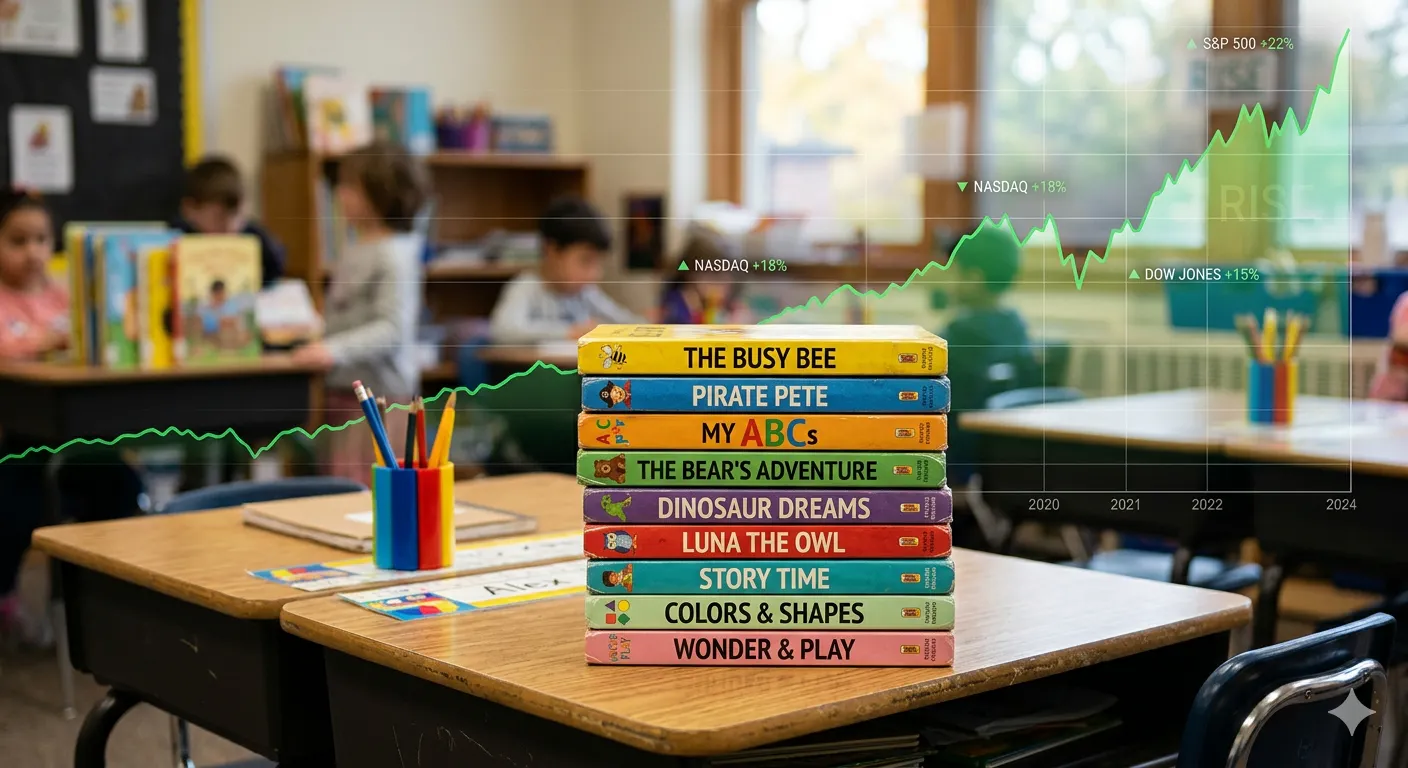
A surprising signal has emerged from one of the most recognizable names in education publishing. Scholastic (NYSE: SCHL (S'ouvre dans une nouvelle fenêtre)*), long associated with school book fairs and childhood literacy, is making a decisive move that has caught the attention of investors. Its newly announced share buyback program is not just sizable—it’s strategic. And in a market hungry for capital discipline, this could mark a turning point.
The question now is whether this is a genuine inflection moment or simply financial engineering masking deeper structural challenges.
Company Overview
Scholastic Corporation has built its legacy as a global children’s publishing powerhouse, blending education, entertainment, and distribution through schools. Its business spans book publishing, education solutions, and media, with a strong foothold in North American classrooms.
If you enjoy independent financial journalism like this, consider supporting my work. Joining a simple program like Coffee Break helps keep this content accessible and high-quality.
Key Recent Developments
The company recently announced a $200 million open-market share repurchase program, representing roughly 23% of its outstanding shares. The stock responded positively, rising about 8.8% following the news, reflecting investor enthusiasm for capital returns.
Financial media has zeroed in on the scale of the buyback relative to Scholastic’s market capitalization. Analysts are debating whether this signals management’s confidence in undervaluation or a lack of compelling growth opportunities. There’s also increasing discussion about cost discipline and margin improvement efforts, as the company navigates a shifting educational landscape.
The Company’s Competitive Moat
Scholastic’s moat lies in its deep integration with schools and educators, a distribution advantage that is difficult for competitors to replicate. Its brand equity among teachers and parents remains a valuable intangible asset.
Readers who want more insights like this can subscribe to a free email newsletter and stay ahead of key market trends and stock stories.
Deep Analysis
From a SWOT perspective, Scholastic presents a nuanced investment case. Its strengths include a trusted brand, long-standing school relationships, and diversified revenue streams across publishing and education services. These factors provide stability and recurring demand, particularly in institutional channels.
However, weaknesses persist. The company has struggled with consistent revenue growth, and parts of its business remain exposed to cyclical school funding patterns. Digital transformation, while underway, has been slower compared to more agile competitors.
Opportunities lie in expanding digital education offerings and leveraging its intellectual property across media formats. The buyback itself could enhance shareholder value if executed at attractive prices, boosting earnings per share.
Threats include declining physical book demand, competition from digital-first education platforms, and broader macroeconomic pressures affecting school budgets. Additionally, a large buyback raises questions about whether capital might be better deployed into innovation or acquisitions.
Current Valuation
At current levels, Scholastic appears modestly valued relative to its historical multiples. The aggressive buyback suggests management believes the stock is undervalued. However, investors should be cautious. Without sustained revenue growth or clear margin expansion, the stock risks falling into value-trap territory. The key will be whether operational improvements follow the financial maneuver.
Conclusion
Scholastic’s buyback is bold and potentially transformative, but it is not without risk. It signals confidence, yet also highlights a lack of high-growth reinvestment avenues. For investors, the story hinges on execution. If management can pair capital returns with operational momentum, the upside could be meaningful. If not, the buyback may prove to be a temporary boost rather than a lasting solution.
Support independent financial journalism by becoming a supporter of this project—your contribution helps keep thoughtful market analysis alive.
Disclaimer: This article is for informational purposes only and does not constitute investment advice.
*Affiliate Link
Date
23/03/2026
Sujet
Buybacks
0 commentaire
Vous voulez être le·la premier·ère à écrire un commentaire ?
Devenez membre de Dividend Growth Stocks🚀 et lancez la conversation.