In this month’s antidote to the algorithm, Francis Buseko takes us back to mid-70s Zambia and the radical sounds of artists like WITCH, pictured below, who blew the minds of his parents' generation
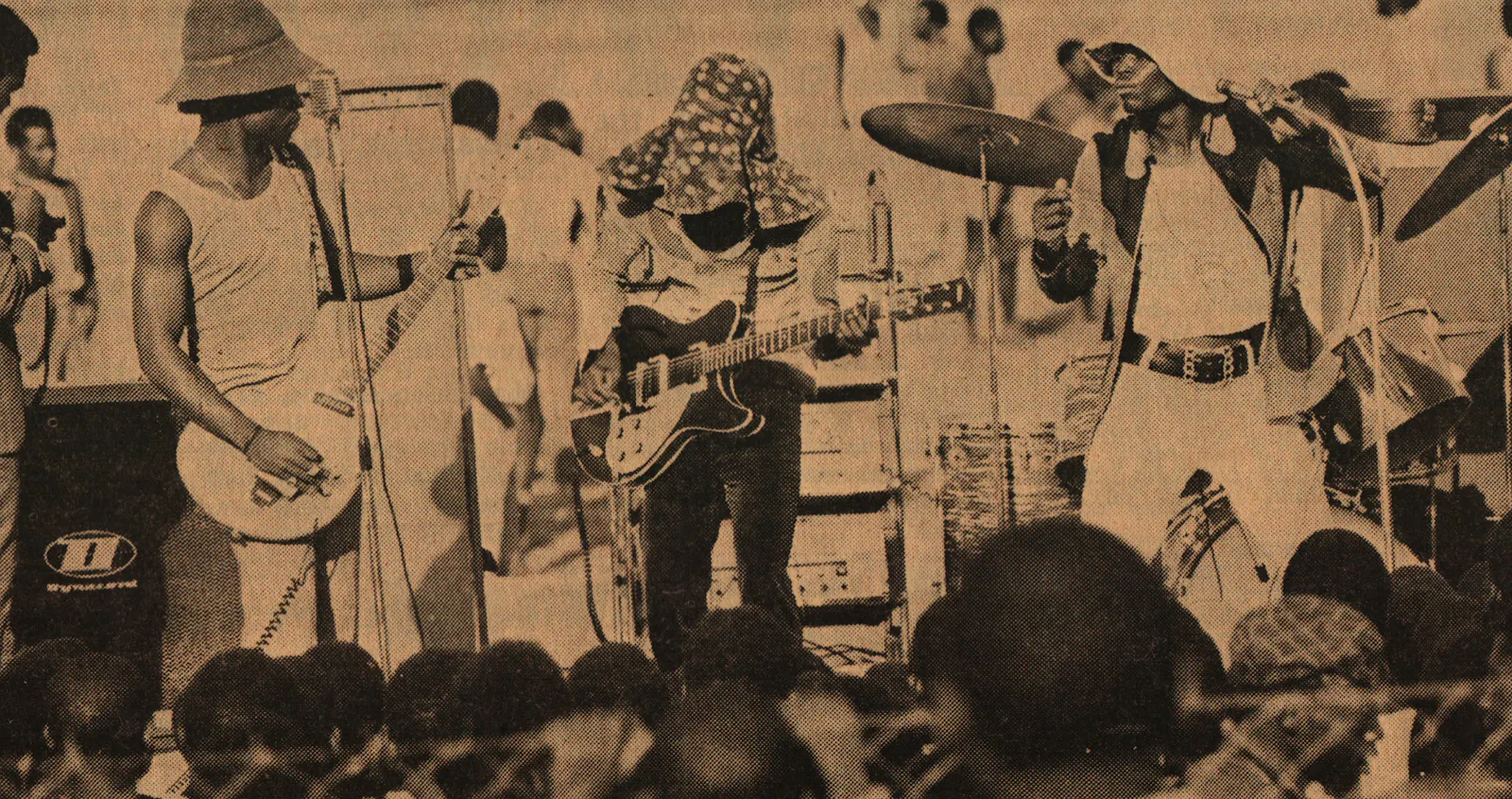
In the 70s, as many African nations were working to define themselves beyond the weight of colonial oppression, a country in the heart of the continent was crafting its own revolution – not just politically, but sonically too. Zambia, newly independent, landlocked, and learning to stand on its own, gave birth to a music that cracked the air like lightning.
Zamrock wasn’t just music, it was rebellion; a sonic renaissance and a radical act of self-definition, funneled through fuzz pedals, sweat, and spirit. Drawing from psychedelic rock, garage funk, blues, and traditional Zambian rhythms, it was raw and unpredictable – like James Brown jamming with Black Sabbath in a Lusaka backyard. The distortion was heavy, the grooves deep, the energy untamed. A generation stood at the fault line between past and future and claimed it as central. What they created wasn’t an echo, but an origin point. The world is only now beginning to catch the frequency.
Who better to cast that first spell than W.I.T.C.H., an acronym for We Intend To Cause Havoc? This was not just a name, but a manifesto. They didn’t knock politely; they kicked the door in. Draped in floppy hats, bell bottoms, and sending out raw distortion, they pressed Zambia’s first commercial record with their debut album Introduction, and turned every stage into a portal. They weren’t just a band but a cultural glitch: stylish, subversive, and loud enough to wake the neighbours. The band are back in 2025 with new album Zango and European tour dates this autumn.
But WITCH was just the beginning. There was Rikki Ililonga, often called the godfather of Zamrock, whose lyrics struck like ancestral memory. His band, Musi-O-Tunya (meaning The Smoke That Thunders, the original name of the mighty Victoria Falls), carried the same weight of thunder and healing. The Ngozi Family, led by Paul Ngozi and powered by drummer Chrissy Zebby Tembo, gave working-class Zambia its soundtrack: raw, bluesy, and full of fire. Amanaz, with their now-cult album Africa, delivered slow-burning grooves brimming with beauty and weariness. And Salty Dog offered existential honesty that now feels prophetic, even though they were overlooked in their time.
Zamrock artists blended Bemba, Nyanja, and Tonga with English, creating a sound as local as it was cosmic. It wasn’t just cross-cultural. It was cross-dimensional.
This wasn’t happening in a vacuum. Zambia’s first president Kenneth Kaunda was a musician himself who championed local culture, mandating that 90% of music on national radio be Zambian. That single policy became fuel and suddenly, bands had airtime, an audience, and a reason to push boundaries.
Date
13/06/2025
0 commentaire
Vous voulez être le·la premier·ère à écrire un commentaire ?
Devenez membre de The Quietus et lancez la conversation.