America is no longer a democracy. That doesn’t mean authoritarianism has won. But merely restoring the pre-Trump status quo won’t work. The country needs a democratic transformation.
By Thomas Zimmer, January 1, 2026
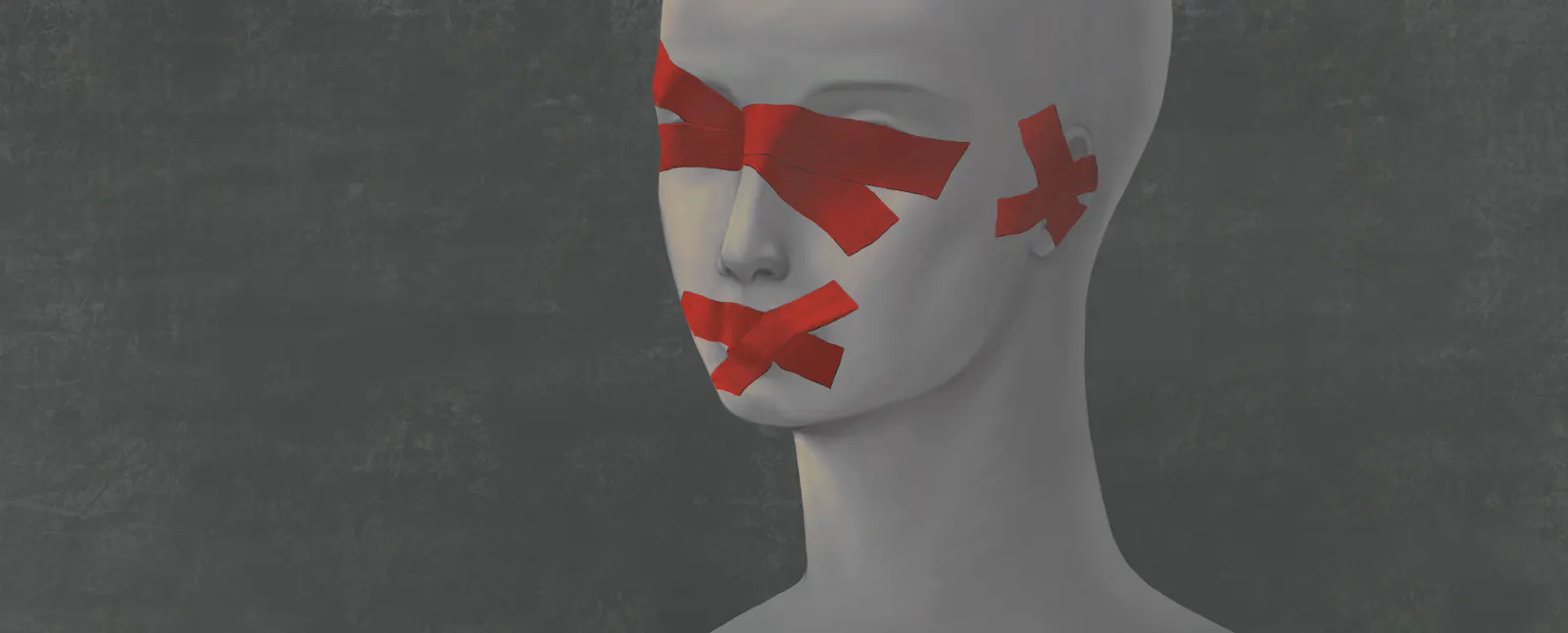
Happy New Year! I wish all of you health, strength, and good fortune in 2026. Let’s hope we can make it a better year than what we’ve just been through…
The first half of January will be all about taking stock: I’ll have pieces coming out daring to make some predictions for 2026, a reflection on the state of Democracy Americana, and a Q+A attempting to answer the most pressing questions from readers. But I wanted to start the new year with a proper deep dive into the state of affairs after almost one year of Trumpism in power. It will hopefully help us clarify where America stands and where the country might be going.
The first part of this piece is free for everyone. If you want to read more than the preview or gain access to the audio version of the piece, please consider becoming a paid member of Democracy Americana, which is solely funded by readers whose support and generosity make this work possible.
Not ready yet for a paid membership? You can subscribe to the free version of the newsletter:
At the start of 2026, almost one year into Trumpist rule, America can no longer be counted among the world’s democracies.
Even if that statement probably doesn’t come as a total surprise to readers of Democracy Americana, we should sit with this diagnosis for a little bit. This is not some fringe position, but an assessment widely shared among scholars of authoritarianism in the United States as well as abroad. “The United States has descended into competitive authoritarianism,” political scientists Steven Levitsky, Lucan Way, and Daniel Ziblatt, for instance, unequivocally state in a much-discussed essay in Foreign Affairs that was published online on December 11.
Under the title “The Price of American Authoritarianism: What Can Reverse Democratic Decline?,” (Abre numa nova janela) the authors argue we need to put the United States in the same bucket as the regimes erected by Chávez in Venezuela, Erdogan in Turkey, Orbán in Hungary, or Modi in India – systems “in which parties compete in elections but incumbents routinely abuse their power to punish critics and tilt the playing field against their opposition.” In fact, as Levitsky, Way, and Ziblatt emphasize, America’s “authoritarian turn was faster and farther-reaching than those that occurred in the first year of these other regimes.” However, as concerning as the current state of affairs certainly is, the authors still end on a mildly optimistic note. They believe the damage caused by the Trumpist assault is very much reversible – “the prospects for returning to democratic rule remain good.”
Grappling with “The Price of American Authoritarianism” presents an excellent opportunity to take stock of where America stands one year into Trumpist rule, and where the country might be going next. Levitsky, Way, and Ziblatt get a lot right. Even though the authoritarian assault on the system has caused tremendous damage, democracy’s fate is not sealed. The fight is not over. Its outcome will be largely determined by whether or not the pro-democracy forces in America can get their act together. The authors present a crucial warning: Going forward, the danger lies as much in underestimating the threat to democracy emanating from the Trumpist regime as in overestimating its strength – the former resting on some form of ignorance and exceptionalist misconception of America’s supposed immunity from authoritarianism, the latter falling for the regime’s assertions of dominance, leading to preemptive acquiescence, resignation, and demobilization.
Levitsky, Way, and Ziblatt are spot on when they emphasize the many ways in which the Trumpists have fallen short of their own authoritarian ambitions and have failed to consolidate authoritarian rule across all spheres of American life. I share their assessment that the chances of fighting off this particular iteration of the authoritarian assault remain high – they have good reason to feel slightly more optimistic now than in the spring, as the societal resistance has hardened, MAGA shows signs of disintegrating, and widespread frustration has gripped the Right. And yet, I also believe the authors’ perspective on American democracy might be too narrow. Levitsky, Way, and Ziblatt are focused on the question of returning to democratic rule, in the sense of heaving the country back across the line that separates still-a-democracy from not-a-democracy-anymore. But what if such a reversal simply won’t be enough? What if we need to assess the chances not merely of a restoration of the pre-Trump status-quo, but of a comprehensive transformation of the political system? What if the only way for democracy to survive in America after the resounding delegitimization of the system that allowed Trump to rise in the first place and after the devastations wrought by Trumpism in power is to properly transform the political system and culture?
In order to take these questions seriously, I will proceed in two parts. In this Part I, we will dive deep into “The Price of American Authoritarianism” to reflect on where we stand, how much damage has already been done, and assess the potential for democratic resistance. In Part II, I will outline why I believe a framework focused on restoring and returning to a status quo ante is insufficient, and why, as a matter of practical reality rather than utopian idealism, we will need to explore avenues towards transformation.
Why get into it again
In the weeks between the 2024 election and Trump’s inauguration, two of the authors, Steven Levitsky and Lucan Way, wrote a long essay for Foreign Affairs formulating their expectations for what would happen to American democracy. Published in early February, “The Path to Authoritarianism” (Abre numa nova janela) was perhaps the first canonical assessment of the Trumpist assault. It was grounded in the authors’ expertise in how twenty-first century authoritarian movements tended to act upon taking power, the “playbook” they generally follow to undermine democracy and force regime change. Much like their counterparts elsewhere and inspired by Viktor Orbán in Hungary, in particular, the Trumpists would focus on weaponizing state institutions, turning them into an instrument to punish enemies and protect supporters. Over the course of the next few years, Levitsky and Way expected, America would cross into competitive authoritarianism. However, Trump was unlikely to consolidate authoritarian rule, Levitsky and Way argued, and wouldn’t be able to install full-scale authoritarianism. Not because of some innate democratic disposition, but because American institutions and civil society seemed more stable than in places like Hungary.
“The Path to Authoritarianism” was enormously influential when it came out, significantly shaping the discourse in those early weeks of Trumpism back in power. It mattered that leading scholars of authoritarianism confirmed, in stark terms, that something extraordinary and consequential was happening; it provided the language and the vocabulary to capture and describe the authoritarian assault that was unfolding with frightening speed.
Now the authors are back – joined by Daniel Ziblatt, another academic heavy hitter – to give their verdict as we are approaching the one-year anniversary of Trump’s return to the White House. What they provide is probably as close as it gets to representing the academic consensus. And most importantly, they offer us a chance to reflect on the big picture. It often feels like there is no time to dwell on anything in the Trump era – the next egregious announcement, the next dangerous escalation is always lurking. It is easy to get lost in the outrageousness of it all. And yet a key challenge is to take a step back and grapple with what it all adds up to. Faced with a broadscale authoritarian assault, we must retain the ability to develop a holistic view: Where do we stand now? What should we expect going forward?
Back in the spring, grappling with “The Path to Authoritarianism” helped me catalyze my own thoughts and observations into a coherent analysis. I largely agreed (Abre numa nova janela) with Levitsky and Way, although it seemed clear that by the time their essay was finally published, the reality of the authoritarian attack had already overtaken their expectations. Levitsky and Way, it turned out, had underestimated the ferocity of the Trumpist assault – and, most importantly, overestimated the resilience of America’s political system and civic society, as those early months were characterized by a pervasive tendency in elite circles and institutions to acquiesce. That’s what gave the piece additional significance: Here were two observers who were under no suspicion of reflexive anti-alarmism, who understand authoritarianism like few others, who are far more immune to ideas of American exceptionalism than almost anyone commenting on U.S. politics. And yet, by the time I grappled with their assessment in mid-March, just weeks after it had been published, the Trumpist assault had already outpaced what they thought possible. It was right around that moment in March, Steven Levitsky has said in recent interviews (Abre numa nova janela), that he felt most pessimistic about the fate of democracy in the United States.
A lot has happened since. Where are we now?
Studying democracy’s fall and the rise of “competitive authoritarianism”
Data
01/01/2026
3 comentários
Gostaria de ver os comentários?
Torne-se membro de Democracy Americana para participar no debate.