September 2023
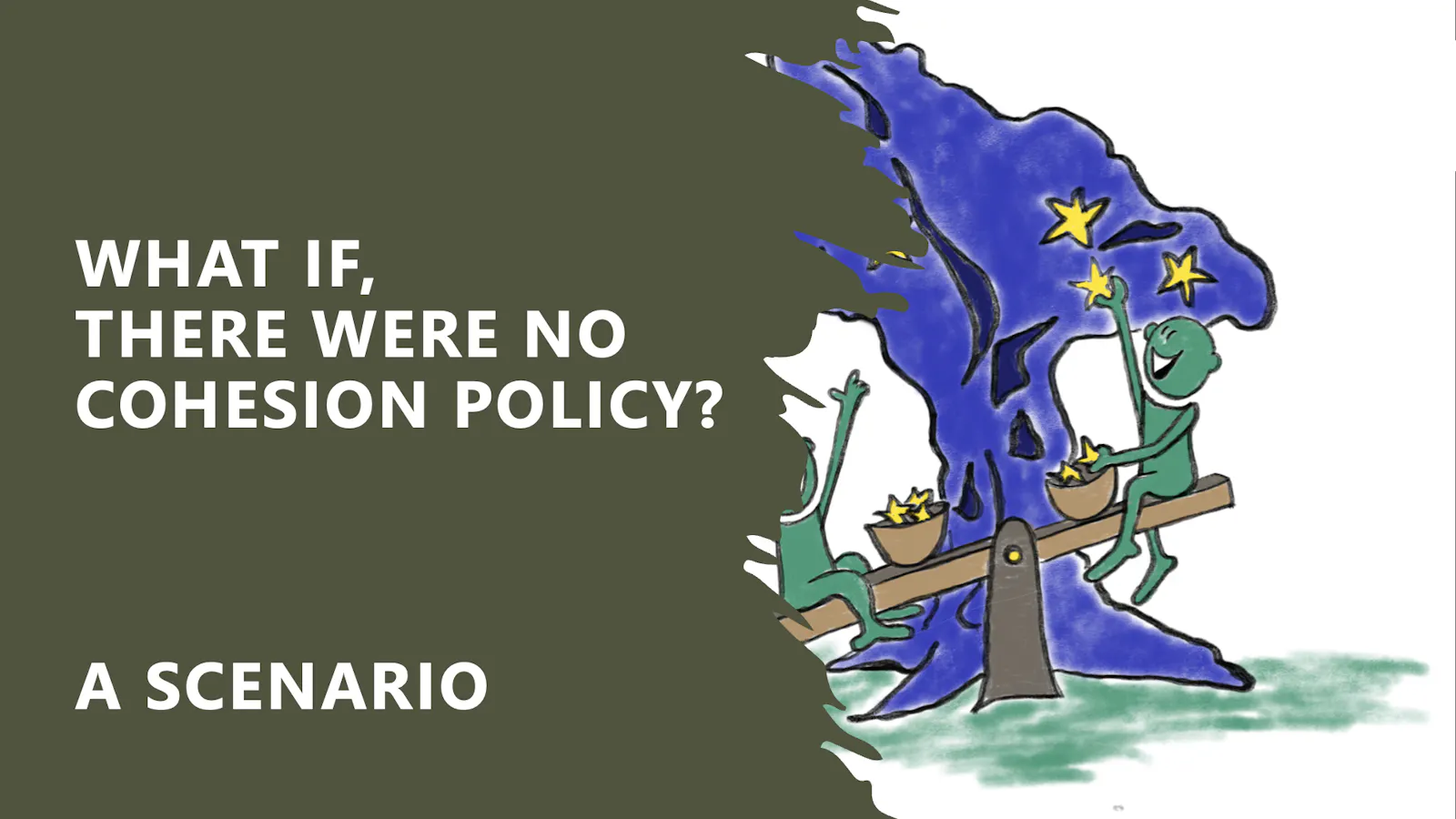
The European funding landscape has grown increasingly complex and costly in recent years. The core EU funding instruments – such as ERDF, ESF, EAFRD – have got companions in the framework of the recovery package for the EU, including the NextGenerationEU and its Recovery and Resilience Facility, as well as a multitude of new funding possibilities through the REACT-EU, CRII/CRII+, CARE, FAST-CARE.
Each new instrument comes with its own objectives, negotiation and programming procedures, eligibility criteria, delivery and implementation systems, timelines and governance arrangements. In parts these overlap with those of existing programmes. For instance, the types of investment supported by the Recovery and Resilience Facility are rather similar to those of ERDF, albeit the administrative procedures could not be more different. Others of the new instruments are merely ways to channel ERDF money into new avenues, sometimes in combination with other funding streams.
While every new initiative and instrument comes with full good intentions to better respond to emerging challenges in the best possible way, the combined picture is hardly convincing. Indeed, in many parts already the civil servants and experts working with the instruments and funds have difficulties keeping the overview of the various funding instruments and their formal requirements. That the average citizen is lost in the jungle of abbreviations of funding instruments is only understandable. Indeed, despite all simplification efforts, the increasing number of abbreviations and instruments portrays the EU all too well as bureaucratic machinery far away from its citizens´ day-to-day reality. On top if this each new funding instrument comes with the need for civil servants at various level ensuring that it is implemented diligently. Certainly, there also needs to be a pot of money to be distributed for each of the instruments. Traditionally this mainly came from the member states payments to the EU budget. In light of the recent crises, the EU in addition also tapped into other financing sources such as borrowing money.
Maybe it is time for a considerable overhaul to simplify the system, reduce the administrative structures, make it easier to communicate and more understandable for the citizens and ensure its financial viability. This could be done in different ways:
Back to the routes. Many of those engaged in decades old instruments certainly would like to see the new instruments – which often have been introduced as temporary add-ons – to phase out again. Maybe some novelties could be transferred into the traditional instruments. Still, the aim is for the pendulum to swing back to the “good old time” and continue business as usual.
Get rid of old ballast. Many of those engaged in the new instruments, picture them as more agile and better fitting today’s challenges. As the new instruments have the potential to make the EU fit for the future and increase its capacity to respond, they do not see them as temporary. They picture them rather as policy innovations which after their current test-phase should take over from the old instruments.
Something completely new. Another line of thought suggests it might be time to rethink the EU funding system from scratch. With all the experience at hand, it might be possible to design something new, which combines a variety of different instruments, becomes easier to understand, communicate and implement.
Listening to Commission President von der Leyen’s State of the Union speech in mid-September 2023, we indeed might not see the pendulum swinging back to the pre-crises business as usual stage. Most notably, she did not mention cohesion policy or even EAFRD the two single largest budget lines in the multiannual budget of the EU at all in her speech. She did mention, though, some of the new policy innovations, such as NextGenerationEU.
The question then is, is there still a role of cohesion policy in the future?
In this and the next blog post, we want to take these thoughts one step further. Focusing on cohesion policy, which accounts for 31% of the EU budget – also considering addition NextGenerationEU brings to the budget, cohesion policy accounts for about 19% (see earlier blog post (Öffnet in neuem Fenster)) – we test two scenarios:
The first scenario dwells on the possibility of an EU with a focus on boosting the green and digital transitions and economic growth through sector policies focusing on productivity gains. Cohesion policy is phased out and also the cohesion objective in the EU Treaty does not really play a role in this scenario.
The second scenario focuses on solving the current complexity trap with a new and possibly simpler approach. Also in this scenario cohesion policy is considered obsolete and phased out. However, the EU objective on economic, social and territorial cohesion is strengthened. Moving on from the ‘do no harm to cohesion’ plea, the EU has moved to requiring all its policy to actively contribute to cohesion. It has made cohesion an underlying value of its policy making.
The scenarios are merely the results of intensive brainstorming and revisiting of earlier policy papers which challenged the idea of cohesion policy. We hope that they can stimulate some thinking, both about the alternatives of cohesion policy but also about what we are going to gain and miss with such alternatives.
Scenario 1 – Market powers substitute cohesion policy
This scenario explores an EU driven by the single market without cohesion policy. It is based on the hypothesis that recent economic pressures and the push for rapid green and digital transitions have strained the EU budget. This results in the decision to reduce and eventually eliminate funds for cohesion policy.
Drawing on early think pieces, such as the Sapir Report in 2003 and the Juncker scenario on the EU as nothing by the single market from 2017, in this scenario all policies are tuned into strengthening productivity and economic growth. After years of crises and economic underperformance, the EU promotes its global competitiveness and growth, amid demographic, technological and economic challenges.
As a result, the single market would further expand and barriers to the free movement of goods, services, capital and people would be abolished. This also implies streamlining regulations, as well as simplifying and reducing administrative cost and burden across the EU. A unified regulatory framework across member states and a fast transposition of rules into national legislation have priority.
Beyond the economic factors, the focus on the single market includes also completing the digital single market. This aims to improve access to digital goods and services, create an environment where digital services and networks can thrive and also be an element and driver for growth in the EU. All these developments make productivity gains a key priority of the EU, investing in high efficiency and economic growth while also addressing intense competition with other global players.
The expected economic growth and influx of capital through the completion of the single market are expected to benefit thriving economies, and particularly places that are already part of global supply chains and are digital hubs. Big cities and tech hubs especially profit more from these developments. However, this is not the case for all places. Although some places may manage to leapfrog, or flourish equally with innovation and growth, this is not the case for all.
This is particularly challenging for places that so far depended heavily on structural funds. Although wealthier member states can invest and support their lagging regions, this may not be the case for poorer member states, which might struggle. Some member states may be unable to cover their needs for infrastructure, research, skills development, etc. as these will depend on national budgets. Furthermore, in an ageing EU, with a shrinking working age population, regions that fall into a talent development trap, i.e. low working age population, low and stagnating share of people with tertiary education and a high brain drain may be further challenged.
As a result, a two speed Europe might develop, with some places being oases of innovation and growth while others are deserts. Brain drain and migration to more advanced places may increase, leaving more and more places behind. With the absence of cohesion policy, member states themselves would need to cater for social inclusion and structural investments accelerate transitions. Earmarking enough funds may be particularly challenging for places with budgetary constraints. Failing that, however, inequalities may be amplified with more people at risk of poverty, feeling distanced from the EU project and eventually causing social unrest. A merely economic EU may bring substantial benefits to its economy, but it comes with costs. These are no other than social disparities and fragmentation.
Territorial and social fragmentation may lead to places losing their potential and stagnating, being unable to cope with the changes. Many regions would risk being left behind, neglected and with no voice in the EU project. At the same time, socio-economic disparities may put European unity at risk. As a consequence, populist movements and feelings may increase, fuelling Euroscepticism and anti-EU movements that increase political fragmentation. Disparities may increase within member states and even escalate to EU level. Euroscepticism may also challenge cooperation between member states in the long run, even on economic or trade matters, causing a reverse growth effect, weakening its global standing.
There may be domino effects, as financial vulnerability in several regions could influence the overall EU economy and its global profile. Advanced regions would need to depend more on external consumers, as the purchasing power of many regions within the EU would decline. This could be similar for the global technological race, as innovation and increasing technological development may only be possible for a few regions, without harnessing talent from other EU regions. It would also be difficult for less developed regions to adapt and upskill their population. This may eventually challenge the ability of the EU to progress technologically at a global scale.
Nevertheless, not only the economic and technological spheres will be influenced. The green transition may also be hampered. Without cohesion policy, priorities may shift, and the green transition could be uneven across the EU. Some territories may innovate towards more sustainable solutions, others may see greenwashing to conform with environmental rules. Less developed ones may lag behind and rely on, or even invest further in outdated, polluting but cheaper technologies, widening the divide across EU member states. The lack of cohesion policy funding towards such projects will make the green transition harder for lagging regions. This may have long-term environmental consequences, exacerbating the status of biodiversity and habitats in the EU, worsening climate change and increasing natural hazards which may challenge natural and cultural habitats. In the long run, this could even result in migration to safer places in the EU or abroad leading to more abandoned places.
Resume
This scenario looks at an EU that has advanced economic prosperity and growth at the cost of no-cohesion. Although there may be an initial economic upswing, risks in the long run may be irreversible as disparities within countries, inequalities and different speeds of development may challenge the very essence of the European project.
In this scenario, more advanced EU regions and contributors to the EU budget may initially see economic prosperity as they would be key beneficiaries of the single market. On the other hand, less developed regions may face economic stagnation and struggle to invest and grow. Social challenges due to reduced funding and social programmes may risk social and political fragmentation and turn them into vulnerable member states. Unable to adapt and change, they risk falling into development traps.
This scenario eventually questions the very essence and reason of the EU as a union of solidarity and cooperation. Its core values are doubted as the long-term effects may be irreversible. A sustainable economy is not only about growth and GDP, but encompasses sustainable and inclusive development for all regions and all people. Short-term prosperity challenges the longevity of the EU, making it necessary to reflect on its overall purpose and vision.
These are some first brainstorming reflections on what an EU without cohesion policy and any serious efforts to pursue its cohesion objectives could look like.
Could you imagine an EU without cohesion policy? How would such an EU look? We would love to read your views. Please, feel free to share your thoughts in the comment section.
In the meanwhile, we work on a second scenario, where cohesion policy is replaced by cohesion as a common value in EU policy making. So stay tuned.
Maria Toptsidou & Kai Böhme
https://steadyhq.com/en/spatialforesight/posts/0c45f6b7-e45c-4aae-a839-71e4aff5ca87 (Öffnet in neuem Fenster)https://steadyhq.com/en/spatialforesight/posts/34a834f6-6159-4bf9-801e-c2965f9acd4e (Öffnet in neuem Fenster)
Datum
25.09.2023
Kategorie
Cohesion (policy)
3 Kommentare
Möchtest du die Kommentare sehen?
Werde Mitglied von spatialforesight und diskutiere mit.