2026/02/04
At the end of World War II, Europe found itself sliced and sandwiched between two superpowers with two massive armies. Two different ideologies were facing off against each other.
After they realized that a direct military conflict would certainly lead to their own destruction and a worldwide catastrophe, both sides shifted toward indirect forms of confrontation.
They proved highly creative and resourceful in that: a nuclear arms race, technological competition including the space race, proxy wars, and the support of ideologically aligned forces across the globe. Sometimes these even escalated to military interventions, like Korea in 1950 or Vietnam in the following decades.
Today it is less in the forefront of our collective memories, but just as important was the economic and cultural competition between the two systems. Both sides attempted to quarantine one another politically and culturally.
Some of these dynamics had roots in the Soviet Union after World War I. Marxism as its core ideology opposed and distrusted global capitalism. Following the revolution they nationalised foreign assets and as a consequence faced military interventions and economic blockades. Soviet leaders concluded that any dependence on foreign powers was a strategic vulnerability.
Over the coming decades, the USSR deliberately sought to build a self-sufficient, closed economic system and restricted cultural contact with the outside world. The USSR entered the Cold War already accustomed to a fortress mentality.
The American side in comparison didn’t isolate economically but constructed an open system it controlled. The backbones of this was the Marshall Plan, Bretton Woods, NATO, and the IMF.
Instead of economic isolation, the response was political and cultural containment. Fear of communist influence — intensified by genuine espionage cases such as Klaus Fuchs and the Rosenbergs, which accelerated the Soviet nuclear program — produced loyalty investigations, blacklists, and the climate known as McCarthyism. While rooted in real security concerns, there was a massive systemic overreaction and these efforts frequently expanded into exaggerated suspicion and political witch hunts.
Once the rivalry was underway, it expanded across every imaginable front: sports, culture, film, technology, and propaganda. Together, these formed what we can call soft power competition — a struggle to influence hearts and minds across the globe and to consolidate influence both at home and within their perceived spheres of influence.
This gave birth to films like Red Dawn (1984), Rocky IV (1985) and Top Gun (1986) from one side, and productions like The Cranes Are Flying (1957), Pirates of the 20th Century (1980), and TASS Is Authorized to Declare… (1984 miniseries) from the other. The fact that most of us recognise the first three while only a few cinephiles know the latter illustrates who won this aspect of the competition.
But it wasn’t just obvious Cold War films. The United States proved highly effective at exporting its cultural products to other countries. Those films — besides making money for Hollywood and the US in general — carried the added soft-power benefit of promoting the “American way of life” to foreigners. The same thing happened increasingly with music, food, fashion, and social ideals.
These ideals included the promotion of the ever-dying myth of the “American Dream”, consumerism, and individualism as opposed to collectivism.
Media shapes norms, role models, conflict styles, consumer desires, and political framing. Prolonged exposure gradually alters what we think of as normal. At it's roots it works very similar to propaganda. Through these cultural products, audiences absorbed American perspectives on behaviour, society, the role of the state, religion, arts, and so much more. Rather than merely learning about these values, people internalised them. It reshaped how they view the world, relate to one another, to money and materialism.
After the Cold War reached its conclusion, the US suddenly found itself not only as a military and economic world hegemon, but also as a cultural one. The youth in Europe born after 1990 grew up often knowing relatively little else besides American cultural products. They listened to American music, watched American films, series, TV programs, drunk Coca-Cola, and nudged their parents to stop at McDonald's for a Happy Meal®.
This all happened in a historical period when the traditional family model was already incrementally fading for nearly 200 years — since the industrial revolution — and parents were often distant at work, or missing altogether. Many in this generation grew up with the TV screens.
The characters in films and television were increasingly their 3rd, or 2nd and tragically sometimes even main parent figures to learn from. The children picked up how to behave, and the characters influenced their morals. They learned to copy what they seen in television in a directed fantasy instead of real-life humans in real life situations.
I remember as a shy kid wanting to improve my social skills I’d seek out confident male characters in films to emulate their mannerisms, style, and behaviour. My father figures were characters played by Al Pacino, Robert De Niro, and similar actors. All American characters, written, played by, directed, filmed, and sold to us by Americans.
This was the time when the German band Rammstein — fittingly named after the largest American military base on the continent — recorded “We're all living in Amerika.” A song that perfectly describes the post Cold-War decades. A notable piece in the soundtrack of the teenage years of European millenials.
 (Öffnet in neuem Fenster)
This trend only accelerated as we moved deeper into the 21st century. As American culture got more and more all-encompassing, amplified by the internet and the global spread of the English language, it felt like we really did all live in Amerika.
During these decades, American society and politics grew increasingly polarized. In patterns reminiscent of Europe’s long history of ideological conflicts — without having the same historical depth to learn from them — they drifted into their own form of a Kulturkampf (Öffnet in neuem Fenster) (and perhaps they might be heading towards their own Anni di Piombo (Öffnet in neuem Fenster) in the coming years and decades).
Meanwhile, these internal American culture wars were increasingly imported into European debates and everyday discourse. Positions, language, and conflict styles were borrowed from both sides of their political duopoly.

With the 2016 election of Donald Trump, this trend began to peak out violently. American politics got reality televised for the whole world to watch, and U.S. domestic politics became everyone's favourite foreign policy topic across much of the world. A show we had to watch, but had no say in it. The taxation of our attention without representation.
Even if we wanted to turn it off, we couldn’t truly tune out because the consequences had the very real danger of touching us as well. Especially those who lived close to Russia, or had an emerging far-right movement. We were too deep into outsourcing our defence and political direction to them.
Perhaps after Trump’s 2024 re-election, a form of America fatigue has finally started to set in. Many less politically minded people who missed the first 4 seasons started to keenly tune in for the reboot, but something has changed in the ones who have been following it before. We got tired of watching.
He probably understands this instinctively. People didn’t simply disengage, but got mentally burned out of opposing him. He exhausted his opponent’s outrage and induced attention fatigue. With this, he paved his way to further erode democratic norms and to normalize his authoritarian aspirations.
Is this what we want?
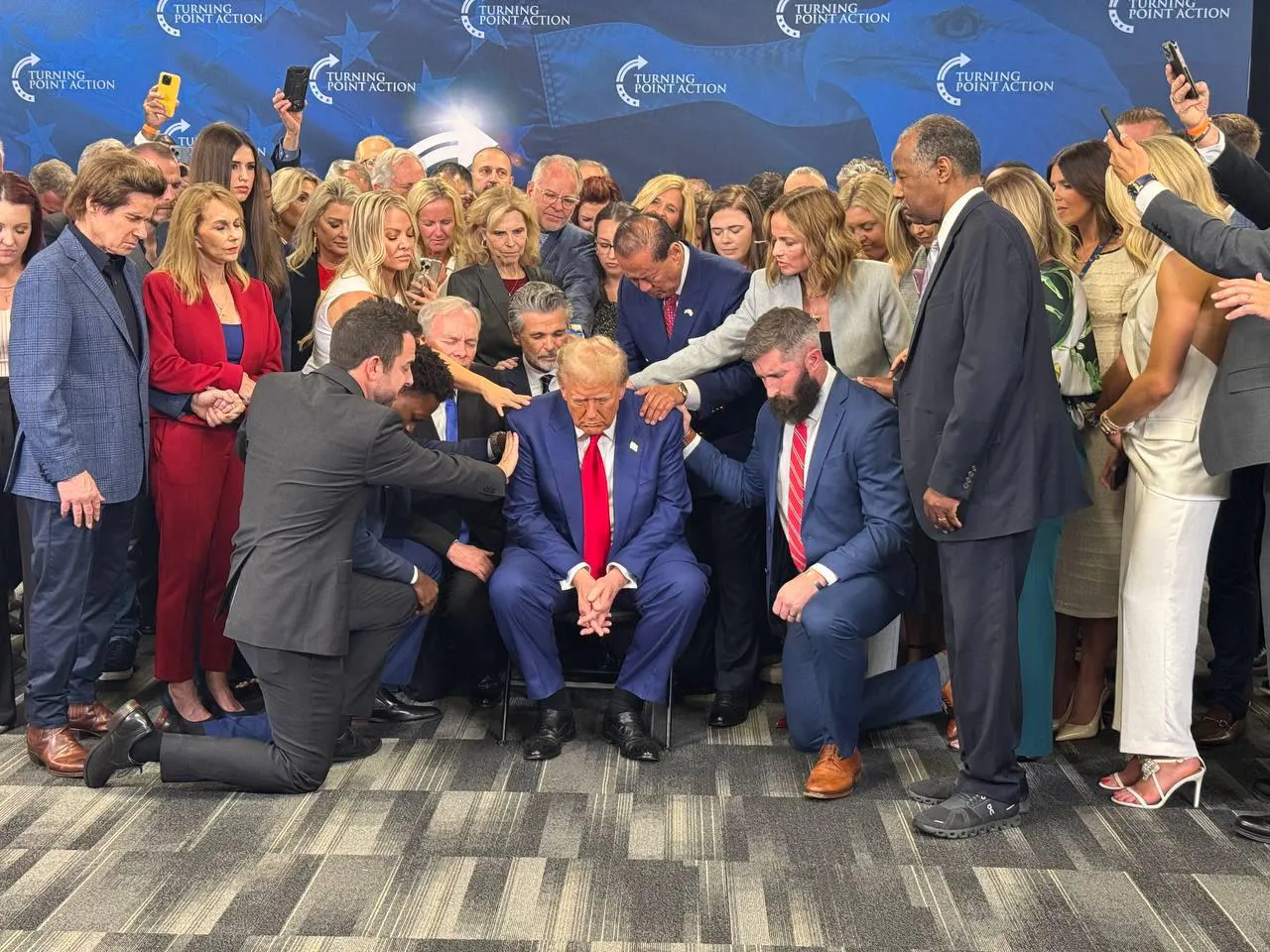
Perhaps it’s time we start thinking about whether we want to derisk not only from a major economical and militarily dependence, but also from the cultural and psychological influence of the society that produced and elevated Donald Trump.
Is this the model we want shaping us as individuals and a civilization? It may be time to begin constructing a loose Velvet Curtain between us and the American Empire.
This curtain should not be like the Iron one. We must always be able to peek in, open to exchange and curiosity, and remain visible in both directions. But we should no longer be systematically forced to watch this long-running show — whose later seasons have grown increasingly hollow and profit-driven — from an uncomfortable audience hall without an exit.
Europe, and the world, have much more to offer than this. There are countless contemporary (and older) films, series, music, and other pieces of art, or even “content” that remain unreasonably unknown because we only hear about the newest American thing.
As we increasingly move into a post-scarcity world, one of our greatest assets will become our attention. We have to learn to be more conscious and vigilant about what we spend it on.
But even until then, we can decide where our money goes. And in an era of increasing economic decoupling, directing support toward local and regional cultural production rather than continuously funnelling money to American platforms becomes strategically important.
It’s not as cultural protectionism is unprecedented in Europe. Unsurprisingly, the French were ahead of the rest of us on this matter as well.
After World War II, these tendencies grew in response to the influx of American consumerism and media, which many in France, and most important of all Charles de Gaulle, viewed as a form of cultural colonialism.
Today, French public radio stations must dedicate at least 40% of airtime to French music. Television channels and streaming services are also required to allocate 40% of content to French works and at least 60% to European productions overall.
Similar principles already exist on the EU level. Member states require streaming platforms to maintain at least 30% European content in their catalogues.
These measures are a useful foundation, but they should only be a starting point. We could all learn from France in this regard. Furthermore, we can even start to diversify cultural imports from other corners of the world.
Some concrete issues and steps to take
As of today, European broadcasters are cursed by an uneven playing field. They face massive pressure from global platform giants like Netflix, Amazon, and Disney+, which enjoy scale advantages, transnational distribution, and network effects (users across many markets). They extract revenue and audience attention in a way smaller European firms simply cannot match.
Current EU policy tools are focused on supporting content production and cultural diversity, but these policies do not shield European broadcasters from global market forces or give them the scale needed to operate as true pan-European players. European tech policy doesn’t include strong industrial protections or competitive safeguards in media distributions.
For European media to be truly integrated and competitive, policies need to address distribution power, scale imbalances, digital revenue models, and the structural capabilities of leading European broadcasters and streamers. Without them, the underlying market structure will remain dominated by American platform giants.
While the most effective way for change are policy shifts, we can always choose to be responsible for our own minds. Change can start within us, we can all be the quiet leaders of this transition. We can select a European film instead of a Hollywood production. We can start a European series instead of an American one.
This has never been easier than today. Not only because they are more accessible than ever, but lately Hollywood, and in general, the American media and arts ecosystem became increasingly financialized and risk-averse.
They are aiming for maximizing profits by remaking old films, rebooting old series, endless franchises, and playing it safe instead of being bold, creating novelty, and focusing on artistic creativity.
At the same time, European media is thriving. There are more and more great productions from across the continent.
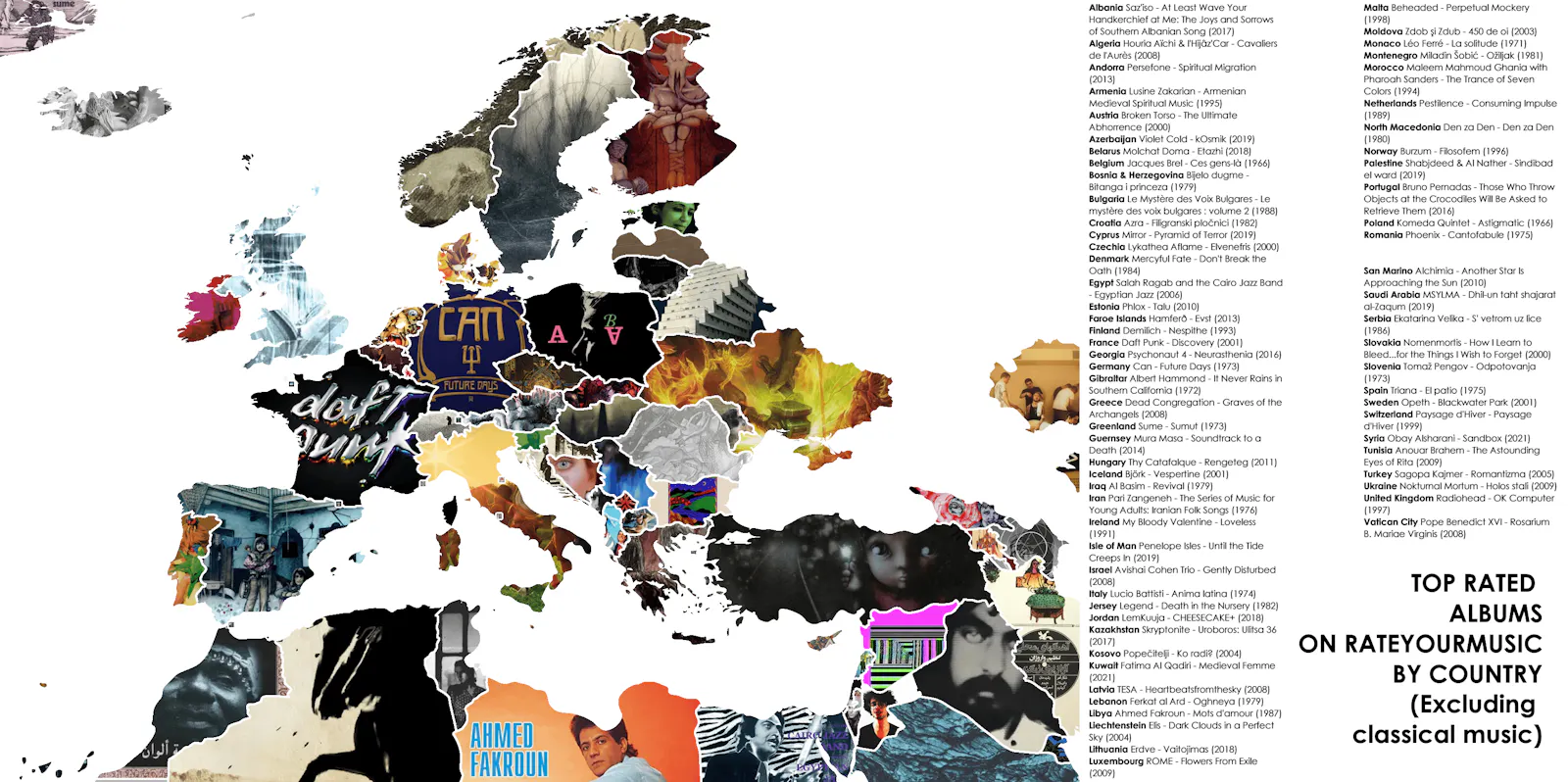
The starting steps to create a unified Europe not only on paper is to get to know each other, and who we are. One film from France, an album from Italy, a series from Germany, something from Sweden, Spain, Poland… We could all broaden our horizons instead of conforming to consume something predictable from Hollywood.
Some resources to start this journey:
The best European Films — IMDB list from 2015 (Öffnet in neuem Fenster)
The best European Series — IMDB list from 2023 (Öffnet in neuem Fenster)
ARTE (Öffnet in neuem Fenster)
Recommended reading:
The rise and fall of European media: EU policy in the streaming era (Öffnet in neuem Fenster)
Datum
04.02.2026
Kategorie
Europe