LA NEWSLETTER SETTIMANALE DI ANDREA BATILLA
WITH ENGLISH VERSION
UOMINI CHE NON POSSONO CAMBIARE
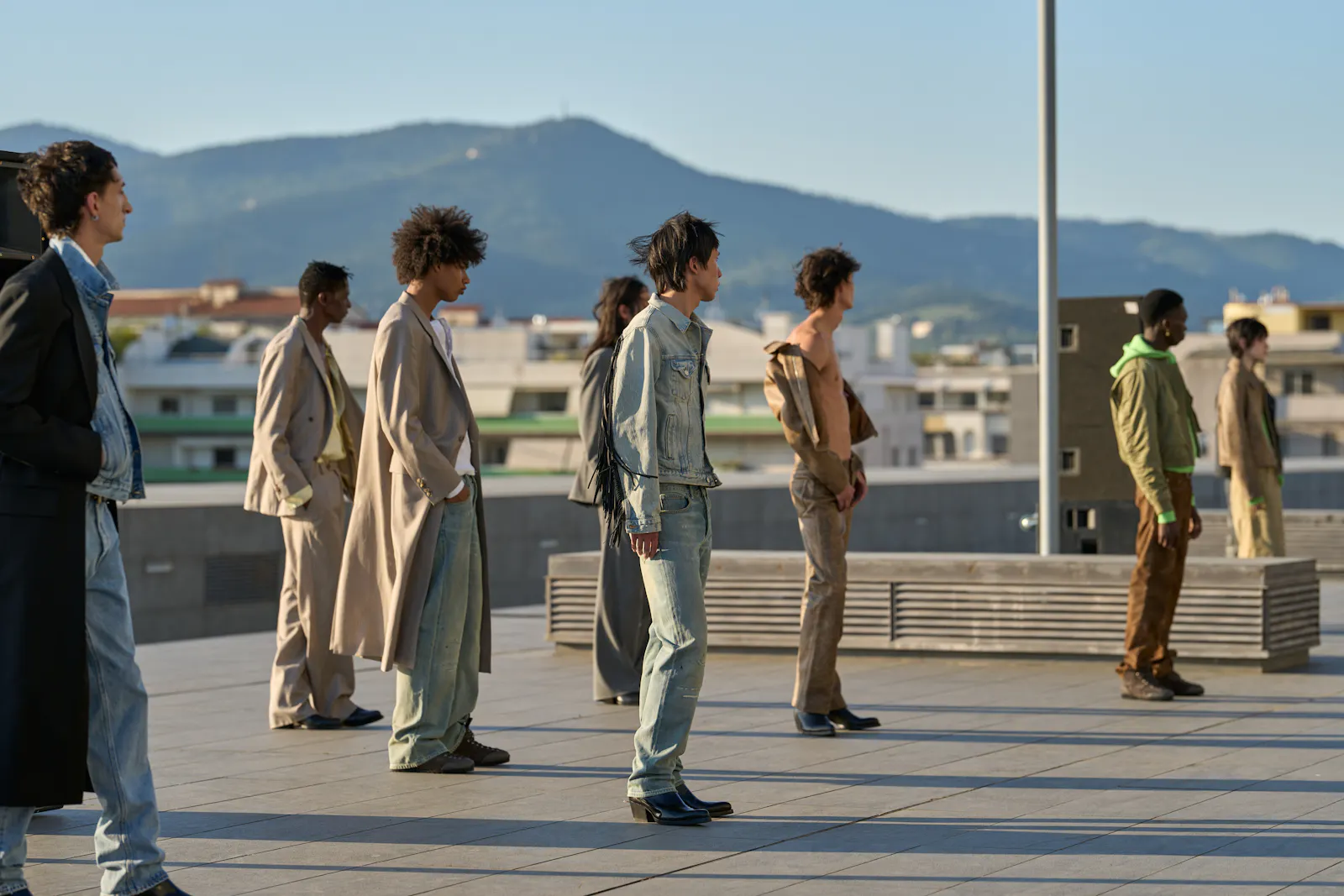
Pitti Uomo ha fatto una precisa fotografia dello stato del menswear
Pitti Uomo si è svolto dal 16 al 19 Giugno.
La manifestazione uomo più importante al mondo è passata dall’avere 1.200 espositori pre-pandemia a 548 nel 2022, fino al parziale recupero di quest’anno con 758. Questo è principalmente dovuto alla sparizione di piccoli o medi brand che non hanno resistito alla sofferenza dovuta alla pandemia.
Pare quindi che, per quanto in molti ne vaticinino la fine, Pitti Uomo sta recuperando e questo succede anche perché non esistono altri luoghi in cui si possa fare una riflessione seria sullo stato dell’abbigliamento maschile.
Cosa che, puntualmente, è successa anche questa volta.
Nell’edizione appena terminata i guest designer sono stati Simone Rocha, con la sua prima collezione uomo, DSM di Kei Ninomiya, Sunflower e Jiyong Kim.
Gli eventi di questo tipo sono interessanti perché registrano e amplificano le tendenze del menswear, dando indicazioni su quello che sta succedendo o potrebbe succedere o non succederà.
Vediamo cosa ci hanno detto i quattro ospiti di questa edizione.
La collezione di Simone Rocha, ispirata nientedimeno che a A Room With a View libro e film, ha raccontato un uomo con evidenti e scontati segni ricavati dal guardaroba femminile che erano più un divertissement che un vero statement.
La designer inglese lavora per la sua collezione donna su un approccio ossessivo verso i segni del femminile storico: i pizzi, le ruches, le gonnellone. È un immaginario post vittoriano che riportato ad oggi ha senso perché scardina un modo di trattare questi segni vecchio di secoli.
Traslare questa riflessione sull’uomo avrebbe voluto dire rimestare nell’abbigliamento vittoriano maschile, formale e rigido, ma questo andava evidentemente oltre le forze di Rocha che di fatto non è interessata ad affrontare integralmente il menswear ma solo a raccontarlo con leggerezza e un certo grado di distacco.
Nell’epoca di Vladimir Putin, Viktor Orbàn, Benjamin Nethanyau, Recep Erdogan e Donald Trump spingere un uomo a mettersi una gonna o un grembiule non ha nessun senso, si tratta di un anacronismo. Ma anche disegnare capi pressoché anonimi o già visti molte volte da molte altre parti è pressoché inutile.
Nessuno ha bisogno di un’altra collezione uomo che verrà venduta solo negli store di Dover Street Market. Questa è l’amara verità.
A proposito di ciò, eccoci a parlare della sfilata di DSM di Kei Ninomiya dove DSM è l’acronimo di Dover Street Market per l’appunto.
Ninomiya è il designer di Noir, uno delle miriadi di brand dell’universo di Comme des Garçons, a cui è stato affidato il primo progetto che porta il nome del negozio.
La collezione si ispira in maniera piuttosto pedissequa al punk, con giubbotti borchiati in pelle nera con la scritta Chaos, tartan, catene e, incredibile a dirsi, gigantesche creste di capelli.
Non si capisce perché Rei Kawakubo e Adrian Joffe sentano il bisogno di un clone di Undercover o perché pensino che questo tipo di approccio oggi possa avere un senso. È bello fantasticare di una tribù di ragazzi nerovestiti che si aggira per il mondo trasferendovi bellezza e libertà espressiva. Ma la realtà è molto diversa. Nella stragrande maggioranza dei casi gli uomini non si vestono così, non vogliono vestirsi così ma, soprattutto, non possono vestirsi così.
Le ragioni sono molto semplici. Le convenzioni sociali impediscono severamente la stravaganza nell’abbigliamento maschile, la rifiutano, la stigmatizzano.
Se questo non bastasse, c’è la questione che per arrivare a vestirsi in questo modo ci vogliono una grande cultura estetica e una altrettanto grande capacità economica.
Per un lungo periodo l’atteggiamento anticonformista di Rei Kawakubo ha avuto un senso. Adesso non ce l’ha più.
Jiyong Kim è un designer sudcoreano che fa parte di una nuova interessante generazione asiatica, in particolare giapponese e coreana.
Nell’installazione di Pitti, Jiyong ha presentato 34 cappotti uguali che sono stati decolorati al sole dal giorno 0 al giorno 100, documentando i cambiamenti a intervalli di circa due o tre giorni, in modo da poter visualizzare la graduale trasformazione operata dalla luce solare naturale nel tempo.
Qui la storia si fa interessante perché il designer sudcoreano, pur usando il procedimento del sun bleaching per astrarre e intellettualizzare il progetto, ha un’idea del menswear estremamente concreta che sta tra lo streewear, lo sportswear tecnico e l’eleganza del formale. Ha infatti lavorato sia da Vuitton ai tempi di Virgil Abloh che da Lemaire.
Ma è anche probabile che, essendo nato nella grande città industriale di Ulsan, sia influenzato dalla società profondamente conservatrice coreana, dai suoi limiti estetici e etici, dai suoi enormi scatti in avanti e dalle sue improvvise frenate.
Nel 2025 le elezioni presidenziali si sono tenute con due anni di anticipo perché il presidente Yoon Suk-Yeol è stato rimosso dall’incarico dopo essere stato accusato di preparare un colpo di stato.
Il suo lavoro è interessante perché riesce a ridurre la complessità dei temi in gioco a oggetti semplici, comprensibili e quasi sempre quotidiani e questo nel menswear in questo momento è fondamentale.
Infine eccoci a Sunflower, brand danese il cui pay-off è The realest of the real che indica in maniera millimetrica la loro direzione.
Non ci sono fuochi d’artificio, non ci sono ispirazioni intellettuali né maldestri tentativi di cambiare il mondo. La spontaneità radicale sta al centro di questo progetto fatto di pezzi facilmente indossabili a prezzi facilmente accessibili.
Siamo dalla parte opposta del design narcisista, verso una concretezza quotidiana piena di significato che non è minimalista, non è quiet luxury, non è streetwear e non è formale.
Sunflower è un collettivo guidato da Ulrik Pedersen, designer di grande e profonda esperienza, che da risposte semplici a domande molto complicate, creando un guardaroba di pezzi facili ma non anonimi per uomini che conoscono molto bene i limiti di rappresentazione di sé che ha il maschile.
In un’atmosfera ancora di grande incertezza, Pitti Uomo è riuscito a fare una fotografia dei temi del momento, portando l’attenzione su ciò che è giusto, ciò che è possibile e ciò che non lo è.
Il territorio del menswear nel futuro ci riserverà grandi sorprese e se Pitti continuerà ad essere una lente d’ingrandimento così potente ci aiuterà ad arrivare in posti in cui forse non siamo mai stati.
MEN WHO CANNOT CHANGE
Pitti Uomo offered a precise snapshot of the state of menswear
Pitti Uomo took place from June 16 to June 19.
The world's most important menswear trade show has gone from 1,200 exhibitors before the pandemic to 548 in 2022, followed by a partial recovery this year to 758. This decline was largely caused by the disappearance of small and medium-sized brands that were unable to survive the economic hardship brought on by the pandemic.
It appears, therefore, that despite the many predictions of its demise, Pitti Uomo is recovering. One reason for this is that there are simply no other places where a serious reflection on the state of menswear can take place.
As usual, that is exactly what happened this time as well.
The guest designers at this edition were Simone Rocha, Kei Ninomiya's DSM project, Sunflower and Jiyong Kim.
Events like these are interesting because they record and amplify menswear trends, providing clues about what is happening, what might happen and what almost certainly will not happen.
Let us look at what these four guests told us.
Simone Rocha's collection, inspired by nothing less than A Room with a View, both the novel and the film, presented a man marked by obvious and predictable borrowings from the women's wardrobe. These elements felt more like a playful exercise than a genuine statement.
For her women's collections, the British designer works through an obsessive engagement with the signs of historical femininity: lace, ruffles and voluminous skirts. It is a post-Victorian imaginary that still makes sense today because it disrupts centuries-old ways of interpreting those symbols.
To transfer that same reflection to menswear would have required a deep engagement with Victorian male dress, formal and rigid by nature. That challenge clearly exceeded Rocha's ambitions. She is not truly interested in confronting menswear in its entirety but rather in approaching it with lightness and a certain degree of detachment.
In the age of Vladimir Putin, Viktor Orbán, Benjamin Netanyahu, Recep Tayyip Erdoğan and Donald Trump, encouraging men to wear skirts or aprons simply makes no sense. It is an anachronism.
But designing garments that are essentially anonymous or that have already been seen countless times elsewhere is equally pointless.
Nobody needs another menswear collection that will only be sold through Dover Street Market stores.
That is the uncomfortable truth.
Which brings us naturally to DSM by Kei Ninomiya, where DSM stands, of course, for Dover Street Market.
Ninomiya is the designer behind Noir, one of the many brands within the Comme des Garçons universe, and he was entrusted with creating the first project to carry the store's own name.
The collection drew rather literally from punk culture, featuring black leather jackets covered in studs and emblazoned with the word "Chaos," tartan fabrics, chains and, incredibly enough, gigantic mohawk hairstyles.
It is difficult to understand why Rei Kawakubo and Adrian Joffe felt the need for a clone of Undercover or why they believe this approach still has relevance today.
It is pleasant to imagine a tribe of young people dressed in black roaming the world, spreading beauty and expressive freedom wherever they go.
Reality, however, is quite different.
In the overwhelming majority of cases, men do not dress this way, do not want to dress this way and, more importantly, cannot dress this way.
The reasons are simple. Social conventions severely limit extravagance in men's clothing. They reject it and stigmatize it.
As if that were not enough, dressing this way also requires both a sophisticated aesthetic education and significant economic resources. For a long time Rei Kawakubo's anti-conformist attitude made sense. Today it no longer does.
Jiyong Kim is a South Korean designer who belongs to a fascinating new generation of Asian talent, particularly from Japan and Korea.
At Pitti, Jiyong presented an installation featuring thirty-four identical coats that were progressively sun bleached from day zero to day one hundred. The transformation was documented every two or three days, allowing viewers to observe the gradual effect of natural sunlight over time.
This is where the story becomes interesting.
Although the South Korean designer uses sun bleaching as a way to abstract and intellectualize the project, his understanding of menswear is remarkably concrete, positioned somewhere between streetwear, technical sportswear and formal elegance.
He previously worked at Louis Vuitton during the Virgil Abloh era and later at Lemaire.
It is also likely that, having grown up in the industrial city of Ulsan, he has been shaped by Korean society itself: deeply conservative, constrained by aesthetic and ethical boundaries, capable of dramatic leaps forward followed by equally dramatic retreats.
In 2025, South Korea held presidential elections two years ahead of schedule after President Yoon Suk Yeol was removed from office following accusations that he had attempted to prepare a coup d'état.
What makes Jiyong Kim's work compelling is his ability to reduce complex themes to simple, understandable and almost always everyday objects.
At this moment, that quality is essential in menswear.
Finally, we arrive at Sunflower, the Danish brand whose tagline, The Realest of the Real, defines its direction with remarkable precision. There are no fireworks. There are no intellectual exercises. There are no clumsy attempts to change the world. Radical spontaneity sits at the center of a project built around garments that are easy to wear and reasonably accessible in price.
This is the opposite of narcissistic design. It is everyday practicality infused with meaning. It is not minimalism. It is not quiet luxury. It is not streetwear. It is not formalwear.
Sunflower is a collective led by Ulrik Pedersen, a designer of deep experience and remarkable maturity.
He provides simple answers to very complicated questions, creating a wardrobe of garments that are straightforward without being anonymous, designed for men who understand the limitations that masculinity imposes on self-representation.
In an atmosphere still defined by uncertainty, Pitti Uomo succeeded in capturing the concerns of the moment, directing attention toward what is right, what is possible and what is not.
The territory of menswear will undoubtedly deliver major surprises in the years ahead.
And if Pitti continues to function as such a powerful magnifying glass, it may help us reach places we have never been before.
Date
June 20, 2026
Topic
POST SETTIMANALI
0 comments
Would you like to be the first to write a comment?
Become a member of LA MODA È UNA COSA SERIA and start the conversation.