LA NEWSLETTER SETTIMANALE DI ANDREA BATILLA
WITH ENGLISH VERSION
ROCKSTUD E ALTRI INCIDENTI
Perchè la moda continua a ripercorrere il proprio passato senza capirlo
Ci sono 9.248 foto dentro il mio telefono. Partono da Dicembre 2018 e arrivano ad oggi. Tutte quelle precedenti sono state inavvertitamente cancellate nel passaggio da un telefono all’altro.
Si mescolano foto che ho fatto io, arrivate via messaggio, screenshot e pdf senza soluzione di continuità e non c’è modo di sistematizzarle se non scorrendole una per una. Cosa che probabilmente non farò mai.
La quasi totalità sono foto senza senso. Riguardandole ora ho scoperto che le primissime sono scatti del palco della finale di X Factor al forum di Assago del 2018. Immagini brutte, indistinte, senza alcun significato, perché fatte in fretta, nel tentativo di trattenere qualcosa di quell’atmosfera che evidentemente mi divertiva molto.
Il problema con la documentazione del passato e con la sua rilettura sta nel fatto che, se ci affidiamo solo alla nostra memoria digitale e non anche a un supporto fisico e a un atto di volontà, rischiamo di prendere dei grossi abbagli.
Fare foto fisiche richiedeva più tempo, più attenzione e più soldi. Nessuno nell’era pre-digitale avrebbe mai fatto 10.000 foto in 7 anni e tutti avrebbero costudito gelosamente i risultati del rullino della propria festa di compleanno, andandoseli a rivedere ogni tanto e costruendosi una precisa memoria sul lungo periodo, veritiera e coerente con quello che era successo.
La mancanza di selezione e di attenzione ha reso il racconto della nostra vita un fluire magmatico e indistinto che genera malinconia, mancanza di chiarezza, di senso.
Sul sito Tagwalk, un motore di ricerca di immagini di sfilate estremamente esteso, ci sono migliaia di foto, forse decine di migliaia. Le chiavi di ricerca possibili sono per tipo, stagione città e brand. Esiste poi una classifica fatta sulla base del traffico del sito che in questo momento vede al primo posto Chanel, al secondo Khaite, al terzo Gucci, al quarto Ferragamo e al quinto Valentino.
Non esiste un modo di estrarre immagini per rilevanza rispetto al contenuto, cioè per capire quali sono state le collezioni con più senso, più capacità innovativa, i designer con più talento. Non c’è possibilità di dare una forma leggibile a tutto quel contenuto. Su Tagwalk vicino all’ultima pre-collezione di Valentino c’è quella di Loulou de Saison che personalmente non so chi sia.
Questa massa indistinta di immagini serve quasi esclusivamente a riempire moodboard di collezioni derivative fatte da designer senza talento o da brand con un unico scopo commerciale.
Avere a disposizione tutto questo passato, invece di aiutarci, è diventato una condanna. All’utente medio basta uno sguardo nostalgico al passato per calmare le proprie ansie da mancanza di iconicità ma la verità è che la nostalgia è diventata uno strumento per commercializzare fette di ricordi senza mai e poi mai dare gli strumenti per capirli.
Uno dei motivi, forse quello fondamentale, per cui la moda sembra procedere a scatti è che siamo stati completamente disabituati a rileggere il passato, ad affrontarlo, a riconoscerlo e a capirlo. Per molto tempo è stato eccitante vedere i designer sbarazzarsi di tutto quello che veniva prima di loro, demolirlo senza lasciarne traccia. Demna e Hedi Slimane hanno fatto di questo metodo uno dei più riconoscibili tratti delle loro visioni.
Spazzare via tutto e ricominciare da zero è una delle forme più potenti di controllo della narrazione, ma anche una delle più pericolose.
Uno degli esempi più folgoranti di questo metodo revisionista è stato il museo Gucci a Firenze che, a seconda del direttore creativo in carica, piegava alla sua visione la storia del marchio, con passaggi a volte del tutto tagliati via. Frida Giannini è stata per lungo tempo una inconsapevole vittima innocente.
Da qualche tempo però pare che le cose stiano cambiando.
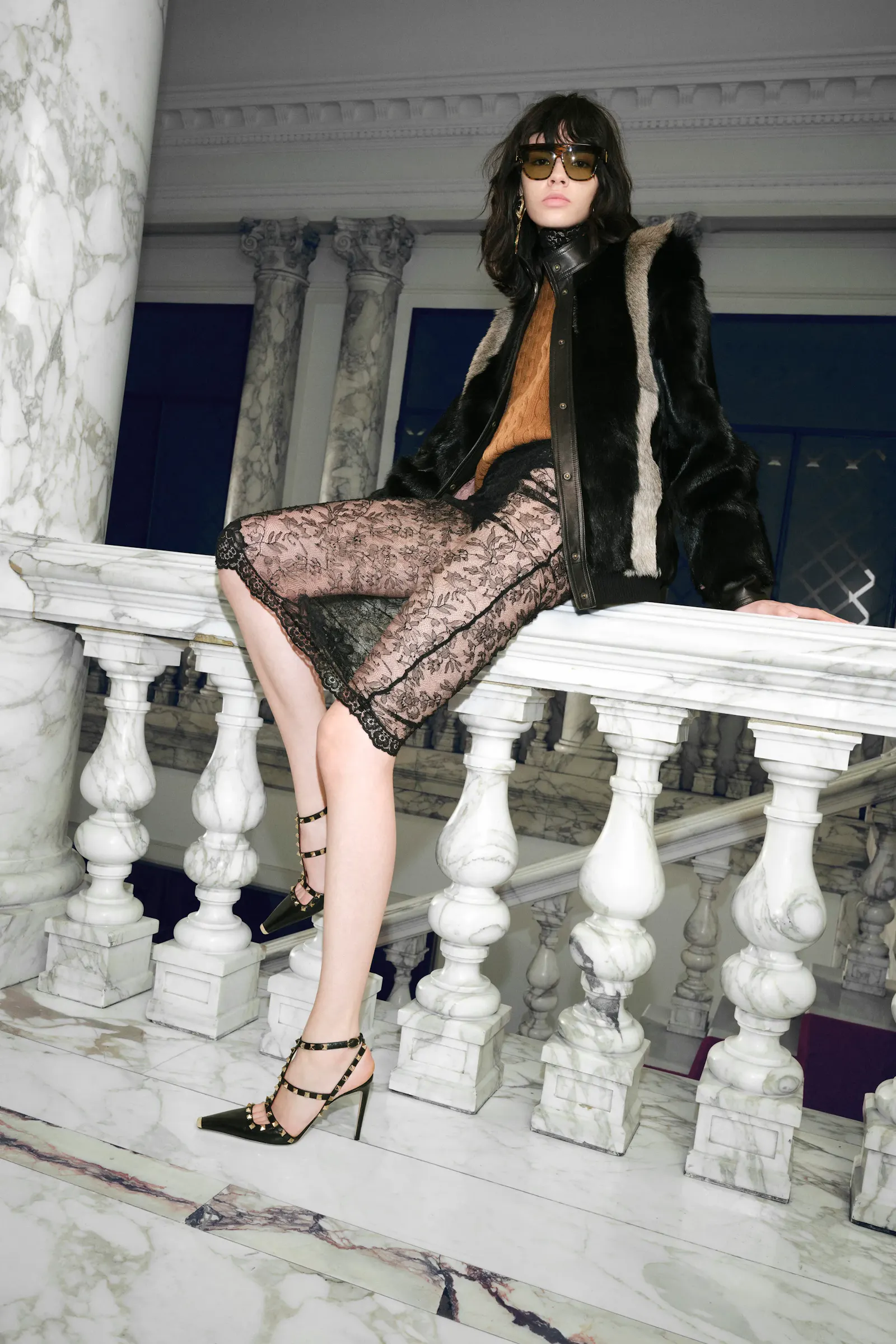
Su TikTok in questi giorni c’è molta agitazione per la reintroduzione in collezione delle iconiche scarpe Valentino Rockstud, un successo commerciale che viene dall’era Chiuri-Piccioli. Alcuni hanno interpretato questa mossa come una mera necessità commerciale, altri invece l’hanno vista come un’intelligentissima rivisitazione dell’archivio del brand. Un timido tentativo di tracciare una linea di continuazione.
La prima cosa che Demna ha detto al suo arrivo da Gucci è stata “Voglio ricordare a tutti cos’è Gucci”, attaccando la questione in maniera programmatica e strategica e sfornando un paio di collezioni di best of piuttosto divisive proprio per la loro volontà di dare uno sguardo attento al passato. Nella pre-collezione appena uscita c’è un riferimento/omaggio fin troppo chiaro all’era di Tom Ford.
Anche Pierpaolo Piccioli, appena messo piede da Balenciaga, ha detto che non voleva creare strappi ma che si sarebbe sforzato di mantenere continuità con chi l’aveva preceduto, addirittura facendosi fotografare in rilassato colloquio con Demna.
Gli esseri umani per dare un senso alla propria vita vanno in terapia e spesso ci rimangono anni. I brand non lo fanno quasi mai perché chi li guida è terrorizzato all’idea di mettere in dubbio certezze granitiche apparenti.
Scandagliare le centinaia di foto su un telefono o le migliaia di prodotti della storia di un marchio è ugualmente lungo, faticoso e avvilente.
Ma non farlo è pericoloso. Soprattutto in questo momento storico in cui non si cerca più semplicemente sincerità, onesta e coerenza. Si cerca impegno.
Un paio di Rockstud costano 950 Euro. Un cifra che oltre ad andare molto oltre il loro valore reale contiene un messaggio piuttosto spaventoso che parla di privilegio, esclusione, provincialismo e mancanza di narrazione.
Un set di valori non esattamente ricollegabile all’universo di Alessandro Michele né in linea con quello che il mondo sta subendo, con la situazione disastrosa in cui ci troviamo.
La borsa Jackie misura media di Gucci costa 3.200 Euro e porta il nome di una donna che nella vita ha avuto molte sfortune ma anche tante, tantissime fortune. Jackie Kennedy Onassis è stata fatta a pezzi da Pablo Larrain nel suo bellissimo film del 2016 ma rimane un’icona di stile, un rimando romantico a un meraviglioso tempo che fu per il cliente medio di Gucci.
Sono due pezzi di storia che se osservati da vicino si sfaldano e perdono consistenza.
D’altra parte, bisognerebbe ricordarlo più spesso, sia Valentino che Gucci sono marchi nati da un’idea molto precisa: la ricchezza conferisce superiorità, anche morale.
Non è un caso che Valentino Garavani fosse un caro amico di Jackie Onassis e che i destini di queste due storie così apparentemente lontane siano in realtà fortemente interconnesse. Gucci e Valentino hanno attraversato decadi e direttori creativi stando sempre vicini alla ricchezza sfrontata, ai club, agli yacht, alle droghe e ha una certa elasticità etica e morale propria di chi nella vita può avere tutto.
Questa è una prospettiva che oggi è molto interessante perché sempre di più i super ricchi hanno necessità di riconoscimento etico.
Peter Andreas Thiel è uno dei fondatori di Paypal, ora co-finanziatore di Palantir, azienda specializzata nell’analisi di big data, coinvolta in azioni molto poco chiare sia con lo stato americano che con quello israeliano. Thiel è gay dichiarato ma ha appoggiato e finanziato la campagna di Trump. È miliardario e ama dare un senso a quello che fa tracciando profonde narrazioni in chiave teologico cristiana. Una cosa nel complesso piuttosto spaventosa.
Nei cinema in questo momento c’è un film sulla vita di Brunello Cucinelli che si chiama Brunello, Il visionario garbato, girato da Giuseppe Tornatore con le musiche di Nicola Piovani. Cucinelli è uno che cita Boezio e San Francesco ma che è stato di recente accusato di mantenere in vita le proprie boutique a Mosca, contravvenendo le sanzioni europee verso la Russia. Un situazione rimasta opaca e mai veramente chiarita.
Gli esempi sarebbero molti ma quello che è di fronte agli occhi di tutti è che i ricchissimi e potentissimi stanno facendo una grande fatica per penetrare e dominare non solo il campo della finanza e della politica ma anche quello dell’etica.
È una storia nuovissima e formidabile che potrebbe sicuramente produrre riflessioni critiche anche nel campo dell’estetica e della moda, cioè qualcosa di più de “La Famiglia” di Demna con personaggi piatti come l’ereditiera e il figo. E sarebbe interessante se questo tipo di pensiero fosse sviluppato dai marchi che vengono amati e comprati proprio da quel tipo di persone.
Fino a qualche anno fa si sarebbe probabilmente arrivati a quel punto in maniera fluida ma ora tutto è bloccato e si respira sempre di più puzza di asservimento e di paura.
Solo che così le cose difficilmente torneranno a funzionare, difficilmente la moda sarà in grado di tornare a sviluppare grandi narrazioni.
È notizia di qualche giorno fa che potete comprarvi una delle residenze di Maison Margiela a Dubai per 3,8 milioni di dollari. Il fondatore della maison, uno degli sguardi più profondamente critici sul capitalismo occidentale, si è ritirato da tempo a vita privata e immagino che, da qualche parte in Belgio, guardi tutto ciò con profondo disinteresse. Forse scorrendo le foto del suo passato glorioso sull’ultimo modello di iPhone.
ROCKSTUD AND OTHER INCIDENTS
Why Fashion Keeps Revisiting Its Own Past Without Understanding It
There are 9,248 photos on my phone. They start in December 2018 and run up to today. Everything from before was inadvertently deleted during the switch from one phone to another.
They mix photos I took myself, images received by message, screenshots and PDFs with no break in between and there is no way to organize them except by scrolling through them one by one. Something I will probably never do.
Almost all of them are meaningless photos. Looking at them again now, I discovered that the very first ones are shots of the stage at the final of X Factor at the Assago Forum in 2018. Ugly images, blurry, without any meaning, because they were taken quickly in an attempt to hold on to something of that atmosphere that was clearly a lot of fun for me.
The problem with documenting the past and rereading it is that if we rely only on our digital memory and not also on a physical medium and an act of will, we risk making serious mistakes.
Taking physical photos required more time, more attention and more money. No one in the pre digital era would ever have taken 10,000 photos in seven years and everyone would have carefully treasured the roll of film from their birthday party, going back to look at it from time to time and building a precise long term memory that was truthful and consistent with what had actually happened.
The lack of selection and attention has turned the story of our lives into a magmatic, indistinct flow that generates melancholy, lack of clarity and lack of meaning.
On the website Tagwalk, an extremely extensive search engine for runway images, there are thousands of photos, maybe tens of thousands. The possible search keys are type, season, city and brand. There is also a ranking based on site traffic that currently places Chanel in first position, Khaite in second, Gucci in third, Ferragamo in fourth and Valentino in fifth.
There is no way to extract images based on relevance to content, meaning to understand which collections had the most meaning, the greatest innovative capacity, the most talented designers. There is no possibility of giving a readable form to all that content. On Tagwalk, next to Valentino’s latest pre collection there is that of Loulou de Saison, who I personally have no idea who that is.
This indistinct mass of images serves almost exclusively to fill mood boards for derivative collections made by untalented designers or by brands with a purely commercial purpose.
Having all this past available, instead of helping us, has become a condemnation. For the average user, a nostalgic glance at the past is enough to calm anxieties about a lack of iconicity but the truth is that nostalgia has become a tool to commercialize fragments of memories without ever providing the tools to understand them.
One of the reasons, perhaps the fundamental one, why fashion seems to move in fits and starts is that we have been completely disaccustomed from rereading the past, from facing it, recognizing it and understanding it. For a long time it was exciting to see designers get rid of everything that came before them, demolishing it without leaving a trace. Demna and Hedi Slimane made this method one of the most recognizable traits of their visions.
Sweeping everything away and starting from zero is one of the most powerful forms of narrative control but also one of the most dangerous.
One of the most striking examples of this revisionist method was the Gucci museum in Florence which, depending on the creative director in charge, bent the brand’s history to their vision, sometimes cutting out entire passages. Frida Giannini was for a long time an unwitting innocent victim.
Recently, though, things seem to be changing.
On TikTok these days there is a lot of buzz about the reintroduction into the collection of the iconic Valentino Rockstud shoes, a commercial success from the Chiuri Piccioli era. Some have interpreted this move as a mere commercial necessity, others have seen it as an extremely intelligent reinterpretation of the brand’s archive. A timid attempt to trace a line of continuity.
The first thing Demna said upon his arrival at Gucci was “I want to remind everyone what Gucci is,” tackling the issue in a programmatic and strategic way and producing a couple of best of collections that were quite divisive precisely because of their desire to take a careful look at the past. In the newly released pre collection there is a reference or homage that is almost too clear to the Tom Ford era.
Pierpaolo Piccioli as well, having just set foot at Balenciaga, said that he did not want to create ruptures but that he would strive to maintain continuity with those who came before him, even having himself photographed in a relaxed conversation with Demna.
Human beings go to therapy to make sense of their lives and often stay there for years. Brands almost never do because those who lead them are terrified by the idea of questioning apparently solid certainties.
Sifting through the hundreds of photos on a phone or the thousands of products in a brand’s history is equally long, tiring and demoralizing.
But not doing it is dangerous. Especially in this historical moment in which people are no longer simply looking for sincerity, honesty and coherence. They are looking for commitment.
A pair of Rockstuds costs 950 euros. A figure that goes far beyond their real value and also contains a rather frightening message that speaks of privilege, exclusion, provincialism and lack of narrative.
A set of values not exactly traceable to Alessandro Michele’s universe nor aligned with what the world is going through, with the disastrous situation we are in.
The medium Jackie bag by Gucci costs 3,200 euros and bears the name of a woman who in life had many misfortunes but also many, many fortunes. Jackie Kennedy Onassis was torn apart by Pablo Larraín in his beautiful 2016 film but she remains a style icon, a romantic reference to a wonderful time gone by for the average Gucci customer.
They are two pieces of history that, when observed closely, crumble and lose consistency.
On the other hand, it should be remembered more often that both Valentino and Gucci are brands born from a very precise idea: wealth confers superiority, even moral superiority.
It is no coincidence that Valentino Garavani was a close friend of Jackie Onassis and that the destinies of these two stories, so apparently distant, are in reality strongly interconnected. Gucci and Valentino have crossed decades and creative directors while always staying close to brazen wealth, clubs, yachts, drugs and a certain ethical and moral elasticity typical of those who in life can have everything.
This is a perspective that today is very interesting because more and more the super rich need ethical recognition.
Peter Andreas Thiel is one of the founders of PayPal, now a co financier of Palantir, a company specialized in big data analysis, involved in very unclear actions with both the American and Israeli states. Thiel is openly gay but supported and financed Trump’s campaign. He is a billionaire and likes to give meaning to what he does by constructing deep narratives in a Christian theological key. Overall, something rather frightening.
In theaters right now there is a film about the life of Brunello Cucinelli titled Brunello, The Gentle Visionary, directed by Giuseppe Tornatore with music by Nicola Piovani. Cucinelli is someone who quotes Boethius and Saint Francis but who was recently accused of keeping his boutiques in Moscow open, in violation of European sanctions against Russia. A situation that has remained opaque and never truly clarified.
There would be many examples but what is in front of everyone’s eyes is that the extremely rich and powerful are making a huge effort to penetrate and dominate not only the field of finance and politics but also that of ethics.
It is a very new and formidable story that could certainly produce critical reflections also in the field of aesthetics and fashion, meaning something more than Demna’s “The Family,” with flat characters like the heiress and the hot guy. And it would be interesting if this kind of thinking were developed by the brands that are loved and bought precisely by that type of people.
Until a few years ago, one would probably have arrived at that point in a fluid way but now everything is blocked and there is an increasing stench of subservience and fear.
This way, things are unlikely to start working again and fashion will struggle to return to developing great narratives.
It was reported a few days ago that you can buy one of Maison Margiela’s residences in Dubai for 3.8 million dollars. The founder of the maison, one of the most deeply critical voices on Western capitalism, has long since withdrawn into private life and I imagine that somewhere in Belgium he looks at all this with profound indifference. Perhaps scrolling through photos of his glorious past on the latest iPhone model.
Date
December 17, 2025
Topic
POST SETTIMANALI
0 comments
Would you like to be the first to write a comment?
Become a member of LA MODA È UNA COSA SERIA and start the conversation.