A conversation with Chinese feminist Li Wen.
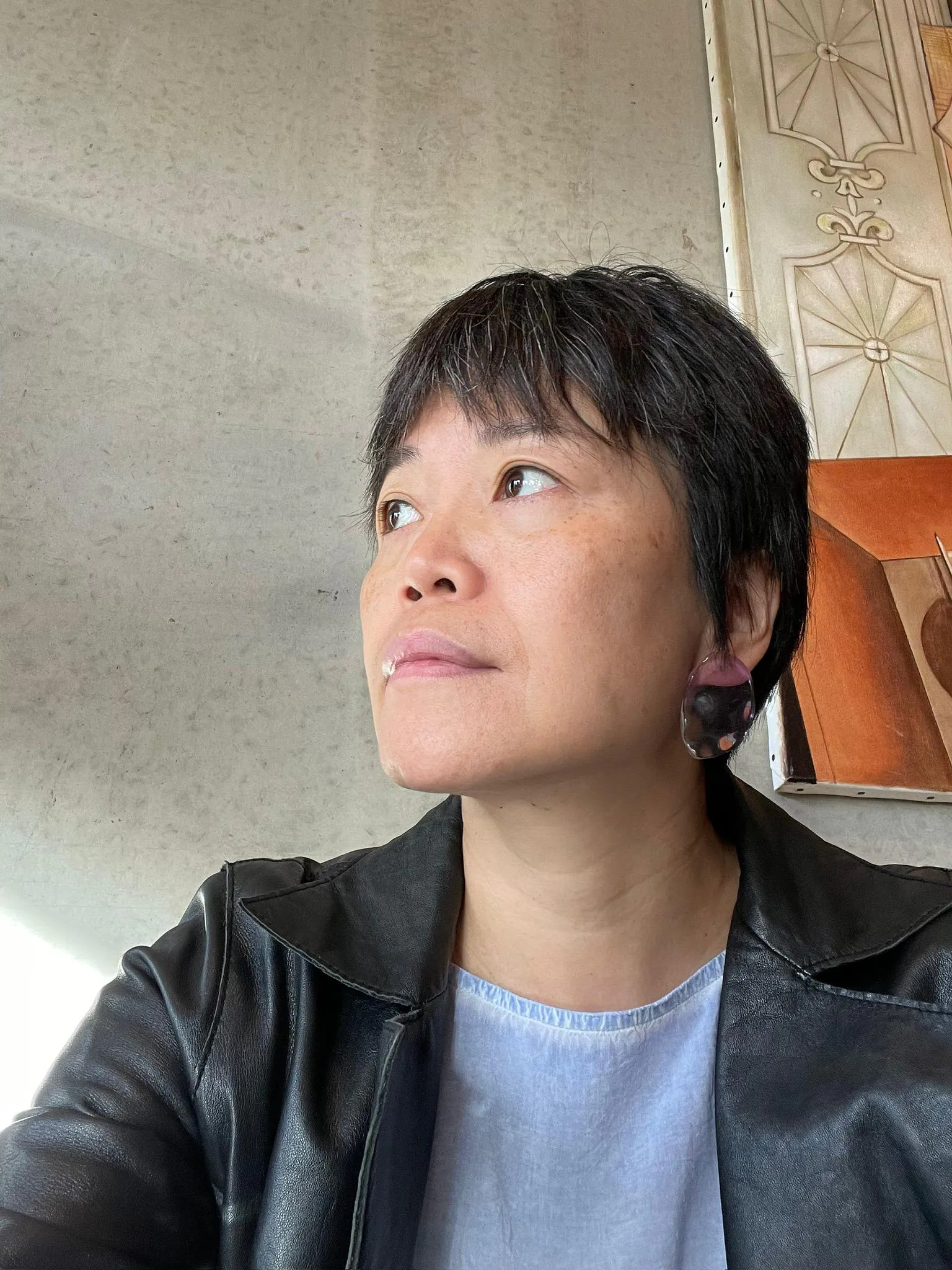
Li Wen left China in 2012. The atmosphere became too suffocating for a journalist like her. “I knew that if I’d stay, one day I’d get myself in trouble”, she says. She has since settled in Berlin and hosts “Seahorse Planet”, a feminist podcast popular with its Chinese audience, despite the fact it’s censored in China.
Li Wen is not going to run out of issues to talk about anytime soon: gender equality in China has diminished rapidly since 2008. Online and offline, feminist voices are shut down for “inciting gender antagonism”. At the same time, Chinas birthrate has dropped to a historical low, because more and more women decide against marriage and childbirth.
Violence against women and the retraditionalization of gender roles are not a uniquely Chinese problem. Yet, the challenges Chinese women face are distinct due to China's political context and the legacy of the one-child-policy. The Chinese feminist movement that has emerged in these circumstances deserves much more attention in the West.
I talked to Li Wen about the regress of women’s rights in China, how Chinese feminists are fighting back, and what Western feminists can learn from feminist struggles in East Asia.
Emily: One of your most successful podcast episodes is about 恋爱脑, the “romantic brain” (Opens in a new window), the female obsession with romanticism. In this episode, your interview partner Ru Ru explains how she broke free from the “romantic brain” by dividing her needs up. She decided to find one companion for watching a movie, one for eating together, one for sexual things, and so forth.
Why did this episode spark so much reaction in your Chinese audience?
Li Wen: The term “romantic brain” had just come up when I first published this episode a couple years ago. After publishing the episode, I immediately got a lot of enthusiastic responses from young women. In the heterosexual mainstream of Chinese society, these women had rarely come across a narrative to legitimize their needs for emotional support, sex or companionship. They found it in my podcast. And that drove men crazy.
You received a lot of backlash for this episode, right?
Yes, there were a lot of angry men who reported my episode to the Chinese internet platforms. From then on, my podcast was completely censored in China. I believe this episode has touched upon a fundamental rule of the patriarchal ideology: Once women instrumentalize men in the same way men make use of women, male dominance is violated. And that makes them very angry.
We see a similar dynamic with female comedians in China, right? They get massive backlash for even just the simplest jokes about men.
Right. The Chinese standup comedian, Yang Li, received immense online bullying for her jokes about men who were “so average and yet so full of confidence”. She had to stop posting on social media and step down from the stage.
During China's communist era, the housewife lifestyle was considered “Western decadence” in China. But today, Chinese women are being pushed back into a domestic role. China has also dropped sharply in the World Economic Forum's Gender Gap report to 103rd out of 146 places.
How did China go from Mao Zedong’s “Women hold up half the sky” to the dire state of gender equality today?
I will try to briefly summarize one century's struggle of feminism in China (laughs). Equal gender rights was a pillar of the Communist ideology. In the early 20th century, women gained rights for two reasons: they participated both in the May Fourth movement and in the Communist revolution and helped the Communist Party to gain power. And second, the Communist Party at that time really needed women in their power struggle. But that didn't mean women were really equal to men. The elites and leaders were still mostly men.
During the Opening and Reform time from the 1980s, a lot of movies, TV series and books came from Taiwan and Hongkong to China. Both had never gone through the Communist revolution. Their cultural products were full of conservative ideology. I was a kid at the time, and I remember the communist movies and TV series I watched. In these movies, women were valiant, they were strong. They worked in the field driving tractors and trucks. They were called comrades, just like men. But in the Taiwanese or American movies, women were called “Misses”, they stayed at home and cooked for their family.
I could sense that the ideology department of the Chinese government was not actually against the subordination of women. They just opposed a so-called “decadent lifestyle”, in which people dressed up nicely, went out for dances, and such. So in the 1990s, 女德班, classes on female virtue, started appearing in universities all around the country. And we all know what “female virtues” mean…
… submission, being pretty, being quiet…
My daughter was born in 2001. She went to a kindergarten in Shanghai, and one day she told me that all the girls in her class wanted to be housewives. I was shaken to my core when I heard that. When I grew up, my dream was to become the next foreign minister of China. Then I realized that the education, the TV series, and the role models around her were completely different from my generation.
To me it’s funny that we call this process re-traditionalization. In Europe the housewife is a very modern invention. Women worldwide are being pushed back into this “traditional role” that was never really a cultural tradition to begin with.
If you define housewives in terms of this vintage American middle class idea, yes. The Chinese term for housewife, 家庭主妇, is modern too. But the essence is the same. In patriarchal history women have always been forced to perform free labour at home for men. That’s it.
Can you give some insight into how feminists organize in a country that basically doesn't allow independent political organisation?
There was a brief period of feminist activism in the Western sense, particularly after the 1995 UN World Conference on Women in Beijing. At the time, China was still under sanctions because of the Tiananmen Square massacre. Beijing saw the Conference as an icebreaker to the West. The event was historical, both in terms of its scale and the feminist institutions that sparked from it, like the now defunct Anti-Domestic Violence Network founded by Chen Mingxia. So between 1995 and 2008, there were feminist NGOs in China and feminist protests covered up as performance art.
2008 was a watershed that ended this period of Western-style activism, for several reasons: Protests were happening in Tibet and Xinjiang, and after that Beijing cracked down on lots of NGOs, including feminist institutions. At the same time, China rose to the second biggest economy in the world. This gave the government enough confidence to crack down on civil society without caring about Western criticism. The Arab Spring and the downfall of Lybian leader Muammar Gaddafi intensified Beijing’s crackdown on independent activism.
After that, a new generation of feminists started a kind of online grassroots feminism on platforms like Douban [a Chinese forum to discuss books, films and personal interests] and Weibo [a Chinese microblogging platform, similar to Twitter/X]. These digital feminists shifted away from negotiations with the government to women's issues in the private sphere. They don't even use words like patriarchy or feminism, because these terms are likely to be censored. Instead they ask questions like, should my mom do so much housework? Do I want to grow up like her? Why does my brother inherit the house, and not me?
All this points to the very origin of women's oppression: the patriarchal family. A whole generation of young girls' have had their perception about their rights reshaped by these discussions. I think this focus on the private sphere is the biggest difference between Eastern and Western feminism.
Less and less Chinese women are willing to marry or have kids. In South Korea women started the 4B movement, which advocates against marriage, childbirth and sexual and romantic relationships with men. Why did these movements come up in East Asia specifically?
In South Korea women can establish NGOs, they have protested on the street a lot of times. But did that change anything? Not really. Because changing politics through protest and advocacy doesn’t always work. In desperation, the South Korean women, especially the radical feminists, started the 4B movement. I think we see a similar phenomenon in China.
Much of Western media thinks that nothing ever happens in China because we can’t go on the streets. But actually a lot of things don't have to happen on the street. Choosing to not get married or have children is a big enough decision. It’s called non-cooperative movement. They don't cooperate anymore.
Absolutely, I think in the West there’s a hope that one day, finally, protests will erupt in China. So we easily overlook other important shifts happening. Maybe you can expand a bit on this idea. What are Western feminists overseeing and what could they learn from a look at their sisters in East Asia?
I'm going to offend a lot of people, including you, when I say this.
That’s okay (laughs). I can deal with that.
I think the so-called third feminist movement in the West is a big distraction from the real issues. I'm not saying nothing good came out of it. But what I see as a result is a stagnation of women's rights. The previous generations of feminists knew very well what power is. Power is political power, money, freedom of movement for women.
As I see it, the public attention in the past decade has been too much occupied on issues of sexual and gender identification. And that gave men an easy way out. We feminists in the West cannot unite ourselves to focus on the root issue. The root issue is that women are excluded from power structures. For example, in the German parliament, women still make up less than a third of the representatives.
I can understand this perspective. When I grew up, girl boss feminism was a big thing. Everybody thought, women can do everything, there is no glass ceiling anymore. Maybe this neoliberal idea led us to cast aside equal pay and political representation.
I was a victim of this girl boss illusion too. There is something specific to the Chinese girl boss feminism: middle-class girls born into a one-child family were set on a route to compete in China's education system. Because China’s education system is both sophisticated and competitive, they enter college with a high self esteem: They are very well educated and profited from China's booming economy. And suddenly, upon entering university, they are confronted with beauty standards that weren’t important in school before: They have to be thin, pretty, and wear make-up. And still, no matter how competent they are, their mediocre male classmate might get the job ahead of them.
This contrast is why Chinese feminists think much more radically. I call it radical because it is perceived as such by society, but I don't think it's radical at all. Chinese feminists are demanding power for women in every sector. They are confident, unapologetic and stick to the core issues.
There is a sense of disillusionment among feminists worldwide at the moment, especially in light of recent cases of extreme violence against women, like Gisèle Pellicot and Jeffrey Epstein. Feminist struggles sometimes just seem ceaseless.
Many women today are wondering, “how can I live with men at all?” What answer do Chinese feminists have to this question?
There is one good thing about social media: Women can speak out on a scale they were never able to before. Now Chinese women start to see each other. And they see not only how prevalent male exploitation and violence are in our society. They realize how great women are. Chinese feminists have moved from misandry to creating a women-centred culture, a sort of modern matriarchal culture.
A matriarchy is about centering women and children, and not about attacking men. Focusing on your hatred towards men doesn't create a new social order. We want to create a woman-centred culture to find out what society can look like if women are the agenda setters.
For me too, a big step in recent years was to make more space for the women in my life.
As long as we give men our attention and energy, even if we fight against male oppression, we still give them power. But when we devote our energy and attention to women, we can dissolve the patriarchal power structure much more effectively.
Actually, this is nothing new. In the 1970s and 80s, there was a separatist movement among Western feminists. But not enough women followed, because the majority of women were still hoping that men would join the women's rights movement. But this new generation of disillusioned feminists knows it’s futile to spend your life convincing men to join you. It's much more effective to start your own community and let men follow.
To me, feminist activism is indivisible from the struggle for queer rights. How are lesbians, bisexual women, and transgender women are doing in China?
Both gay men and lesbian women are discriminated against in China. However, in Chinese history homosexuality was tolerated as as long as one fulfills their duty to get married and have children.
The government doesn’t openly persecute gays and lesbians anymore since the 1990s. But they don’t intervene when for example parents send their homosexual kids to so-called “schools” that are basically punishment centers. They serve to “correct” the children’s sexual orientation. In these schools, there is a lot of physical violence, including the use of electric shocks. For homosexual kids, this is the biggest nightmare.
I think gay men in China are having a comparatively better life than lesbians. There are more gay clubs than lesbian bars, and gay novels and mangas are very popular with young people.
Sometimes gay men or lesbian women get married just so their parents will stop bugging them. In this case, lesbians suffer more because they have to play the traditional women's role. They have to bear children. They do more chores and serve the family. So even in the queer community, this power imbalance between men and women is very obvious.
Li Wen, thank you for agreeing to talk with me. I thoroughly enjoyed this conversation.
Thank you.
Date
April 9, 2026


