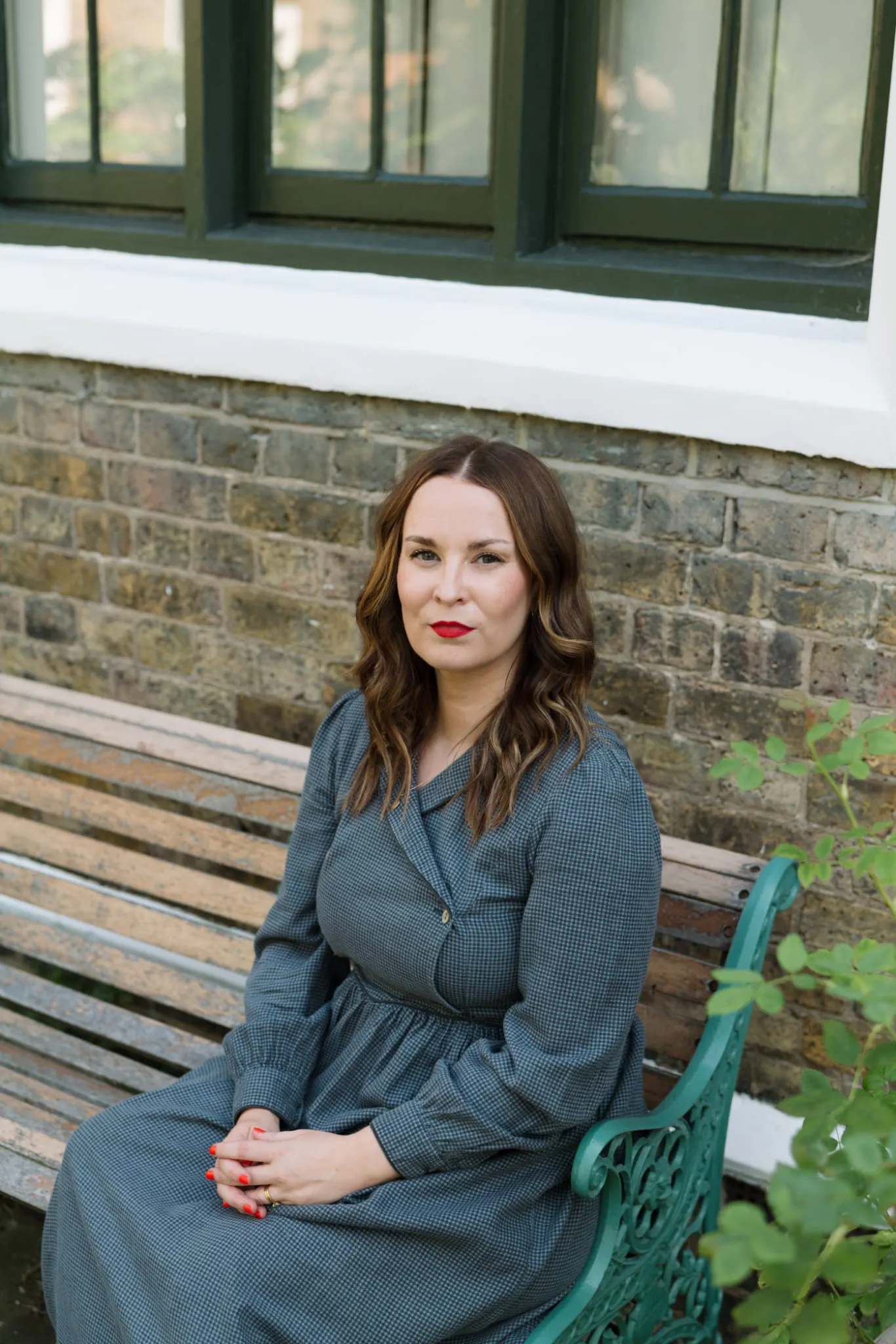
In October’s subscriber-exclusive interview, Hollie Starling — editor of Book of the Month Bog People: A Working-Class Anthology of Folk Horror (Öffnet in neuem Fenster) — speaks to Tallulah Brennan about the current popularity of folklore, far-right invocation of soil, land and indigeneity, and the real monsters that roam this green and pleasant land.
To start, a couple of quick-fire questions.
Whilst writing your story ‘Yellowbelly’, and whilst editing the anthology as a whole, what was the most important book or resource you kept by your side?
I’d love to say I got into horror though M.R. James or another literary grandee, but it was really the Pan horror anthologies, a pulp series that my mum collected and whose disgusting covers mesmerised me as a kid before I could read them. I even loved the name of the editor — Herbert van Thal — who I pictured becloaked in a crypt somewhere. Many of the stories are as pulpy as the covers but some were bone-chilling and I can still remember the thrill of discovering an idea truly too awful to comprehend. Something between the Pan anthologies and The Bloody Chamber was my highest hopes for this collection.
I also found a great little book called Folk Opposition by Alex Niven. It’s a short but incredibly wide-ranging volume concerned with the ‘pastoral myths of Englishness’ and its reductive traps and hypocrisies, and is the perfect primer to Bog People.
Of the folk horror trio, which are said to have founded the genre — The Wicker Man, The Blood on Satan’s Claw, and The Witchfinder’s General — which one do you love the most, and why?
The first ‘grown up’ film I ever remember watching was The Wicker Man. It was like nothing I’d seen before and I loved it immediately, even though I found Christopher Lee very sinister despite his smooth seventies’ wardrobe. For a story of human sacrifice it’s quite bloodless, which is the only reason I can think my mum let me watch it. Summerisle may be a luscious semi-tropical island but it still feels very familiar and populated by all the characters you might find in Postman Pat — a shopkeeper, a publican, a school-teacher — but everything is slightly off-kilter. The classroom was like mine but odd things could happen there. I remember that surreality being really exciting, I think it got its hooks in me because of the revelation that very ordinary settings can be anything but. I still watch it at least once a year, around May Day if possible.
Datum
27.10.2025
Kategorie
Author interviews
0 Kommentare
Möchtest du den ersten Kommentar schreiben?
Werde Mitglied von Caught by the River und starte die Unterhaltung.