Preparations are underway, interest is high, and we have lots of work. We are learning a lot in the process and meeting wonderful people who don't hesitate or procrastinate but want to roll up their sleeves and implement smart ideas with us. It's fun to organise the training camp because with every call, things become clearer and we can now imagine what meaningful training might look like for all four training strands, what content is needed and how it can be put together over the weekend with various scenarios happening. Today, I'm going to introduce you to the second of our four topics for which we are currently designing training content.
Supply and logistics
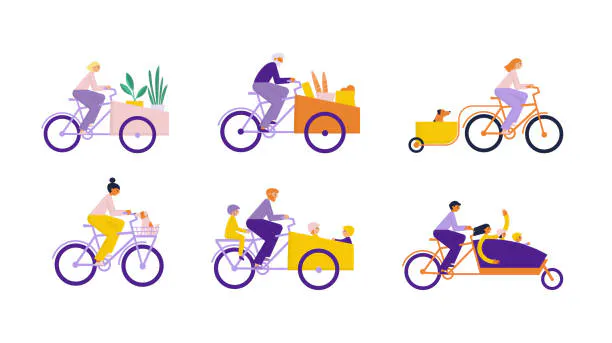
It's about supply (of food) and the logistics without which this would not be possible. The question during the design and development of this training strand is: how do I provide people with food in an emergency – where do I get it from, how do I transport it and how do I prepare it? Behind these three fundamental and obvious questions lie countless others, which is why this training is not entirely straightforward. Originally, the idea was to deal with the aspects of food & supplies and transport separately, each in a separate training strand.
But we quickly realised that food supply in emergency situations does not work without transport and logistics, and that in this case, learning about growing XY or sustainable seeds is pointless. That's why two training strands became one, and even though this increased the complexity, more detailed planning is slowly taking shape. We have people from Arbeitgemeinschaft baeuerliche Landwirtschaft AbL (a union for rural agriculture, connected to La Via Campesina), networks of solidarity-based agriculture, the Cargobike Bubble and Solibus e.V. (a group supporting activists with busses to get where they need to be) on board. Currently, the focus is on integrating Küfa structures (solidarity kitchens) that not only cook but also offer training for participants, and together we are working on something amazing. We also try to integrate groups such as Solibus e.V (Öffnet in neuem Fenster). and a solidarity kitchen not just as service providers for our camp but understanding them for what they are: political actors who can and want to be involved in our political work, its planning and design.
What's it all about?
Participants will train for four days, knowing that during the weekend they will be responsible for providing food for the camp under stressful conditions, with a variety of scenarios (= surprises) happening. This does not involve three courses and a dessert, but rather good food that will feed a large number of people.
Where do I get food, what can I offer in return, how do I get everything from A to B, what and how do I prepare it, and how do I distribute it? What if more people show up unexpectedly, the power goes out, the cargo bikes have a flat tyre, the parking space for the fully loaded bus is tiny, or the planned route is no longer passable? We'll see what comes of it and what ends up on our plates.
Practising something like this means, above all, recognising everything that needs to be considered when solutions have to be found quickly. It's about understanding contexts and practising working creatively with what is initially accessible due to geographical proximity. It is important to know where to go and what to look for in an emergency, and how to communicate with people across (ideological) divides, because we cannot assume that we will always find supportive organic farmers and community-supported agriculture structures who will provide us with food without hesitation and perhaps even without anything in return, in order to care for those affected during an emergency. So we need good arguments, calm communication and consideration of what we might be able to offer in return. At the beginning, we didn't realise that all of this would end up in a training course that is ‘only’ about food, and it illustrates exactly what we have noticed time and again since we started working on the content of all four topics: the obvious often looks different than we initially thought.
Who do we want to address?
In principle, such training can be helpful for everyone – for those who are already involved in (emergency) care, who are organised in solidarity kitchens or networks of solidarity-based agriculture, as well as for anti-fascists, neighbourhood assistance groups and climate activists who are considering where and how to get involved in their neighbourhood when flooding occurs or when there is a fundamental need to provide food to marginalised communities.
In all cases, organisation, knowledge of local conditions and the ability to respond to them are required. It does no harm to be a little better prepared so that we can act when the worst comes to the worst.
Datum
01.03.2026
Kategorie
English
0 Kommentare
Möchtest du den ersten Kommentar schreiben?
Werde Mitglied von disrupt! und starte die Unterhaltung.

