December 2023
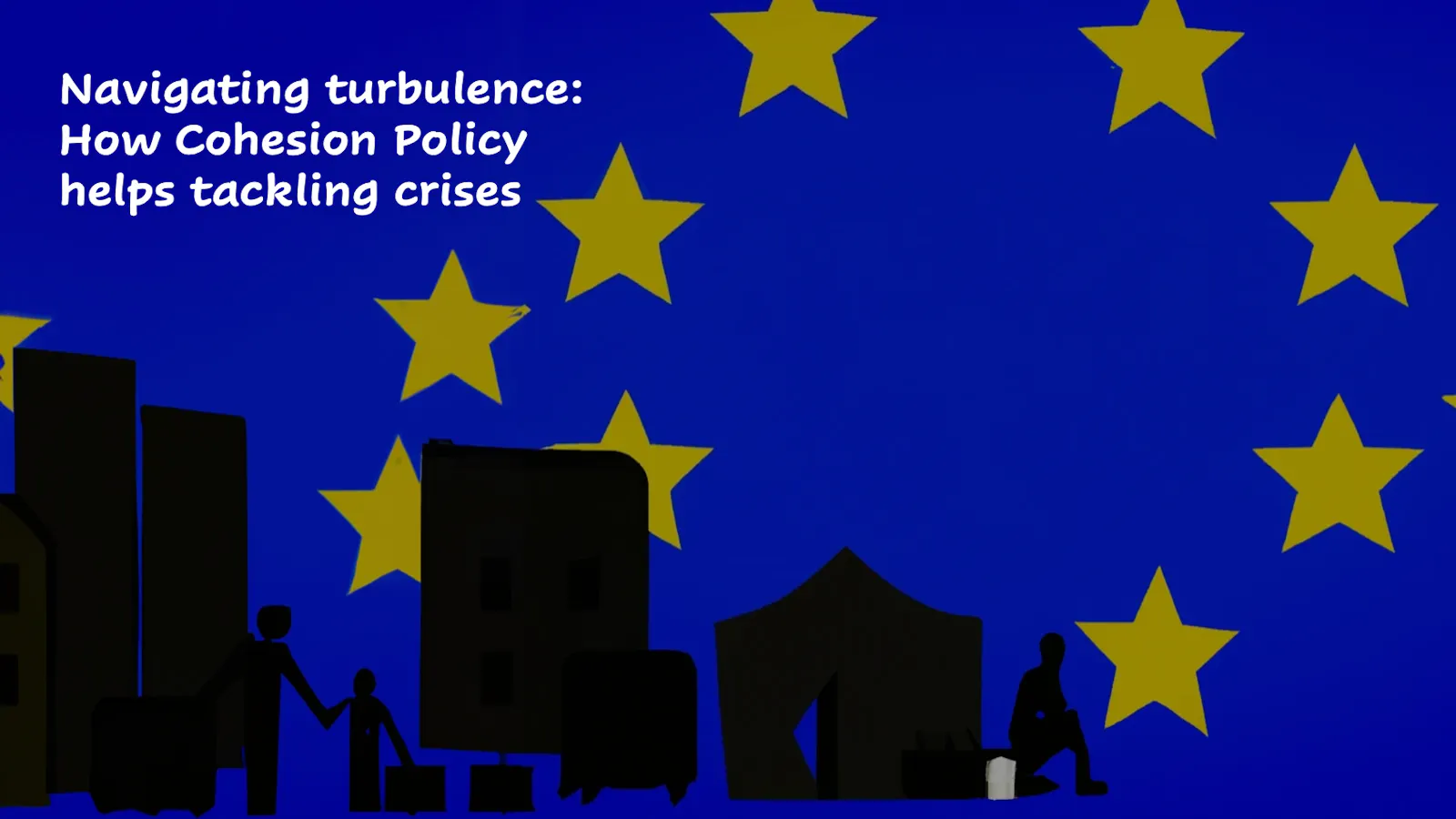
In the face of the COVID-19 pandemic and the ongoing war in Ukraine, Europe found itself navigating through unprecedented challenges. The impacts of these crises extend beyond immediate health concerns and geopolitical tensions, affecting the socio-economic fabric of regions and societies.
The EU has been important in responding to the crises and cushioning their effects on local and regional development. As there is no allocated EU-level reserve, Cohesion Policy is often perceived as a source of emergency funding. Given its overall financial volume, it is the most important part of the EU budget that can be mobilised to address various aspects of unexpected shocks.
This blog post delves into the distinctive instruments deployed to counter the effects of the COVID-19 pandemic and the crisis caused by the war in Ukraine. The crises instruments under the umbrella of Cohesion Policy include CRII/CRII+, REACT-EU, CARE/CARE+, FAST-CARE, and SAFE. Each instrument has unique characteristics and funding allocations. These mechanisms aimed to provide liquidity, flexibility, and support for sectors most affected by the crisis.
Mitigating the socioeconomic impact of the COVID-19 pandemic
The COVID-19 pandemic has left an indelible mark on the global landscape, impacting economies, societies, and health systems. In Europe, the pandemic's effects were felt unevenly, with significant regional variations in socio-economic development. Looking beyond the devastating implications on people’s health and excess death rates, the debate about the impacts on cohesion concerns the impact on the socio-economic development and prospects of regions in Europe. Gross Value Added (GVA) data for 2020 allows for a comparative regional analysis of changes in the wake of the pandemic. Southern Europe, in particular, faced the most detrimental impacts, while parts of Northern and Eastern Europe were less affected. The pandemic's economic consequences mirrored those of the 2008 financial crisis, potentially reinforcing existing North-South imbalances in the EU. The lowest declines in GVA are to be found around the Baltic Sea as well as in the Netherlands, Ireland, Luxembourg, Romania, and some regions in Bulgaria. See also our earlier blog post on the impacts of the pandemic (Öffnet in neuem Fenster).
Recognising the urgent need for action, the EU swiftly implemented the Coronavirus Response Investment Initiative (CRII) and CRII+ packages in March and April 2020, respectively. These initiatives modified regulations to enhance the flexibility of Cohesion Policy funding, allowing the redirection of resources toward COVID-19-related measures. CRII/CRII+ measures included:
100% EU-financing option.
Reallocation of financial resources among funds, categories of regions, and priorities.
Increased flexibility in financial instruments and simplified re-programming procedures.
By July 2022, EUR 23 billion from Cohesion Policy funds had been mobilised, with 320 programmes amendments processed by DG REGIO.
Building on the success of CRII/CRII+, REACT-EU, adopted in December 2020, extended the 2014-2020 funding period for Cohesion Policy programmes. With an additional EUR 50.4 billion, REACT-EU contributed to a green, digital, and resilient recovery, aligning with the NextGenerationEU goals. Key allocations under REACT-EU:
EUR 12.8 billion for labour market measures, with significant support to Italy and Spain.
EUR 8.7 billion for healthcare support, addressing economic measures for affected sectors.
EUR 8.7 billion for green economy investments, emphasising Italy and Spain.
Flexibility in transfers among ERDF and ESF, 100% EU-financing, and no thematic concentration requirements.
Across the board, CRII/CRII+ and REACT-EU measures facilitated the reallocation of resources, eased procedural steps, and expanded the scope of eligible interventions, making Cohesion Policy more responsive to the emerging needs during the pandemic.
As the COVID-19 pandemic posed challenges to regional development, the EU Cohesion Policy, through initiatives like CRII/CRII+ and REACT-EU, has proven instrumental in mitigating the socio-economic impact. By providing liquidity, simplifying procedures, and enhancing flexibility, the EU has demonstrated its commitment to fostering resilience and solidarity among member states, ultimately steering the ship of regional economies through the storm of uncertainty.
Responding to the Ukrainian refugee waves
As a result of the Russian invasion of Ukraine, almost one-third of Ukrainians have been forced from their homes. One year ago, in December 2022, there were more than 7.8 million refugees recorded across Europe, particularly women and children, make up around 90% of the Ukrainian refugees. The war has changed the migratory situation in many EU countries significantly and the distribution of refugees across member states is highly imbalanced. Most of the refugees recorded across Europe are now in Central and Eastern Europe. The dynamics of labour migration, cultural proximity, and the common border with Poland have positioned it as a key player in providing refuge, hosting a significant portion of the displaced population.
The influx of refugees has brought forth multifaceted challenges for regions receiving them. From accommodation and social services to healthcare, social services, education, and labour market integration, local authorities have been stretched to their limits. The differences between transit and destination countries, as well as between urban and rural areas, have further complicated the situation. See also our earlier blog post regional sensitivities to the consequences of the war in Ukraine (Öffnet in neuem Fenster).
In response to this crisis, the EU swiftly proposed and adopted a series of instruments under the EU Cohesion Policy framework. The Cohesion's Action for Refugees in Europe (CARE) initiative, adopted in April 2022, introduced flexibility mechanisms within operational programmes. These mechanisms included 100% EU-financing, retroactive eligibility, and simplified reporting procedures, among others.
The CARE+ regulation, adopted in April 2022, complemented CARE by providing additional pre-financing to member states under REACT-EU. This additional funding aimed to alleviate the financial burden on member states dealing with the most significant influx of refugees. The regulation also introduced flexibility measures like a unit cost linked to basic needs and support for persons granted temporary protection.
To address ongoing challenges, the EU proposed the FAST-CARE regulation in June 2022, adopting it in October 2022. This regulation further increased flexibility by allowing cross-financing, transferring financial allocations, and widening eligibility for operations addressing war-induced migratory challenges.
The interconnected objectives of CARE, CARE+, and FAST-CARE focus on providing emergency assistance to refugees fleeing Russia's invasion of Ukraine. These measures span short, medium, and long-term goals, including immediate relief, integration activities, and community-based support.
While the uptake of these flexibility mechanisms was initially slow, Managing Authorities adapted swiftly. The increase in the EU-financing rate for an additional accounting year emerged as a widely utilised mechanism, demonstrating the effectiveness of these initiatives in supporting regions grappling with the refugee crisis.
Cohesion Policy, through initiatives like CARE, CARE+, and FAST-CARE, showcased its adaptability and effectiveness in responding to unforeseen crises. As regions work towards integrating displaced populations, the success of these initiatives highlights the importance of a cohesive and flexible policy framework in times of crisis.
Cohesion Policy responds to the energy crisis post Russia's war on Ukraine
The ramifications of Russia's war on Ukraine created a significant energy crisis that has reverberated across Europe. It has led to soaring energy prices, particularly affecting energy-intensive industries. Europe's heavy dependency on energy imports from Russia, especially in terms of gas, has exposed vulnerabilities in the continent's energy security. Sensitivity indicators, including energy intensity, gas and oil imports, solid fossil fuel imports, and employment in energy-intensive manufacturing, highlight the intricacies of the crisis.
Poland emerges as one of the most sensitive countries to the energy crisis, with Bulgaria, Finland, Greece, Slovenia, Hungary, Slovakia, Czechia, Germany, and Estonia also facing considerable challenges. On the other hand, regions in Ireland, Spain, France, Italy, Cyprus, Austria, Denmark, and parts of Sweden appear less sensitive. See also our earlier blog post regional sensitivities to the consequences of the war in Ukraine (Öffnet in neuem Fenster).
The EU responded swiftly to the energy crisis by launching the REPowerEU Plan in May 2022. This comprehensive plan aims at reducing dependence on Russian fossil fuels and fostering a green transition. One integral component of this plan is the SAFE instrument, part of REPowerEU, which leverages Cohesion Policy funds to address energy-related challenges.
The SAFE instrument introduces flexibility mechanisms aligned with previous crisis instruments. Notable features include:
100% EU-financing for operations addressing the energy crisis, supporting SMEs affected by energy price increases, vulnerable households, and workers under short-time work schemes.
Retroactive eligibility of operations from February 1, 2022.
Widened eligibility for operations before programme approval.
Inclusion of operations implemented outside the program area but within the member state concerned.
A territorial impact assessment conducted for the European Committee of the Regions emphasises that while the REPower Plan may have short-term negative effects on various regions, the long-term positive impacts will likely outweigh them. This underlines the importance of financing measures to counter the direct and indirect negative impacts of the energy-related challenges stemming from the current circumstances. As Europe navigates the complexities of energy security, REPowerEU and SAFE showcase the adaptability and effectiveness of Cohesion Policy in responding to unforeseen crises, reinforcing the importance of a cohesive and flexible policy framework.
Conclusions
In the face of interconnected crises, Cohesion Policy stands as a resilient framework, adapting to dynamic challenges. The instruments deployed demonstrate a commitment to flexibility, rapid response, and a focus on the diverse needs of affected regions and communities. Cohesion Policy appears to be a cornerstone for fostering solidarity and resilience across the European Union. Still, Cohesion Policy cannot be EU pocket money, reallocating its resources whenever a crisis emerges, or new instruments are set up.
Currently, an ex-post evaluation of the various crises response instruments under Cohesion Policy is ongoing. In 2024 it will present its findings, showing to what degree the various instruments have achieved their objectives.
by Kai Böhme
Datum
06.12.2023
Kategorie
Cohesion (policy)
0 Kommentare
Möchtest du den ersten Kommentar schreiben?
Werde Mitglied von spatialforesight und starte die Unterhaltung.