From the failed ethno-nationalist revolt in the early 1990s to the triumph of MAGA extremism - A history of the Republican Party, Part II
By Thomas Zimmer, March 14, 2026
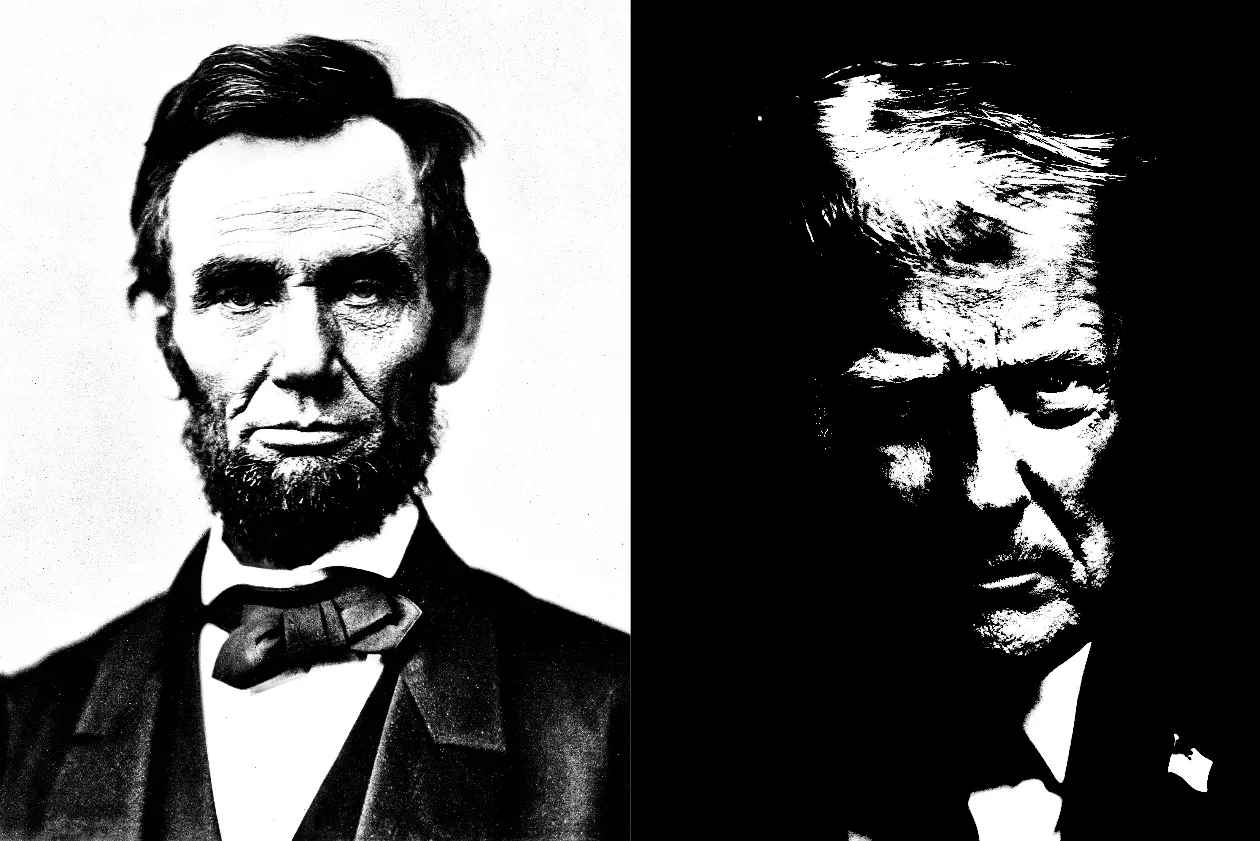
This is Part II of a two-part series on the history of the Republican Party. Not a total history of the GOP and the American Right since the 1850s, of course – but an attempt to identify some key moments and dynamics, to come up with a framework for how to think about that crucial question: How the hell did we get here?
Part I, which you find here (S'ouvre dans une nouvelle fenêtre), covered a lot of ground from the GOP’s anti-slavery origins in the middle of the nineteenth century to the party emerging as the parliamentary arm of the American Right, dominated by the conservative movement, by the end of the Cold War. I obviously recommend reading Part I first – but if you want to jump right in here, don’t worry, this second part should also work as a stand-alone exploration of the past forty years of Republican history. So, strap in for: The ethno-nationalist revolt under Pat Buchanan and the GOP’s aggressive embrace of “culture war” politics in the 1990s; the mainstreaming of militant nativism, the hard turn against immigration, and the explicit embrace of the surveillance state after 9/11; the Right’s unhinged reaction to the first Black president and the rise of Donald Trump; and the question of what might become of the Republican Party in the future.
The extended intro to this piece is free for everyone. If you want to read more than the preview or gain access to the audio version of the essay, please consider becoming a paid member of Democracy Americana, which is solely funded by readers and constitutes my main source of income as an independent writer.
Without your support, I will not be able to continue this work. Please know that I am immensely grateful for your generosity!
Not ready yet for a paid membership? You can subscribe to the free version of the newsletter:
A radical revolt after the end of the Cold War
By the early 1990s, the Republican Party had become a recognizably conservative force on an accelerating rightward trajectory, as the conservative movement had managed to define the GOP’s agenda and identity.
To an unsuspecting observer, it may not have appeared like that on the surface. After all, Ronald Reagan was succeeded by George H. W. Bush, a distinctly moderate political figure, certainly by today’s standards. However, Bush was very unpopular with the party’s ever ascending radical wing: His centrism on the domestic front they regarded as an anachronism, his foreign policy vision of a “new world order” (S'ouvre dans une nouvelle fenêtre) characterized by multilateral cooperation they despised as a sellout of America’s true interests. Bush presided over a party whose center of gravity was shifting rapidly away from the mainstream of American society on many key political, social, and cultural issues. Spurred on by the Religious Right, for instance, it was adopting the position of militant anti-abortion activists; the GOP was also embracing a reflexive anti-environmentalism as a key part of its political identity – climate change denialism became a pervasive posture among Republican elected officials.
More and more, the GOP was devoted to the interests and sensibilities of two constituencies only that were united in a sometimes awkward alliance against liberalism and any attempt to level hierarchies of race, gender, religion, and wealth: A white conservative base that tended to define America – “real America” – as a predominantly white, Christian, patriarchal nation; and a relatively small elite of business people and wealthy donors. Strategically, the Republican Party faced a dilemma: In a pluralizing society that was generally moving away from such a vision for the country, the GOP would either have to find a way to broaden its appeal – or be destined to struggle finding a democratic majority. Republicans, however, were neither willing to widen their focus nor accepted the prospect of relinquishing power. It was the hour of those who favored a third option and identified the constraints of democracy itself as the real problem. They were determined to transform the political system in a way that would allow them to hold on to power without majority support, even against the explicit desire of a growing numerical majority of the electorate.
Immediately after the end of the Cold War, ethno-nationalist forces inside the Republican Party believed their time had come to stage a revolt against the GOP establishment. Uniting behind Pat Buchanan as their standard bearer, they challenged incumbent President George H. W. Bush in the 1992 Republican primaries. Rightwing pundit Joe Sobran, one of Buchanan’s closest confidants and advisors, described the project (S'ouvre dans une nouvelle fenêtre) of the self-proclaimed “paleo-conservatives” like this: “Now that democracy has overthrown communism, we can turn to the problem of how to overthrow democracy.”
Buchanan openly professed an aggressive nationalism and explicitly embraced a vision of white Christian domination. His hostility towards the party leadership endeared him to a conservative movement that emerged frustrated from twelve years of Republican rule in the White House. Instead of actually implementing the rightwing agenda, conservatives bemoaned, Reagan and Bush had caved to establishment pressure and appeased liberal domination.
But the party elite’s tentativeness and lack of conviction had not been the only obstacle, according to those around Buchanan. They came away from Republican rule in the 1980s convinced that controlling the executive was insufficient on a more profound level: Politics, they believed, was ultimately downstream from culture, so to change the country’s trajectory and roll back the ongoing liberalization of American life before it was too late, the Right needed to change course. Buchanan was instrumental in shifting the Right’s focus more explicitly to what came to be called the “culture wars.”
Date
14/03/2026
3 commentaires
Souhaitez-vous voir les commentaires ?
Devenez membre de Democracy Americana pour rejoindre la conversation.