New Europeans steps up advocacy campaign following success in Brussels
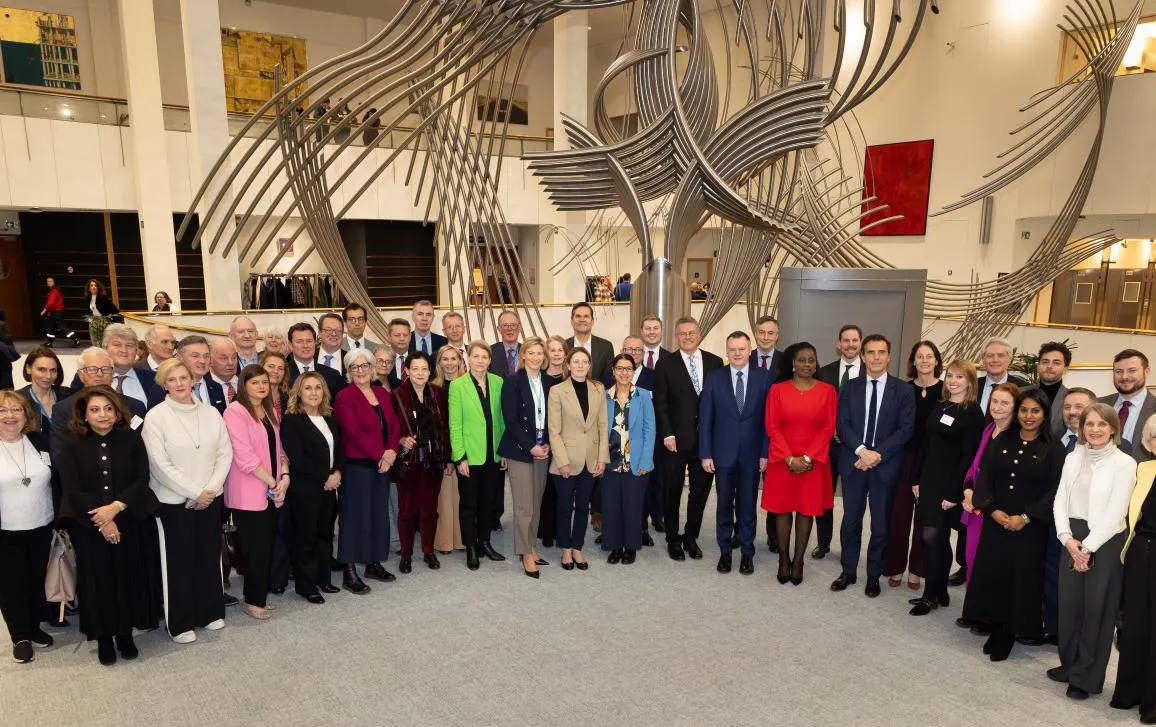
There are moments in EU–UK relations that feel procedural, even distant. And then there are moments that remind us what cooperation is really about: people, opportunities, and the future.
The recent meeting of the EU–UK Parliamentary Partnership Assembly (PPA) was one of those moments.
Among the various agenda items discussed by parliamentarians from both sides, one outcome stood out in particular: a shared commitment to push for work to be taken forward on a Youth Experience Scheme between the UK and the EU.
For many of us at Friends of New Europeans UK, this is not just another policy development. It is something we have actively campaigned for.
Why a Youth Experience Scheme Matters
Since the UK left the EU, young people have been among those most affected. Opportunities that were once taken for granted such as studying abroad, working across borders, and building friendships and careers across Europe, have all become more limited, more complex, and often more expensive.
A Youth Experience Scheme has the potential to change that.
By creating structured, reciprocal opportunities for young people to live, work, and gain experience in each other’s countries, such a scheme could:
Rebuild connections between the UK and EU societies
Support skills development and cultural exchange
Offer practical pathways for the next generation to collaborate across borders
In short, it would begin to repair one of the most tangible losses of Brexit.
Building on Erasmus+, Going Further
This progress comes alongside another important breakthrough: the agreement to bring the UK back into Erasmus+ from 2027.
That is a major achievement in its own right. Erasmus+ has long been one of the EU’s most successful programmes, enabling students to study abroad and build lasting European connections.
In important ways, the proposed Youth Experience Scheme would go further.
While Erasmus+ is primarily focused on students and formal education pathways, a Youth Experience Scheme could:
Extend opportunities beyond education to include work, internships, traineeships, and volunteering
Reach a wider group of young people, including those not in university or higher education
Allow longer and more flexible stays, making it possible to gain meaningful work and life experience
Reduce administrative barriers, creating simpler routes for young people to move between the UK and EU
To put it simply: Erasmus+ might allow a student to spend a semester abroad.
A Youth Experience Scheme could allow a 22-year-old from Manchester to spend a year working in Berlin, gaining professional experience, learning a language, and building a life beyond their home country.
Crucially, it would reintroduce something that has largely been missing since Brexit: a structured and accessible pathway for youth mobility linked to the world of work.
Importantly, the Assembly discussions also made clear that while the return to Erasmus+ is a major step forward, it is not sufficient on its own.
As several participants stressed, Erasmus+ must be “the beginning of rebuilding mobility, and not the final step.”
In that sense, Erasmus+ and a Youth Experience Scheme serve different but complementary purposes.
Erasmus+ reconnects classrooms.
A Youth Experience Scheme reconnects lives, careers, and everyday experiences across borders and begins to restore opportunities that many young people feel they have lost.
A Win for Advocacy
This development did not happen in a vacuum.
New Europeans has consistently advocated for restoring youth mobility between the UK and the EU. We have raised this issue in meetings, policy discussions, and public campaigns, highlighting both the demand from young people and the mutual benefits for both sides.
For organisations like New Europeans, this represents a significant moment. The Assembly discussions show that youth mobility is no longer a peripheral issue. It is now recognised by policymakers as central to rebuilding the UK–EU relationship.
The fact that the Parliamentary Partnership Assembly has now agreed to push the UK government and the EU to take this work forward is a clear sign that this message is being heard.
It shows that persistent, constructive advocacy can make a difference.
What Happens Next?
Of course, this is only the beginning.
Crucially, this is not just a long-term aspiration. As confirmed during the Assembly, negotiations on a Youth Experience Scheme are already underway, with both sides aiming to reach agreement in time for the next EU–UK summit.
As UK Minister Nick Thomas-Symonds put it, the UK and EU are “currently negotiating the parameters of this scheme… aiming to conclude these negotiations by the time of the next EU–UK summit.”
Turning political agreement into a functioning Youth Experience Scheme will require:
Detailed negotiations between the UK and EU
Agreement on eligibility, duration, and conditions
Political will on both sides to prioritise youth mobility
As reported, in The Guardian (S'ouvre dans une nouvelle fenêtre), there will be challenges ahead. But the direction of travel is now clear and that matters.
Keeping Up the Momentum
At Friends of New Europeans UK, we will continue to support and push for progress on this issue.
We believe that rebuilding bridges between the UK and the EU must start with young people. Giving them the chance to live, learn, and work across borders is not just beneficial. It is also essential for a shared European future.
The Parliamentary Partnership Assembly has opened the door.
Now it is up to all of us including policymakers, civil society, and citizens to make sure it leads somewhere meaningful.
Friends of New Europeans UK will continue to engage with stakeholders and advocate for practical steps to make the Youth Experience Scheme a reality.
If you share this goal and would like to stay informed or support our work, we invite you to join us by becoming a member of Friends of New Europeans today.
Date
29/03/2026
0 commentaire
Vous voulez être le·la premier·ère à écrire un commentaire ?
Devenez membre de Friends of New Europeans UK et lancez la conversation.


