After cozying up a couple weeks ago at the riverside bookshop with tea and friends, now I’m here to present a game-ier game, featuring spaceships, galactic exploration, alien encounters, and the optimistic, shining spirit-of-humanity.
Today we’re talking about Welcome Aboard, Captain (S'ouvre dans une nouvelle fenêtre) — a Star Trek-themed, solo-first TTRPG created by Lone Spelunker, available on Itch.io.
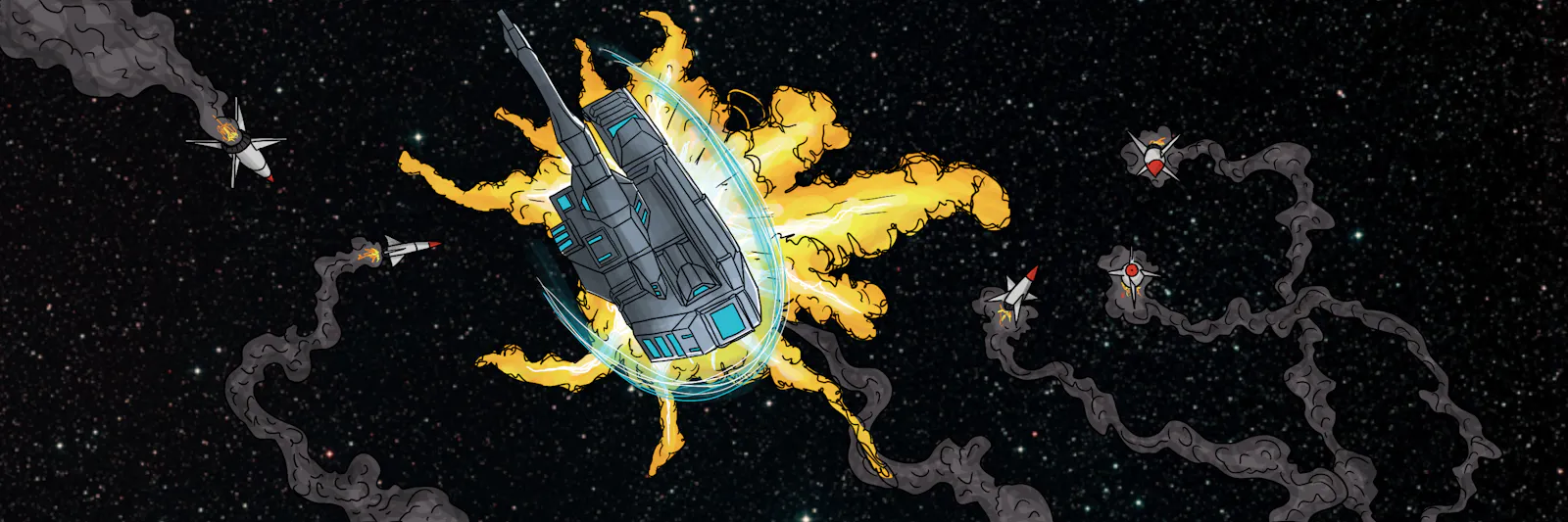
In this game, the player(s) command a spaceship and its seven-or-so Bridge Officers. Your main character, the Captain, leads the ship, seeking to embody the three core directives of the Alliance Warden Fleet: Explore, Understand, and Unite.
If a Hi-Fi/Sci-Fi Ship-&-Crew Solo TTRPG sounds exciting, then strap in and secure your belongings, we’re entering Dropspace in 3… 2…
Rally the Crew, Captain!
In Welcome Aboard, Captain, you play with a full crew of Bridge Officers: seven highly-capable specialists, each individually-skilled in their own ways. The Pilot maneuvers the ship through dangerous situations, the Chief Engineer fixes problems with the hull or power core, and the Medical expert knows how to sew wounds shut (hopefully).
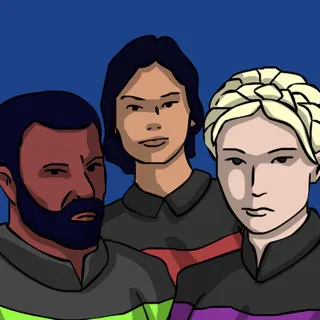
Individually, each Bridge Officer has a role they specialize in, with skills that either back up their assignment, or fill-out their other accomplished qualities. More than just that, though, they also work as a team. As the Captain’s most-trusted delegates, the Bridge Officers not only lead operations aboard the ship, they also lead Away-Team missions, beaming down to planets and other ships, to solve problems with a more personal touch.
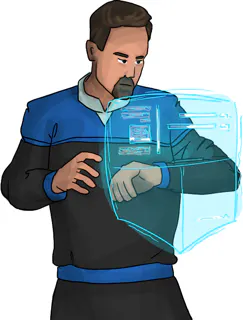
While the game has an extensive mission-building chapter, with tools on quickly creating your own adventure sessions, it also comes with “Duty Sector” booklets, which play similarly to Choose Your Own Adventure-style novels. In the Duty Sectors, you make-and-play your own crew members, rolling dice when instructed. While CYOA isn’t for most solo RPGers, I really appreciate the author’s effort and work put into these booklets, because everybody has to start their Solo RP’ing journey somewhere. And while titles like Thousand Year Old Vampire and Fox Curio’s Floating Bookshop get by with guided prompts, that doesn’t work for open-ended conflict-resolution with dice, like the group-play games where many players come from.
How Mechanics Tell Stories
We’ve all been at the table where one character prepares to roll a special action, and other players chime in, asking if they can roll too. Or, even if they don’t have the same skill, whether they can help with some related action. The GM then decides whether that’s a +2 bonus, or if it gives Advantage, or who “actually” succeeds, or how many times it can be rolled, or…
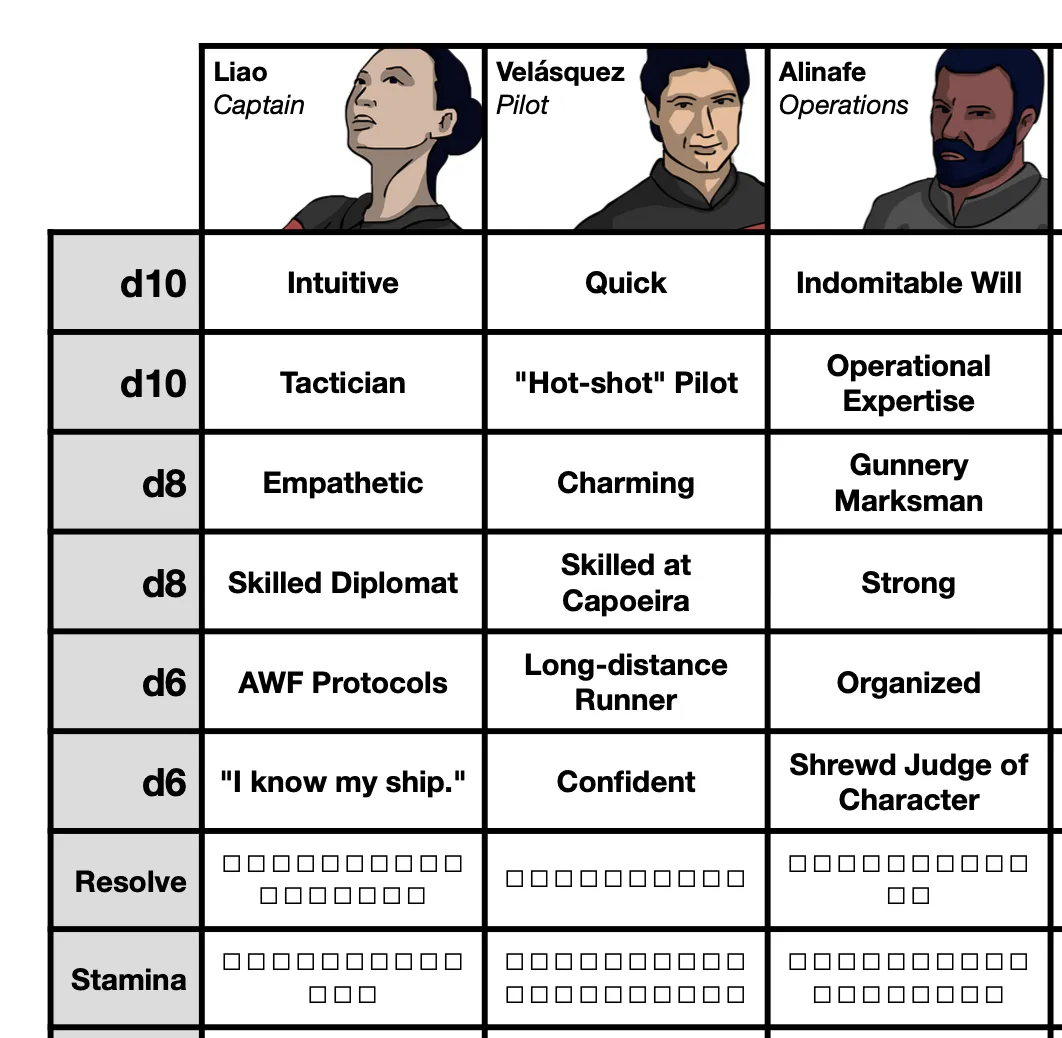
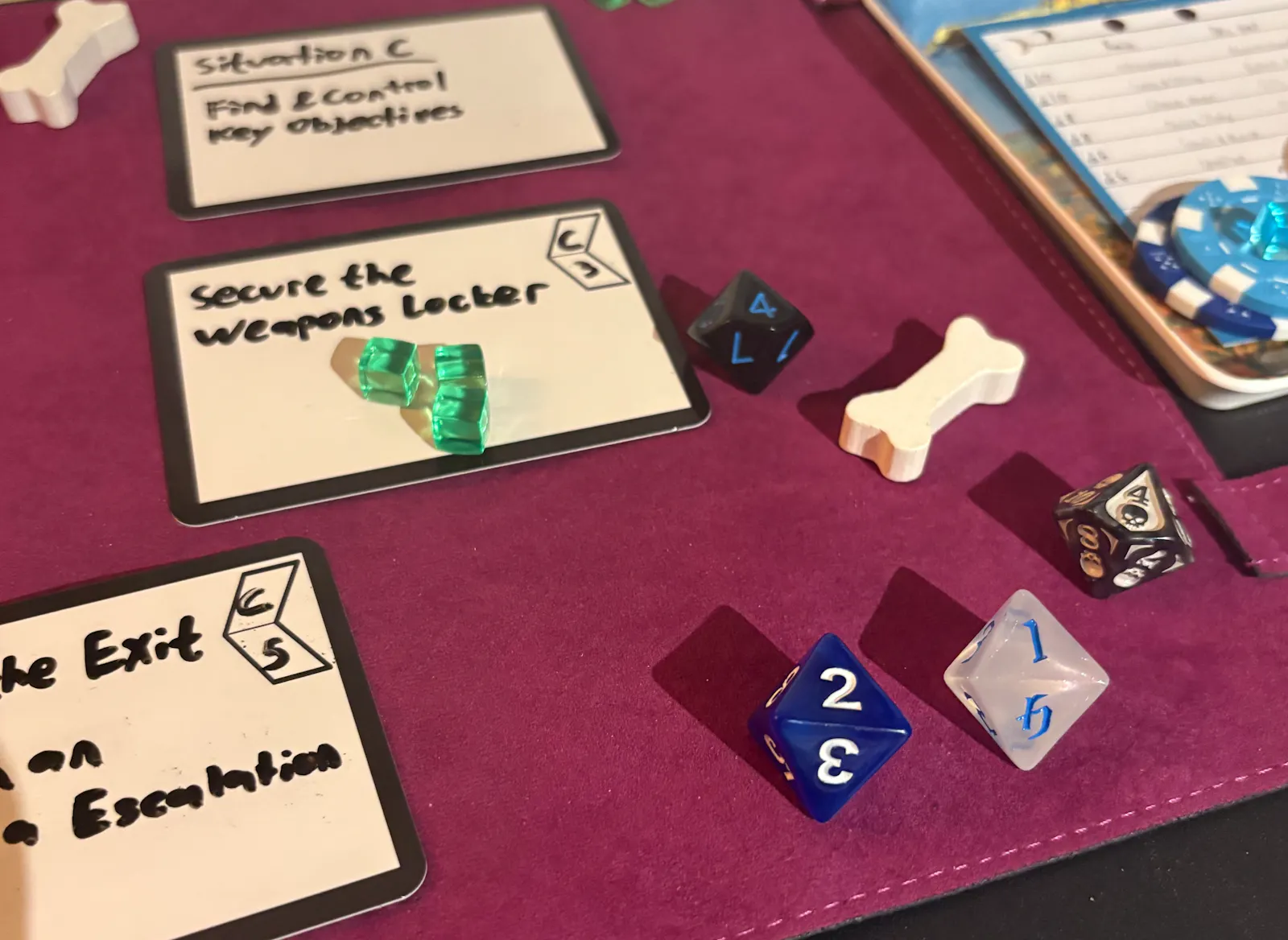
With WAC’s unique “2×2” dice system, each challenge gets rolled with two “Officer Dice” against two “Challenge Dice”. You want your Officer Dice to roll higher than the Challenge Dice — but you can only roll dice that match skills relevant to the challenge.
Each character has 2 skills they’re ace at, 2 skills they’re good at, and 2 skills they’re okay-enough at doing. And since you need two skills to make each roll, if a single officer only has one relevant skill that’s good, they might be adding a d6 or even a d4. Ouch!
But since this is a team game, and the team has multiple Bridge Officers, there’s a much better chance of having multiple characters who can support/assist each other. This way, you might get two d10 skills, rather than just one d10 and one kinda-mediocre d6. And, you also get a free stamina, too, to help with re-rolls! Helping one-another makes conflicts way easier — so do it!…
Here’s where the action economy comes in. Like in Ironsworn and other GM-less games, tasks are often made more difficult by requiring multiple successful dice rolls. But, unlike in Ironsworn, the concept of “turns” exists here, notated as delta-t (∆t). There’s no turn order, but rather, you have a set number of actions per ∆t, and at the end of each ∆t, you gain a point of Escalation, which makes things Real Bad in the next scene.
Action economy scales on total actions taken — think, dialogue-lines and seconds-in-a-scene.
And, you can probably guess where I’m going with this: assisting is an action, too.
This means, while you can always roll your best-two-skills among all present officers, sometimes it’s advantageous to try and eek-out a roll with a lesser die, if it means only one officer making the roll. Even though it’s easier with extra hands, if an Officer can do their task alone, that means the situation is potentially more time-efficient. Action economy scales on total actions taken — think, dialogue-lines and seconds-in-a-scene. So, what’ll the choice be?
How “hackable” is it? Very!
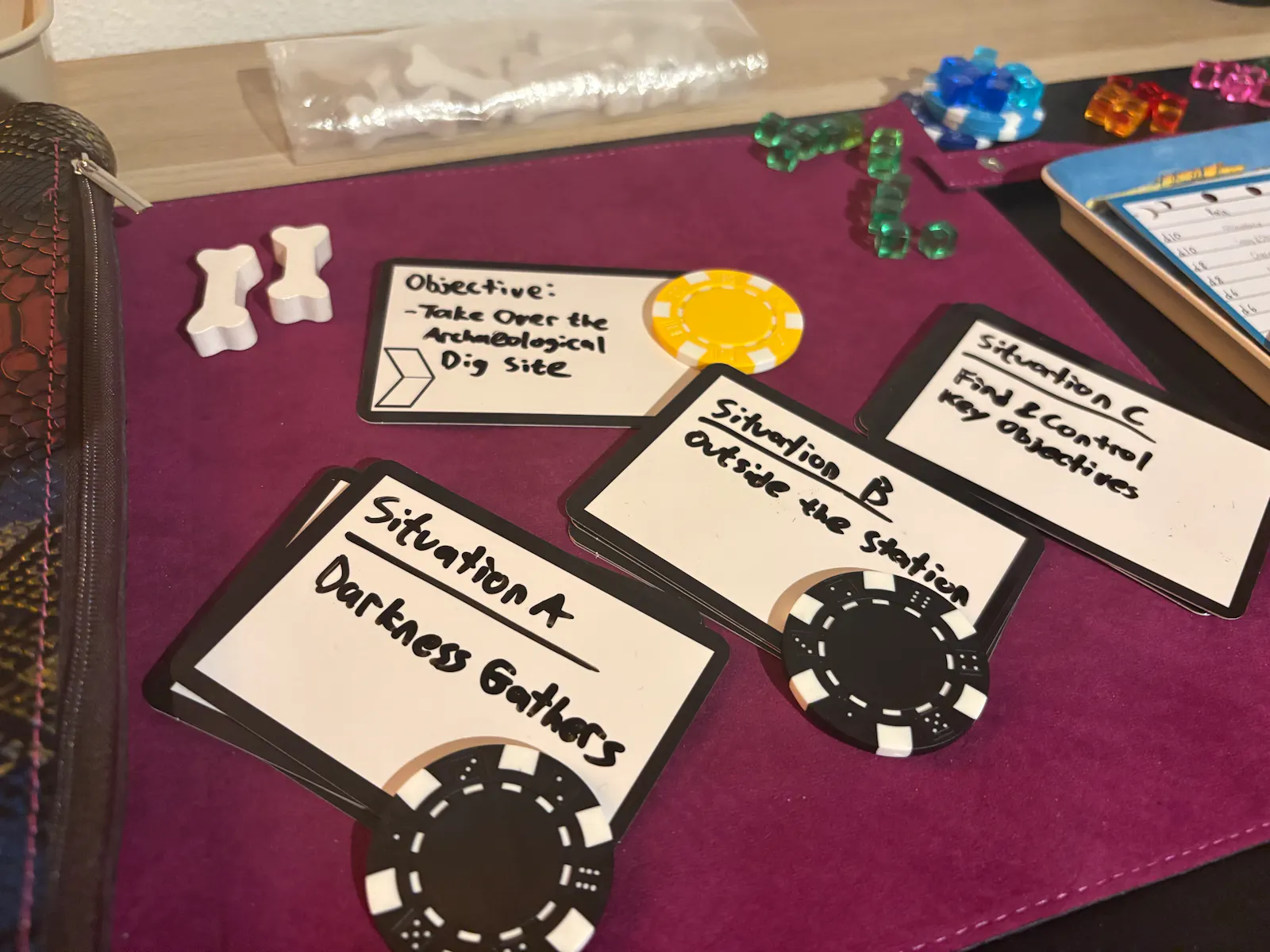
Something else neat about this game is how supportive is towards changing-things-up. It supports different styles and even genres of play with very little effort. The setting and mechanics work together, but aren’t tightly-coupled. Many solo games are locked to a single narrative or genre, and WAC certainly does focus on its core principal and aesthetic — but if you’re comfortable with making the game your own, it’s really easy.
Number Of Players: ✅
This title is, at its core, designed to be played solo. However, in my time testing, I found it also runs just-as-well in duet-style play (e.g. with a friend or significant other), as well as at a traditional, asymmetrical table (e.g. one GM and several players). There is some advice in the book on how to do these games — and it’s exactly what it sounds like.
The game makes no assumptions about having a GM, and it includes tables that guide you through both mission- and objective-building processes. However, a GM can easily run the game for another person, with or without the tables. Or, you could both play half the crew, and use the tables to build encounters and play through them together. You don’t even need all 7 bridge officers — you can scale up, or down, easily!
Long-Term Campaigns: ⚠️/✅
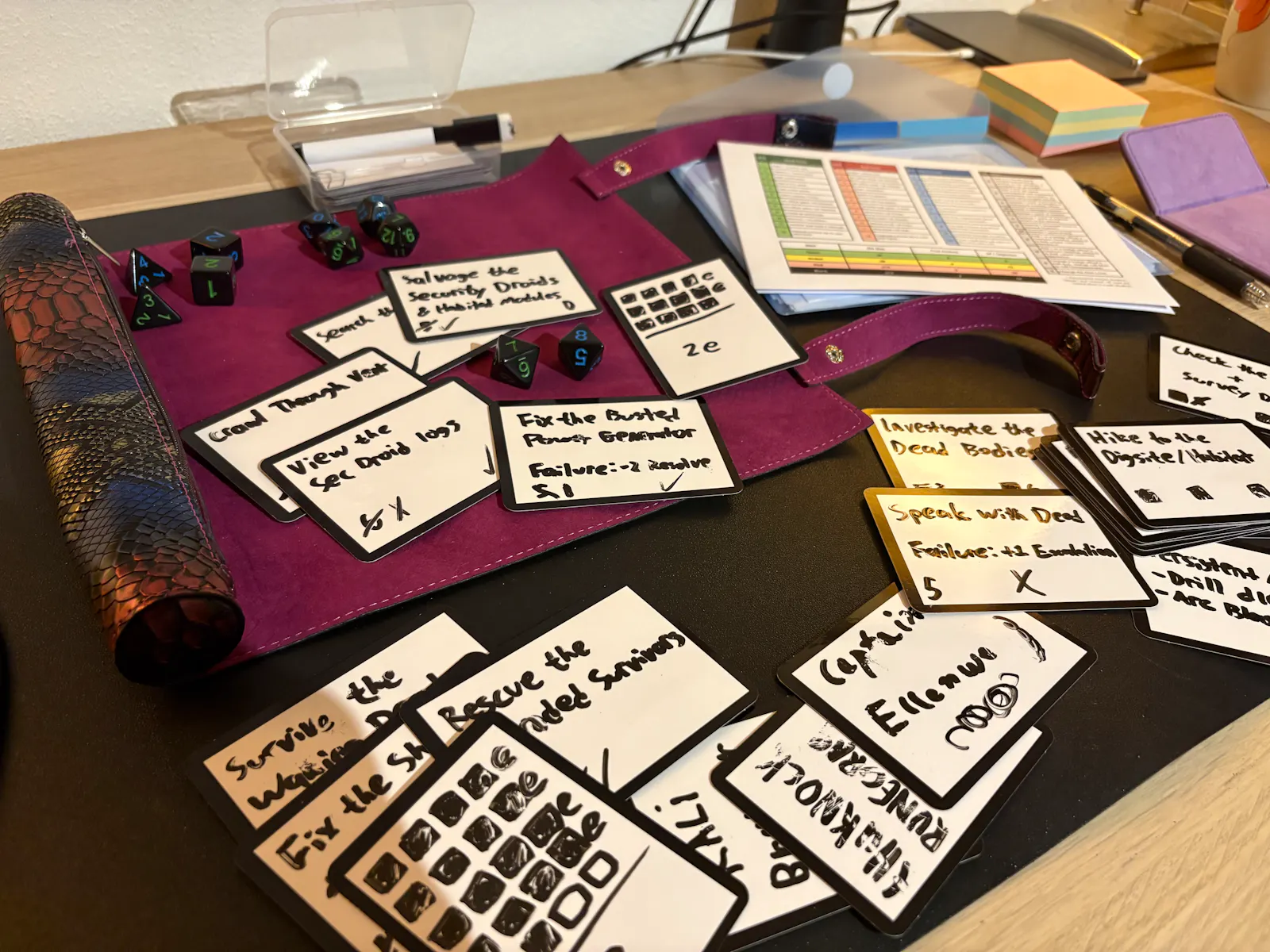
Progression in this game is difficult to predict, especially if you are likely to spend half (or more) of your Veteran Points (xp) on recovering the crew. Additionally, like many sci-fi games, playable characters are assumed to already have previous experience. While you can spend your points on increasing your maximum Resolve or Stamina, you don’t have any extra skill slots to unlock, the ships don’t really upgrade, and there isn’t much of an economy that supports meta-gameplay and long-term planning.
That’s to say, WAC feels solid for short-to-medium-term campaign length, but if you want a longer game that lasts for many months with the same crew, you may eventually want to make adjustments and/or borrow outside resources.
Setting: ✅
For my solo play report, Deadfleet Captain Rain (S'ouvre dans une nouvelle fenêtre), I played an evil lich who awoke in a space-fantasy world with xeno-archaeologists and killer robots. It went great! Then, for D&D Amsterdam, I flipped the lich’s story around and made a one-shot set in the Starfinder universe — with a crew of heroes out to rescue the survivors and find out what happened.
That’s because, at its core, WAC’s core game loop features:
2×2 skills-based dice resolution, which works for any story-first conflict
Solo-friendly team-play design, with streamlined skills & attributes
Action economy that doesn’t care how many characters are in a scene
Optional-but-fun Ship mechanics, with its own stats and assets
Welcome Aboard, Captain is designed around the hi-fi Star Trek aesthetic, and it shines best for those kinds of stories. However, it also has the structure to support any adventure premise that could take advantage of the above systems. For me, that meant a halfling necromancer and all her friends; and, a few days later, a sci-fantasy rescue crew. For you, that could mean survivors in a radioactive apocalypse world, or a pirate crew sailing the Seven Seas, or even a one-off downtime episode when a player suddenly can’t make it to RPG Night.
Parting Words
This game has quickly become a favorite of mine, and I’ll be recommending it to newcomers in the Solo TTRPG space for a long time. Seriously — big kudos to the author! This game has given me a lot of inspiration and excitement, blending the coordinated team-play elements with character-focused gameplay.
This is Captain Nicole, signing off…
For more content like this:
If you aren’t a subscribed member already, consider subscribing to our free newsletter! I aim for 2-4 articles per month that focus on solo RPGs.
Also, in case you didn’t know, the One-Page RPG Jam is going on! I’m covering a number of One-Page titles in a series I call “One-Page, One-Hour”. It’s a lot of fun! Click here (S'ouvre dans une nouvelle fenêtre) to check out Roundup-Round 1.
And, if you super-duper love these articles and want to see lots and lots more, paid memberships encourage me to make more content just like this. There’s bonus content just-for-members, including the worldbuilding and storytelling in my Deadfleet Captain Rain (S'ouvre dans une nouvelle fenêtre) play report. But, more importantly, every subscription goes a long way towards helping publish more-and-better articles.
Links & Credits:
Welcome Aboard, Captain (S'ouvre dans une nouvelle fenêtre) is available on Itch.io (S'ouvre dans une nouvelle fenêtre) for $5 USD
The Charon Wormhole (S'ouvre dans une nouvelle fenêtre) Duty Sector is also available as a free demo and tutorial, explaining the rules while providing a guided-play experience.
This game was gently-sponsored by way of a press copy provided to us. If you would like to become a sponsor for your own game, and/or see your work featured in articles like this, please reach out to me either on Discord (@faenre) or via email: nicole@play-brilliant.nl (S'ouvre dans une nouvelle fenêtre)
No AI programs (ship-board or otherwise) were used in the writing of this article. No offense, Data!
Date
02/08/2025
Sujet
Game Reviews


