Tempted to just switch off for a bit? I once did that in a very drastic way.
Tired Of The News
Back then, I was still a young trainee journalist and had to learn to keep cool in the face of endless ticker news. We still wrote on mechanical typewriters and secretaries typed them again into typesetting machines. For articles were printed in phototypesetting (Si apre in una nuova finestra), and our final editors worked with razor blades and glue to get a prototype of the next newspaper. We had no internet.
Anything that hadn’t been glued on by the end of the final edit at night wouldn’t make the news the next day. And because the number of final editors was limited, the world would have had to be on fire for extra space to be made before printing. The room with the tickers – as we called the teletype machines (Si apre in una nuova finestra) – was a clacking, rattling inferno of noise. The staff on duty didn’t linger there for long. We tore off metres of paper and already skimmed through it as we left the room. In a flash, we had to weigh up 20 deaths on an Indian bus against a famous scientist missing in the Amazon, or a quote from a German politician.
I only remember that I was extremely tired at that time. The year had already started off with excitement and extra work: Spain and Portugal as new members of the EU, Gorbatchev discussed with the West to dismantle all nuclear weapons by the year 2000. Spain left the Nato. Philippine’s dictator Marcos was peacefully overthrown by the people - and invited to the US by President Reagan. France was holding elections, the US attacking Libya, and the news about Gorbachev’s glasnost kept coming. I desperately needed a break. I took some free days from Saturday, 26 April 1986 until 4 May. A news-free period. I vowed not to read the papers, listen to the radio, or watch the news on TV. I switched off radically.
Meanwhile, I was sweating. I’ll never forget that long-awaited, refreshing spring shower, for which I actually left the house. It was a wonderfully peaceful walk through the fields, and I let the rain soak me, feeling the wetness on my face and arms. You don’t see radioactive radiation. You don’t smell or feel radioactivity. And if you don’t listen to the news, you don’t know why you are walking alone under these heavy clouds.
Propaganda Meets Repression
My colleagues on duty didn’t know either that a “super-GAU” had happened in Chernobyl* on 26 April. It’s the German term for a full reactor meltdown and steam explosion. The world was on fire, but the news was kept secret by the Soviet Union. It was only after Sweden and Finland had recorded significantly elevated radiation levels that the Soviet Union finally agreed, on 28 April, to report an “accident” (and a lot of lies). It took another day for the incident to be reported in Germany. Federal Interior Minister Friedrich Zimmermann (CSU) claimed that any risk to the German population could be “absolutely ruled out”. It is only now, when we know more and the timeline of the disaster has been reconstructed, that we realise how readily Soviet propaganda was believed abroad, compounded by the disastrous communication strategy of the Kohl government, which was determined not to let the construction of nuclear power stations be discredited.
For the people in the GDR it was even more dangerous: they were told that Western German precautions were only “capitalist” propaganda against them. Many of us at the French-German border remember that people in French Alsace wondered why their German neighbours were suddenly so cautious. The French government claimed that the fallout had been stopped at the Rhine! It was not until five years after the disaster that the scientists’ views gained acceptance there. I emigrated to France before that change but was fortunately connected to the world news. But I hadn’t realised that Poland, too, was deliberately withholding much of the truth from its people. When I moved there in 1993, news from abroad was slow to reach us. I felt well-informed, avoided irradiated food – or so I thought – and ate an organic diet.
I’ll never forget that either: when I found a slightly out-of-date issue of the Scientific American in a bookshop in Warsaw, with Chernobyl as the cover story. I’ll never forget the horror I felt when I saw the maps: my organic food came from the most contaminated areas. All the whitewashing by the Polish government: propaganda. The most dangerous place of the world was just 631 km beeline from us. The first women in my circle of acquaintances suddenly developed thyroid cancer. Officially, any link to the reactor accident was still being denied. Even scientists often sounded helpless: so many didn’t knew anything for certain. So very little had actually been researched. And so much could not be investigated because the Soviet Union was keeping tight-lipped. We will never know how many people actually died. We will never know how many suffered harm or will go on to die of cancer.
The World Has Changed
When my thyroid started running completely haywire, I was fortunate enough to be living in a France where science had gained the upper hand and the disaster regarding radiation had been made public there too. I had the most luxurious operation performed by the chief surgeon, was given the finest painkillers, and sat enthroned in a bed that massaged me automatically. For I had been asked beforehand if I would be willing to participate in research. I happily agreed. At last, the matter was being taken seriously! I talked about the rain, I was asked what I had eaten in Poland, when, and from where. I was told that in France, too, the number of people with thyroid disorders had risen dramatically following the nuclear accident. But what was particularly alarming was the number of expats who had lived in Eastern Europe in the years that followed the catastrophe. I heard it from the doctor. I never read it in the news.
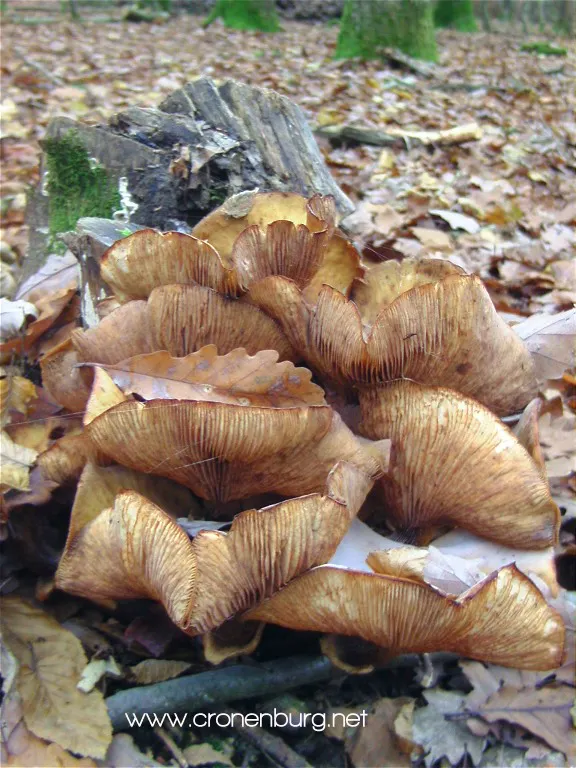
You can’t smell or taste radioactivity. You can’t imagine the ages, a place will be contaminated. You forget that mushrooms - connected by the mycelium with the soil, can still have too much radioactivity. And Radioactivity doesn’t stay in one country only, it doesn’t respect government’s borders or rivers like the Rhine - it’s moving around the globe with the weather.
The good news was that people were waking up at that time. In Germany, there was criticism from the Greens and a broad anti-nuclear movement. And yet today we have still those who deliberately turn a blind eye: the Russians have fired on the Chornobyl* sarcophagus, leaving a gaping hole that urgently needs repairing. They continue to endanger nuclear power stations in Ukraine. In December 2025, the IAEA warned that the containment structure had lost its key protective functions and required a comprehensive refurbishment.
The area around the reactor will remain contaminated for tens of thousands of years. A timescale, we cannot even begin to comprehend. We do not even know how to convey this danger to future generations. This makes it all the more dangerous to turn a blind eye, even today.
After 26 April 1986, the world was never the same again. Even if we only realised it later.
*Chernobyl is named today Chornobyl in Ukrainian. I’m using the old name here because I’m talking exclusively about the Soviet era back then.
I have some reading tips especially in German:
NDR: The first reactions in Germany in 1986 (Si apre in una nuova finestra)
Spiegel: Short timeline 1986-2012 (Si apre in una nuova finestra)
Tagesschau 29.4.1986 one of the first news in Germany (Si apre in una nuova finestra)
Deutschlandfunk: the German communication disaster (Si apre in una nuova finestra)
Greenpeace about the new damage and the dangers (Si apre in una nuova finestra)
And find a lot of info on Wikipedia (EN) (Si apre in una nuova finestra)
And in English:
The Conversation: Nature in the Exclusion Zone Today (Si apre in una nuova finestra)
The Guardian: The No-Zone-Paradox (Si apre in una nuova finestra)
Never miss an article:
Data
27/04/2026
Argomento
Transition Reflections
0 commenti
Vuoi essere la prima persona a commentare?
Abbonati a Nature Match Cuts e avvia una conversazione.