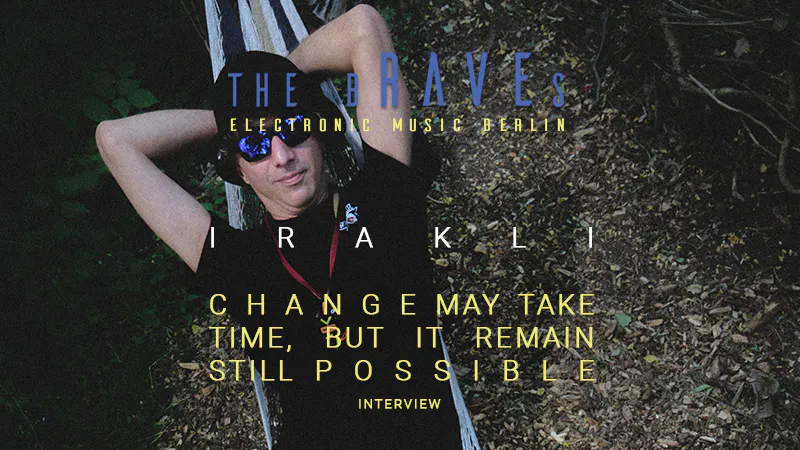
13 years of STAUB (Si apre in una nuova finestra) and no end in sight. Behind one of Berlin's most successful party series, which has no lineup and usually takes place during the day, is IRAKLI (Si apre in una nuova finestra). A man with numerous musical facets, reflected not only in his sets but also in his label. From Georgia to Cologne, then to Berlin – here's the second part of the extensive interview. This time we delve deeper into his roots, explore his story, and talk about dictatorships, Ukraine, vinyl, and of course, music and DJing. Enjoy and don’t forget to like and share!
Support this story with a comment and a like on our instagram (Si apre in una nuova finestra) channel.
the bRAVEs: What did you actually study?
Irakli: I studied architecture in Georgia and design in Germany and obtained two diplomas. My knowledge from architecture also helps me in music, as the creative processes are similar. When publishing my music, many works initially remain unused and only a small part is published - similar to architectural designs.
the bRAVEs: In a 2021 interview you said: "If people don't like my selection, I'm out of place." What does it mean?
Irakli: As a DJ who remembers the days of buying physical records and bringing them to the party, I appreciate the art of DJing. The process starts with selecting records that I like and that seem appropriate for the event. But often the reality at the party can be different than expected. Instead of stubbornly playing my planned set, I adapt to the mood and the number of guests. With the same repertoire of music, two DJs can create completely different sets, because each record can have a different effect depending on the context.
Nowadays, with USB sticks, I have an even bigger selection of tracks to choose from. I get bored when a DJ always plays the same style. My sets are diverse and range from ambient to fast techno. It is important to me to have an artistic discussion before the event. I don't want to play against the mood of the party; if people want to dance, let them dance.
the bRAVEs: Your productions are often very different from what you play in the club. How do I know what you will play then? If I've gotten to know and love you as a producer and I come to one of your gigs in the club and you play a much harder tune, won't I be disappointed because I was expecting something different?
Irakli: My DJ set always remains my set, whether it's a little slower or faster. If someone can't cope with a small change in BPM, they should question their musical perception. Open-air sets are different from those in dark rooms. I choose tracks that fit the atmosphere and I'm ready to change my plans if the mood calls for it.
Success can be limiting because the audience expects you to play the way they are used to. But I admire DJs who can surprise, like Anja Zauber, who wows the audience with 105 BPM techno. A good DJ has a broad horizon and doesn't disappoint his audience, even if he plays differently.
the bRAVEs: You've been in Germany since the early 2000s. How have you developed?

Irakli: I came to Cologne to study, where Kompakt (independent record label since 1998 - editors note) was shaping the party scene at the time. I am grateful for the deep involvement with electronic music, which was not divided into genres but offered a mixture of everything. I started with experimental records and learned to mix different styles. In Berlin, I met DJs who could only mix with a certain beat, which was alien to me. I appreciate the diversity and creative mixing, like a friend of mine who integrates hip-hop into house sets in such a way that the audience hardly notices.
https://soundcloud.com/hate_music/irakli-hate-podcast-106?in=irakli/sets/irakli-podcasts&si=9cf536e422e544c4a07c8d5142135a75&utm_source=clipboard&utm_medium=text&utm_campaign=social_sharing (Si apre in una nuova finestra)the bRAVEs: You were already living in Germany when Russia invaded Georgia in 2008. How did it affect you?
Irakli: I was in Cologne. It was terrible! The only source of information was CNN, and I spent a lot of time on the phone with my sister. Instead of going to a concert, I sent my friends away to focus on the news. Back then, without social media, it was difficult to get information. The situation was unclear, only that Russian tanks were driving into Tbilisi and villages were being bombed.
the bRAVEs: When the situation calmed down, in your opinion, what remained in people's minds?
Irakli: Georgia has never resigned itself to being part of the Soviet Union. Slavery under a ruler is unacceptable. The young people taking to the streets of Tbilisi today were born in freedom and know that their ideals will not die, even if the government uses force. We survived the Soviet Union and preserved our identity, music and language. I believe that we will also survive the current oligarchs.
Those who were born in freedom and have experienced democracy know that dictatorship has no place in society.
the bRAVEs: How do you see the situation in Georgia today?
Irakli: The situation in Georgia is complicated and becoming worse with each passing day. Some describe it as a dictatorship, others as an autocracy. I would say it lies somewhere in between. Unfortunately, ongoing harmful actions by the current government have changed the country’s near future.
Despite this, I still believe in the power of people and in human rights, and in those who continue to stand for democracy, fairness, and dignity. Change may take time, but it remains still possible.
the bRAVEs: Back in 2014, many Ukrainians raised European flags. In 2024, many Georgians raised European flags. What connection do you see here?
Irakli: I see parallels with previous events, but the context is different. The West used to be seen as a unified bloc, but in reality it is made up of different countries with their own interests. The EU and the world have now recognized Putin's true face. A conflict like the one in Ukraine used to be seen as local, but the global political situation has changed fundamentally. In Georgia, similar events are repeating themselves as the government has tried to get closer to Russia and is now showing its true intentions. It is unclear whether this is out of self-interest or due to pressure from Moscow. Europe has been trying to get closer to Russia for a long time, but now it has to face reality. If we don't take a closer look, democracy has no future. It's about the fundamental question of what kind of world we want to live in.
the bRAVEs: The Ukrainian K41 Community wrote: "The battle against Russian imperialism is universal". How do you see that?
Irakli: When the war in Ukraine started, hardly anyone in Europe thought about it. When I spoke to people about it, I emphasized that it was not about individual opinions on the war, but about a generational imperialist mindset.
Many Russians see Georgia as their little brother over whom they can rule.
This thinking means that they believe they can decide for their neighbors without respecting their sovereignty. Some Russian refugees who came to Georgia showed this attitude and did not understand why they were not warmly welcomed. The attitude was: you are my little brother, my little neighbor, I can do whatever I want. They didn't understand that the Soviet Union was a dictatorship and not an ideal world. Artists like Parajanov suffered under this dictatorship. The idea of a fraternal community is an illusion and a lie that people don't want to return to.
Have you been to Ukraine yourself?
Irakli: I've never been to Ukraine, although I've planned to several times. I hope to find the opportunity soon! Initially, there was a lot of solidarity in Berlin and in the scene, but that has waned. However, that doesn't mean that things have gotten better in Ukraine. It is important to keep talking and involving people.
Readers of this interview should consider how they can help instead of giving up and leaving the field to the dictators.
Democracy is important because each individual can make a difference if we decide together. In dictatorships, we do not have this opportunity.
the bRAVEs: In addition to STAUB, you also run the label “Intergalactic Research Institute for Sound”. The name leaves an impression. What's behind?
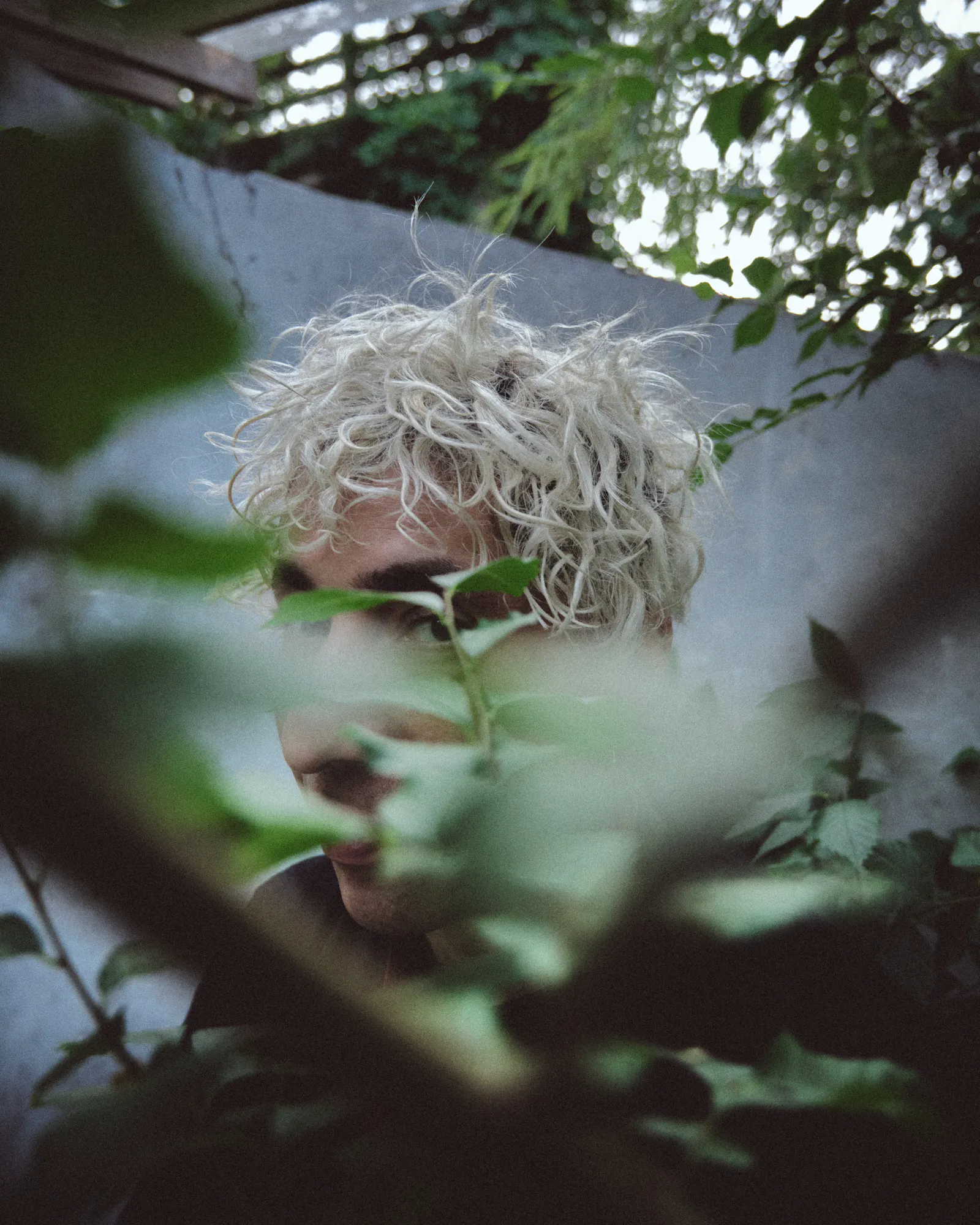
Irakli: I founded it because I have a passion for researching sound and its effects. The name reflects both seriousness and humor, which is important to me. I see it as a kind of boutique outlet for music, where I mostly release artists that I personally know and appreciate.
In recent years, the music industry has changed a lot, with an overproduction of content, which makes it difficult to keep track. Nevertheless, I have managed to reach a certain audience and plan to continue releasing more experimental music. My label has no strict rules, except that the music should have a certain cosmic sound quality.
Are all of the labels' releases on vinyl?
Irakli: Yes, I haven't done digital-only releases yet.
I think if I don't have enough money and confidence in a release to press it on vinyl, I shouldn't release it.
But if I'm confident in a release, even if it doesn't sell well, I'm happy to invest the money I've earned from a gig. The number of pressings varies from release to release, depending on how I think it will work.
Where does your love of vinyl come from?
Irakli: Even as a child I listened to vinyl and my DJ heroes all played vinyl. I have a strong appreciation for aesthetics, influenced by my studies in design and architecture. For me, the visual presentation of a record is very important I once paid extra to have the inside of a record sleeve printed in red because it just looked better, even though it didn't make economic sense. I play both vinyl sets and digital, but vinyl is more tactile to me.
the bRAVEs: What advice would you give to a young label or artist?
Irakli: I understand that it's difficult to sell records, especially because production costs have risen. It's important not to give up. If you believe in the good, you should keep going. Even if you don't have any money, there are always opportunities, such as applying for grants. What I've done remains important to me, while I'm no longer aware of the ideas that I didn't realise. For new label founders: just try and be persistent. If you're sure that you're doing something good, you shouldn't be put off.
the bRAVEs: You've been in Berlin since 2010. Has the city become your home?
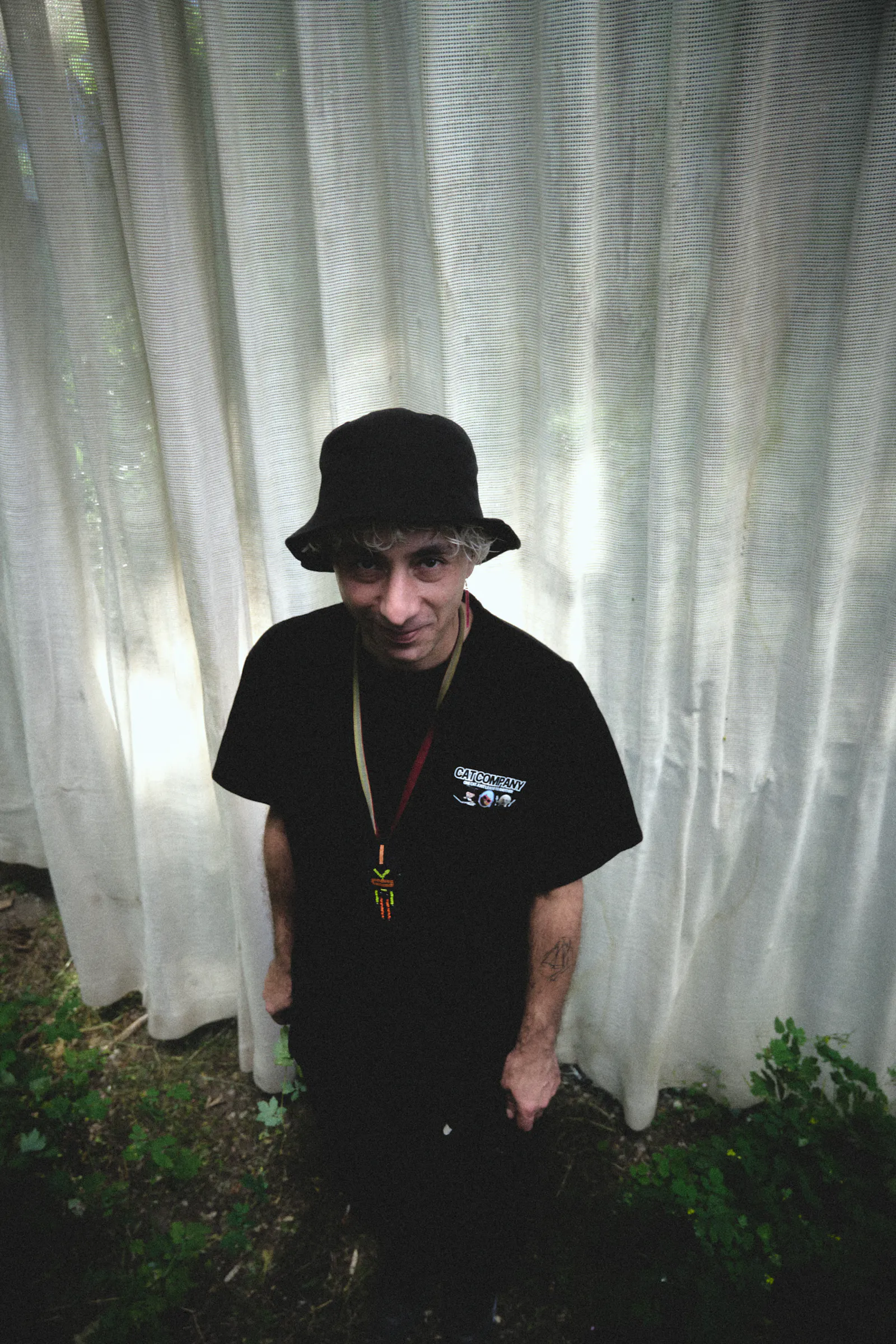
Irakli: If I'm away for longer than two weeks, I miss Berlin - I start to miss my friends and certain places. But I still can't get used to winter.
the bRAVEs: What has this city done to you?
Irakli: Berlin is very inspiring, especially compared to Cologne. I did a few parties in Cologne, but I would never have founded a label or started a party series like I did in Berlin. I've met a lot of interesting and exciting people, including Yacoub, with whom I started my first project I/Y, and people who have helped me focus on the positive side of change.
the bRAVEs: What plans are you pursuing?
Irakli: I have a lot of ideas and am trying to concentrate on one or two. I have ideas for a small concert series, a kind of listening session. Sometimes you need to step back and reflect, especially when you have to deal with a lot of things at the same time. The pandemic has given me time to think about my life and what I want to achieve. Of course, it would have been better without the pandemic, but I hope we have learned something for the future.
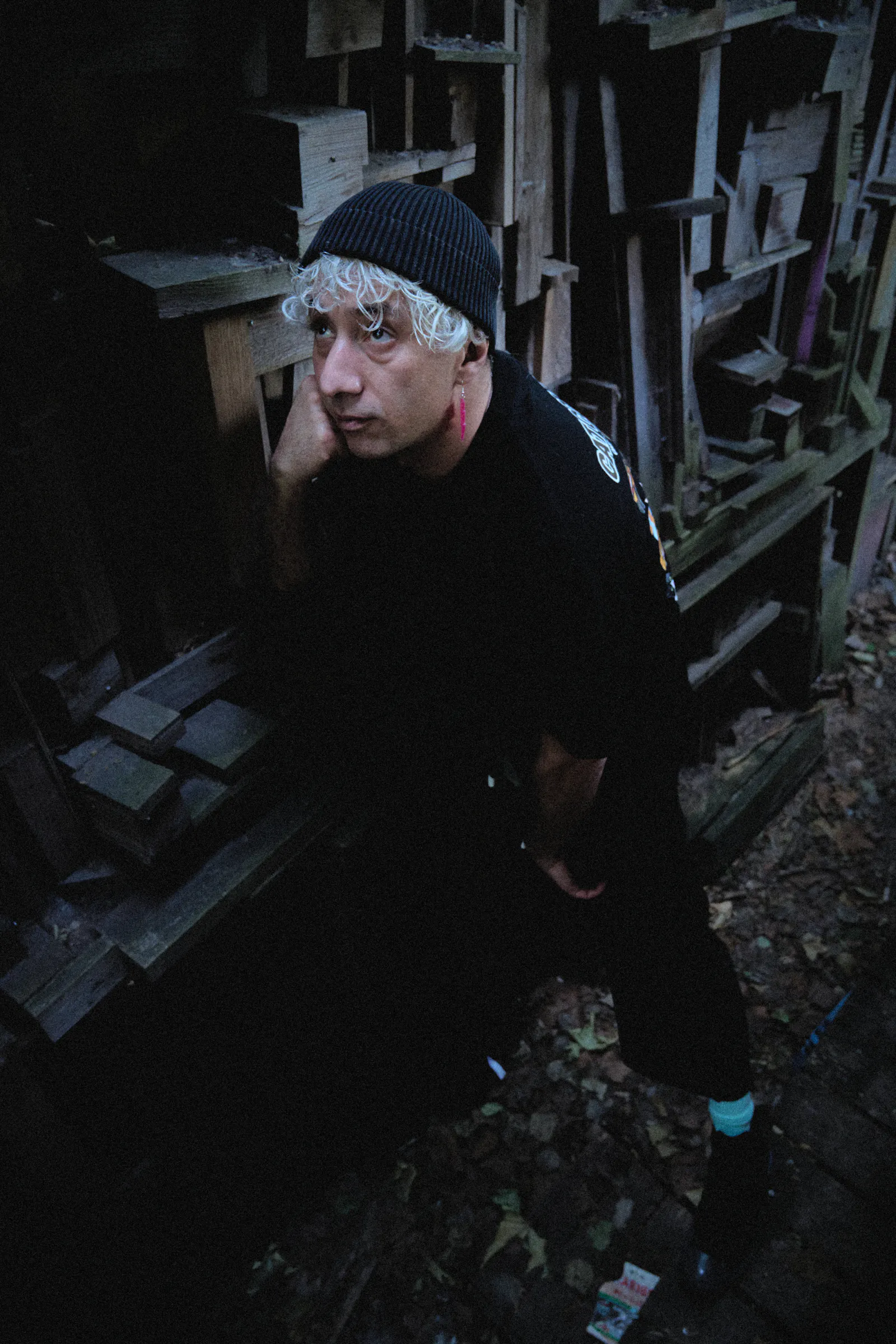
the bRAVEs: Opening, Closing or Primetime?
Irakli: I appreciate the opening because it creates the atmosphere for the rest of the party. Prime time is important when a good closing is the highlight of a party. Opening and closing are challenging, and I've played a lot of closings, especially at Staub birthdays. I prefer long sets and in Berlin I didn't always know how long I would play. At my first party I thought that after an hour these 20-30 people would leave. When I played all the records, including the B-sides, after nine hours, I said: "Okay guys, that's it, I played everything I had with me."
the bRAVEs: Thank you for your time!
Interview was first published (Si apre in una nuova finestra) on Feb 11, 2026
https://intergalacticresearchinstituteforsound.bandcamp.com/album/staub-10 (Si apre in una nuova finestra)https://soundcloud.com/staub-5/staub-133 (Si apre in una nuova finestra)PHOTOS by
Alexander Weigandt (Si apre in una nuova finestra)
INTERVIEW by
vdm.berlin (Si apre in una nuova finestra)
IRAKLI
Instagram (Si apre in una nuova finestra) I Soundcloud (Si apre in una nuova finestra) I ra.co (Si apre in una nuova finestra)
STAUB
Instagram (Si apre in una nuova finestra) I Soundcloud (Si apre in una nuova finestra)
Intergalactic Research Institute for Sound
Instagram (Si apre in una nuova finestra) I Soundcloud (Si apre in una nuova finestra) I Bandcamp (Si apre in una nuova finestra)
the bRAVEs — Electronic Music Berlin
linktr.ee (Si apre in una nuova finestra) I Instagram (Si apre in una nuova finestra) I Telegram (Si apre in una nuova finestra) I Soundcloud (Si apre in una nuova finestra)
Data
11/02/2026
Argomento
INTERVIEWS SEASON II