My eldest struggles with math. I suppose that happens if you mix a sensitive respiratory system (missing lessons at school) with an unfitting math teacher (just give in or bugger off!) and with somewhat chaotic parents who are not really into math themselves. I mean, I do enjoy a certain form of meta-love for mathematics (and thus, the scientific method) since playing Firaxis’ Civilization and understanding the meaning of the quote for the mathematics science advancement in installment numero IV:
If in other sciences we should arrive at certainty without doubt and truth without error, it behooves us to place the foundation of knowledge in mathematics," Roger Bacon
This beauty of mathematics, its inherent elegance in “truth” is, at least for me, a welcome distraction from the ever prominent gut feelings and opinions and conceptual alignments we have to deal with when interacting with other humans - including our inner monologues (which was a major reason why I quit design). A proper mathematician of course will, and one already did, rightfully, successfully debate this (hey Pawel!), but for a simpleton approach like mine, it works fine.
Anyways, math ain’t my strongest suit, it never will be (one guy on our school made 2nd place in the national math competition - he was a wonder to behold). Neither is it my wife’s. Funny enough, it turned out to be an advantage regarding the fact that our son needs a little bit more support to counter missed lessons and an ignorant teacher.
Add, subtract, multiply, divide
So, I was sitting down with my son because he struggled with algebraic signs and how they work with operators.
1 + 1
1 - 1
1 + - 1
-1 - - 4
Everybody knows the rules right? You subtract negative values from positive ones and vice versa. Multiplication of negative with another negative value returns a positive one, whereas multiplication of + and - return negative values, yadda, yadda, blabla.
But the combo of abbreviating calculations and memorizing rules hides the implicit concepts behind it. My son could not understand why a plus and minus drawn on a sheet of paper in any deliberate combination led to a certain result. Anyone can just memorize it, but it will get you only so far. The above example is more logical like this:
1 + 1 = +1 + +1
1 - 1 = +1 - +1
1 + -1 = +1 + -1
-1 - - 4 = -1 - -4
It’s still abbreviated, but somewhat clearer. One also needs to know that the operator comes with an implicit multiplication.
1 + 1 = +1 + +1 = +1 + 1 * +1
1 - 1 = +1 - +1 = +1 - 1* +1
1 + -1 = +1 + -1 = +1 + 1* -1
-1 - - 4 = -1 - -4 = -1 - 1* -4
Et voilá! Now it’s possible by solving it by the rules of operator precedence and how algebraic signs interact with each other I mentioned earlier. It also looks quite ugly and is fucking hard for people who have problems with focusing. Try this:
+1 (+ 1 * + 1) = 2
+1 (- 1* + 1) = 0
+1 (+ 1* - 1) = 0
-1 (- 1* - 4) = 3
Lately I was told by by niece that the mathematical proof for these rules is somewhat three DIN A4 pages long.
Mathematics, Physics, Chemistry. STEM is full of rules and formulas. To get by in school all you need to do is to memorize when to apply which formula and how to resolve it along the rules that are given. You don’t need to understand it. You do not need to contextualize. Trust in the idea that any given fact/rule/concept just works as intended and don’t bother with the rest. Don’t second guess. Trust in your teacher. Trust in your boss. Mankind does this all the time and it’s summarized in the saying “standing on the shoulders of giants (Abre numa nova janela)”. Knowledge transfer works this way in a society, it’s the reason why we pretend that our ancestors were dumber than us - they were not, it’s just another trusted level of conceptual state.
It was basically what his math teacher told my son: Just learn and accept the rules and train, train, train it until it becomes your muscle memory.
It drove him crazy.
And thus, he drove me crazy, trying to help him. Screaming and yelling included. My wife gave up before me. I was about to give up when I realized something - my son is a feeling, divergent, holistic concept learner.
Like me.
(no shit: I am close to recommending having kids for the sole purpose of getting your own behavior thrown back at you. I reached a level of self-enlightenment I wish I could have acquired when growing up.)
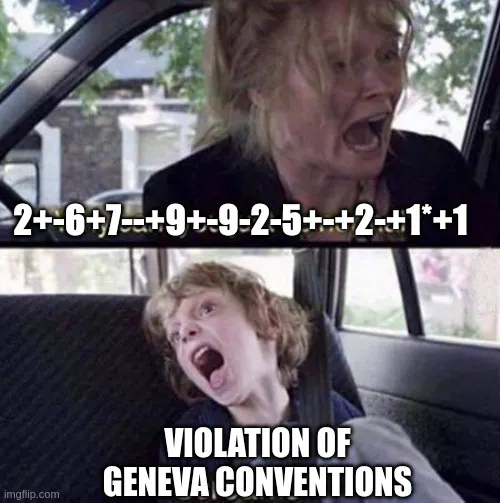
Truth is, for many, many decades I thought myself being quite stupid. And intelligent. And stupid. And intelligent. I tried to learn programming with various books and courses. I tried to learn the guitar and the piano. I tried to learn 3D modeling. I tried to learn English and Spanish. And I failed. And I failed. And I failed. And… well, yeah. It’s a very boolean way to look at it and I already hear the complaints of some people saying… did you even try hard enough?
I like physics and even despite that I fell asleep nearly every lesson at school, even when sitting in the front row, right in front of my teacher. I’ve read books for university and had to read sentences twenty times to make sense of the words, they were just strung-up letters and my head could not make sense of them. It took hours to wade through pages like this, falling asleep in between. I tried to train away my illustration weaknesses, giving up after a few minutes. At work I had meetings with other people and we would work on text or discuss things and my brain simply refused working.
DUH!? Is this NOT written in English?
How are you able to read this, when I failed at learning English? I "failed” at learning English in school. I really learned it devouring (graphic) novels and movies in their original language. I fell in love with teh intarwebs (Abre numa nova janela). I wrote and communicated in English. It let me find friends and love in far away countries. I traveled to meet them. It was (and still is) amazing.
The English became a intuitive tool for me, a way to express myself in a way that simply does not work for me in German. Thus, I try to avoid writing in my mother’s language when the audience is Anglo-International. My own translations feel awful, the cadence is off and everything feels forced.
But I did not understand the learning process.
I repeated the stunt learning Spanish. Went to two schools in México (UNAM for the win!) and while some fellow students were doing absolutely fine, I felt like I did not get anything. Then I read Süskind’s “Perfume” (Abre numa nova janela) in Spanish, my German-speaking betrothed dumped me, I was own my own and a very attractive tutor later I felt Mexican Spanish. I can still feel it. Yes, it’s rusty. Still, I know in my guts I can pick it up again and sound very Distrito Federal.
But I did not understand the learning process.
As a feeling, divergent, holistic concept learner one needs to trigger all three aspects of the learning process (which I know off).
you need to build an emotional connection to the stuff you want to learn. The strongest are positive emotions of affection and interest, but pressure and stress can work well, too. It’s needed to keep the focus and the innate motivation to keep on going. Since divergent learning can take far longer than convergent learning, the motivation needs to be stronger and/or the reward triggers in the brain need to fire more frequently.
people who think in a divergent way are far more creative at problem-solving, while convergent thinkers are much more efficient and structured at applying solutions. It’s exactly the same with learning. For divergents learning is a messy process and the spark of interest needs to be followed. Convergent thinkers do well with doing little steps following a path of building-up knowledge.
People like me also need to understand the holistic concept behind most things they are supposed to learn. Nouns literally do not have any meaning if the concept, the intention of it is missing in the conscious, they are literally just letters. This often feels like learning nothing at all for what feels like ages until something clicks and everything makes sense.
Concepts in action
My learning process basically begins with a strong emotional motivation. Deadlines and exams always worked well, but are quite unpleasant in reality, because complex topics are very hard to comprehend in a short time frame.
A strong emotional motivation forces myself to bombard my senses with information my brain cannot make any sense of. Many exams at school were like that for me. I focused really hard on input and tried out stuff and… maybe understood something. Then, a few days later, when we got our exams back and when we would talk about them in class, magic, I was able to wire my brain up correctly.
One might ask: Rapha, why didn’t you did this work before the exam then, like most other pupils? Well, I was lacking emotional motivation.
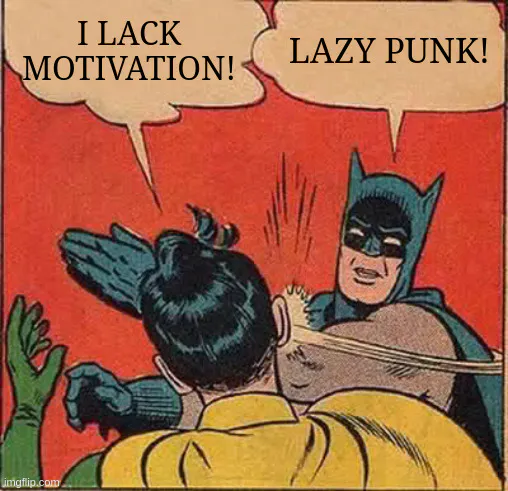
I cannot learn in a straight line. I need to follow tiny sparks of interest, fired by the intent of some original mystery. Then I imagine my brain would light up under a EEG in all the weird places. So I pile up seemingly useless, loosely related information pieces until they, all of a sudden show a complete picture. When it does I do not necessarily know how I build a specific thing piece by piece, but why. I can even explain it. And then I can keep learning the how because I am able to assess its relevance, its impact. Convergent learners do it the opposite way. Some such would say “Now I learned to build functions in programming language XYZ, let’s head to the next building block!”. Meanwhile I would just sit there an think “Yeah, but why a function?” and seemingly not get anywhere.
The explanation for the Why might even be right in front of me, in the first paragraph of the new chapter. I read it. Someone tells me. My brain is picking up white noise.
It took me years of casual on-off learning to understand “Objective Programming”. It was a “mystery word” for me. I read the description in several primers, on the net and in hindsight it makes perfect sense, it’s laughably easy even. A friend of mine had to tell me that it’s just about organizing code.
The same happened to me with “Product” and “Project”. I have been a product manager for nearly ten years now and I still struggle in describing the full extent of what these nouns mean to me. A fellow product manager was coaching me. He showed remarkable resilience towards me being daft.
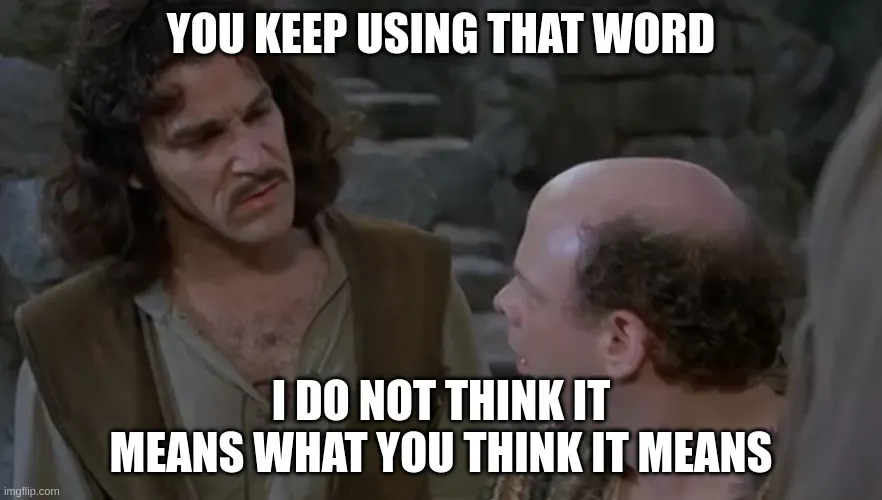
The opposite happens to me with words I locate… in my guts. I use them without the knowledge of their proper meaning and/or implications and my arrogant pareto-mind indeed does believe I got it right most of the times, at least on the emotional side of meaning.
Don’t stop believing (in yourself).
Every time I enjoyed diving deeply into something I learned the fastest, to an extent and overall understanding which I’d describe as feeling knowledge. I always need to feel why a detail is necessary and which role it has to play. I need to immerse in its context. I need to experience how things are connected.
Whenever those three factors fell together, this underachiever became a sleepwalking sub-cranial mastermind – able to see angles and patterns and connections not many other people came up with. Playfully doing things other people dream of and work for very hard. How could I be that dumb one moment and exceptionally excel at any other given time?
“Where does that even come from?”
There’s is quite a bit to uncover. Possible neurological causes like ADHS or being placed somewhere on the spectrum leaning to the autistic. Growing up in a lower middle-class household of not so well-educated parents, not being able to support their fourth child intellectually nor methodically. Internalized beliefs and mental restrictions about myself which prevented me from harnessing the stuff I am really good at. An educational system which has difficulties to identify, incorporate and foster high-functioning divergents.
So, I sat there with my son, almost giving up. On him, on me. I did not want to. I knew that he is smart. I felt it. We already had convos about topics far more complex than this simple math problem. It has been some time since my last exam and I knew that this can only be conquered if one is chipping away at it until it ‘clicks’.
I refused giving up and I told him so. But just believing is not sufficient. If you only believe and have unrealistic expectations, a missing outcome may very well shatter all your ambitions and yourself. So I shared my past learning experiences with him, especially when I was not interested in the topic. That I struggled to no end, seemingly not advancing at all. That I always needed to push more and more data into my brain, computing it over and over again until the patterns emerged. That this was hard. Unrewarding. That I sometimes needed days, weeks, months.
Then we started together. Exploring the math problem and different ways to watch and tackle it. I made errors. I made mistakes, I realized I could not explain it properly. We agreed on trying stuff. We paired. We failed - Together. We actually had fun while we sucked.
He asked me if he could snack something on the side. He acquired a bowl of Studentenfutter (literally “student’s food”, but basically different kinds of nuts and dried fruits) and chewed away contently. It distracted his mind from his anxiety and allowed him to reallocate his thinking resources.
And suddenly we found another angle to understand the problem. One I was not able to explain before. The insurmountable task suddenly crumbled under the force of our shared understanding. That was nice. Especially because now he’s like “Oh, I don’t understand this. Let’s ask Dad, he doesn’t know either.”
His grades are getting slowly better and math has lost its horror – it became only unpleasant. Maybe on day, he’ll see the beauty of it – and if he saves some years in comparison to get there, then I’ll have done my job.
Data
30/11/2025
0 comentários
Gostaria de ser o primeiro a escrever um comentário?
Torne-se membro de The Meandering Fray e comece a conversa.


