Over the years, as authors and designers, we’ve undoubtedly faced the age-old dilemma of defining what an RPG truly is—often arguing in the comments of some social community or, more generally, finding ourselves reading, studying, and debating in search of the correct definition for a complex, layered medium still in its early days. Yet, some questions surrounding RPGs rarely surface, and I find them very important because they step outside the usual debates and can help us better understand our role as designers.
As many of you know, Oddplan has a specific philosophy as an authorial collective. And while we often enjoy being provocative and polemical, we also spend a lot of time reflecting on the world around us and the one we’re professionally part of. So, over the next few months, expect a series of newsletters that will straddle the line between philosophy and good old marketing. After all, who says the two can’t go hand in hand?
Let’s begin with a core principle about human nature (yes, we said we’d talk philosophy) and our relationship with art—specifically, storytelling. We are constant generators of stories. It doesn’t matter if it’s due to some divine spark or a cerebral short-circuit caused by our development of abstract thought that made us broken animals. Every day, we produce an enormous amount of narrative—even if it’s just pondering whether to get a glass of water from the kitchen—and every day, we’re bombarded by a massive amount of narrative we absorb and digest.
It’s no coincidence that many religions tie the act of creation or the understanding of creation to the use of words or that magic is based on formulas and symbols—forms of language in their most concrete form.
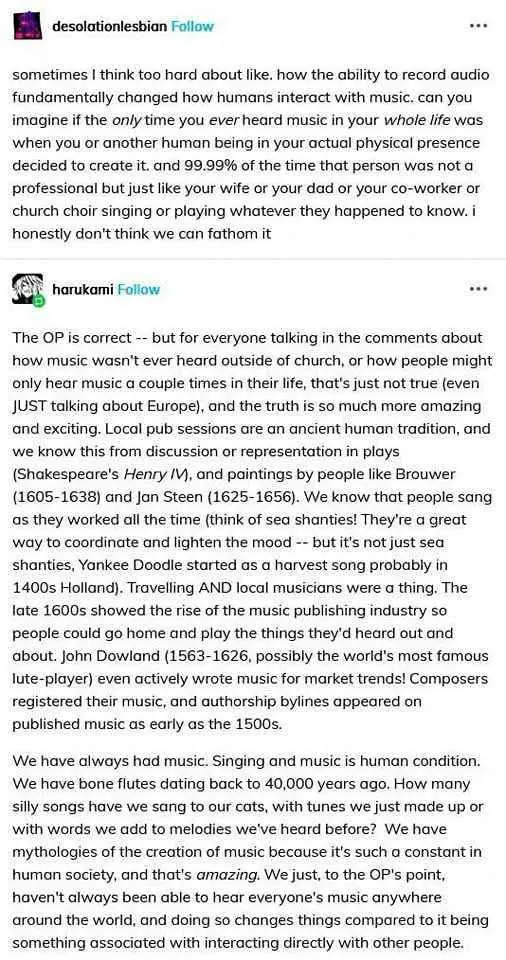
From the dawn of our species, we’ve understood that names are a fundamental part of our identity. It’s impossible to think of someone close to us without assigning them a nickname. And any marketing expert will tell you that a name—and the story behind and around it—is a key element of any project.
We are unavoidably tied to all of this, to the point where we can lie, speak in allegories and metaphors, and feel real emotions for stories and characters that are entirely fictional—or even get duped by the demagogue of the moment. Moreover, the stories we consume and the tropes we internalize influence our perception of reality. All of this shapes how we relate to reality and others. If you pause for a moment, you’ll realize that your worldview has been shaped, at least partially, by what you’ve absorbed from pop culture. We are mosaics of narratives, and every piece of what we love becomes part of the kaleidoscopic lenses through which we see life.
So, in this newsletter, let’s start with the first reflection on what it is, at least in our opinion, that we genuinely do as game designers—and what we are putting into our audience’s hands. We are not writers who deliver stories; otherwise, we’d write books. And we’re not just creators of mathematical rules. We are something else—but what, exactly?
We are craftsmen.
Like it or not, what we create is not what one would traditionally call “artwork.” We are creators of tools—not even games—that allow others to tell the stories they have inside them. And if that seems to devalue our craft because it shatters your notion of being artists, then maybe this isn’t the right environment for you. Too often, this field becomes a dumping ground for failed directors, mediocre writers, bland screenwriters, and castaways from other artistic worlds chasing easy fame.
But let’s be clear: calling ourselves toolmakers doesn’t strip away the dignity of what we do. Everything is art when treated and lived as such—ask Andy Warhol. What’s important is accepting that we’re not here to sell others our rejected drafts that cinema or literature has cast aside. We’re here to give people the chance to access something that will allow them to do one of the most essential human things: tell stories.
We offer our worlds (notice I didn’t say “settings”) along with a nice package of rules explaining how they work. The audience will choose the world that best suits their needs and desires—where they feel most inspired to create. In doing this, we also make the space to reflect on ourselves as individuals because, ultimately, we are giving others the lenses through which we see the world—and that forces us to, at the very least, take them off for a moment and understand how they function.
We said at the beginning that people talk a lot about RPGs, but the conversations are often limited to the same topics. If we start looking at our role as game designers from this perspective, we can begin to ask ourselves about our professional relationship with this world. We can start to reflect on why a product we release sells—or doesn’t—and perhaps understand that our approach to it may be wrong and that our way of selling it may not align with the desired result. Also, let’s be honest: we often don’t know what result we want.
So, this is where we start—with food for thought for the coming months. Remember that writing role-playing games might be the most challenging job in the creative field (yes, I truly believe that) because it requires us to deconstruct the rules of general storytelling and our internal narrative.
Before we give you another free toy to play with, let’s close this first chapter with some questions for you. You can write your answers in the comments below or think about them. It’s the same for us, really.
Why did you create a particular project as a game designer? What did you want to share with the audience, and why did you make the specific choices you did while crafting your project?
As a player, why do you choose certain games? Why did the possibility of telling certain stories through specific rules draw you to those titles over others?
Toy Box: Artifacts of Aztlan
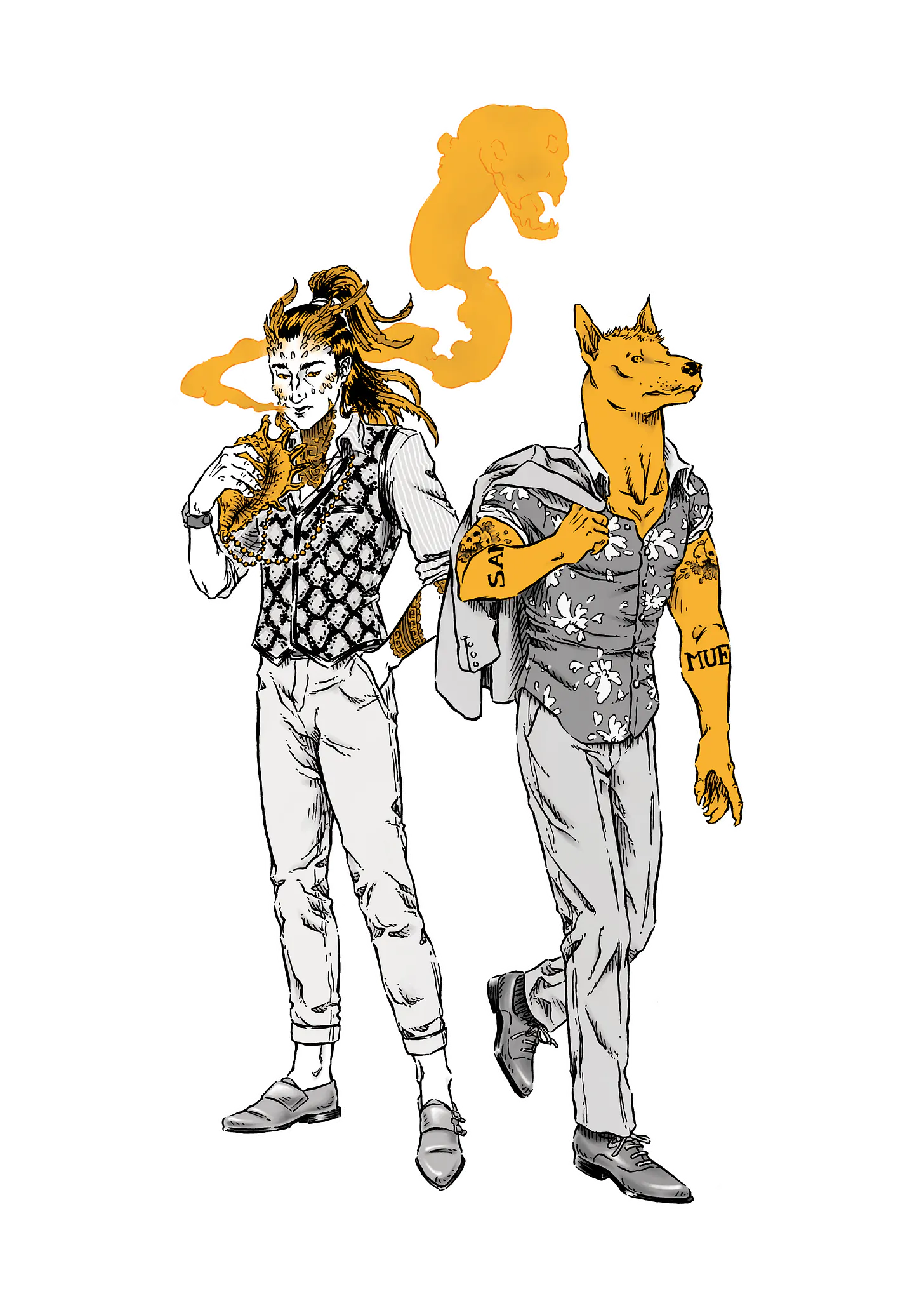
Being an Epigone in Aztlan is complicated. Allies among the Mythic Entities are few, and the dangers are countless. Yet, unique opportunities may arise for the cunning ones who know how to navigate court intrigues and the many warring factions. In the document below, you’ll find 15 artifacts ready for your Epigoni (Abre numa nova janela)adventure set in a Mythical Mexico where proud Aztec Gods fight for the future of their Nation.
Download Now (Abre numa nova janela)
You can find Aztlan in the Vision sourcebook, which is available for purchase here (Abre numa nova janela). While it’s not in our best interest to say this, we strongly advise against buying it if you’re only interested in this Vision. Which can be free (Abre numa nova janela).
Things we loved this month
Pressure12 was born as a necessary tool for our short games, but it’s taken on a life of its own thanks to Pat (Abre numa nova janela), who first asked us for the engine’s SRD and then built a flavorsome dungeon game called The Whispered Depths (Abre numa nova janela) with it. Not satisfied, he even launched a JAM specifically for Pressure12 (Abre numa nova janela). We won’t bother thanking him anymore—honestly, we’ve run out of positive words to say about him. All we have left are guttural noises.
In a new episode of “Corporations are not your friends just because they talk about civil liberties and do the bare minimum to represent minorities, Games Workshop is suing a gazillion people to protect its brands and consumers from counterfeit goods—but mainly to secure its profit margins on the gold-priced plastic miniatures it sells in its stores. It’s a complex issue, so we’ll leave you to Discourse Minis’ in-depth analysis (Abre numa nova janela) before we end up in an armed uprising.
We love deconstructions, ludonarrative experiences with something to say, and products that subvert expectations without forcing them. We also love video games—because being obsessed with TTRPGs wasn’t enough. So here’s Dark Queen of Mortholme (Abre numa nova janela), a twenty-minute gem that tells us many things about freedom, choices, and destiny. Not bad, huh?
Subscribe for free to receive free games and support Oddplan.
Data
01/07/2026
Tópico
Tales from the Odd Ones