Can divine love become so intense that even the Vedas fall silent before it?
Vilāpa-kusumāñjali Verse 27 | lecture by Pratibhā Goswāmi
Verse 27:
»O Varoru (nicely-thighed girl)! Your excellent earrings are like
ropes that the flower-archer Cupid has placed to bind the mad elephant king of the prince of Vraja's heart! Can this happy girl hang these ornaments on Your ears?«
Video
https://youtu.be/q9n9H9qE-iI (Opens in a new window)1:02:57 h
Podcast
In verse 27 of Vilāpa Kusumāñjali, we enter the exalted realm of mahā-bhāva and anurāga, where divine love transcends philosophical understanding. This lecture explores the difference between knowing Kṛṣṇa through tattva and experiencing Him through rasa. Through the Gopī-gītā, intimate līlās, and profound teachings of the rasika ācāryas, we discover why the highest reality is found not merely in knowledge, but in love. A beautiful meditation on the sweetness of Vraja and the inner path of rāgānugā-bhakti.
🔹 Timestamps
01:00 Reading of verse 27 & commentary by Ananta dās Bābājī.
03:03 Commentary by Pratibhā Goswāmī: What is mahā-bhāva? Explained through the Gopī-gītā (Tenth Canto of Śrīmad Bhāgavatam).
07:35 Continued reading: tattva and rasa—two complementary approaches to understanding Kṛṣṇa.
09:52 Kṛṣṇa as the supreme enjoyer of divine love—not merely the almighty God. Two ways of approaching Kṛṣṇa: through tattva and through rasa. The jñānīs cannot perceive the bliss flowing through the lanes of Vṛndāvana. The Vedas themselves say ›neti, neti‹ (not this, not that) before the sweetness of mādhurya-rasa.
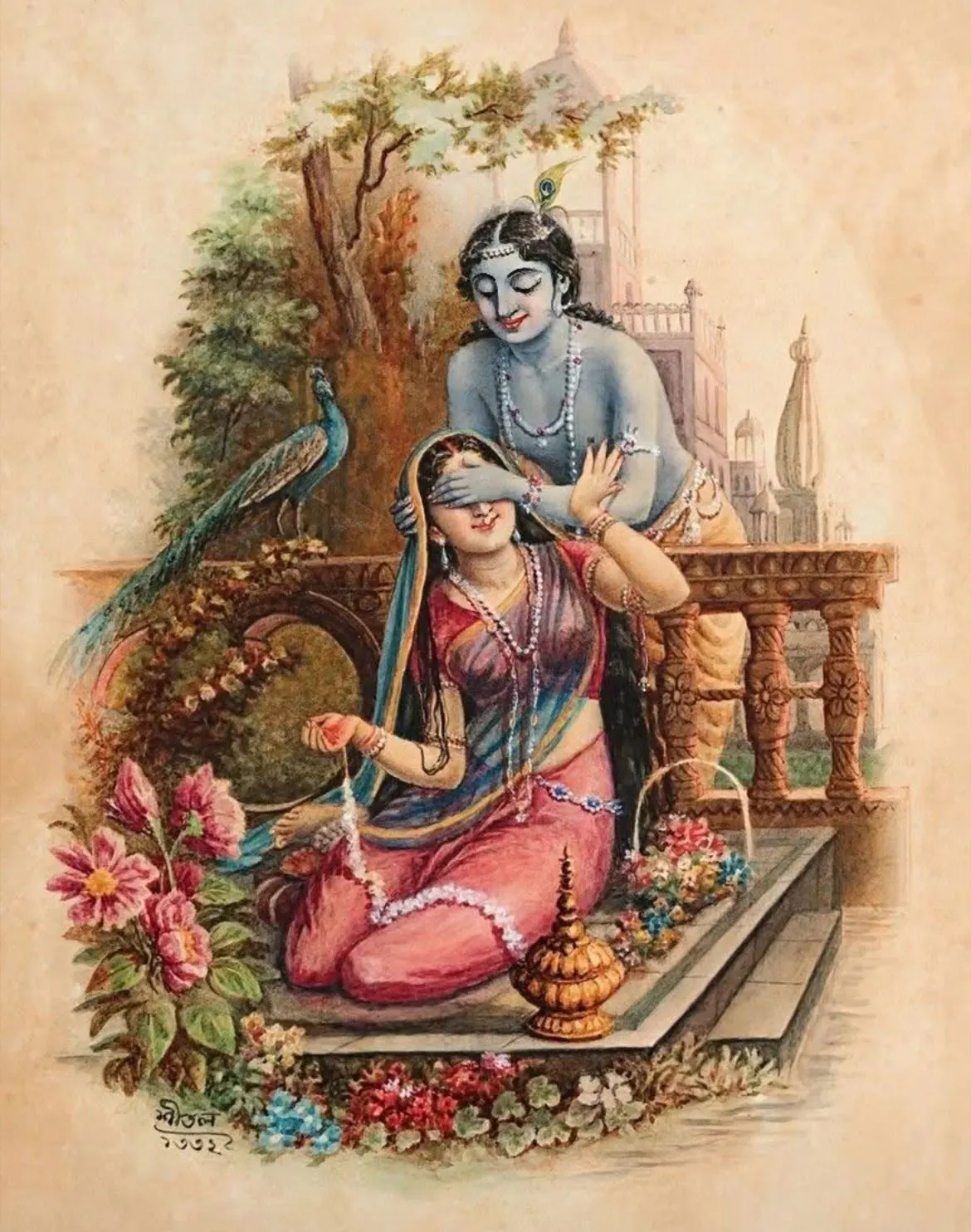
13:35–15:30 Glimpse: Kṛṣṇa's eagerness to taste the sweetness of rasa.
17:50 Līlā: Kṛṣṇa sends Uddhava to Vṛndāvana.
22:25 Continued reading: Tulasī speaks with Rādhā about the nature of anurāga.
26:27 Līlā: an old Vṛndāvana narration—Rādhā comes to cook for Kṛṣṇa.
43:39 The worldly story of Majnūn and Laylā illustrates the principle of anurāga. How meditation matures into the rasa of Śrī Rādhā.
47:29 Continued reading: the earrings of Rādhe Jū.
48:51 Explanation: Rādhe Jū's earrings are compared to the ropes of Kāma-deva, drawing everyone into the nectar of divine rasa.
51:10 Continued reading: Why is Śrī Rādhikā called Varoru? The symbolic connection between Her earrings and Her graceful form.
53:25 Related līlā: a conversation between Tulasī Mañjarī and Rādhe Jū. Rādhā is absorbed in rūpa-dhyāna.
Podcasts on Spotify
https://steady.page/en/prema-bhakti-yoga/posts/2fea7e0c-c6aa-417e-952e-c0cec7ce21f5 (Opens in a new window)For more inspiration
Facebook group: »Voices of Vrindavan« (Opens in a new window)
YouTube channel: »Voices of Vrindavan« (Opens in a new window)
Overview of videos: https://iueojvjd.manus.space/ (Opens in a new window)
Intro website: voice-of-vrindavan.org (Opens in a new window)
Join our bi-weekly Zoom-satsang!
Classes are every 2nd and 4th Monday in the month. If you are interested in joining the live online satsang on Zoom, write an email to Ram das (Opens in a new window). We will send you the link. For further information, click here (Opens in a new window).
Bibliography
Śrīla Raghunātha dāsa Goswāmī: Śri Śri Vilāpa Kusumāñjali, comments by Ananta dās Bābājī, Sri Krishna Chaitanya Seva Sadan Trust, Kolkata 2014
Newsletter
If you like to be updated about new articles, schedules, and programs, join our free newsletter!
Date
July 19, 2026
Topic
Vani
0 comments
Would you like to be the first to write a comment?
Become a member of Prema Bhakti – Voices of Vrindavan and start the conversation.


