War changes language. In Tolkien and the Great War I put it this way:
English received an enormous jolt of electricity from the new technologies and experiences of the Great War. Old words received new meanings; new words were coined; foreign phrases were bastardized.
But I overlooked one striking example: the English use of “go west” to mean “die”. I’ve only just learned that this sense of the phrase was first recorded in the 1914–18 war.
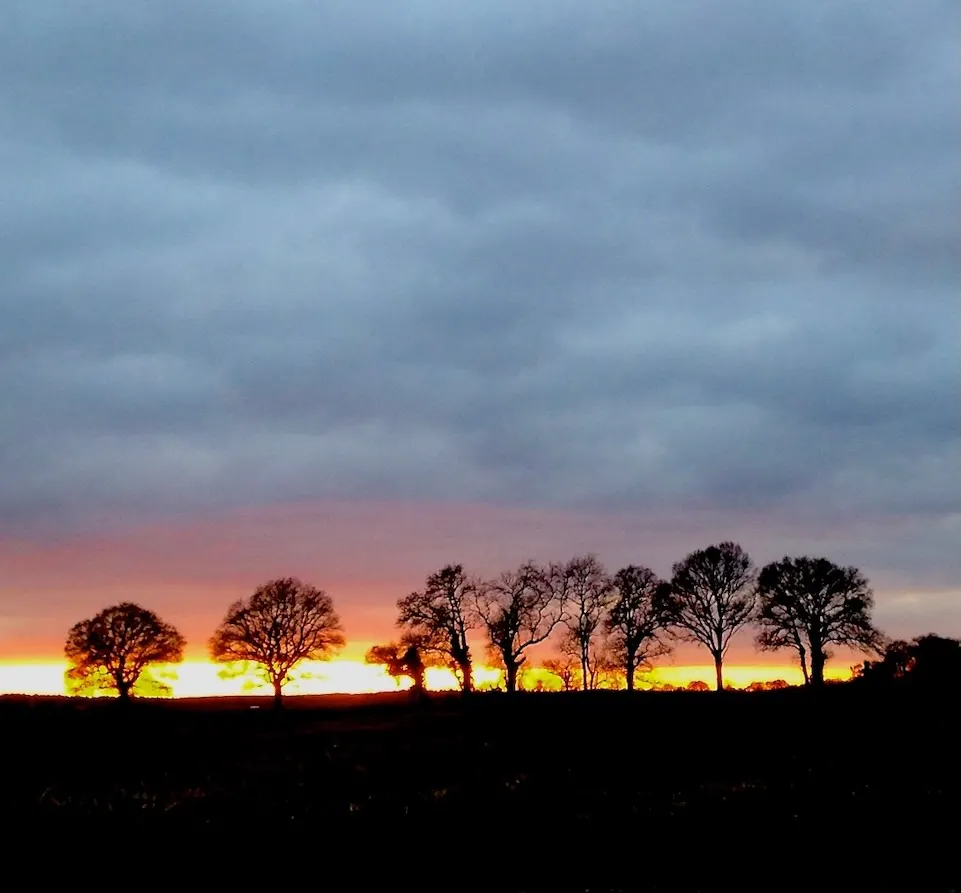
 (S'ouvre dans une nouvelle fenêtre)
From the outset, philologists have favoured a link with ancient Celtic traditions of a westward land of the dead. Theories about why the usage arose are interesting in themselves … and perhaps, too, for our understanding of Tolkien’s earliest cosmological concepts.
Noteworthy books on First World War culture and language mention the phrase but omit to mention that it was new. Paul Fussell’s The Great War and Modern Memory (1970) just says:
Of course there was a whole set of euphemisms for getting killed. ‘Going West’ was thought to be too la-di-da; more popular were ‘to be knocked out,’ ‘going out of it,’ ‘going under.’
Julian Walker’s Words and the First World War (2017), discussing a number of euphemisms for dying, some specific to particular nationalities, just says “gone west” was “used everywhere” (133).
But the Oxford English Dictionary’s earliest illustrative quotation for this use is from New Year’s Eve 1914 – a question in The Times newspaper asking about its origin. (The etymologist’s earliest evidence for a phrase is a sentence asking where it came from. Now that’s meta.)
It appears in an article describing a small coastal village in northern France supporting a cluster of soldiers’ hospitals. The British troops are cheery (they were hardly ever otherwise, if you believed the war reports). But the imagery is melancholy. Incessant winter rain; incoming wounded; villagers missing or mourning their menfolk. Then:
The soldiers’ funerals go down the village street, the Union Jack covering the coffin, and a very small party following behind. Does anyone know the origin or meaning of the soldiers’ curious phrase for death, ‘Going West’?
The Times was publishing replies from readers, both expert and general, for the next two weeks. These letters pages throw a searchlight on the mental world of 1915 as it pertains to matters that would have greatly interested Tolkien.
Some readers looked to sources from relatively recent times. One letter connected a popular soldier song, Drake Goes West, in which Sir Francis Drake attacks Spain for Elizabeth I:
Some are going West, lad,
Who’ll ne’er return again –
Some will sleep their long, long sleep
’Neath the Spanish Main.
Another letter compared imagery from a Wordsworth poem. A woman who had lived in Colorado said she had occasionally heard people of the plains east of the Rockies saying ‘go west’ to mean ‘die’, alongside more common variants such as ‘He has passed the Great Divide’. An 11 January letter claimed it all went back to a Staff officer at Aldershot galloping past his battalion and shouting (in a voice his men found comical) that they must ‘Tell the general that I have gone west.’ The writer observed that this would ‘disappoint those who have sought to attribute it to ancient mythology’. Yet another letter connected the phrase with the opinion in the East End of London that the West End was a perilous place for a young woman to go.
Other readers, however, traced the phrase to ancient roots. A letter on 4 January said the westward journey of dead souls is ‘the belief of the ancient Egyptians and Babylonians … still held by many pagan peoples all over the world – Brazilians, Australians, and Fijians, among others’. Another letter likened lines from classical Greek works, Homer’s Odyssey and Sophocles’ Oedipus Tyrannus.
An especially interesting 6 January letter claimed the phrase was from south-west Ireland and reached far back into Celtic tradition:
Probably the soldiers who used this expression for death were Munstermen. … above all, the West stands, by a tradition which probably dates from many millennia before Columbus was born, for the mysterious and unknown. For death, the greatest of all mysteries:— ‘Is it Pat O’Sullivan? Poor fellow, he’s gone Wesht.’ … Why the shoreless ocean should suggest the mysterious to the Western Irish is easy to understand…
 (S'ouvre dans une nouvelle fenêtre)
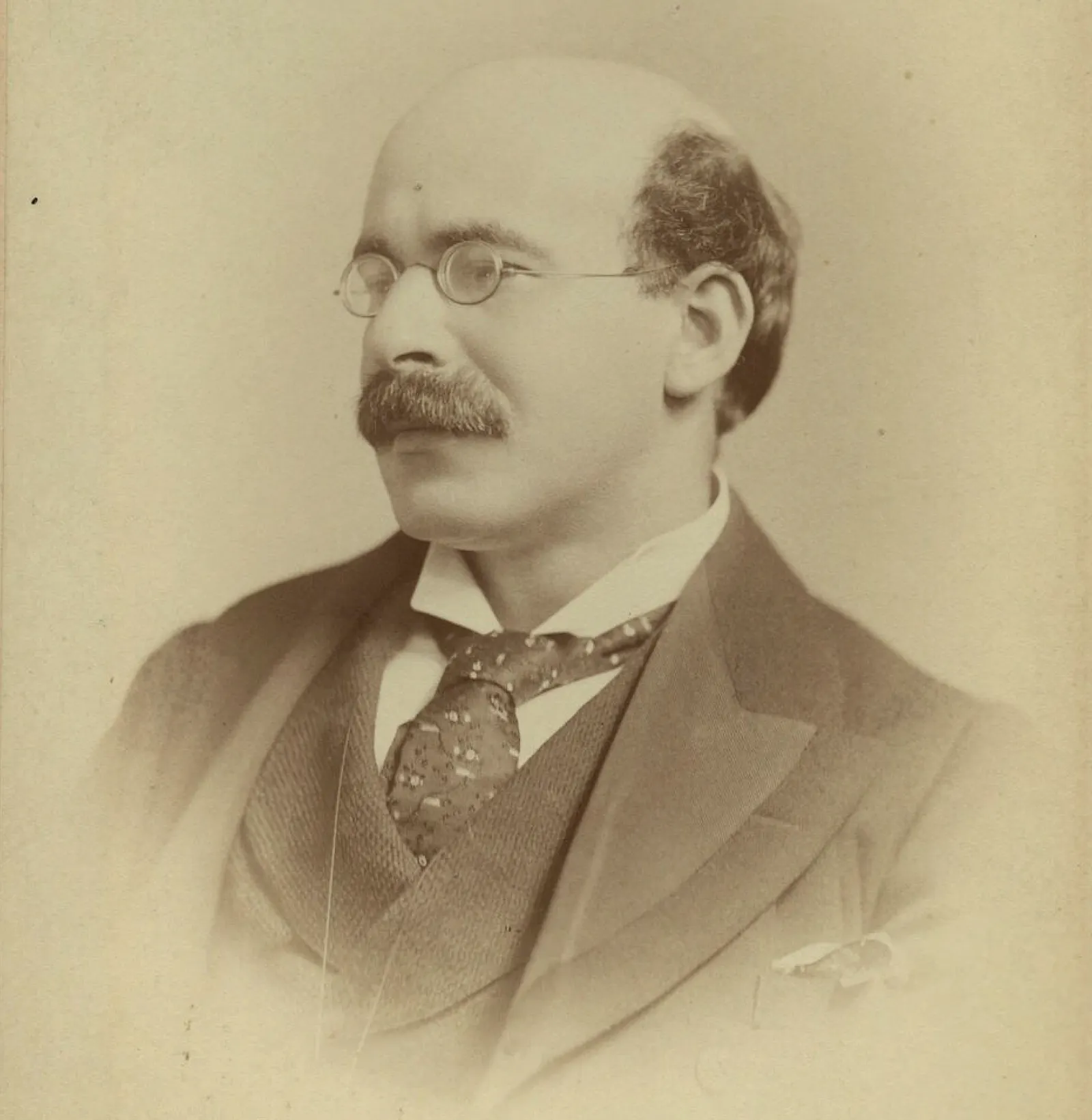
This caught the eye of Israel Gollancz, the distinguished philologist of King’s College, London. On 8 January, he made the fullest contribution to the debate:
It would be interesting to know how far the phrase ‘going West’ is common among English soldiers, and whether it seems to be peculiar to those coming from certain parts of the country – possibly from the West, Scotland, and Ireland.
(I don’t think Gollancz was setting up a contrast between Irish and English soldiers; rather, he was using ‘England’ to mean the whole of a Britain which then included the whole of Ireland.)
He also offered one earlier example:
The soldiers’ phrase ‘Going West’ … must be very old, though its occurrence in Early English literature is extremely rare. I can recall but one instance of its use, and this in some verses belonging to the end of the 14th or beginning of the 15th century on the theme and with the refrain ‘This World is Very Vanity’. The poem [is] possibly of West-Midland origin and certainly due to West-Midland influence … The illustrative lines are as follows:—
‘Women and mony wilsome wy
As wynd and wattir are gane west’
I.e., ‘Women and many a goodly whight
As wind and water are gone west’ – have passed away.‘To go West’ was ‘to decline’; ‘westring’ was synonymous with ‘drawing to decline’; ‘going west’ meant ‘drawing towards death’.
Gollancz then examined the cultural beliefs behind the idea of the dead passing westward:
The natural course of all things mortal was the sun’s course – from East to West; and the expression ‘going West’ can no doubt be traced to far-off ideas, primitive beliefs, and superstitions; but, apart from this, Biblical phraseology and parable helped to deepen what is a natural and beautiful metaphor. Life’s Day in the Vineyard starts with sunrise and ends with the Dark of Night – ‘Sunset and evening-star!’
He was quoting Lord Tennyson’s Crossing the Bar (S'ouvre dans une nouvelle fenêtre), a poem that depicts death metaphorically as a westward voyage. Gollancz went on to contrast two direction-words: ‘the auspicious “deasil”, sun-wise’ and ‘the sinister and ill-omened “widishins”’. He finished his long letter with this reflection:
There were, I think, in olden days no sinister or gloomy connotations in the phrase “going west”, applied to death; nor are there any for our brave soldiers to-day, who still use the expression when their life’s course is so nobly sinking westward.
The discussion on the Times letters page went on so long that the newspaper threw in its own own editorial commentary too. Canon E.A. Burroughs of Hertford College, Oxford, a stern moralist, found it reprehensible that ‘a public, eager … to discuss the origin of the phrase “Going West”, apparently thought the spiritual condition of the nation a subject less worthy of its attention’ (4 March, p.11). A philological discussion had become a weathervane for the state of Britain’s morals.
The current, online edition of the OED broadly follows Gollancz’s views. It likewise cites the quotation ‘Women and mony wilsome wy / As wynd and wattir are gane west’ (dating this to around 1532) but says the relationship ‘has not been firmly established’ between that earlier instance and the sense that ‘became widespread during the First World War’. The 1914–18 usage was originally Scottish, the OED says, giving an illustrative quote from Johnstone’s Edinburgh Magazine (October 1833):
The Irish, and the Scottish Highlanders, always describe persons lately dead as having gone west.
On this evidence, it would seem more accurate to call the sense originally Scottish and Irish. But at any rate the Dictionary judges that this usage is
Apparently ultimately with reference to the west as the place of the setting sun and perhaps also to its identification (esp. in Celtic traditions) as the abode of the dead.
So if the views of Israel Gollancz and the OED are correct, I guess what happened is this. The use of ‘going west’ for ‘dying’ was common enough in Scotland and Ireland, drawing on deep-rooted Celtic traditions. But it only really made a mark on the permanent record after ordinary Scottish and Irish soldiers were thrown into a war closely covered by journalists such as the Times correspondent in that northern French village. It was the most literate of wars, too, involving volunteer officers drawn from prestige schools and universities who were liable to write about their experiences.
My friend Peter Gilliver of the OED tells me he has found a 1925 claim (S'ouvre dans une nouvelle fenêtre) that go west = ‘die’ was used even earlier, by soldiers from the British Isles fighting in the Boer War of 1899–1902. But he cautions: ‘It’s all too often the case that claims like this, presented as simple facts though they may be, often turn out to be entirely spurious.’
I’m going to look into the new usage (and the public discussion it provoked) as part of the context for Tolkien’s wartime development of a cosmology where dead souls go to halls in the West. Your thoughts are welcome below. And then we may ‘go west’ again in a later post here…
 (S'ouvre dans une nouvelle fenêtre)
© John Garth, 2026. All rights reserved.
Date
28/02/2026
Sujet
Inspirations
3 commentaires
Souhaitez-vous voir les commentaires ?
Devenez membre de John Garth on Tolkien’s life and works pour rejoindre la conversation.