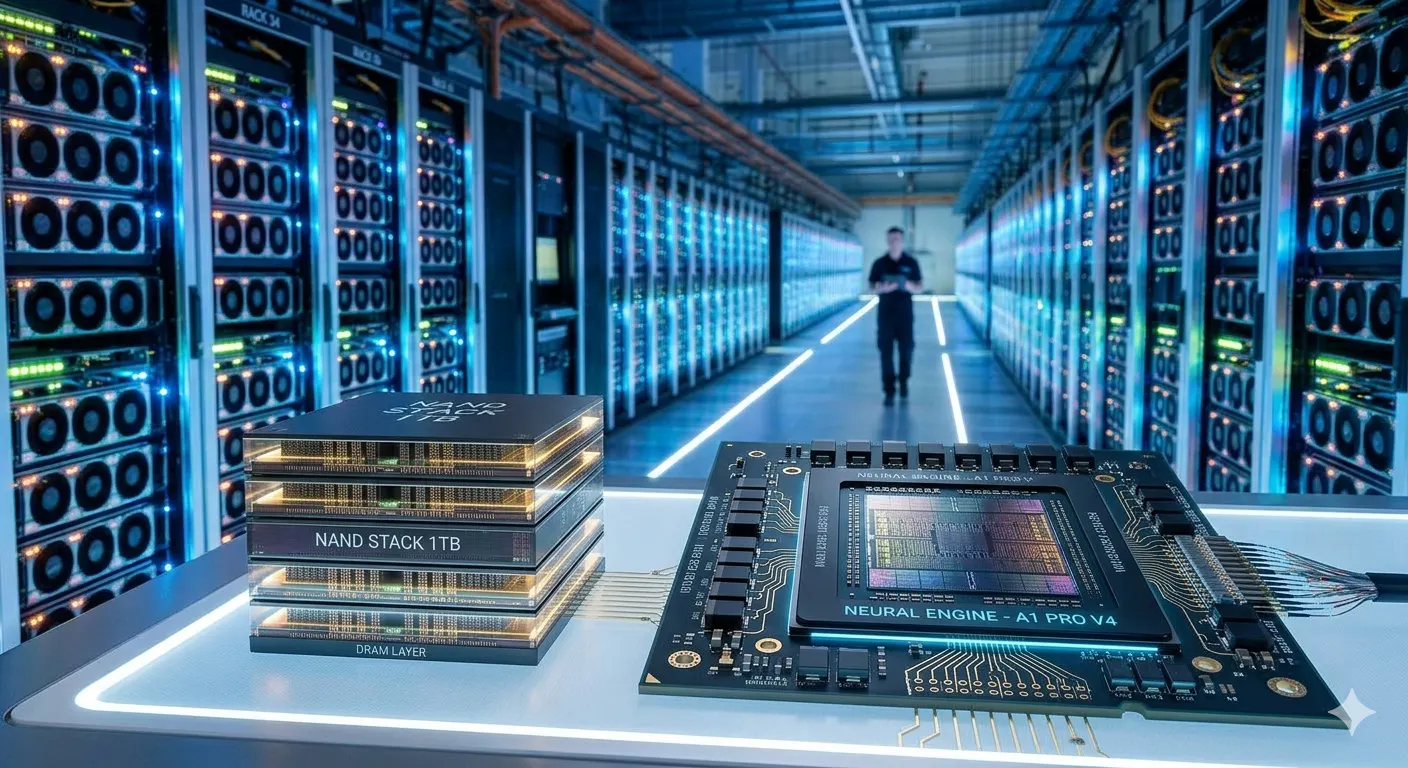
Artificial intelligence is rapidly transforming industries, markets, and global competition. But behind the excitement around AI models and powerful GPUs lies a less visible constraint that could shape the next phase of the technology boom: memory. AI systems require enormous amounts of high-performance memory to process data at scale, and demand is beginning to outpace supply. This emerging bottleneck is quietly boosting pricing power for memory chipmakers.
Before we dive deeper: if you enjoy independent financial journalism like this, consider supporting my work. By joining a supporter program such as Coffee-Break, readers can easily help sustain this kind of analysis.
Company Overview
While companies like Nvidia dominate headlines in the AI race, memory chipmakers are becoming increasingly critical to the ecosystem. The most important players in this space include Micron Technology, Samsung Electronics, and SK Hynix. These companies manufacture the DRAM and NAND flash memory used in data centers, smartphones, and increasingly in AI accelerators.
In AI systems, high-bandwidth memory (HBM) has become particularly important. HBM allows processors to access data at extremely high speeds, which is essential for training and running large AI models.
Because the global memory industry is highly concentrated, only a small number of companies have the manufacturing capacity and technological expertise to produce advanced chips at scale. This limited supply base is one reason why the current surge in AI demand is beginning to push memory prices higher.
Key Recent Developments
The explosion of AI workloads has dramatically increased the amount of memory required in data centers. Training large language models or running advanced AI inference systems demands far more memory than traditional cloud computing.
As technology companies race to build AI infrastructure, orders for advanced memory chips have surged. High-bandwidth memory in particular has become a critical component of AI accelerators used by hyperscale cloud providers.
Industry analysts increasingly describe HBM as a bottleneck for AI hardware production. With only a few companies capable of manufacturing these advanced chips, supply constraints are beginning to tighten the market.
This dynamic is particularly significant because the memory industry has historically been extremely cyclical. After years of weak pricing and oversupply, the sector may now be entering a new upcycle driven by structural AI demand.
The Company's Competitive Moat
Memory manufacturing is one of the most capital-intensive industries in the global economy. Building a state-of-the-art semiconductor fabrication plant costs tens of billions of dollars and requires years of technological development.
This creates a powerful barrier to entry. New competitors cannot easily enter the market, and existing leaders benefit from decades of manufacturing expertise, intellectual property, and supply chain relationships.
Companies like Micron, Samsung, and SK Hynix have invested heavily in next-generation memory technologies, including advanced DRAM nodes and high-bandwidth memory stacks. Their ability to produce these complex chips at scale gives them a significant competitive advantage.
If you want to receive more deep-dive analyses like this, you can subscribe to the free email newsletter. It’s the easiest way to stay informed about emerging investment trends in technology and global markets.
Deep Analysis
The investment case for memory chipmakers is increasingly tied to the structural rise of artificial intelligence. AI training clusters and inference systems require enormous datasets to be stored, transferred, and processed at extremely high speeds. This dramatically increases the memory footprint of modern computing infrastructure.
One major strength for the sector is the limited number of producers capable of meeting this demand. The concentrated nature of the industry gives established players significant scale advantages and potential pricing power during strong demand cycles.
Another positive factor is the rapid increase in memory per AI server. As models grow larger and more complex, memory requirements per system are rising significantly, which directly benefits manufacturers.
However, the sector also faces notable risks. Memory remains a cyclical industry that historically swings between shortages and oversupply. If manufacturers expand production too aggressively in response to AI demand, the market could eventually face another downturn.
Competition between the leading players is also intense. Technological leadership in areas such as high-bandwidth memory can shift depending on manufacturing breakthroughs, customer relationships, and capital spending.
Despite these risks, the long-term demand outlook appears stronger than in previous cycles because AI workloads are fundamentally more memory-intensive than traditional computing.
Conclusion
Artificial intelligence is reshaping the semiconductor industry in unexpected ways. While GPUs remain at the center of attention, memory is emerging as a critical bottleneck for next-generation AI infrastructure.
This shift could mark a turning point for memory chipmakers such as Micron, Samsung, and SK Hynix. Rising demand, limited supply, and improving pricing dynamics may create a favorable environment after years of cyclical volatility.
Still, investors should approach the sector with a clear understanding of its inherent cycles. The AI boom offers significant opportunity—but the memory industry has always rewarded patience and discipline.
Support this project
If you appreciate independent financial journalism and want to support more research like this, consider becoming a supporter. Your contribution helps keep this work sustainable.
Disclaimer:
This article is for informational purposes only and does not constitute investment advice.
Date
16/03/2026
Sujet
Growth
0 commentaire
Vous voulez être le·la premier·ère à écrire un commentaire ?
Devenez membre de Dividend Growth Stocks🚀 et lancez la conversation.