July 10, 2026
Hello dear Good News community,
My daily stress reliever: walking my dog—without our daily rounds, I instantly feel more unsettled, and I miss the exercise. In England, walks are now even being incentivized: vouchers and the like are being used to motivate people to get moving.
Enjoy reading, Selina

WEEKEND EDITION
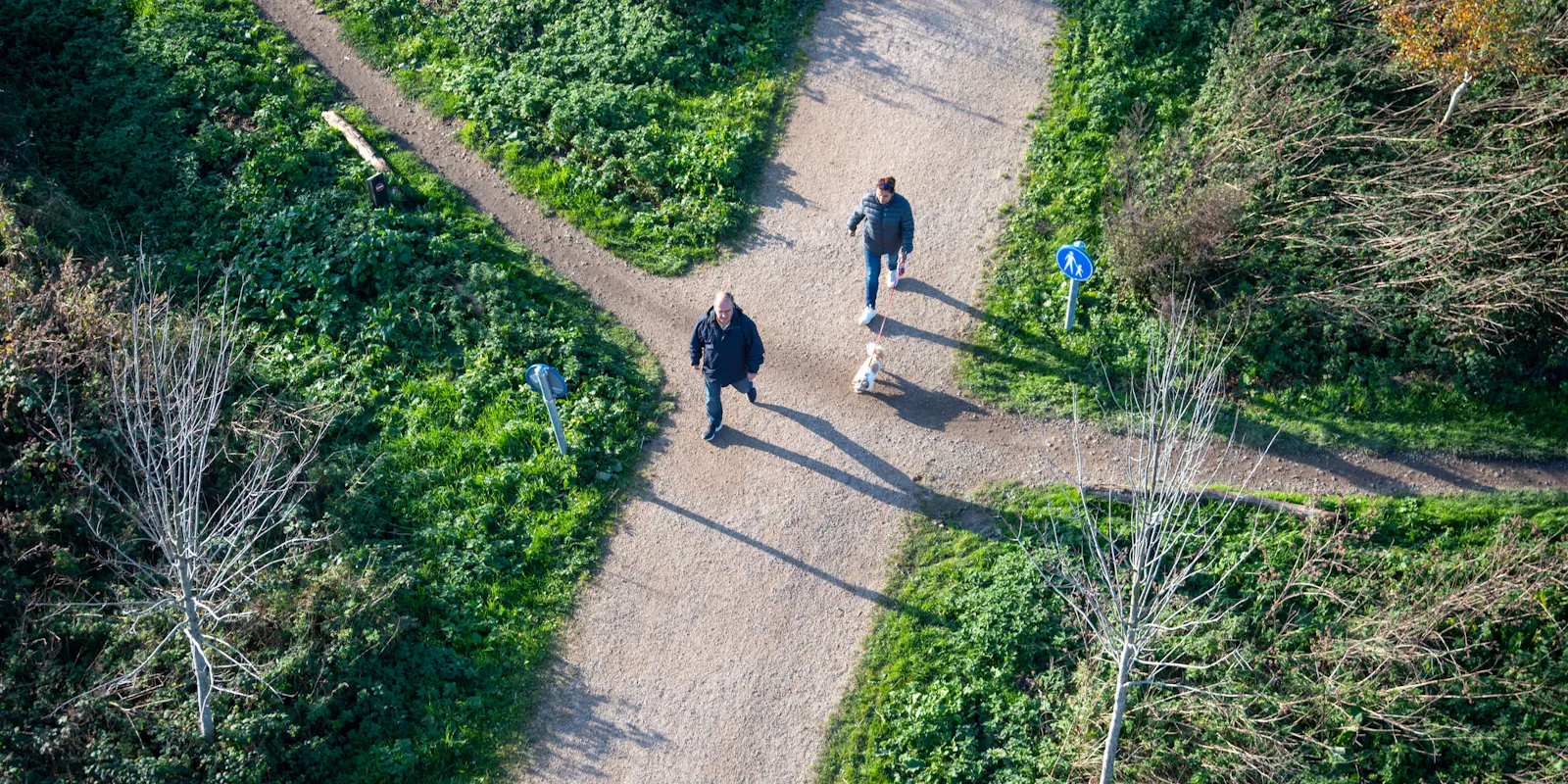
England rewards daily walks
The English National Health Service (NHS) wants to motivate people to exercise more using vouchers and discounts. Anyone who walks for 30 minutes every day for a month and proves it via smartphone or smartwatch will receive rewards in the future. Source: BBC
Go to article (S'ouvre dans une nouvelle fenêtre)
Blood test could ease endometriosis diagnosis
Worldwide, about 190 million people are affected by endometriosis. It often takes ten to twelve years to get a diagnosis. A study by the University of Edinburgh now shows how a simple blood test based on hormone patterns can identify who is affected by endometriosis. However, further research is needed. Source: EURONEWS
Go to article (S'ouvre dans une nouvelle fenêtre)
European municipalities bet on open source
More and more cities and regions in Europe are becoming more independent of US tech giants and are switching their administrations to open-source software. Pioneers include Schleswig-Holstein, Amsterdam, and Valencia. Source: RESET
Go to article (S'ouvre dans une nouvelle fenêtre)
Museum in Italy: Touch the art
Exploring art with your hands: At the Omero Museum in Ancona, this is explicitly allowed. Founded in 1993, it makes art accessible to everyone. The collection includes more than 200 works from antiquity to the present day. In addition to replicas of Michelangelo's statues, models of famous buildings can also be discovered. Source: DW
Go to article (S'ouvre dans une nouvelle fenêtre)
Indigenous knowledge to ensure environmental protection in AI development
A new study shows how Indigenous knowledge and ecological responsibility can be integrated into the governance of artificial intelligence. The researchers propose prioritizing environmental protection over technological expansion to limit the massive resource hunger of AI models. Source: MONGABAY
Go to article (S'ouvre dans une nouvelle fenêtre)
How one man saved six million bees
Clarence Chua lives in Singapore and has a mission: relocating bees that pop up in unusual places to safe environments. He is able to rescue about one hundred nests per year this way—over the last six years, that has amounted to six million bees. He shares these rescues on social media. Source: REUTERS
Go to article (S'ouvre dans une nouvelle fenêtre)
ON OUR OWN BEHALF
Good news needs YOU!
We firmly believe that Good News changes how we look at the world. That is exactly what we work for every single day—completely independently. To keep it that way, we need your support this July. Are you in? 🚀💚
 (S'ouvre dans une nouvelle fenêtre)
❣️ Thank you 74 supports in July!
Good News is largely financed by the voluntary contributions of its users. We are a non-profit organisation and all income is reinvested. Thanks to your voluntary contributions, we are able to cover a large part of our staff and production costs.
🩷 We hope that with our hand-picked daily edition, we have been able to motivate you to initiate and promote positive change yourself.
💌 If you know someone who would enjoy receiving this newsletter, please forward this email to them to sign up (S'ouvre dans une nouvelle fenêtre).
📲 Download our Good News app (S'ouvre dans une nouvelle fenêtre) .
Best regards,
Bianca Kriel & Selina Mahoche
Date
10/07/2026