which is it to be?
Before you begin to read, you should know I have mentioned products and supermarkets in the following text. Unfortunately, no one is paying me to mention their product. If this should change anytime soon, I will let you know!
Tea
When I was a teenager in Jamaica my father, Stan, would get up early in the morning and go to the kitchen to make us all a cup of tea.
Stan was English, and knew how tea should be prepared.
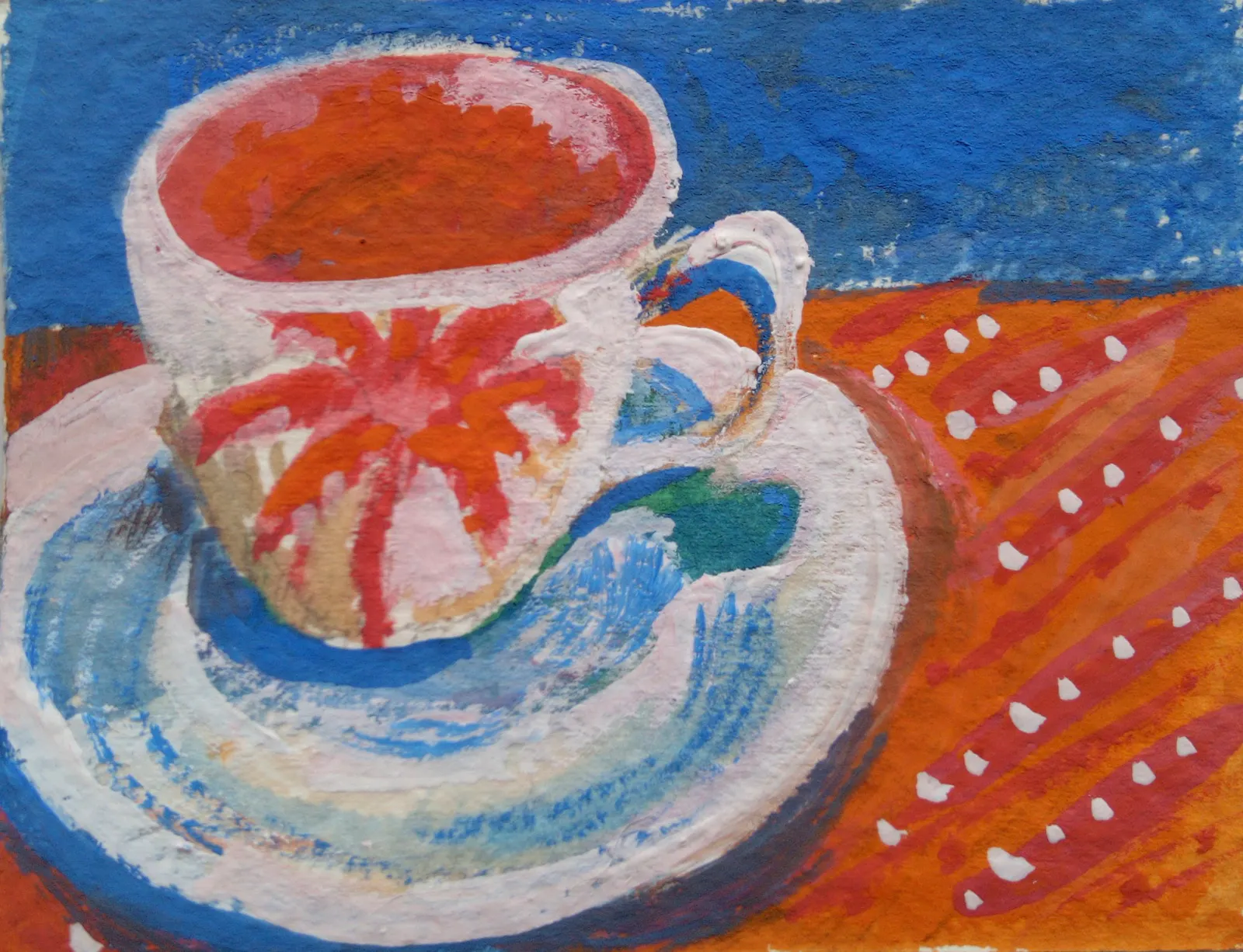
First, you should have loose tea, not the kind trapped in a little bag. A proper ceramic tea pot is good, with cups and saucers, a sugar bowl, and a little milk jug. Stan used to set all these items out on a blue metal tray with a silver border. There would also be a container for ice cubes, as my mother, Ruth, would only drink tea or coffee with an ice cube to lower the temperature so she could drink the beverage in a few good swallows.
The water would be boiled in our electric kettle, and poured into the empty teapot to warm it. The water would be swished around in the pot and poured out into the kitchen sink. Here my father may have paused to look out the picture window above the kitchen sink. He would have seen the rolling green hills, and the white mist rising from the valley in the pastures across the road. Then he would return to the counter with teapot in hand, set it down on the counter top, and measure one teaspoon of tea leaves for each cup, and one for the pot. The tea we were brought up on was Ty Phoo tea, which, I think, was sold in Jamaica, unless we were supplied by visitors from England.
Stan would carry all the tea making items down the long, dark corridor from the kitchen to the bedroom he shared with Ruth. The tea would be poured. Ruth’s tea would have an ice cube plopped into the golden brown liquid. I would drink my tea with milk and sugar, as did my brother. My sister, at that time, was still small and may not have drunk tea at all. She would be sitting up in the bed. Every morning my father would ask us how we wanted out tea, even though he must have known the answer. It was a ritual, the words and actions formed the solid start to a day filled with myriad unknowns.
Morning tea time was when you would probably find all the family gathered in our parents bedroom. My bedroom was through the blue bathroom that adjoined my parent’s. On the days I did not run down to be with my father when he was making tea, he might find me sleeping, and would bring me a cup of tea, which he would set down on my bedside table. I would wake up, and take my tea into my parent’s room to drink, where I would hear about the plans for the day.
In my father’s family, it may have been his mother who had always made the tea. My mother, Ruth, had failed at this task, so the job had fallen to my father. Ruth had joked that she had made sure she failed, otherwise she knew she would have been faced with a lifetime of tea preparation.
Once, years later, I ordered Ty Phoo tea through Amazon, it came from India ,and seemed to have been hand packed. The tea was trapped in those little paper flow through tea bags, and I could hear my long dead father muttering in disgust. It did not taste how I remembered. This is probably because my father had been making tea with soft rainwater. The water that comes out of our taps, in the tiny town I now live, sometimes tastes good, other times it tastes as though someone sharpened pencils into it, or tripped and spilled a billion litres of chlorine into the supply.
Where I live now, we used to drive up a dirt road to a pipe that came out of the side of the mountain. We used to fill glass demijohns with clear, clean water that tasted like water should. We have not done this for a while. It will be interesting to make that trip again. It is not far. It will be interesting to see if people have come to live in the farmhouse on that stony road, and if someone is now taking care of the land.
Lately, I discovered the Earl Grey tea from EuroSpin has a stronger flavour of bergamot than the tea that comes from Twinings, packed in Poland. This makes perfect sense to me, because bergamot grows in Italy, and not Poland or the United Kingdom. The Twinings Prince of Wales tea also seems to have a different flavour. I hadn’t drunk it for such a long time, and remember I had once enjoyed the perfumed flavour. If I can find it, which is seldom, I buy the Intense tea from Twinings.
I am still in search of good tea, and see that people mention Irish and Yorkshire tea as being exceptional, because it is strong. Before Brexit I could find Irish tea at a local supermarket, Pam. When I was in New York, and knew people from Japan, I used to drink Japanese Bancha tea, and loved it. Not too easy to find in the foothills of the Dolomites, unless you order online.
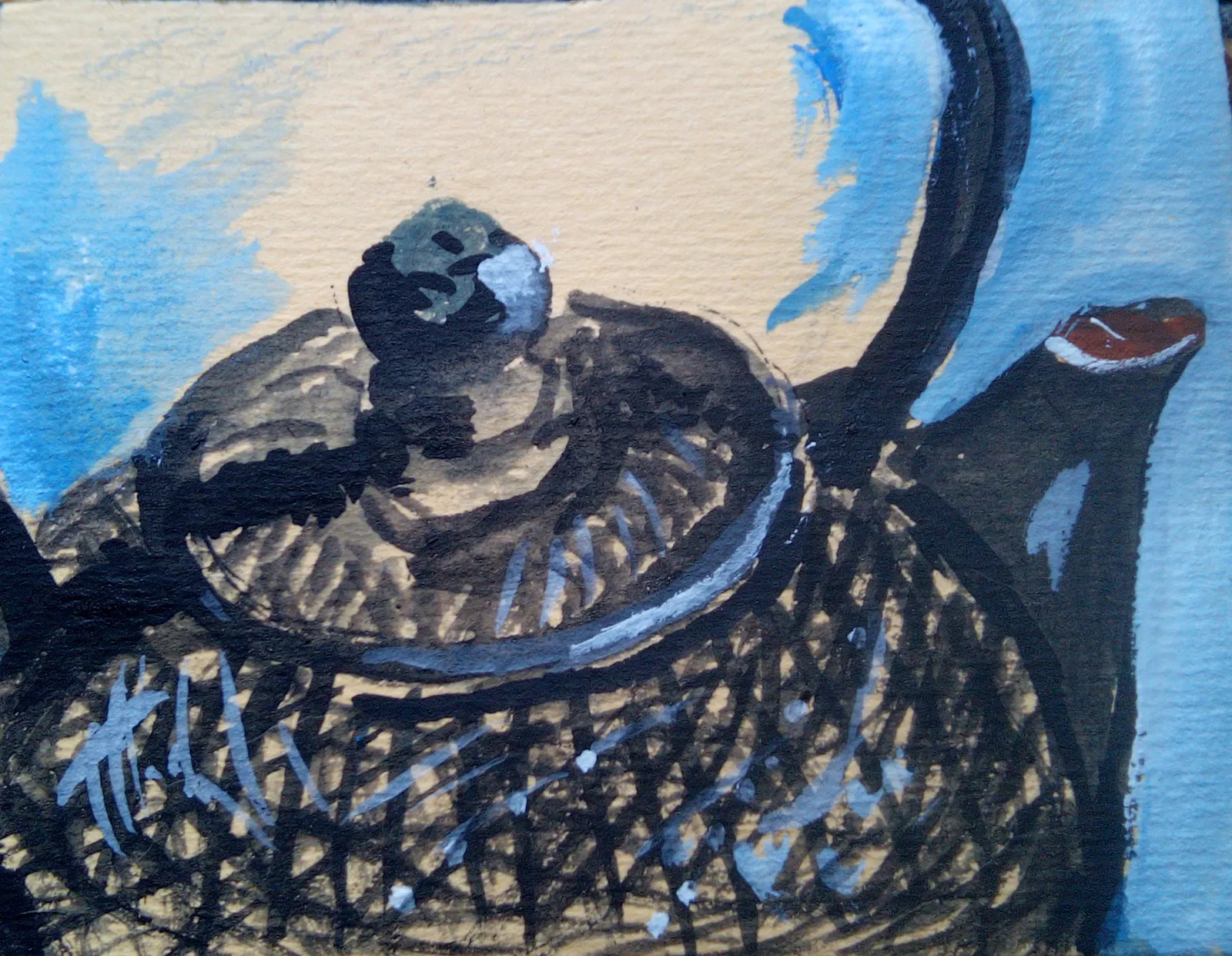
Anyway, it is only me who drinks tea in the morning. I boil the water for my tea in my Japanese cast iron kettle. I have read you are supposed to boil the water for the tea and not to make the tea in this tea pot shaped container. We have a stainless steel kettle, but it is quite large.
If we drink tea in the afternoon, my companion wants to drink fruit teas made from berries. We usually buy tea from either of the supermarkets: Lidle or EuroSpin. The tea is adequate. In the morning, if I put two teabags in my giant cup the tea may even be strong enough, may even taste of tea. I do not mind. I know that sooner or later I will find loose tea, perhaps I should be going to the store where they sell herbs and spices.
It was my mother who taught me about when to pour the milk into the cup of tea. If the china is good you can pour it in last, if not, the milk goes in first. My father said it is probably related to the fact that in a home, where servants are employed, it would be the lady of the manor who poured the tea, and the maid would come round after to offer milk and sugar from a silver tray. And yes, it is true, tea can stain a cheaply made cup, but may not stain porcelain. Personally, I need to experiment using different types of china.
My cheaply made cup is stained by the tea I drink. I make my tea with teabags. Put my two teabags in the large pink cup, pour the boiling water, move the teabags around to release the tea. Pour in a little milk. Leave the teabags in. I may need to add more hot water, after I have had a few sips. Sometimes I will even leave the tea until it is cold, and drink it when I come in from the heat of the day.
Coffee
When in Jamaica, we drank tea in the early morning, and coffee at the round wooden breakfast table. The coffee would be in a tall ceramic pot with a yellow lid and a flower painted on the side. The pot was set down in the middle of the table. I do not know how this coffee was made, but suspect it was bush coffee. You boil the coffee in water. When the coffee has boiled, you add a tiny quantity of cold water which, they tell me, causes the grounds to fall to the bottom. You strain this dark liquid into your coffee pot, or the waiting cups.
Breakfast was on the veranda before the sun hit that side of the house. We could look out onto the John Crow Mountains in the distance. Or over to Aunt Mollie’s pink house on the hill at Mammee Ridge across the way. There were cypress trees growing to one side that reached into the sky. We could see the white clouds drifting, the ever changing shadows on the hills and mountains. We could hear the cows in the pasture, or watch them feeding as small red-gold dots in the distance in the pastures across the road.
The favourite breakfast from that time was salt fish and ackee, served with pear (avocado), boiled green banana, and fried Johnny cakes.
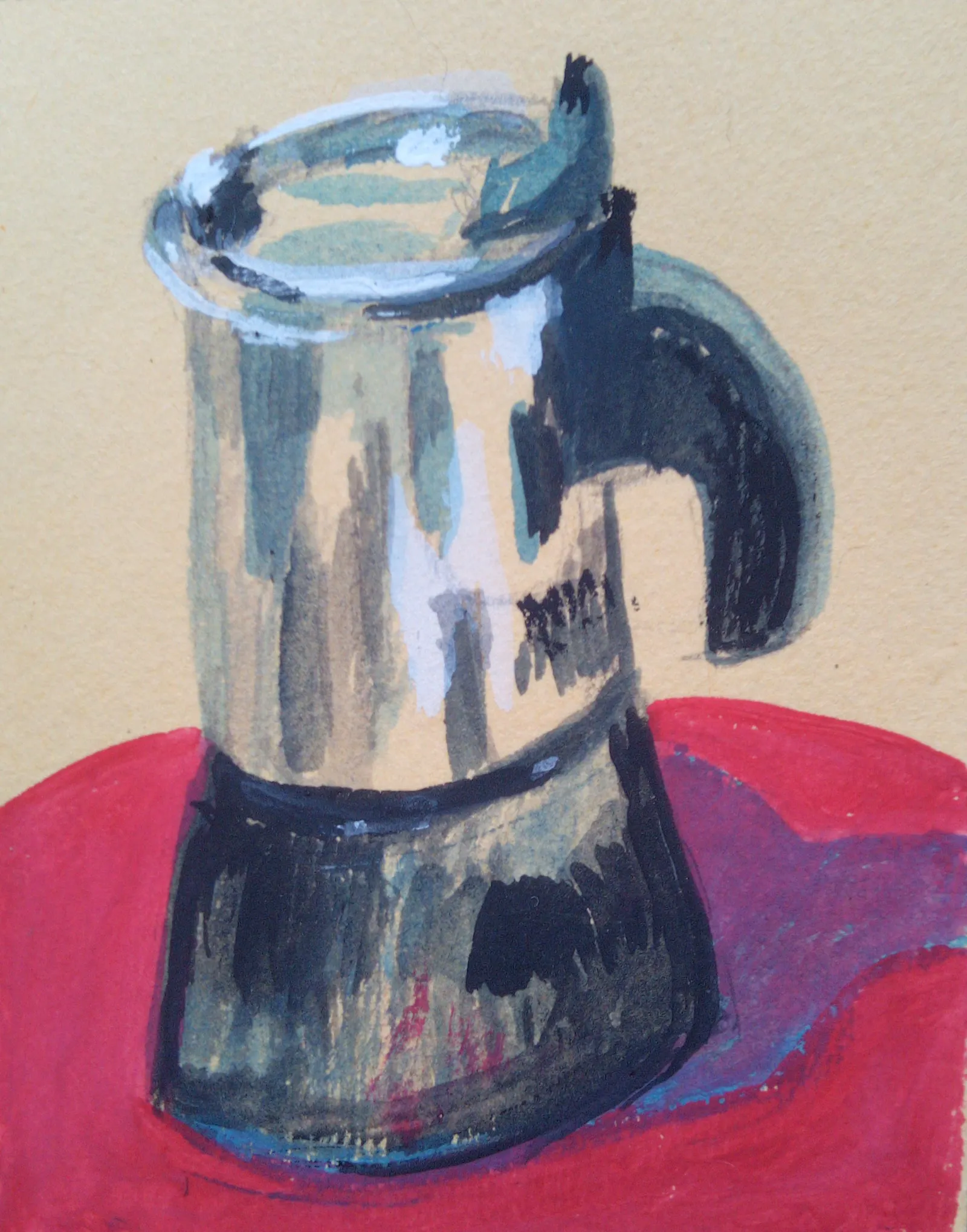
I cannot remember when I found my grandmother’s coffee maker, which we knew as a Cuban coffee pot. In Italy I would learn this was called a Moka (see my illustration). I adopted it to make my coffee. It explained why my father always used to tell us Grannie had drunk her coffee so strong and sweet that a spoon could stand up in the middle of the cup.
When I was living in New York the Italians I met introduced me to Italian coffee, and taught me where I could buy Lavazza gold. From that moment I was well and truly addicted. I also discovered that the only places to really get a decent cup of coffee in New York was in any coffee shop belonging to Latinos or Italians.
After I had been living in Rome for a while, and returned to New York for a brief visit, I found a coffee shop that sold espresso. It was dreadful. I complained. The owner asked me where I lived, and I told him I had been living in Rome. He said, “I’ll make your coffee.” It was the best espresso. He explained he couldn’t make espresso like that for the Americans because they found it too strong. He said he was from Europe, and knew the taste of a good espresso.
At our neighbour’s house in Jamaica, Winefield, coffee was grown on the property and prepared bush coffee style. Coffee would be served after every meal, even late at night. I used to find I would sleep like a log after drinking that coffee.
Coffee does not have to be espresso for it to taste good. I have drunk the best Jamaican coffee at Devon House in Kingston, and a friend used to make me coffee flavoured with hazelnut in a drip coffee maker in New York. The Jamaican powdered coffee in a jar is also good, and there are brands of fiercely strong powdered coffee on the market. One brand I found at Lidl supermarket in Spilimbergo, where they also used to sell good Assam tea, but no more.
Indeed, have had more trouble finding a good cup of tea than a good cup of coffee. Admittedly I am living in Italy, where the coffee is generally good. Sometimes, when out and about, it comes down to who is operating the espresso machine. When buying coffee to prepare at home we look for 100 percent Arabica, which we buy from the large supermarkets. Every so often we will splurge and buy Illy, a blended coffee, which also sells an intense (Intenso) version, which we like best of all, but is not easily found where we shop.
Illy was founded in Trieste in 1933. A friend who lives in that city says he has heard the coffee beans are roasted only when the atmospheric conditions are perfect for roasting.
Cocoa
I learned about cocoa as a morning drink when I was taken to France, when I was twelve, by the woman who had been hired to help look after my baby sister. Her grandfather spoke English, but he was not always up when I showed myself for breakfast in the morning. I only knew a few words in French one being for bread and the other for cocoa, so this is what was given me. The cocoa was very milky.
On that visit I was also taught how to cross extremely busy roads where the drivers of the cars don’t stop when a person is attempting to cross. “Think of it as a river”, said my sister’s nanny, “and just walk as though you know where you are going”. I remembered this advice when I went to live in Rome. In Geneva the traffic stops as you step out onto the pedestrian crossing, which terrified me in a way that constantly moving traffic does not. In the one case you have to trust the driver, in Rome or Paris, you trust yourself.
We used to drink cocoa in Jamaica, but we would grate the cocoa beans into the milk and prepare it that way. Again, it was my mother who taught me about the cocoa beans when we were in the market buying fruit and vegetables. It was Anita and Rachel in the kitchen who taught me how to prepare the drink.
Morning tea, morning coffee?
You may, or may not, be asking who prepares the coffee in the morning? The Italian, or the one born and partly raised in Jamaica?
Generally, and most of the time it is me who prepares the morning coffee. The Italian has been very flattering, and claims I make the better coffee. It is stronger, he says, has more flavour. However, I suspect the truth maybe very different. As I am the morning person, the job of making coffee has fallen to me, by default.
We drink the coffee, made in a six cup moka, with hot milk out of glasses with handles, which used to contain a not very tasty tiramisu from the supermarket.
Coffee, cocoa, tea and the environment
Coffee, cocoa and tea grown to supply our needs can impact the environment. I have learned that coffee is one of the top six drivers of deforestation (Coffee Watch website link below). Coffee, some teas, and cocoa can be grown under other trees, as agroforestry, which can reduce the impact on the environment, while providing food crops.
Link to Coffee Watch: https://coffeewatch.org/coffee-and-environmental-problems/ (Öffnet in neuem Fenster)
When buying we can look for Fair Trade, Eco labels, or Rainforest Alliance Certification. For more information click here:
https://www.fairtrade.net/uk-en.html (Öffnet in neuem Fenster)Thank you for reading!
Datum
10.06.2026
Kategorie
Memories


