September 2024
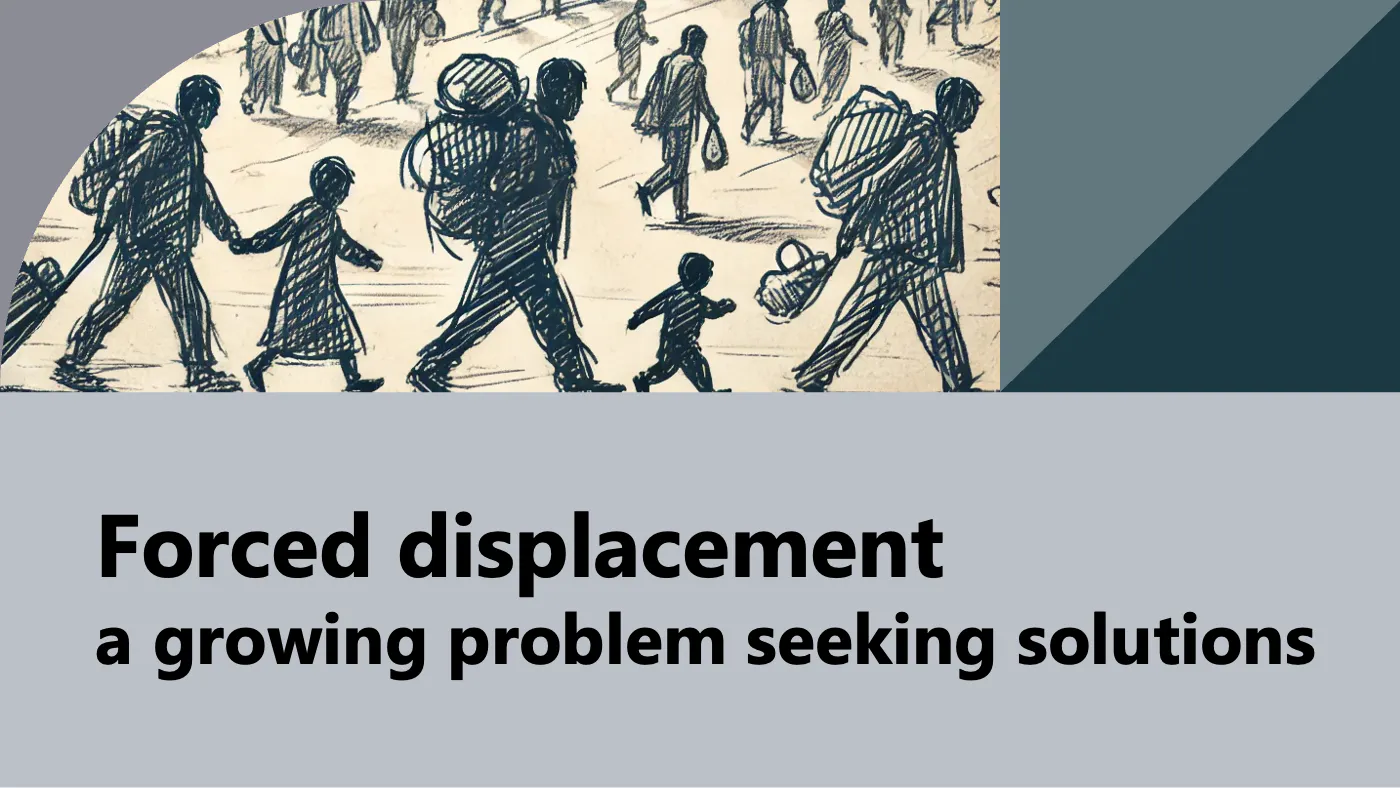
In an increasingly interconnected world, migration has emerged as one of the most pressing and complex issues. From war and persecution to climate change and economic disparities, millions of people are forced to leave their homes in search of safety, stability and better opportunities. While migration can be voluntary, today's large-scale movements of people are often driven by crisis and necessity, posing unprecedented challenges for governments, international organisations and societies.
The current landscape of global displacement
By the end of 2023, the global displacement will have reached unprecedented levels. According to the United Nations High Commissioner for Refugees (UNHCR) (Öffnet in neuem Fenster), there are now more than 117.3 million forcibly displaced people worldwide. This figure includes refugees (approx. 37.6 million), asylum seekers (approx. 6.9 million), internally displaced persons (IDPs) and others fleeing persecution, conflict, violence or human rights abuses.
A key component of this displacement is internally displaced persons (IDPs), who are uprooted within their own country's borders. In 2023, the number of IDPs stood at 68.3 million, highlighting the scale of internal conflicts and crises. In the same year, 6.1 million people were newly displaced within their own countries, a stark reminder that the burden of forced migration is often an internal national one.
In recent years large international displacement flows came from countries such as Ukraine, Sudan, Venezuela and Syria, which have seen a sharp increase in the number of people fleeing violence and instability, either internally or across international borders to seek asylum. Behind these statistics lie human stories of loss, suffering and the search for a future that remains elusive for many.
Sudan's unfolding humanitarian catastrophe
While global attention often focuses on conflicts such as those in Ukraine and Gaza, Sudan is experiencing an under-reported yet devastating wars in recent history. The ongoing conflict in Sudan threatens to become one of the deadliest of the decade, with far-reaching implications for the region and beyond.
Sudan, Africa's third largest country, has descended into chaos as violence engulfs the capital. The displacement caused by the conflict in Sudan is alarming. More than 10 million people - almost a fifth of Sudan's population - have fled their homes, contributing to a growing refugee crisis in the region. As neighbouring countries struggle to accommodate these refugees, the crisis risks triggering wider instability across the Horn of Africa.
There are fears of a looming famine that could claim 2.5 million lives by the end of the year if urgent action is not taken. This potential humanitarian disaster could rival the infamous Ethiopian famine of the 1980s, with international aid and intervention remaining limited.
This looming crisis has a clear geopolitical dimension, with its Red Sea coastline and proximity to vital global trade routes such as the Suez Canal. The conflict threatens not only regional stability but also global economic interests, making it a crucial flashpoint in the wider debate on migration and displacement.
The root causes of forced migration
To effectively address global displacement, it is essential to understand the root causes that drive people to flee their homes. UNHCR identifies a number of primary drivers of forced migration:
Conflict and violence: Armed conflicts and civil wars remain the main causes of displacement. Countries such as Ukraine, Syria, Afghanistan and Sudan have experienced protracted violence that has displaced millions of people both internally and across borders.
Persecution and human rights abuses: Minority groups facing persecution because of their ethnicity, religion or political beliefs are often forced to flee. For example, ethnic minorities in countries such as Myanmar and China continue to face systematic oppression and displacement.
Political instability: Fragile states with weak governance are often plagued by political unrest, coups and insurgencies. The collapse of governments can lead to mass displacement, as seen in Venezuela, where political and economic turmoil has driven millions to seek asylum elsewhere.
Economic hardship: Difficult economic conditions, often exacerbated by corruption and mismanagement, drive people to leave in search of better livelihoods. Economic migration is prevalent in regions where opportunities are scarce, leading to significant outflows from Central America and parts of Africa.
Large-scale development projects: Infrastructure projects such as highways and dams, or massive extraction and pollution of, for example, water resources by international corporations, can displace entire communities, although this remains a less common factor compared to conflict or environmental displacement.
Climate change and environmental degradation: As climate change intensifies, environmental factors are becoming increasingly important drivers of migration. Rising sea levels, desertification and extreme weather events are displacing millions of people, particularly in vulnerable regions such as sub-Saharan Africa and South-East Asia.
These drivers of migration are often interrelated. For example, environmental degradation can lead to resource scarcity, exacerbating conflicts over land and water, while political instability and violence often accompany economic hardship. The actions of Western society also play a role in this complex web of causes, for example in the exploitation of national resources and cheap labour, or the export of waste.
Future projections of refugee numbers and movements
The global displacement crisis shows no signs of abating, and future projections paint a worrying picture. Reports such as the World Migration Report 2024 (Öffnet in neuem Fenster) and the World Bank's Groundswell report (Öffnet in neuem Fenster) offer insights into possible trends.
The current annual growth rate of refugee populations is around 3-5%, suggesting that if these trends continue, the number of refugees could increase by 1-2 million per year over the next decade. One of the most significant factors influencing future displacement is climate change. The Groundswell report (Öffnet in neuem Fenster) estimates that by 2050, 216 million people could be internally displaced due to climate-related factors alone. Rising sea levels, more frequent natural disasters and desertification will force millions to move, many to urban areas, increasing pressure on cities in both developed and developing countries.
The global response to the refugee crisis
Despite the growing number of displaced people, the global response to the refugee crisis has been uneven, with low- and middle-income countries hosting the majority of refugees. According to the UNHCR, these countries host 75% of the world's refugees, while 21% of refugees live in the least developed countries. Wealthier countries, especially in the West, have increasingly adopted isolationist policies that focus on fortifying borders rather than addressing the root causes of displacement.
In Europe, the concept of 'fortress Europe' has gained traction, with many countries investing in border walls and fences to prevent the arrival of migrants. This trend is exacerbated by growing anti-immigrant sentiment, with populist and far-right parties gaining ground in Europe. Anti-immigration rhetoric is no longer confined to the far right; it has also become a topic of debate among left-wing politicians in countries such as Germany, signalling a worrying shift towards xenophobia across the political spectrum.
The rise of xenophobia has had an impact on policy, with countries imposing stricter asylum procedures and increasingly discussing remigration policies aimed at sending migrants back to their countries of origin (see our earlier blog post on remigration debate (Öffnet in neuem Fenster)). These developments highlight the tension between humanitarian obligations - enshrined in international conventions such as the 1951 Refugee Convention - and domestic political realities, which often prioritise national interests over global solidarity.
Conclusion: A critical moment for the global response to migration
The global displacement crisis is at a critical juncture. With the number of refugees projected to rise significantly in the coming decades, the existing global response - characterised by disproportionate burden-sharing and rising xenophobia - is unsustainable.
The Western world in particular faces a choice: continue down the path of isolationism and border fortification, or adopt a more cooperative, humane approach to migration. This requires not only addressing the symptoms of the displacement crisis, but also tackling its root causes. Effective strategies must focus on conflict prevention, sustainable development and climate change mitigation in regions prone to displacement.
There also needs to be a fundamental shift in the narrative surrounding migration. Instead of viewing displaced people as a burden, societies must recognise the potential contributions that migrants can make, economically, socially and culturally. Refugees, if properly integrated, can become valuable members of host societies, bringing diversity, skills and new perspectives.
Finally, international cooperation will be key. Wealthier nations must step up to share responsibility by providing asylum, resources and support to countries bearing the brunt of the refugee crisis. By building stronger global partnerships and creating comprehensive migration policies, the world can begin to address this monumental challenge in a way that upholds the dignity, rights and future of all people.
by Kai Böhme
https://steadyhq.com/en/spatialforesight/posts/c558d017-0a70-487f-8484-8f7776c25bc8 (Öffnet in neuem Fenster)
Datum
27.09.2024
Kategorie
Trends
0 Kommentare
Möchtest du den ersten Kommentar schreiben?
Werde Mitglied von spatialforesight und starte die Unterhaltung.