Few markets spark as much excitement—and uncertainty—as China. For global pharmaceutical giants, the country represents both an enormous opportunity and a complex strategic puzzle. Now, Eli Lilly and Company is making one of its boldest moves yet.
The U.S. drugmaker has announced a $3 billion investment to expand its supply chain operations in China (Opens in a new window), signaling long-term confidence in the world's second-largest pharmaceutical market. At a time when geopolitical tensions and supply chain risks dominate headlines, Lilly’s decision raises a compelling question: is this a calculated growth strategy—or a high-stakes gamble?
Company Overview
Founded in 1876 and headquartered in Indianapolis, Eli Lilly and Company has transformed itself into one of the most influential players in modern medicine. The company specializes in treatments for diabetes, obesity, oncology, immunology, and neuroscience.
In recent years, Lilly has surged ahead of many pharmaceutical rivals thanks to breakthrough drugs such as Mounjaro and Zepbound, both based on the molecule Tirzepatide. These therapies have turned the company into a central figure in the rapidly growing obesity and metabolic disease market.
With demand for these treatments exploding worldwide, Lilly’s growth strategy increasingly depends on scaling production and securing global supply chains—a challenge that has pushed the company toward major infrastructure investments.
Key Recent Developments
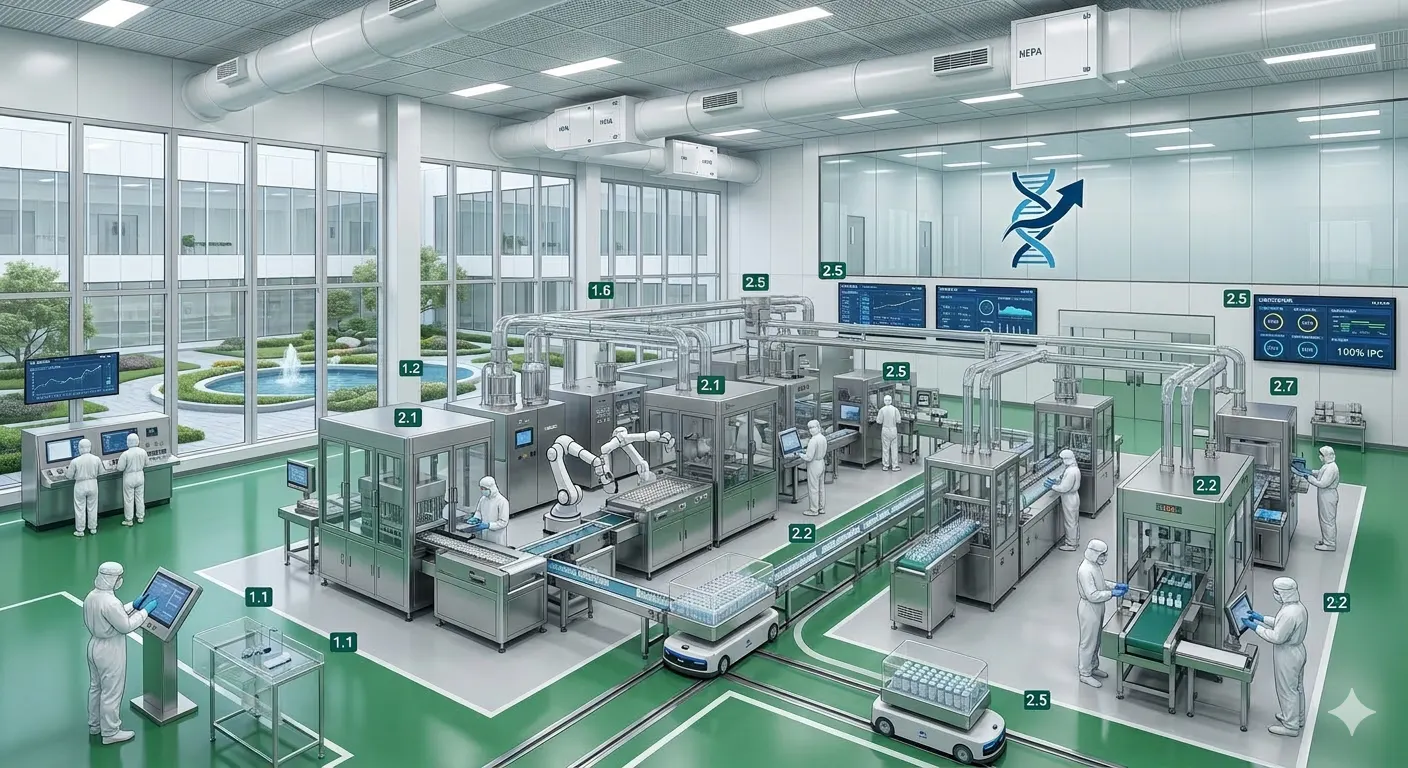
The newly announced $3 billion investment in China focuses on expanding Lilly’s supply chain capabilities, including manufacturing, logistics, and distribution infrastructure. The initiative will strengthen the company’s operational footprint in one of the fastest-growing pharmaceutical markets globally.
China’s healthcare system is undergoing rapid modernization, with rising incomes, an aging population, and increasing rates of chronic diseases such as diabetes and obesity. These trends align closely with Lilly’s core therapeutic areas.
At the same time, the investment reflects a broader industry shift. Pharmaceutical companies are increasingly seeking regional supply chain resilience, reducing reliance on single manufacturing hubs while positioning production closer to end markets.
For Lilly, China is not merely a sales market—it is becoming a strategic manufacturing and innovation node within its global network.
The Company's Competitive Moat
Eli Lilly’s competitive strength rests on a powerful combination of scientific innovation, blockbuster drugs, and scale. Its research engine has delivered a pipeline of high-value therapies, particularly in metabolic disease, where demand is skyrocketing.
The company’s leadership in GLP-1–based treatments has created a formidable moat. As obesity drugs transition from niche treatments to mass-market therapies, production capacity becomes as important as intellectual property. Lilly’s aggressive investments in manufacturing infrastructure aim to ensure that supply keeps pace with global demand.
Moreover, its early and deep commitment to China gives Lilly an advantage over competitors that remain cautious about expanding in the region.
SWOT Analysis
Eli Lilly’s strengths lie primarily in its industry-leading drug portfolio and powerful innovation engine. The company’s success with metabolic treatments has positioned it at the forefront of one of the most lucrative pharmaceutical segments. Strong revenue growth and investor confidence have also given Lilly the financial resources to pursue massive expansion projects such as the new Chinese supply chain initiative.
However, the company faces weaknesses typical of highly specialized pharmaceutical firms. A significant portion of its current valuation is tied to the success of a few blockbuster drugs, making it vulnerable to regulatory changes, pricing pressures, or unforeseen competition.
Opportunities are abundant. Global demand for obesity and diabetes treatments is expected to surge in the coming decade, particularly in emerging markets such as China. By building supply chain capacity locally, Lilly may capture a significant share of this growth while strengthening relationships with Chinese healthcare authorities.
Threats, however, remain substantial. Regulatory unpredictability, geopolitical tensions between the United States and China, and increasing competition from other pharmaceutical giants all pose potential risks. Additionally, domestic Chinese biotech companies are rapidly improving their capabilities and could eventually challenge foreign players.
Conclusion
Eli Lilly’s $3 billion investment in China reflects both confidence and urgency. As demand for its breakthrough metabolic therapies explodes, the company must scale production and strengthen its global supply network.
From a strategic perspective, the move is bold but logical. China offers enormous growth potential, and companies that invest early often secure long-term advantages. Yet the decision also exposes Lilly to geopolitical and regulatory uncertainties that are difficult to predict.
For investors and industry observers alike, the key question is whether Lilly’s global expansion can keep pace with the extraordinary demand for its medicines. If it succeeds, the company may solidify its position as one of the defining pharmaceutical leaders of the decade.
Enjoy deep dives into the world of business, markets, and innovation? Become a supporter of this project and help keep high-quality financial journalism alive.
Disclaimer:
This article is for informational purposes only and does not constitute investment advice.
Date
March 12, 2026
Topic
Dividend Growth
0 comments
Would you like to be the first to write a comment?
Become a member of Dividend Growth Stocks🚀 and start the conversation.