A few weeks ago I grabbed a magazine at the airport: the first issue of the French Esquire, with Bruno Danto as Editor-in-Chief. It's a gorgeous piece of journalism and editorial art, and it proved to be pure catnip for me.
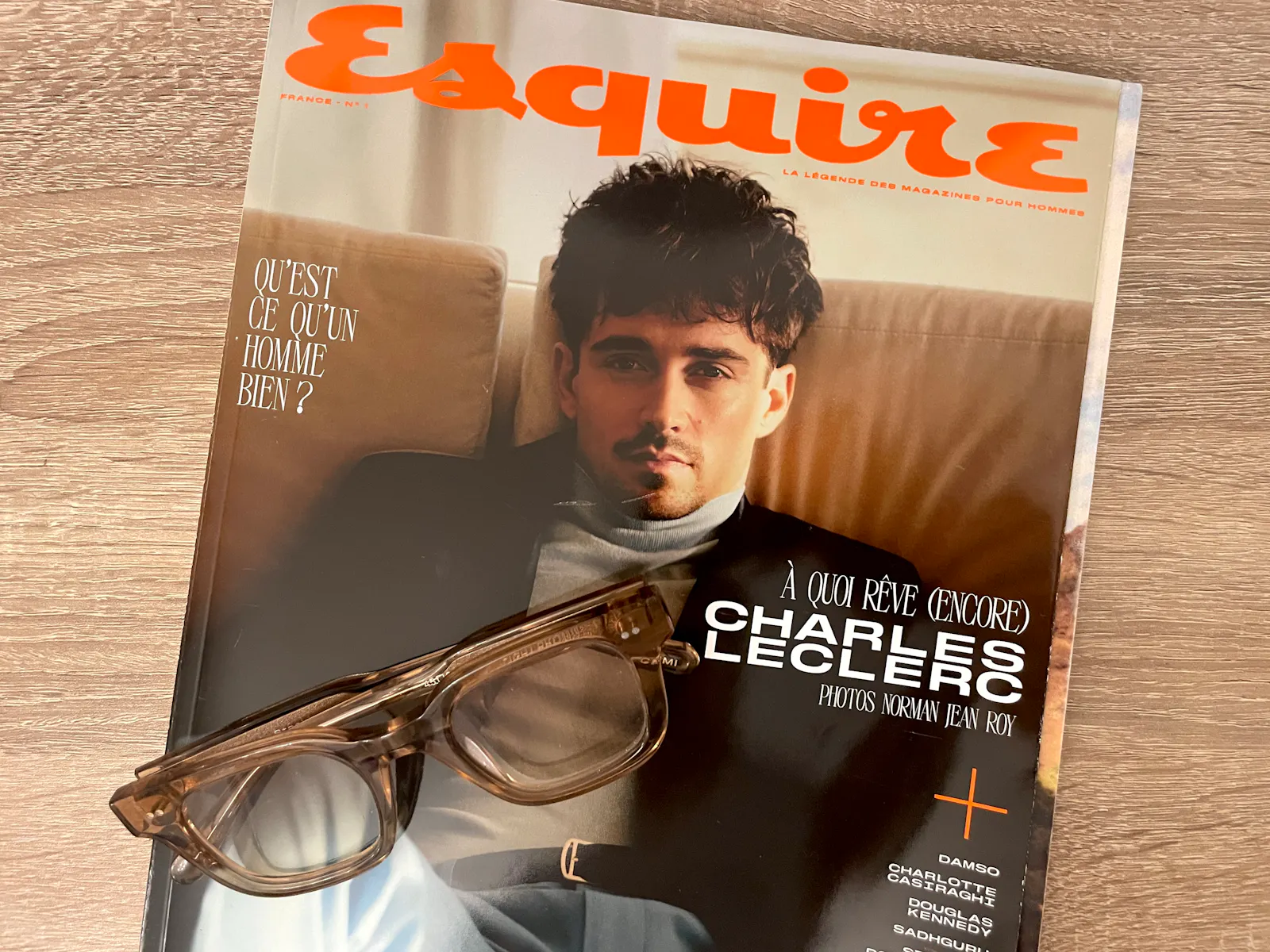
It has Formula 1 driver Charles Leclerc on its cover, a snazzy Louis Vuitton ad with Jeremy Allen White on the first spread, and interviews with author and model Charlotte Casiraghi and model David Gandy—just to mention a few things that caught my eye.
As you may know, Esquire is actually a legendary gentlemen's magazine, so I did surprise myself a bit by buying it, for I am no gentleman (maybe just a gentlewoman 😜). But then I remembered I've always found men's fashion much more fascinating than women's, so in reality I'm keeping very much in line with my identity with this purchase.
Anyway, what’s interesting is that reading this magazine incidentally taught me a lesson about our perception of perfection.
As I started to devour the magazine's photos and articles at the airport, I was beyond happy to discover Esquire is bringing such elegance to the magazine stalls. There were only maybe three or four articles I skipped, but otherwise it felt like the magazine just kept getting better and better page by page. So kudos to the whole editorial team for creating such a quality piece—I could truly sense the devotion and good taste required to make it!
But…
There is a but.
Even looking at the tiniest of details, the magazine seemed practically flawless to me—until I found a typo.
I know… This is exactly the type of thing only a perfectionist would notice and want to contemplate, but bear with me.
There was a time in my life when typos used to annoy me much more, but fortunately these days I have a more balanced view of them.
Now, in the field of journalism and book publishing, there is generally zero tolerance for typos. Perfection in language is expected from people who deal with the intricacies of language every single day. Yet typos happen all the time.
Even the first issue of this Esquire has a simple typo in it, no matter how many eyes have gone through every page many times over. It happens to be a typo in an English word in a French magazine, so I'd say it's a bit less grave than if they'd made a typo in French.
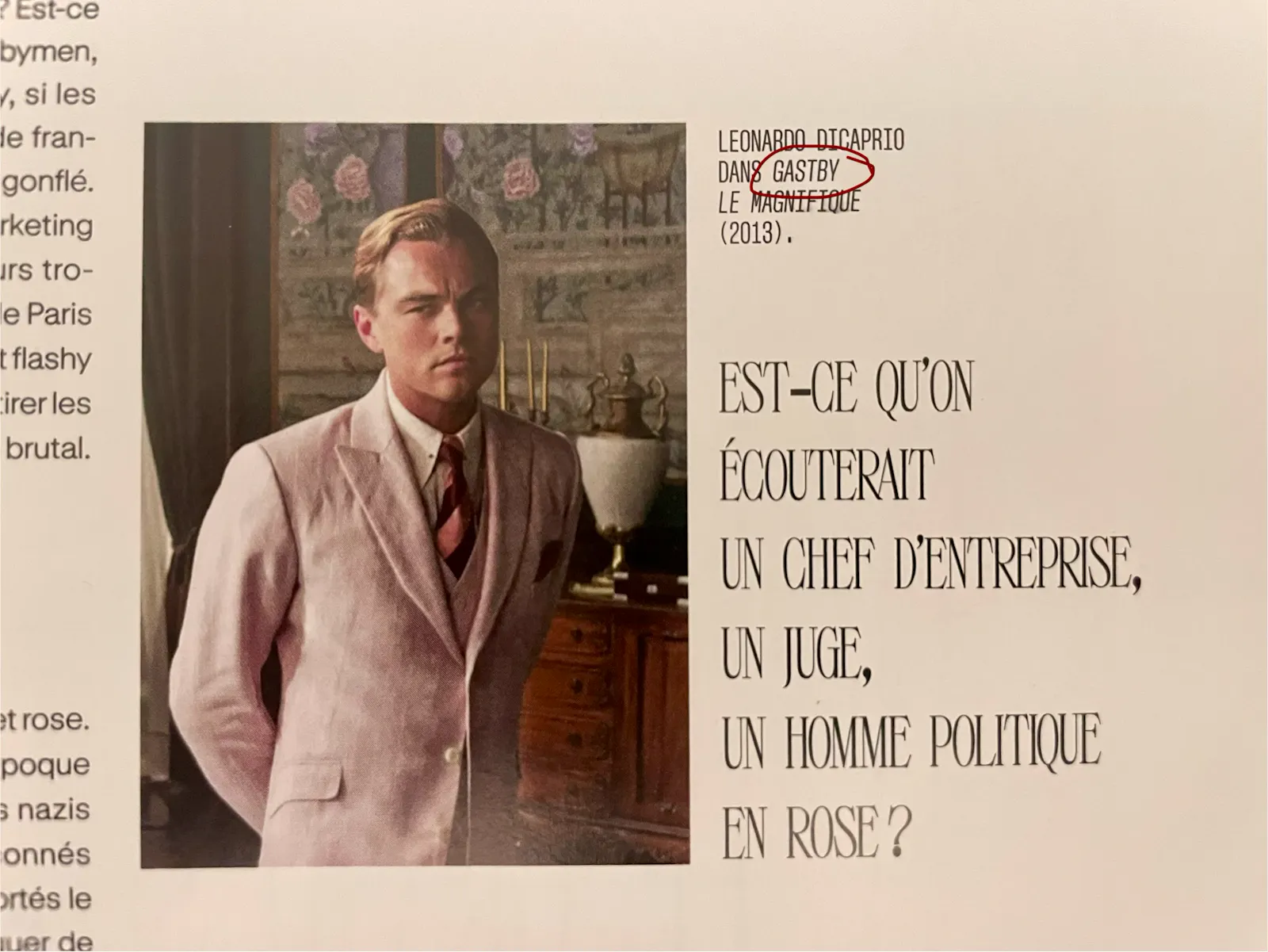
Regardless of the language being used, typos are imperfections that infiltrate our quest for flawlessness, no matter what we do. Maybe if fifteen people with excellent knowledge of grammar read it five times each, we'd start approaching a level where the probability of a typo becomes very minimal. In fact, I'd guess this very issue of Esquire was probably read by at least fifteen people with excellent knowledge of grammar, many times over many months—yet here we are.
So if we refuse to accept any imperfections in our work, we're basically chasing an impossible standard. This is why I've begun to change my view of typos over the last few years. Nowadays I don't see them as failures—I try to consider them more as cute pieces of proof that actual living, breathing humans are behind the text (most likely).
This way of thinking has become even more relevant now that LLMs can, in theory, help us eliminate all typos from our writing. That may be great for the overall level of spelling in published texts, I suppose—though even AI makes mistakes in this regard sometimes.
But the real question we need to ask these days is this: would you rather read a text written by a passionate human with a couple of typos in it, or a perfectly polished, passionless text run too many times through AI?
I'd guess most of us would prefer the passionate piece, because it's often the very imperfections that make something appealing. We love to feel that someone actually thought things through and tried their best to reach for excellence, typos and all (assuming the text isn't too full of them, of course 😅).
In conclusion: it's the sincere effort we put into our craft that's far more appealing than ensuring the work contains no imperfections. It's not the absence of imperfection that makes the result elegant—it's seeing how hard you strive for excellence no matter what.
This is also why people follow sports. We like to watch other humans trying to outdo themselves. It's why we love seeing comedians struggle to keep a straight face. It's why we enjoy watching someone play or sing a jazz solo with a few "off" notes but a whole lot of swing and passion, rather than a technically correct one with no soul.
So if I'm understanding this right, imperfections are not only inevitable—they're desirable. Of course, there's no point in including them intentionally, but when they arrive, we shouldn't treat them as unforgivable mistakes.
Those imperfections may often be the very reason others find your struggle for excellence inspiring. The typo in your text or the funny note in your jazz solo might be the very things that make people fall in love with your work.
Have an elegant weekend full of elegant mistakes!
Bisous,
Elle
Date
June 5, 2026


