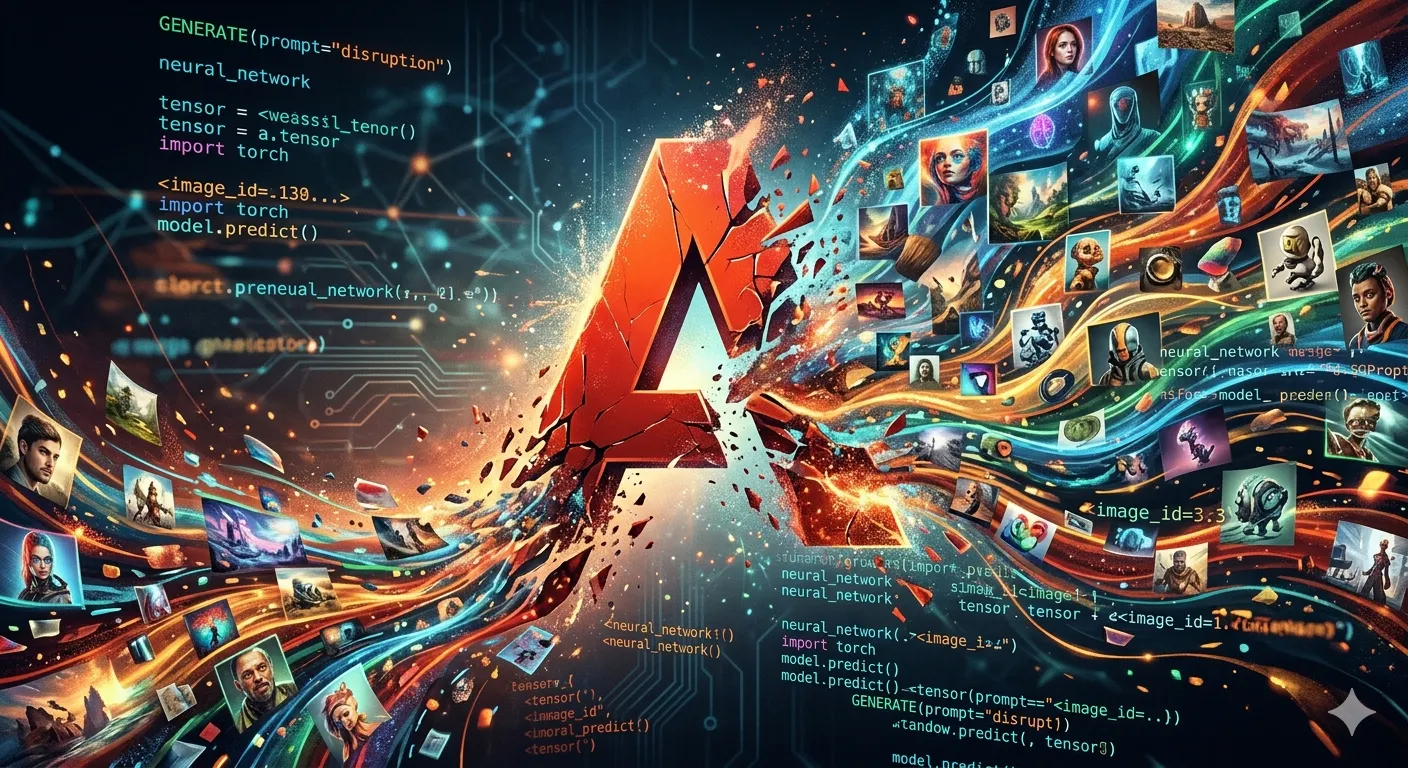
For years, Adobe looked untouchable. Its software defined entire industries, from photography to digital marketing. But the ground beneath the company is shifting rapidly. Generative artificial intelligence is rewriting the rules of software, and investors are starting to ask a difficult question: is Adobe still leading the future—or struggling to keep up with it?
The debate on Wall Street has intensified. The once high-flying stock has lost momentum, competitors are multiplying, and whispers about leadership direction are growing louder. In the age of AI copilots and prompt-driven creativity, even a titan like Adobe must prove that its dominance still matters.
Company Overview
Founded in 1982, Adobe has grown into one of the most influential software companies in the world. Its flagship products—including Adobe Photoshop, Adobe Illustrator, and Adobe Premiere Pro—form the backbone of the global creative economy. Designers, photographers, filmmakers, and marketers rely on these tools daily.
Under the leadership of Shantanu Narayen, the company executed one of the most successful transitions in software history: moving from boxed software to a subscription-based cloud model with Adobe Creative Cloud. This shift turned Adobe into a highly profitable recurring-revenue machine and helped propel its market capitalization into the hundreds of billions.
Yet the environment that once favored Adobe’s ecosystem is evolving. AI-powered tools are lowering barriers to creativity, allowing users to generate images, videos, and designs with simple prompts. The question is no longer whether software can assist creators—but whether it can replace large parts of traditional workflows.
Key Recent Developments
The biggest disruption comes from generative AI platforms. Tools like Midjourney, DALL·E, and Stable Diffusion have shown that complex visual content can be produced in seconds. What once required hours in Photoshop can now be generated with a line of text.
Adobe has responded aggressively. Its generative AI model, Adobe Firefly, aims to integrate AI image generation directly into its creative suite. The company argues that professional creators still need advanced editing tools, reliability, and copyright-safe training data—areas where Adobe believes it has an advantage.
However, investors remain cautious. AI-native startups move quickly, and tech giants are embedding generative capabilities across productivity software. The pace of innovation raises concerns that the creative software market may become commoditized.
Meanwhile, speculation occasionally surfaces around leadership succession at Adobe. While Narayen remains CEO, some analysts wonder whether the next era—defined by AI-first product design—might eventually demand a different kind of leadership.
The Company's Competitive Moat
Adobe’s moat has historically rested on three pillars: ecosystem lock-in, industry standardization, and deep professional workflows. Creative professionals often build entire careers around mastering Adobe tools. File formats like PSD and AI became de facto industry standards.
The company also benefits from integration across its products. A designer can move seamlessly from Photoshop to Illustrator to Premiere, all within the same cloud ecosystem. For enterprises, Adobe’s marketing and analytics tools further deepen this relationship.
Yet AI is eroding parts of this moat. When a user can generate high-quality visuals instantly through a web interface, the value of mastering complex software decreases. If creative output becomes prompt-driven, the power may shift from software suites to AI platforms.
Adobe’s strategy is clear: integrate AI deeply enough that users never need to leave its ecosystem.
SWOT Analysis
Adobe’s greatest strength remains its dominant brand and deeply embedded user base. Millions of professionals rely on its tools, and enterprises trust its software for mission-critical creative and marketing operations. The company’s subscription model provides predictable revenue and high margins, giving Adobe enormous financial flexibility to invest in AI.
Its weakness lies in complexity and cost. Adobe products can feel overwhelming for beginners, and subscription pricing remains a frequent point of criticism. In a world where AI tools promise instant results with minimal training, this complexity could become a disadvantage.
Opportunities are significant. If Adobe successfully integrates generative AI into professional workflows, it could transform creativity rather than lose it. Firefly and AI-assisted editing may dramatically increase productivity for designers, opening new revenue streams and strengthening the ecosystem.
Threats, however, are growing. AI startups are moving faster than traditional software companies, while major tech players are embedding generative capabilities directly into operating systems and productivity suites. If creative tools become commodities powered by large language and diffusion models, Adobe’s historical pricing power could erode.
Conclusion
Adobe is far from finished. The company still controls the most important tools in digital creativity, and its financial strength gives it time to adapt. But the narrative around the stock has changed. Investors no longer see a guaranteed software monopoly; they see a company fighting to redefine its relevance in the AI era.
Whether Adobe becomes the leader of AI-powered creativity—or a legacy platform disrupted by it—will depend on how boldly it reinvents itself over the next few years. The creative revolution is happening again, and this time the brush may belong to artificial intelligence.
If you enjoy independent financial journalism like this, consider becoming a supporter of this project and help us continue producing deep, thoughtful market analysis.
Disclaimer:
This article is for informational purposes only and does not constitute investment advice.
Data
13/03/2026
Argomento
Growth
0 commenti
Vuoi essere la prima persona a commentare?
Abbonati a Dividend Growth Stocks🚀 e avvia una conversazione.