Memories of my mother Ruth
Recently, I was overcome by a sense of rebellion.
Times are difficult all over, but one way I thumb my nose at the world is to bake a cake.
This is a cake my mother used to make for us, I remember helping her a few times in the kitchen at Carton, our home in Jamaica. It is the 1234 cake, and probably came from a book called The American Woman’s Cookbook, which was one of her favourites when I was growing up.
It is a cake that survives, even having the four eggs left out of it, and such indignities as having the milk substituted for water, and the butter for vegetable oil. It is a cake that I make at times like these, when there is a need to stabilise the spinning of the world, and the stars in the sky. It is a cake that does not cause me to remember, because it is, in itself, a memory.
My mother, as many of us will remember, was not a regular mother type. Everyone loved her, and she was, I recall, mother to many, but she never wanted to be called: “Mummy”. So at some point, someone in the extended family of friends began to call her: “Miss Root”. And it stuck.
First some random notes about my mother: Ruth would have been eight when the United Kingdom entered the Second World War in 1939. It may also the year her father died. She was at school at Saint Hilda’s in Brown’s Town, where our neighbour Joya Hairs also went, but she was older.
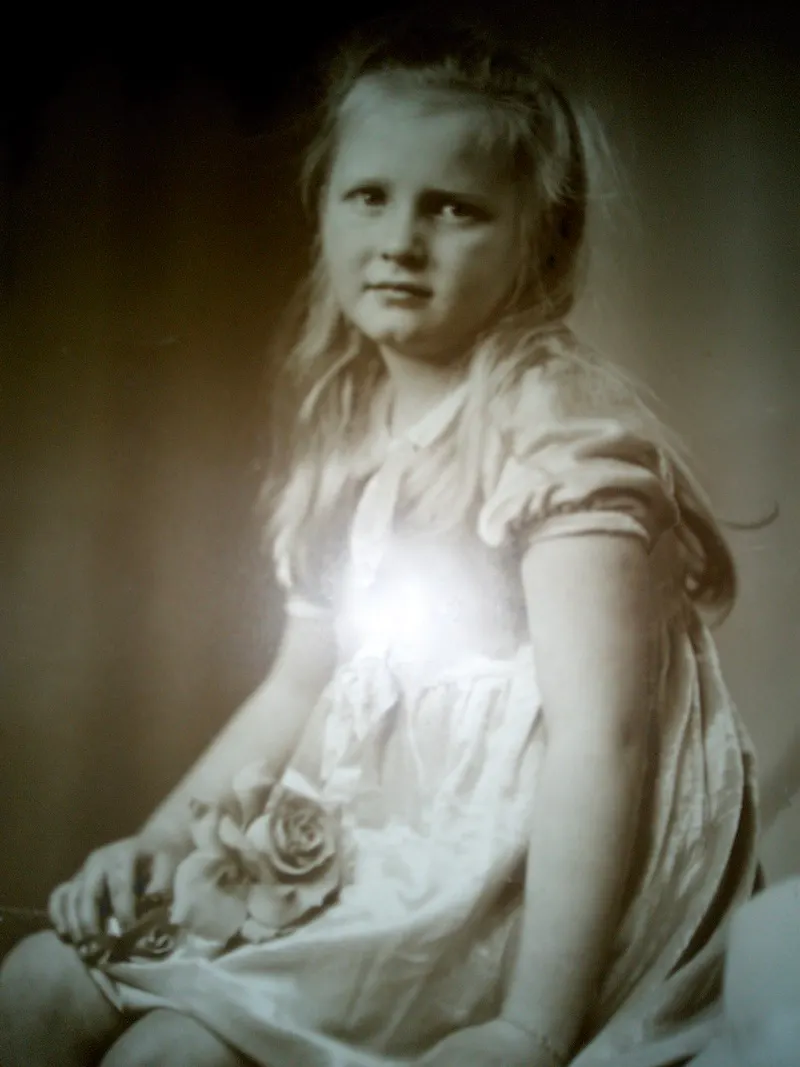
As a teenager Ruth was sent to boarding school at Wycombe Abby in England. She loved it, which is why Peter and I were sent to boarding school, apart from it being the general fashion of the time. She played lacrosse, and learned fencing. She is the one who taught me about on guard! And how to stand while holding a foil. Her mother, Eva, rented a house outside the gates of the school. This may have been another reason Ruth loved school, she was never really far away from her mother.
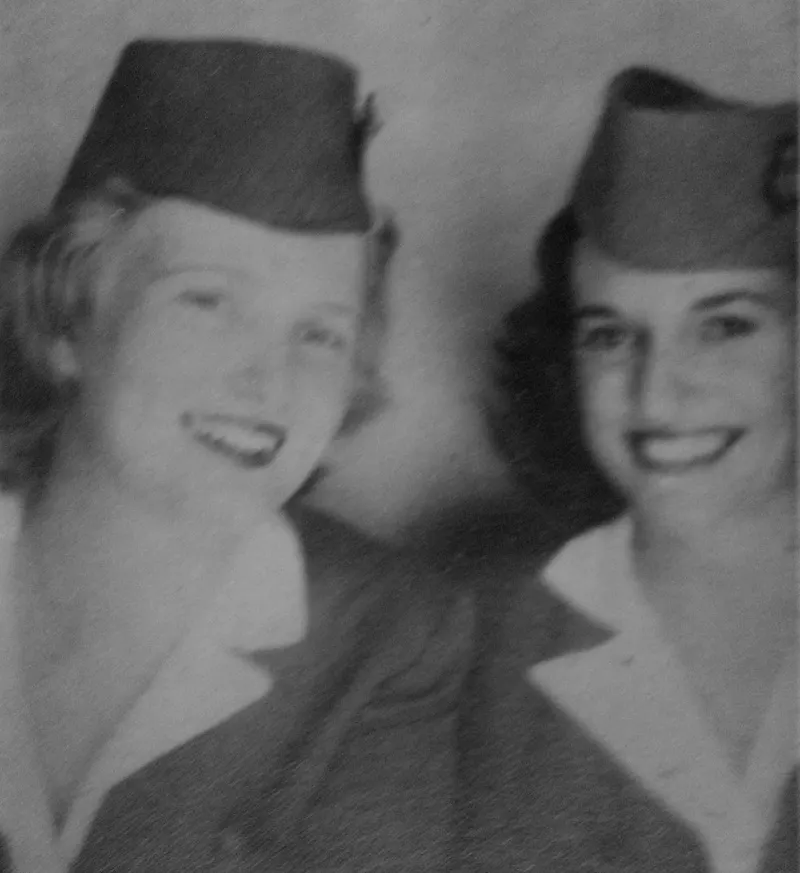
On returning to Jamaica, at 18, Ruth spent a summer at parties and just having fun. She was supposed to have returned to the UK to study medicine. She did not. She said she was having so much fun and couldn’t face returning to the cold in England. At some point she found a job with British West Indian Airways and went to live at the boarding house in Kingston run my Mrs Moren, where she met her future husband Stanley George Allison. She met Stan in 1952 and they were married after three months, which was, I understand, not unusual just after the war.
I was born at the Nutthall hospital in Kingston, Jamaica, in June 1953, Peter in 1955, Melanie was born at a nursing home in 1963 in Hove, UK.
When I was growing up Ruth told us her memories of aunts and uncles staying at Carton during the war. There was an aunt in a wheelchair who seemed to have been able to communicate with animals. Ruth was afraid of her. There was an uncle who despised hearing chewing at mealtimes, and Ruth learned to eat silently. There was Zita, her father's sister, who threw herself off the falls, was it Dunn's River? Ruth told me of having chiggers on her feet and legs, and having to stand in hot ashes to kill them.
When I was still at school in Jamaica, and on holiday, Ruth would be driving in Kingston, and suddenly pull over to the curb and run out to greet a woman walking along the road. An aunt who had lived at Carton. They would talk for a while at the side of the road, I would watch from the car, curious. She would return to the car, happy, and tell me it had been one of her favourite aunts. Was her name Marny? Was she the one who continuously washed her hands? Was she related to Eva, or to Keith? I never understood. I was not introduced because Mary would not have known who I was, or remembered me. It didn’t matter. My mother was happy.
Miss Root, did not always know how to “be a mother”. She once sent me off to boarding school at Riddlesworth Hall in England with chicken pox. I remember being at the Liverpool Street train station and my mother putting me on the train and telling me it was, “Just nerves.” She felt that most illnesses were “psychological,” and was convinced I would be healed as soon as I arrived at the school and found all my friends.
As it turned out that first night at the school I felt ill, was given an aspirin, which I nearly choked on, and suddenly found myself in solitary confinement in the sick room, where I languished for days on my own until I was joined by others falling sick with the same spots.
The head nurse (matron), Ms Luhrs, apparently never spoke to my mother again after this incident. Once I was cured, my mother sent me a block of cocoa butter, wrapped in brown paper, to rub on the scars left by chicken pox, which is a Jamaican remedy. The same Miss Luhrs would begrudgingly comply with my mother’s suggestion, as, I suppose, she could see that it worked.
Another time I was given a set of oil paints for my birthday, together with a pair of white trousers and white shirt. I immediately dressed in my white outfit to go out into the garden. I set up the easel, I had also been given, started painting and got green oil paint on my white clothes, and my mother I remember just sighed.
Later, people came to the house, one brought me a present of “baby paints”. I took them to my mother, who was in the kitchen, and asked how come she gave me oil paints and this woman was giving me paints for a baby. She told me that this woman didn’t know much about children, but I must be kind to her, and say thank you because sadly… “some people had never been children”.
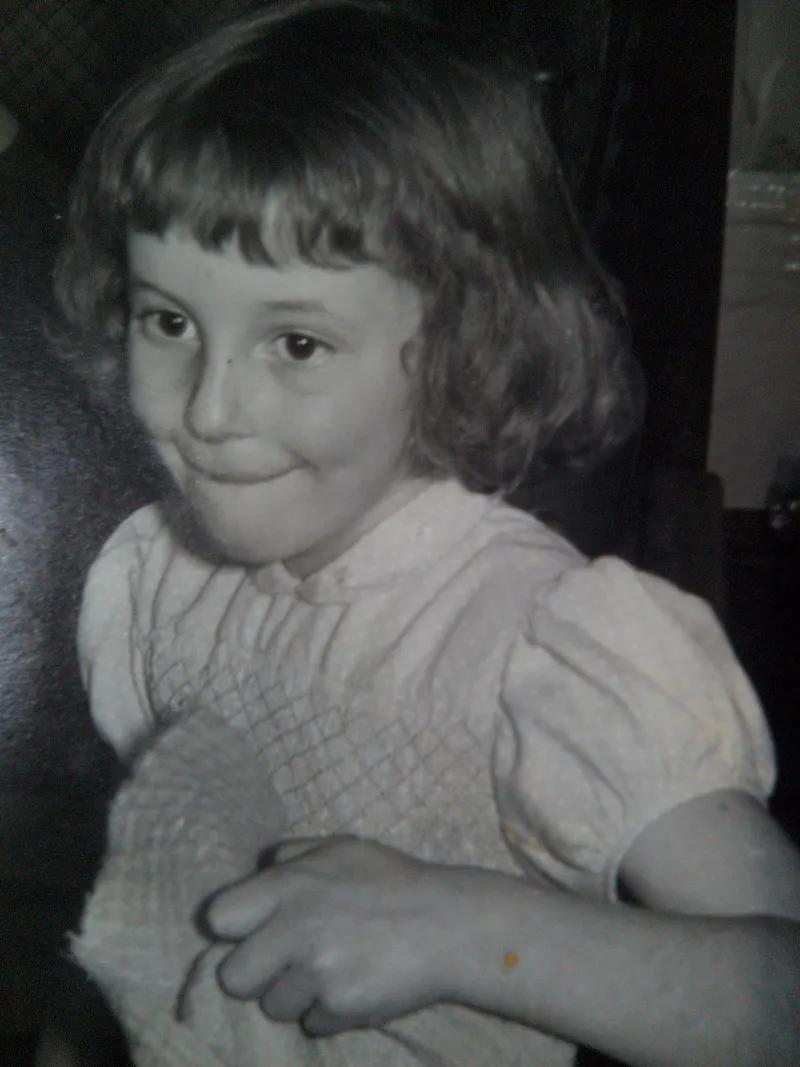
When we lived in Hove, and I was away at boarding school, Ruth had a friend, Stuart, who was an interior decorator. They opened an antique and interior decoration shop together. Much time was spent going to auctions in the surrounding countryside. I never saw the shop, but did learn something about antiques, and once knew the difference between Chippendale and Napoleonic styles. Much of the furniture we had in England, which was later moved to Jamaica, came from this time. Unfortunately, the termites ate one of our favourite round wooden inlaid tables, and that was that.
We also had a wonderful glass cabinet (said to be French), which in Italy would be called a vetrina. It had the original pale green silk waistcoat lining at its back. On the shelves were the family treasures. A tea set that had survived a shipwreck. I don’t know how old it was, or from where, or whether the family treasure was Allison or de Roux. These are questions children and teenagers forget to ask, and then it is too late.
When I was away at boarding school Ruth used to write to me frequently. Her neat, rounded handwriting filled the pages with tidbits of news from home along with a calculation of how many days were left until the end of term.
I learned that my brother Peter had asked for home clothes to be sent him. Had I known about that? Had he written anything to me? It was feared he was planning to run away from school. He told me many years later (laughing) that the school had asked him to write to his parents for home clothes to wear on the weekend. He was lucky. He got to be taken out of far away boarding school in England and sent to one that was walking distance from home in Hove, and then in Jamaica.
Ruth would take me to London to shop for my school uniform. Once I was allowed to choose a party dress, which I would never have been able to wear at my school. I chose one that looked as though someone had taken bright colours and splashed them on the fabric with a large round paintbrush. I loved that dress, but don’t think I ever got to wear it often.
Ruth also took me out to eat at the restaurant at Harrods or Dickens and Jones. At one of these shops there was an elevator, which I enjoyed trying to go up the down and down the up, a game I played with Peter if he was with us. I think it was he who introduced me to this game.
One time Ruth ordered lobster, and taught me how to pick out the meat. I asked if I could keep the shell, which the waitress brought to me wrapped in paper. I had a plan. Not a very good plan. I wanted to play a joke. I made the bed in my mother and father’s room and placed the lobster in the bed to be found by my mother that night. I recall surprised laughter and many questions.
I do not remember being punished for anything. I think Ruth found it difficult to tell a son or daughter what not to do, when she knew she would have wanted to do the very thing anyone told her not to do. My mother would always tell me that if I hurt myself doing what I was doing, then I was to know it was something that she would have told me not to do. This may have caused me to become slightly more cautious than I might have been.
In Jamaica, when Peter and I were small, but big enough to hold a rifle, Ruth asked Uncle Eddie, our farm manager, to teach Peter and me how to shoot. I remember being taken down to the empty cattle pen and being taught to push the stock back into my shoulder so I wouldn’t feel the recoil so much. I was taught how to aim, how to pull the trigger and shoot. Peter was taken bird hunting, but was unable to eat the bird he was supposed to have shot. We were told never to point a gun, even a toy, at anyone, even in play.
One day, at home in Jamaica, I was there when Ruth found her mother, Eva’s, tiny pearl-handled shot gun in the cupboard, which she flung out the door by the steps to the barbecue. She regretted having done this, but it was never found again. We learned that Eva used to wear a bracelet made of bullets.
When I was home for the holidays from Art College in Canada. I must have been 18, because I was sent to learn to drive with Mrs Segree from Claremont, who came to the house dressed in her dead husbands clothes, and stood in the middle of the pasture beside Mr Fred, the headman’s house. Here she shouted directions at me driving the ancient Land Rover, as though she was giving me a riding on horseback, instead of in a car. Later Ruth told me she had done the same for her.
It was only when Mrs Segree was sure I could actually drive the vehicle that I was then sent for driving lessons in Saint Anne’s Bay. I took the driving test, and the instructor, who was a family friend, took me to the Saint Ann’s Bay hill to do a hill start. This is still my favourite thing to do with a car. Start it on a hill without it rolling back even one centimetre. I passed my driving test.
It was also around this time that Ruth became ill. She had a hysterectomy and fell into a deep depression and would not leave her bed. I recall coming in from a ride on my horse Cherry to find her bedroom filled with friends and relatives. In the end, a few people managed to help her. There were David and Jennifer Browne, Ricky Browne’s dad and mum, Ruth’s cousin Eva de Roux Parcells, her cousin Harry Knowles, Pat Hastings, who owned Glistening Water outside Montego Bay, the driving instructor and others. All worked together to help her regain her confidence.
Finally, the house was again filled with friends and family dropping by for a drink, or being invited to Sunday lunch cooked by my parents working as a team, with help from Parker, Anita and Rachel.
Sometimes Ruth would say that she had been brought up as an only child, but she never felt alone because she had cousins who were her brothers and sisters. She also told me that she was sorry she had brought us up as she had, to be in competition with each other. For example, I remember Melanie telling me she had been told I was brilliant at math, which was a complete lie as I had got minus 4 for a test at prep school. She had been told this to spur her on to do better. When I told Melanie the truth we both laughed.
Then, interestingly, seeing it was Eva, and then Ruth who owned Carton, when my mother was thinking about who should “take over” the property, she first thought about my brother Peter. It was not until it was too late that she thought about her girls: Melanie or me.
It was not until I visited Tuscany, Italy, that I came to understand something about land. In Tuscany it may not be illegal to divide agricultural land among siblings, but there are strict regulations governing its division. In this way productive land remains profitable, and is not turned into ever smaller parcels that you can only be used to plant vegetables (like here in Friuli Venezia Giulia). There may be two options: Everyone has to work together for the benefit of the land and each other; or the land is purchased from the ones who want to do something else with their lives.
I have shared my memories until I was about 18. I end with my mother’s best loved quotation from Mathew 6.3, “… don’t let your left hand know what your right hand is doing,” which is something I really don’t agree with, as it can get everyone into a lot of trouble, and is probably why, when Ruth had a stroke at 52, none of us knew anything about her business.
But all of this is for another day …
Datum
25.03.2026
Kategorie
Memories


