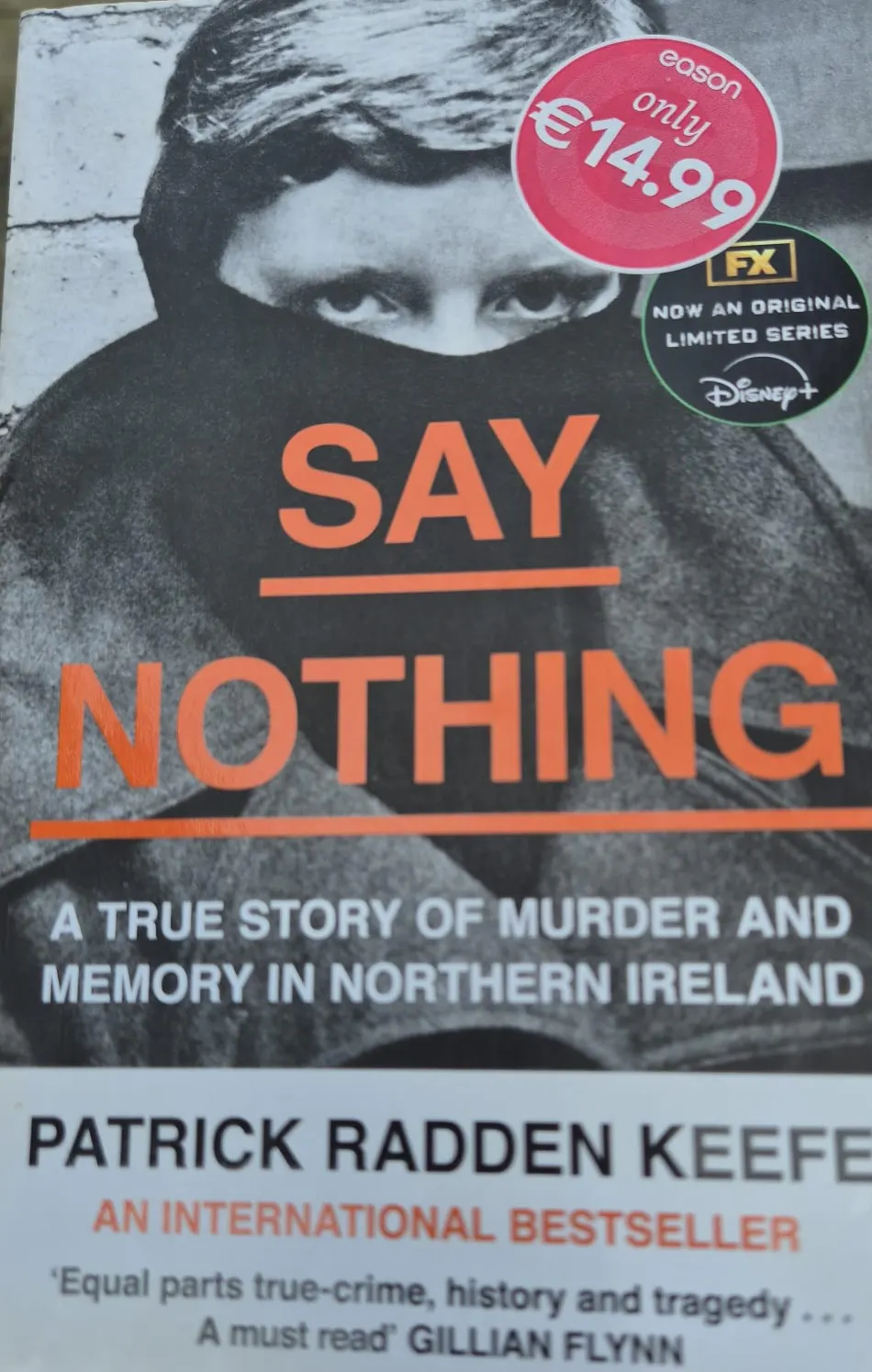
I’m reviewing two books this week on the related theme of Northern Ireland: Rory Carroll’s Killing Thatcher, published by Mudlark in 2023, and Patrick Radden Keefe’s Say Nothing: Murder and Memory in Northern Ireland, published by William Collins in 2019. The latter book is now especially well known, not least because of the television adaptation. The books bear reading together; each illuminates the violence, secrecy, memory, and moral injury of the Troubles.
I’m not a historian, but did grow up during the time of the Troubles, but at a remove on the island - in Galway, where Northern Ireland felt at once terribly far away, and yet so close as well. The shadow of death fell across the whole island.
In summary, the Troubles were a long civic, political, social, and, of course, individual, family, and community catastrophe: a conflict of identity, sovereignty, religion, memory, territory, policing, and fear, lived out in the routines of everyday life. The Good Friday Agreement did not abolish grief, grievance, or historical dispute, but it gave Northern Ireland a means of containing them politically, rather than violently. That uneasy settlement is one reason these books now read with such force: they describe a past that is close enough to touch, yet already beginning to pass into history.
Date
April 29, 2026
Topic
Cognitive Republic
0 comments
Would you like to be the first to write a comment?
Become a member of Cognitive Republic and start the conversation.