My Oxford doctoral project will transform the way we look at Tolkien’s epic. Here’s why … and how you can help
‘It is not our part to master all the tides of the world, but to do what is in us for the succour of those years wherein we are set, uprooting the evil in the fields that we know, so that those who live after may have clean earth to till. What weather they shall have is not ours to rule.’ So says the Pope’s latest encyclical, quoting The Lord of the Rings.
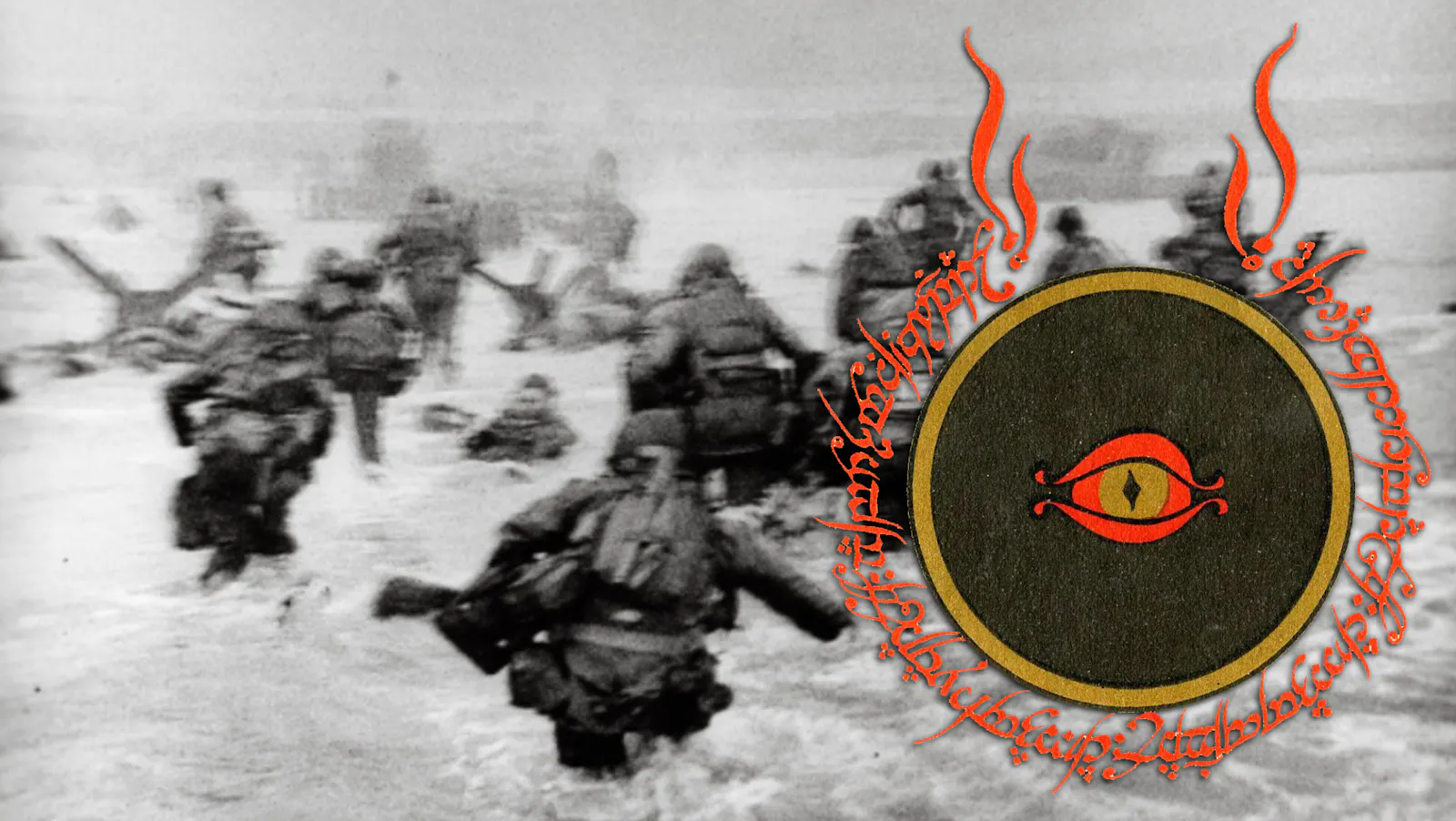
This year I’m starting an Oxford University doctoral project tracing how ‘the tides of the world’ shaped The Lord of the Rings. But even as I look ahead to that, we’ve been collectively looking back across eight decades to D-Day, 6 June 1944.
The weekend after the Allied invasion of Normandy, Tolkien wrote to his son Christopher, training for the RAF far away in South Africa:
A great deal is happening at this end of the world. But I won’t enlarge on that, as doubtless you get the same news as we do, and as quick; and if one knew anything outside that it would be ‘indiscreet’ to mention it. As a matter of fact I don’t. But thank God it really looks like clearing up a bit this evening. It is calmer, warmer, and there are glimpses of sun and blue sky. I fancy weather is of paramount importance …
Tolkien said he could remember little else about the week.
At this great turning-point in the Second World War, however, addressing Christopher stirred deeper memories of how he himself had responded to the First World War as a young man. He had channelled the stresses of experience into writing:
I took to ‘escapism’: or really transforming experience into another form and symbol with Morgoth and Orcs and the Eldalie (representing beauty and grace of life and artefact) and so on; and it has stood me in good stead in many hard years since and I still draw on the conceptions then hammered out.[1] (S'ouvre dans une nouvelle fenêtre)
It is this transformation of experience ‘into another form and symbol’ in his Silmarillion mythology that I traced in Tolkien and the Great War for his first mythological writings, in and around 1914–18.
 (S'ouvre dans une nouvelle fenêtre)
I am ever mindful of Tolkien’s declaration much later:
An author cannot of course remain wholly unaffected by his experience, but the ways in which a story-germ uses the soil of experience are extremely complex, and attempts to define the process are at best guesses from evidence that is inadequate and ambiguous.[2] (S'ouvre dans une nouvelle fenêtre)
So in my book I made every effort to exhume all the evidence and examine it objectively.
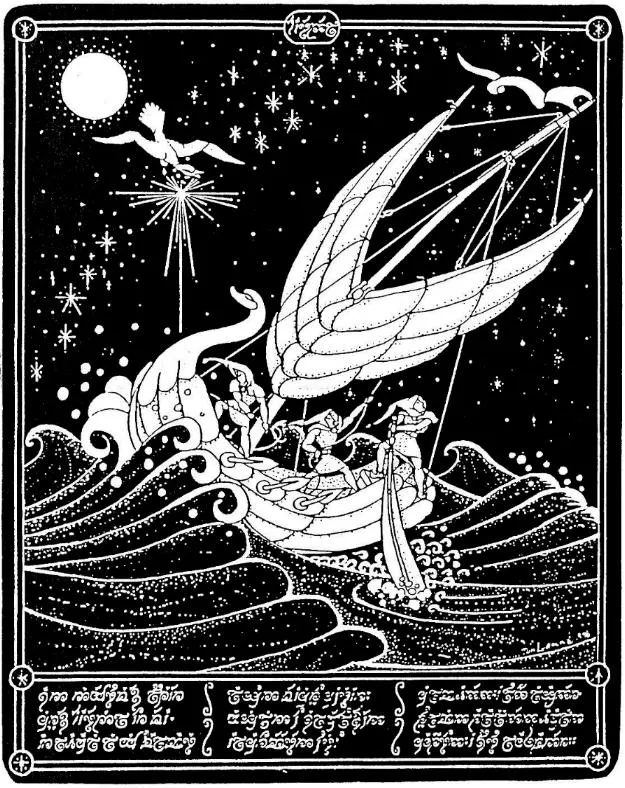
Take Éarendel, the earliest-invented hero of his mythology. It is well known that Tolkien transformed this figure from Old English poetry’s Éala Éarendel engla beorhtast, ‘hail Éarendel brightest of angels’. But I observe that when he did so in September 1914, he was resisting massive pressure to enlist in Britain’s New Army. In a literary parallel to that experience, the Éarendel of his poem sails off into the sky as the wayward Evening Star (the planet Venus) even while the fixed stars all move in rigid unison on ‘the gathering tide of darkness’. His Éarendel escapes the world while listening to its weeping.
One of the first reviews testifies to the success of my approach in Tolkien and the Great War:
Tolkien’s imaginative world ... surely grew out of his experiences as a young soldier on the western front. No writer before John Garth has been patient enough to explore not merely the obvious truth of this, but the more complicated matter of how the truth applies itself in each of the relevant texts, major and minor.
Even if you are not a Lord of the Rings fan, I commend this book to you. It is all so interesting in itself, and I have rarely read a book which so intelligently graphed the relation between a writer’s inner life and his outward circumstances.[3] (S'ouvre dans une nouvelle fenêtre)
 (S'ouvre dans une nouvelle fenêtre)
I find it deeply instructive to look at ‘outward circumstances’. Context helps on the most obvious levels. Tolkien’s June 1944 letter to Christopher refers the ‘paramount importance’ of weather for the Normandy invasion. You will read that comment with new appreciation if you watch Pressure, the admirably intelligent 2026 drama about the crucial and deeply fraught forecasting problems ahead of D-Day. You will appreciate the truth of it even more deeply if you read the history of the landings or the news and weather reports of the time. To paraphrase Gandalf (and the Pope), what weather the Allies would have for D-Day was not theirs to rule – but predicting it was a matter of utmost moment.
Any of us would have spent D-Day glued to the radio for any news of developments. But waiting for such vast events to unfold can make anyone feel powerless. When Tolkien ‘made special efforts with typing’ Book Four of The Lord of the Rings the next day, no doubt it was an escape into positive productivity.
He had written the story of Frodo’s journey from the Dead Marshes to the passes of Mordor with astonishing speed and fluency between April and May 1944. Those chapters saw a resurgence of his own memories of soldiering, most obviously in the haunted Dead Marshes. But his situation as the world plunged deep into war in September 1914 can also be discerned. It’s there in the echo of Old English poetry when Frodo takes out the Phial of Galadriel to pierce the utter darkness of Shelob and cries Aiya Eärendil elenion ancalima, ‘Hail Eärendil brightest of stars’.
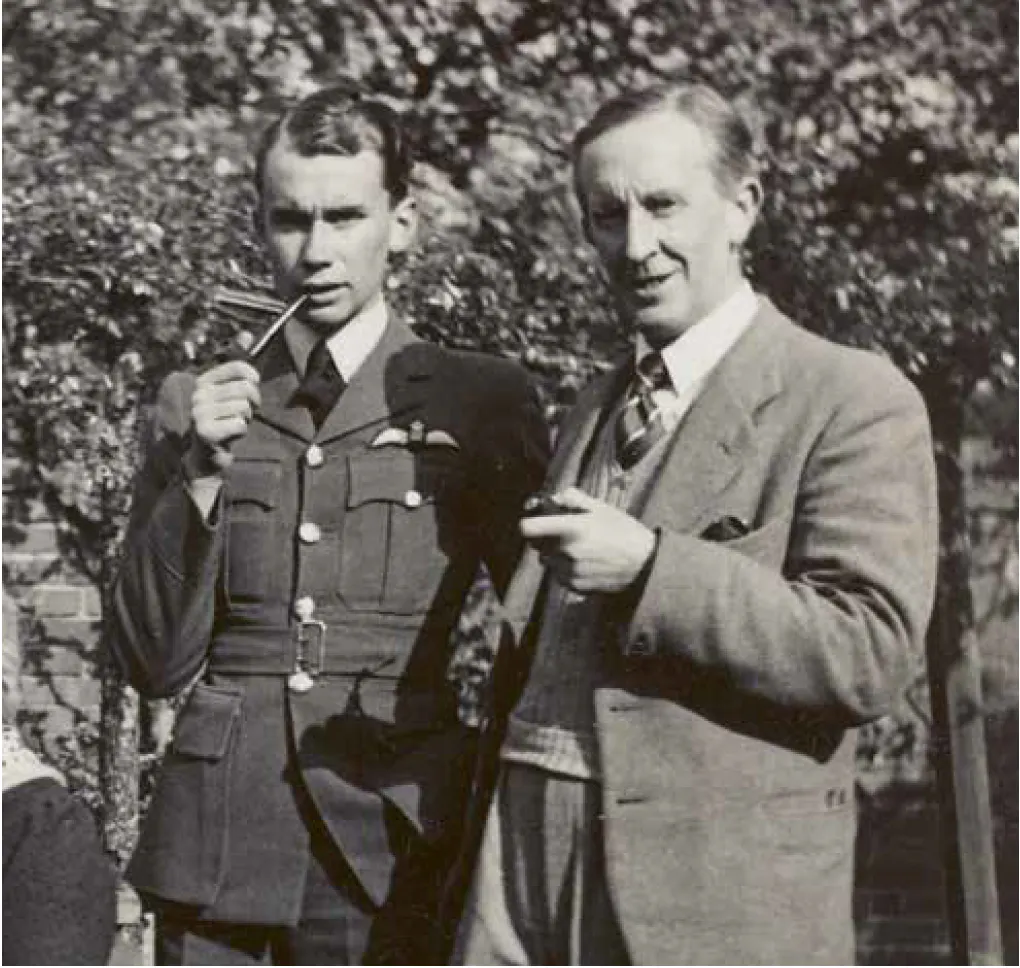
Empathy for Christopher in the Second World War, so palpable in Tolkien’s fatherly letters during these months in 1944, clearly contributed to that resurgence of his own First World War experience in Book Four.
My biographical explorations are an exercise in empathy too. I’ve never regarded Tolkien and the Great War as any kind of final word on Tolkien’s creative project. So my Oxford doctoral research will continue the same work by graphing the relation between Tolkien’s ‘outward circumstances’ and what he wrote from the 1920s to 1940s, particularly The Lord of the Rings.
I expect stresses, shocks and surprises proportionate to an ambitious academic endeavour.
And I hope for your support.
Changes in doctoral research funding mean I have no bursary.
So last week I launched a campaign to raise money to cover the fees. I set a new £900-a-month target for my ongoing crowdfunding here – more than double what my wonderful supporters were already contributing to help my writing and research.
Immediately some supporters increased their subscription levels, while others joined for the first time. In a matter of days, their combined generosity has reduced the shortfall by almost a quarter.
With my first-year fees to pay in October, the sooner I close the gap completely, the better.
Can you to help my DPhil journey through The Lord of the Rings? If so, look at my newly revamped subscription plans and rewards (S'ouvre dans une nouvelle fenêtre). Which one suits you best?
© John Garth, 2026. All rights reserved.
[1] (S'ouvre dans une nouvelle fenêtre) Letters, no. 73.
[2] (S'ouvre dans une nouvelle fenêtre) Foreword to the second edition of The Lord of the Rings.
[3] (S'ouvre dans une nouvelle fenêtre) A.N. Wilson, ‘War and Middle-earth’, Evening Standard, 10 November 2003, 44.
Date
14/06/2026
Sujet
News
0 commentaire
Vous voulez être le·la premier·ère à écrire un commentaire ?
Devenez membre de John Garth on Tolkien’s life and works et lancez la conversation.