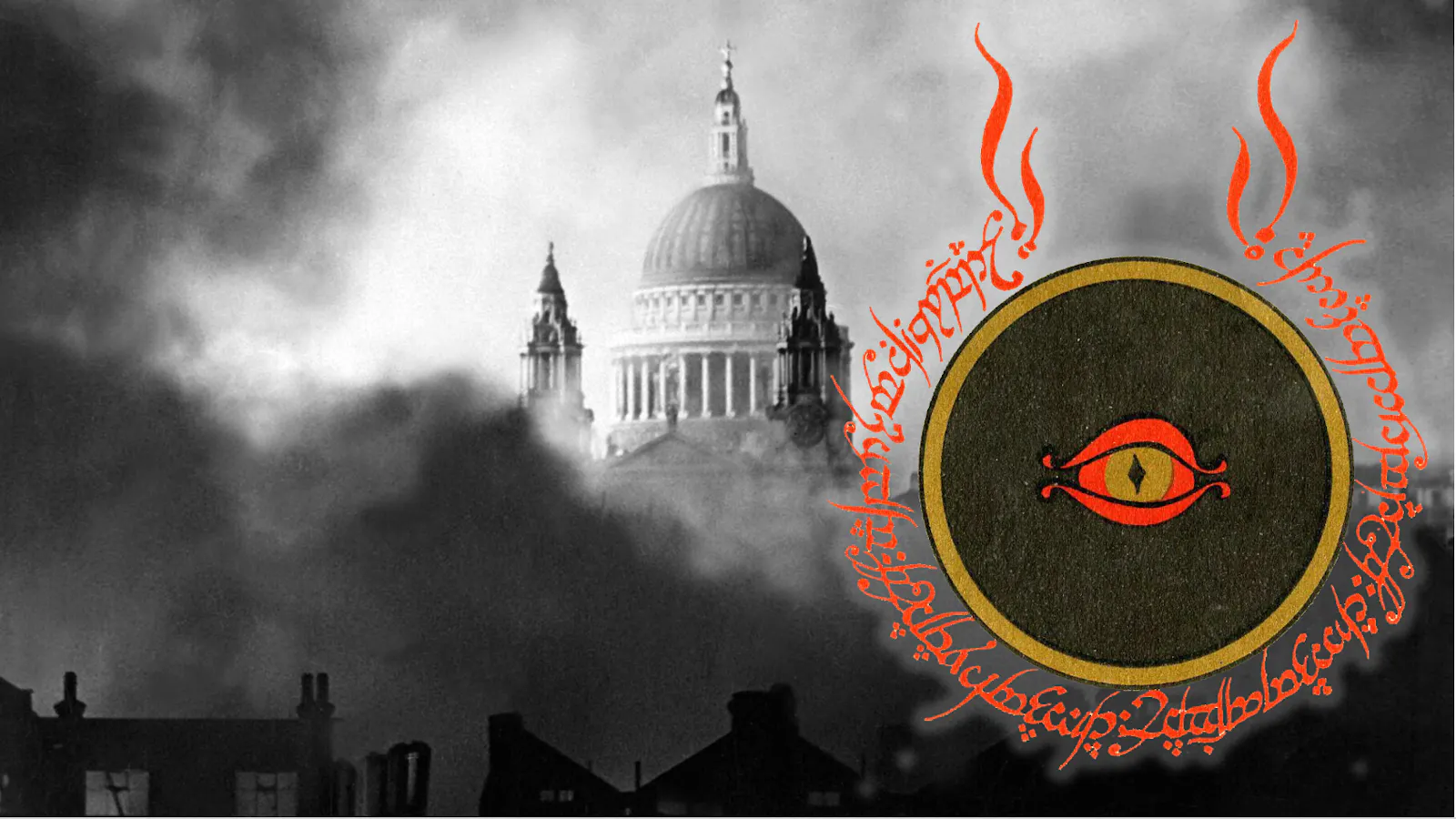
I’m about to embark on a doctoral research degree about how world war and other modern conflicts shaped Tolkien’s masterpiece. Two newly published literary polls illustrate why I’m especially pleased that Oxford University has accepted my application – and why I’m asking for support here.
When Mr. Bilbo Baggins of Bag End announced that he would shortly be celebrating his eleventy-first birthday with a party of special magnificence, academicians and literary pundits made a note to avoid it.
It’s now 72 years since Bilbo and his creator issued their joint invitation with the publication of The Fellowship of the Ring in 1954. And it seems that this early divide – between experts and amateurs – still persists.
The Guardian recently published a list of ‘the 100 best novels of all time’. This is ‘the greatest literature ever published in English, as voted for by authors, critics and academics worldwide,’ the teaser says. ‘How many have you read?’
(I found I’d read almost half of them. But this kind of count is shallow fun at best, puerile self-validation at worst. I was more interested in noting what I hadn’t read. I like recommendations.)
The winner, Middlemarch, is a great and wise novel of society and psychology. So is Beloved, in second place. So are Ulysses, To the Lighthouse, and In Search of Lost Time, in third, fourth and fifth places. And so it goes on down most of the list. The sole piece of resolutely genre fiction is Ursula K. Le Guin’s The Left Hand of Darkness, scraping in at 91.
Who voted? Overwhelmingly, writers and critics who till the soil of primarily realistic social and psychological fiction.
In a commentary, Guardian writer Lisa Allardice ponders the absence of ‘the now unfashionable postwar writers’ C.S. Lewis, William Golding and Tolkien. Surely she doesn’t seriously think Tolkien has gone out of style. He’s only unfashionable in the sense that The Lord of the Rings has survived all the fads and trends of the past seven decades.
There’s nothing wrong with cultural polls and we shouldn’t take them as seriously as, say, elections. A poll of experts is a tried and tested way of getting the rest of us riled up. The Guardian has simply used the literati to get the chatterati talking. And that has generated a whole new Guardian poll: readers’ top 100 novels of all time.
The Lord of the Rings won.
Tolkien excepted, the upper end is still solid canon fodder and so is most of the list. But readers also voted for Watership Down and The Hitchhiker’s Guide to the Galaxy, for Cloud Atlas and The Dispossessed. Piranesi, The Stand, Jonathan Strange & Mr Norrell, Dune – votes for books like these show that ordinary readers want to celebrate stories that transport them with wonder and fear, that compel them to turn of the next page.
Don’t get me wrong. I’m all for expertise and I admire experts. In my own field, I try to be one. Distrust and even hatred of experts is a plague of our times.
But the politics, news and social media of our times are also plagued by confirmation bias. Shared values harden into tumorous, metastasising growths. They dismiss other ways of being, doing and thinking – or they thrive on attacking them. Academic literary expertise has a weakness in that direction. In defining the cultural canon, it likes to show its teeth.
So, on one hand, we have a pan-national profession with overlapping literary outlooks and a shared agenda – to be able to define the canon they teach or write within. On the other hand, we have a lot of little people with no group affiliation, no unified code of readerly conduct, and no aim except to share their sense of excellence. They are amateurs in the proper sense: people who practice something for the sheer love of it.
 (S'ouvre dans une nouvelle fenêtre)
At Oxford in the 1980s, I discovered there was actually a bust of Tolkien at the English Faculty Library, but it was sequestered at the one corner of the building where no one had cause to go. Among undergraduates, mention of Tolkien brought silence, sniggers or sneers: he was an escapist, and that was that. He was honoured in his own home town and university as a medievalist, but not as a literary creator in his own right.
I didn’t expect to study Tolkien at Oxford, but naturally I hoped the critical skills I developed there would help me understand what I admired in him. Reading The Wanderer, Beowulf and Sir Gawain and the Green Knight helped. So did the prophetic poems of William Blake, and Coleridge’s big trio (The Rime of the Ancient Mariner, Christabel, and Kubla Khan. But little else. The Oxford English BA degree syllabus primarily taught the formal development of literature towards the social or psychological poetry, drama and fiction in today’s accepted canon.
It left me with a void to fill. Later, books by Tom Shippey and Verlyn Flieger showed me I was not wrong about Tolkien. But I sensed there was much more to learn. The claim that his works are mere escapism still rankled.
His portrayal of war, especially, seemed to demand attention. On the surface, the battles draw from medieval or classical sources and evoke a desperate glory. Beneath that surface there is always a sense of the horror of war and the damage it does to peoples, nature, the body and the mind.
Ultimately, to understand Tolkien, I wrote my own book about him. In Tolkien and the Great War, I gathered all the evidence then available about the wartime experiences of Tolkien and his friends in 1914–18. I charted with great care how Tolkien first conceived and constructed his mythology in that same period. This chronological mapping of secondary creation on the backdrop of primary experience makes the connection between them abundantly clear.
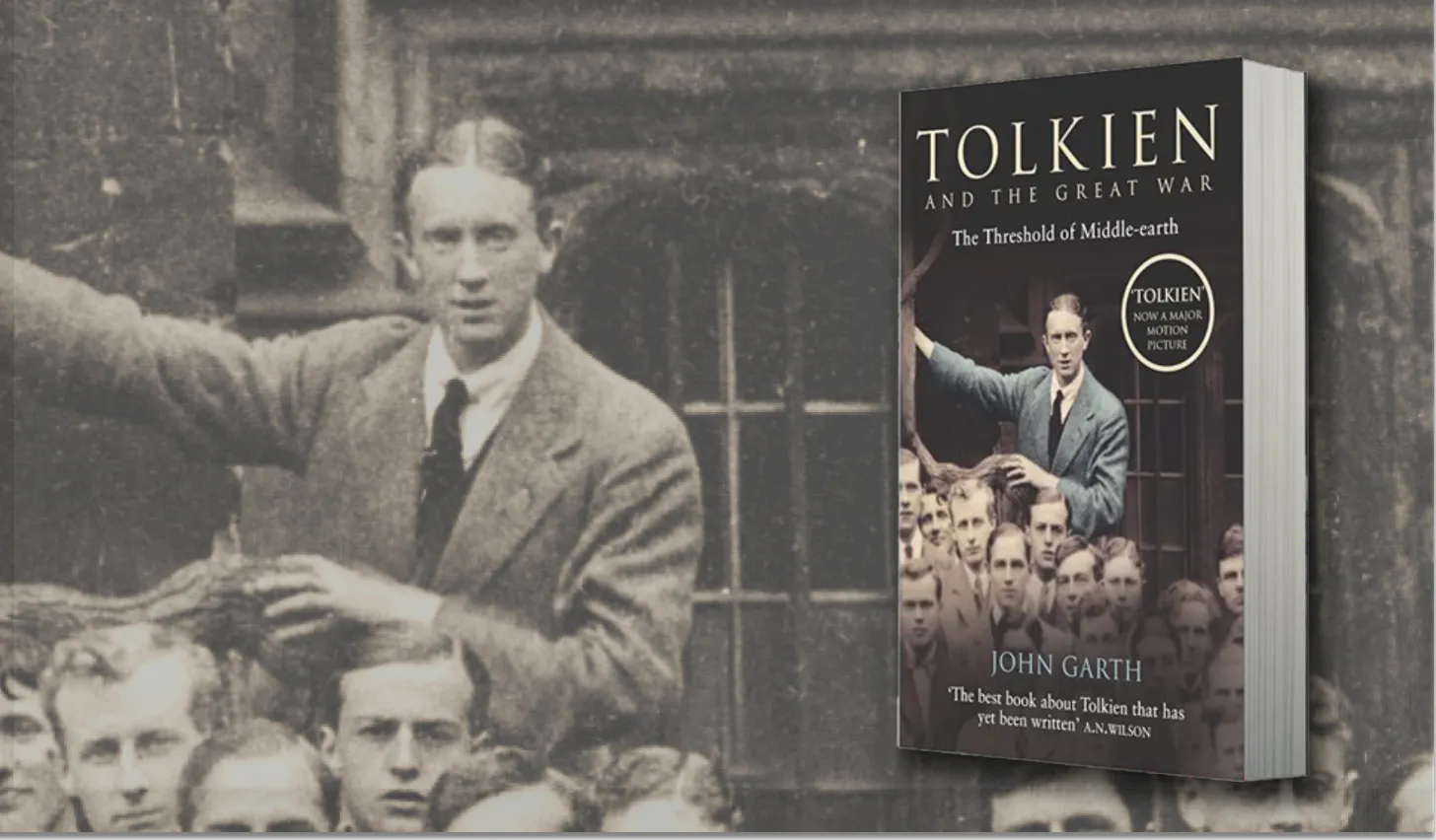
By grounding this fairy-story in the uncompromising reality of the Somme, Tolkien and the Great War (I’m proud to say) has helped people take Tolkien seriously. It’s on virtually all lists of essential books about Tolkien. Its influence has been far-reaching. ‘Nearly any article in the popular press will now allude to the facts of Tolkien’s service record and take as a given that his fantasy was inspired by these experiences,’ says a recent essay anthology on the First World War and fantasy.
I’ve never ceased my deep research into how he reshaped his own lifetime experience into his stories. Tolkien and the Great War goes no further than about 1920, so there’s plenty to learn still about Tolkien’s famous works and how the crises of his era influenced them. But freelance work, life, bereavement, and even hurricanes can severely disrupt a long enterprise of this kind.
That’s why, early this year, I applied to begin a doctoral research project on The Lord of the Rings in its time. I’ll look at how he laid its foundations in the interwar years when the peace of Europe was crumbling, constructed most of it under the shadow of the Second World War, and completed it during the birth-throes of the Cold War.
I’m delighted to say that Oxford University has accepted my application – only the second time it has done so for a DPhil project on Tolkien. I hope that it will be a step in making the study of Tolkien a specialism within his own university and English faculty.
Rightly, it will challenge my brain and fortitude. But will also challenge me financially.
British funding for solo research projects has just been cut to the bone. A bursary to support doctoral study of Tolkien would be a great thing for the university that holds his academic and personal papers and half of his literary papers too. But such a bursary does not exist – at least not yet.
That means I’ll have to raise funds with as much energy as I can spare from everything else. The DPhil is part-time so I can spend half my year on freelance work, which will help. But at the very least, I need to make an additional stretch to pay the university fees.
So I’m setting a new target for this crowdfunding appeal – £900 a month. That’s more than double what my cherished supporters already bring in. But it’s surely within reach – with the help of anyone who admires my work or believes it would be a great thing to put the study of Tolkien squarely in place in his home ground at Oxford.
Would you like to help? If so, take a look at my newly revamped subscription plans (S'ouvre dans une nouvelle fenêtre)to see what you get and what suits you best!
 (S'ouvre dans une nouvelle fenêtre)
Date
07/06/2026
Sujet
News
1 commentaire
Souhaitez-vous voir les commentaires ?
Devenez membre de John Garth on Tolkien’s life and works pour rejoindre la conversation.