Today, to mark the birthday of a worthy heir to Tolkien – and a formative influence on me – I present an interview-profile of Susan Cooper. I wrote this in 2014 for the Daily Beast (which published it in a slightly different, edited form) to mark the publication of her novel Ghost Hawk.
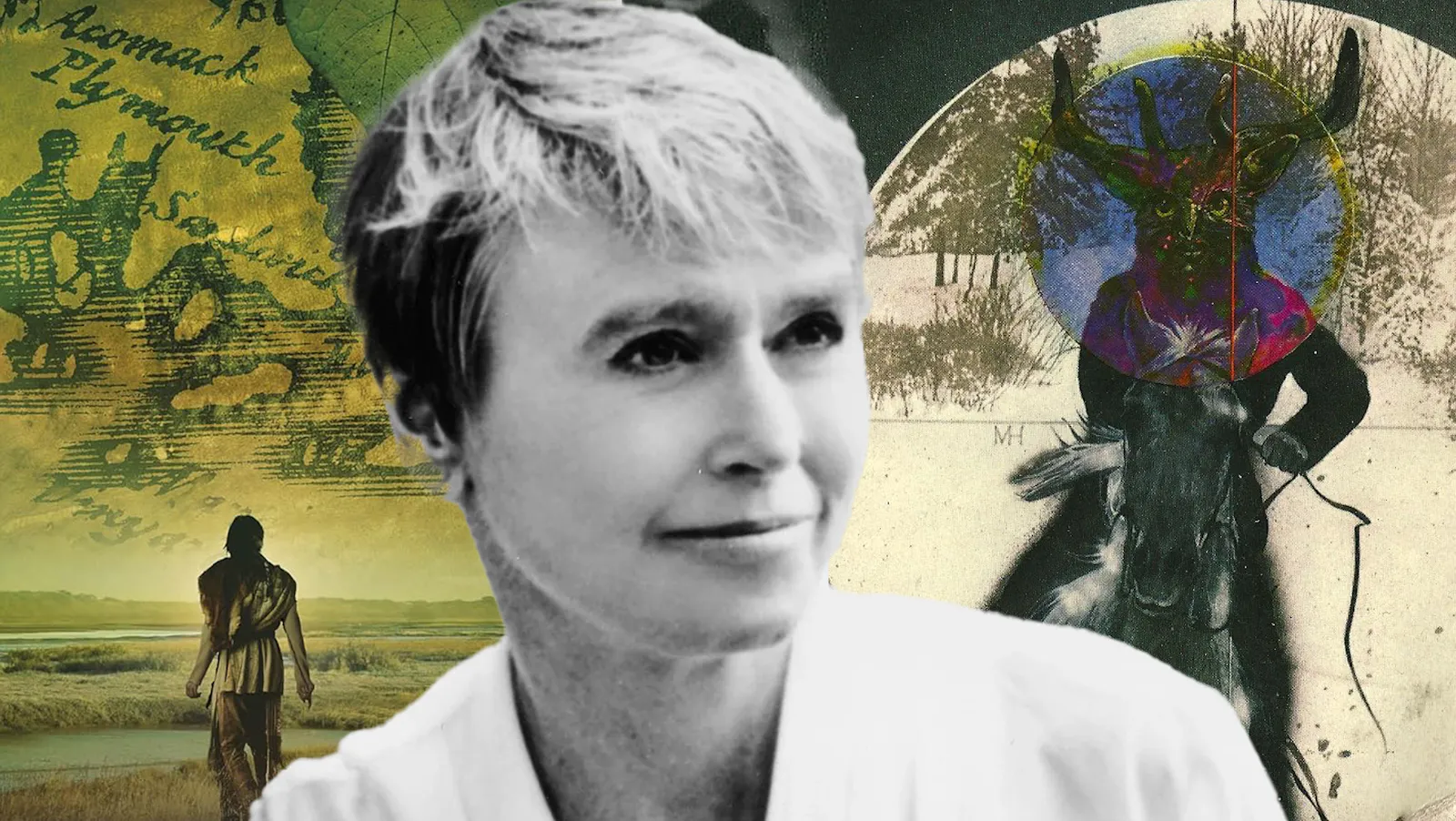
‘My imagination is rooted in Britain, and always will be,’ says Susan Cooper. ‘It’s like the fact that I’ve lived in the USA for 50 years and don’t have an American accent. But gradually it’s been crossing the Atlantic.’ With Ghost Hawk, her impassioned 2014 novel dealing with the fraught encounter between Puritan settlers and native peoples, her imagination definitively made landfall on the coast of America.
If Cooper’s name is new to some US readers, it’s only because her previous novels have been set in Britain – notably the Dark Is Rising sequence, a towering landmark on the road from J.R.R. Tolkien to J.K. Rowling.
Now 78, she has lived most of her life in New England, where she moved in 1963 to marry an M.I.T. professor.
But let’s go back in time – a compulsion of Cooper’s – to childhood in a house outside London during the Blitz of 1940–41, when her nightmares of German paratroopers bursting through the door seemed all too feasible. She began writing stories aged eight, but it wasn’t until after Oxford – where she attended lectures by Tolkien and C.S. Lewis – that she found herself writing for children.
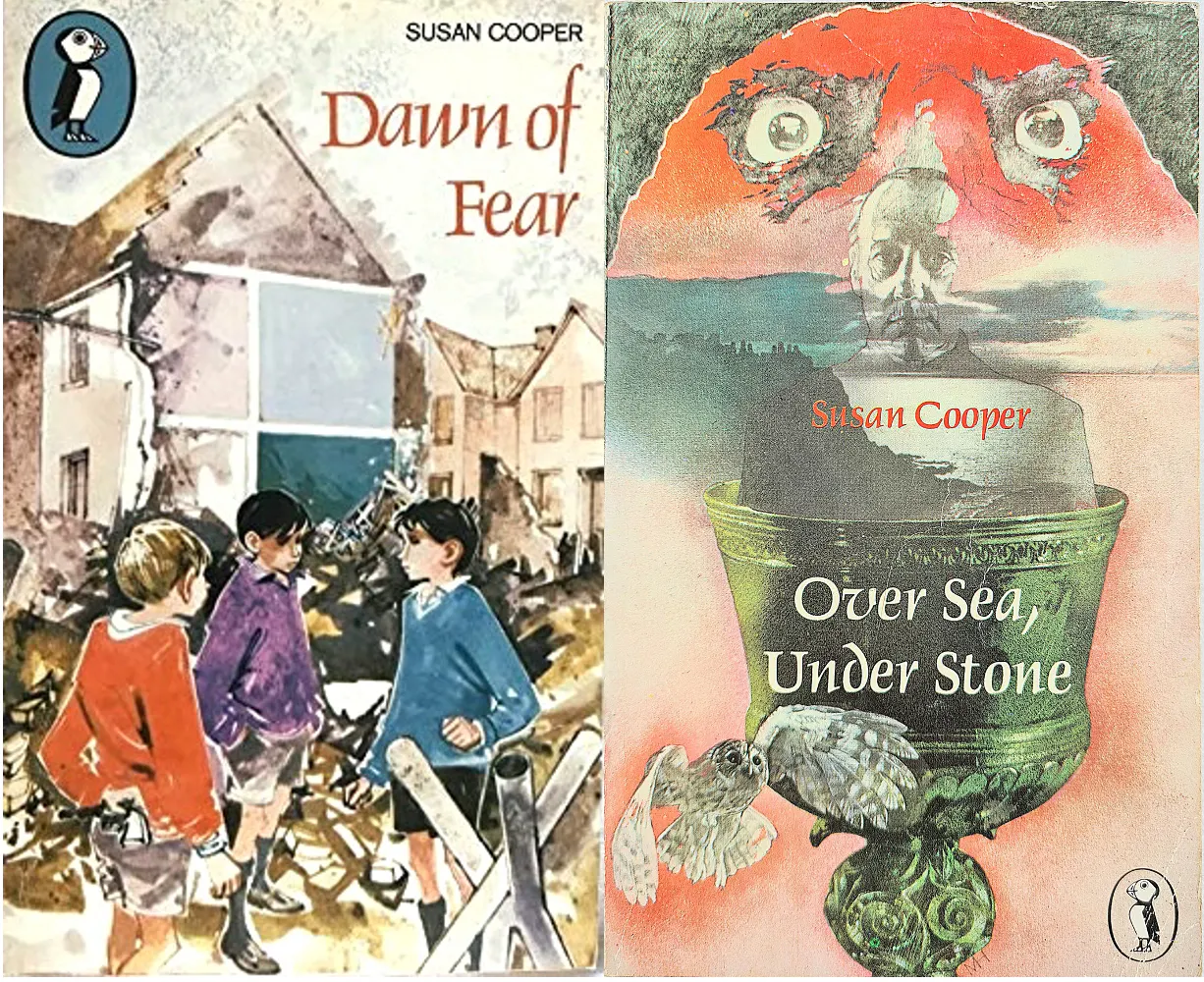
Initially it was part of her job as a Sunday Times journalist under James Bond author Ian Fleming; then it became an end in itself. Over Sea, Under Stone, about children searching for the Grail of Arthurian legend, long ago hidden in Cornwall by Celts fleeing the invading Anglo-Saxons, was published in 1965. By then she had moved to America, after falling in love during a four-month reporting trip Stateside.
Transplanted, she craved reconnection with her roots, and with Britain’s. The idea that her Cornish story was actually just the first of five books came in a flash while she was cross-country skiing. The snow-covered New England landscape carried her mind’s eye to ancient Britain, where she now set parts of 1973’s The Dark Is Rising.
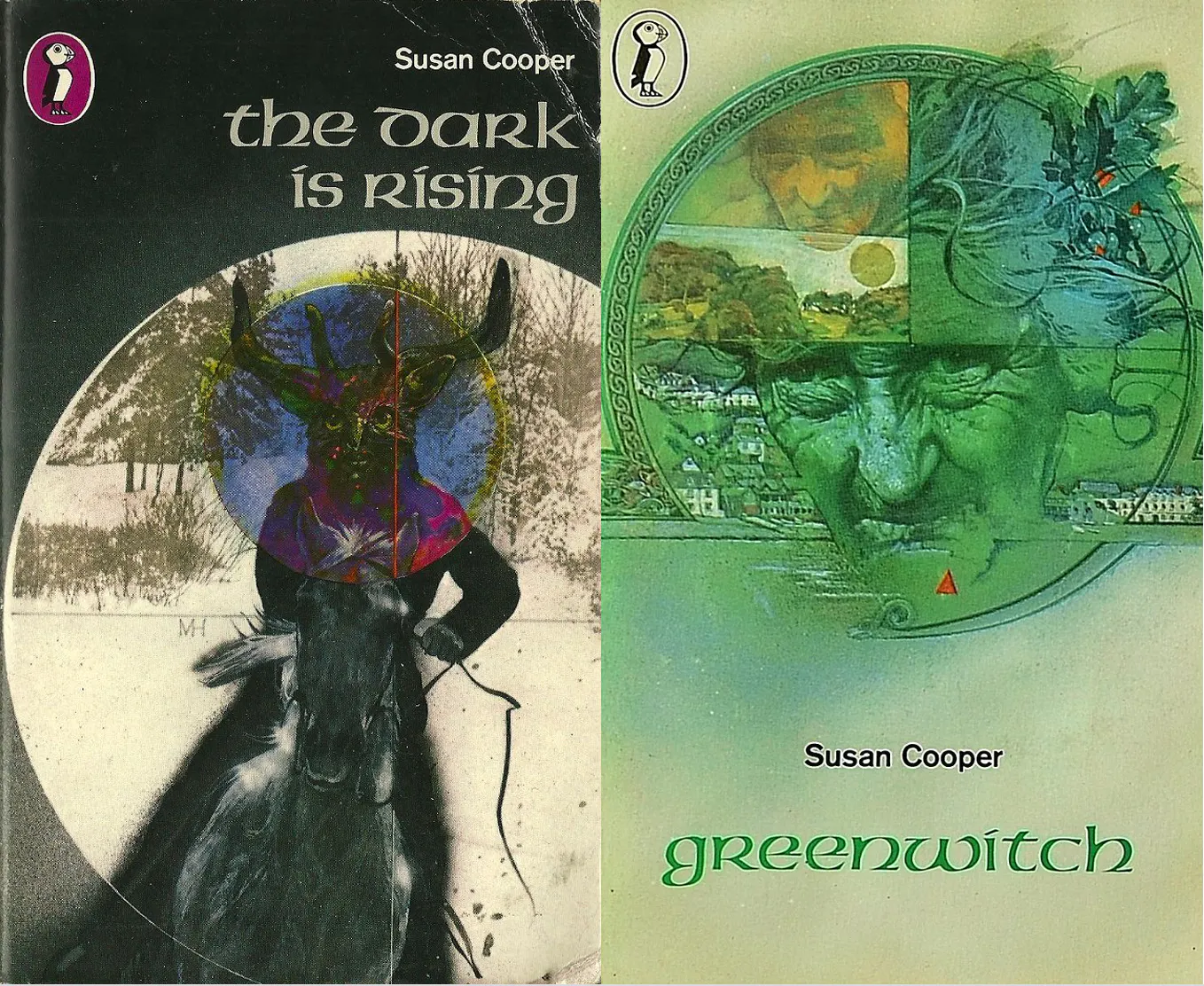
In this second book, 20th-century Will Stanton learns on his 11th birthday that he is the last of the Old Ones, appointed defenders of the Light, and has to seek six signs – quartered circles of wood, bronze, iron, water, fire and stone. (Cooper has distanced herself from the widely panned 2007 movie adaptation, The Seeker.) In the other books, further tokens are gathered against the rising Dark. But the real interest lies in the brilliant interweaving of history and legend, in the shadings of morality that belie the simple dualism of Light and Dark, and in the increasingly well-drawn cast.
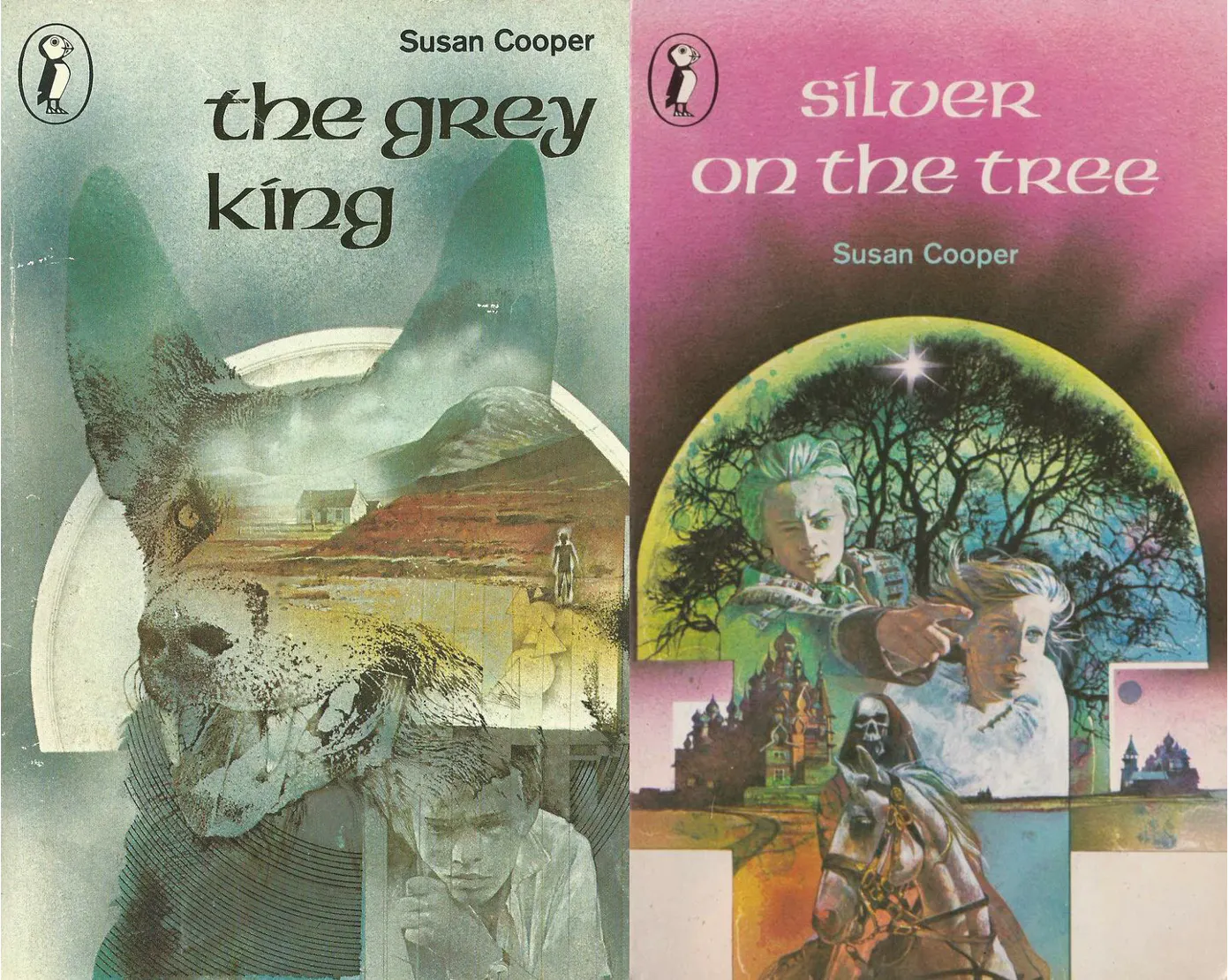
It was while she was writing the haunting fourth volume, The Grey King (winner of the Newbery Medal), that she and her husband met Hume Cronyn at dinner in a Caribbean hotel. When he told his actress wife Jessica Tandy – off in bed with sunburn – she responded, ‘Not Susan Cooper? She wrote that book I’ve been trying to get you to read for the last six months, The Dark Is Rising.’
So began a long collaboration, during which Cronyn and Cooper co-wrote the 1982 Broadway hit Foxfire, for which Tandy won a Tony Award. In 1996, two years after Tandy’s death and 13 after the end of Cooper’s first marriage, she married Cronyn, and they lived in Connecticut until his death in 2003, when she returned to Massachussetts to be near her children.
 (Öffnet in neuem Fenster)
Ghost Hawk arose like a mist from the estuary salt-marsh on the South Shore where she built her island home. ‘The place is so extraordinary that it began to haunt me,’ she says. Characteristically, she began to explore its past.
‘For three years I read every 17th century source and umpteen histories, and became increasingly appalled by the bigotry of the Puritans, who came here to escape persecution and proceeded to persecute others – not just the Indians but also white Christians with beliefs other than their own. My imagination took over and gave me two boys, one English, one Pokanoket Indian, and their very dangerous friendship – and this story.’
 (Öffnet in neuem Fenster)
The novel is structurally daring – managing to dovetail the perspectives of both boys – and culturally brave: ‘You have to pay great respect to the past, especially when one of your characters has an ethnicity different from your own,’ she says. But there are intriguing continuities with The Dark Is Rising and Dawn of Fear.
Like Will Stanton, Little Hawk is 11 when ancient ritual and sudden circumstance rob him of his innocence. Likewise the English immigrant John is 11 when he goes off to be apprenticed. When (by supernatural means) he learns the Pokanoket language, astonished Indians call John ‘the Speaker’, just as Will was ‘the Seeker’.
Cooper’s Britain has always been marked as a place in danger from invaders, whether they be Germans, Anglo-Saxons, or the agents of the Dark who exploit human hatred, greed and fear. In Ghost Hawk, the ‘invaders from over the sea’ are the English settlers on the Mayflower and later. Their first inadvertent gift is a disease so virulent to the native population that the hero’s entire Pokanoket village is wiped out while he is away enduring a solitary rite of manhood.
Further imports from 17th-century England are religious dogma, guns, and – perhaps most pernicious in Cooper’s view – a sense of ownership. The Pokanoket people honour the land as an mother; but the best hope their leaders can offer is to trade it away for short-term profit or peace: a perversion of the old ways, and a doomed one at that.
The Dark is Rising is a symphonic movement with brilliantly modulated suspense and terror, moving towards the point prophesied when ‘All shall find the light at last, silver on the tree’. Ghost Hawk, a powerful novel with the hobbled rhythms and stark outcomes of reality, offers no victory achievable by arms or by magic – only an impassioned plea for understanding.
It is in the lingering innocence of her young protagonists, and in the human capacity for open-heartedness, that Susan Cooper finds a limited hope. ‘I don’t think mankind is any darker than it’s always been, but because of mankind’s new capabilities the world is now clearly in greater peril year by year,’ she says from her house on the salt-marsh. ‘The future of this imperfect world is up to you. One person at a time. Try your best. Small things are better than nothing.’
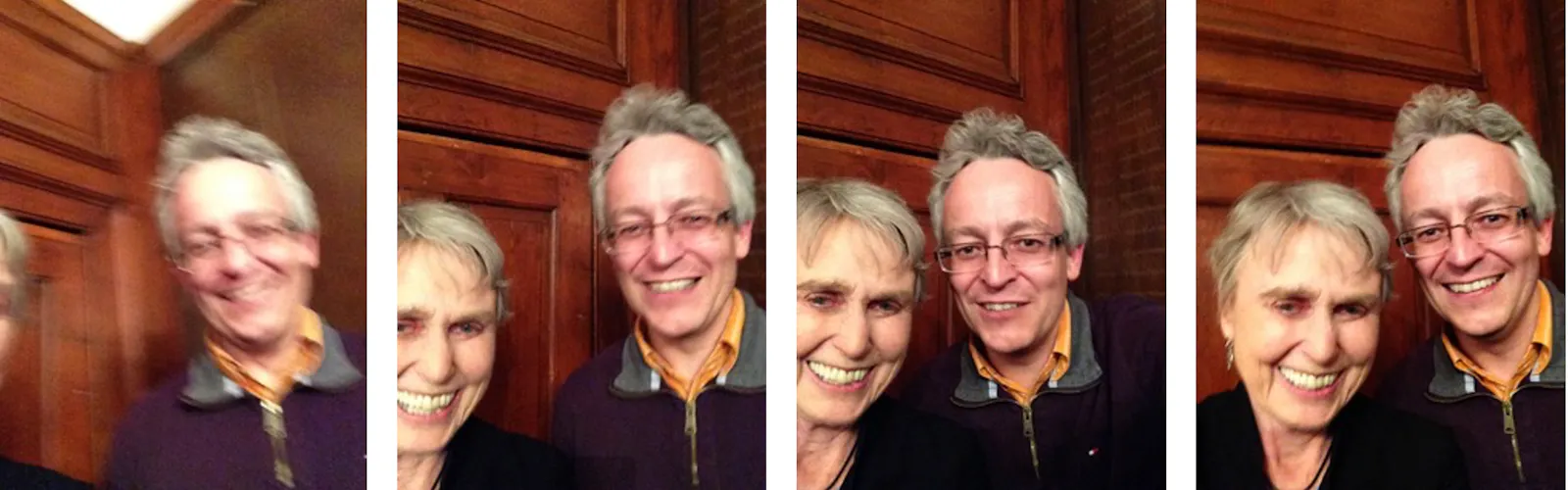
Susan and I later met when she gave the Pembroke College J.R.R. Tolkien Lecture in 2017; and again in 2023 at a discussion of the startling radio adaptation of The Dark Is Rising. Now, having just re-read the full five-part sequence with my book club, I can attest to its enduring power.
© John Garth, 2014 and 2026. All rights reserved.
 (Öffnet in neuem Fenster)
Datum
23.05.2026
Kategorie
Biography
0 Kommentare
Möchtest du den ersten Kommentar schreiben?
Werde Mitglied von John Garth on Tolkien’s life and works und starte die Unterhaltung.