
I’ll admit it’s a bit late to be reviewing the past year. But the month around the New Year was consumed by more important things – of which more later. Anyway, I had a busy time with Tolkien in 2025 – in scholarly and popular publications, in talks and lectures, on my crowdfunding blog, and in manuscript archives. So join me on a little excursion, starting with a couple that regular readers of this blog already know about.
 (Si apre in una nuova finestra)
Tolkien’s On Fairy-stories lecture rediscovered

Probably my most important new piece is a paper about Tolkien’s March 1939 lecture about fairy-stories. He reworked his lecture as the seminal essay ‘On Fairy-stories’, published in 1947. But the text of the 1939 lecture itself has been thought lost. Now I’ve been able to demonstrate that it survived. In fact it is already published, though no one realised it was the actual lecture text. Confirming my suspicions took me much sleuthing and close manuscript analysis. But spotting the clue depended on my experience in print journalism. My blog post (Si apre in una nuova finestra) about it also links through to my Journal of Inklings Studies paper.
New light on Tolkien’s return to Oxford in 1918
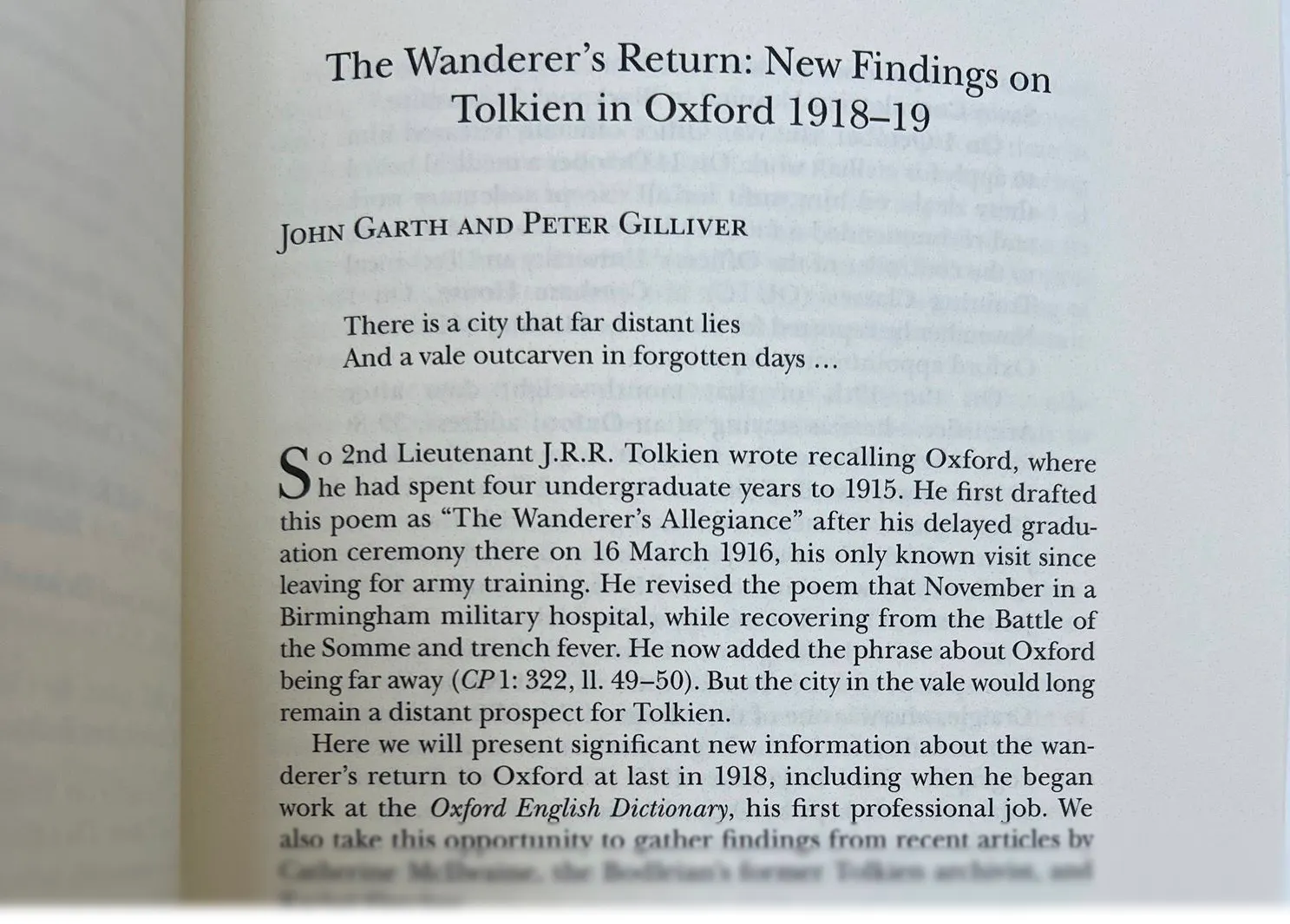
A further Bodleian manuscript discovery led to another of my 2025 papers. In Tolkien’s papers for his 1936 British Academy lecture, ‘Beowulf: The Monsters and the Critics’, I noticed a handwritten calendar covering 20 November to 10 February – but with no years specified. By way of a few clues and a process of elimination, I managed to identify this as his tally of hours worked for the Oxford English Dictionary as a new freelancer. With Peter Gilliver of the OED, I’ve written a paper shedding much new light on this period just after Tolkien’s release from war service. It’s published in volume 21 of Tolkien Studies, and I blog about it here (Si apre in una nuova finestra).
Geoffrey Bache Smith, the boy from the Black Country
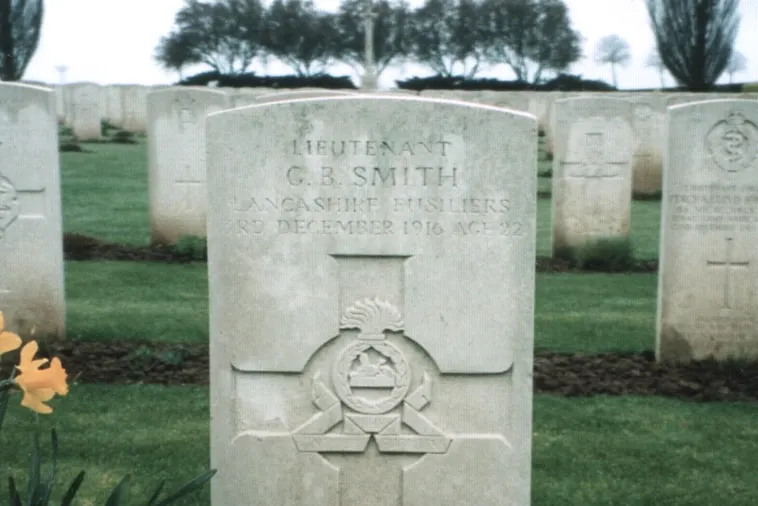
I’ve contributed a biographical chapter on Tolkien’s T.C.B.S. friend Smith to a forthcoming book, J.R.R. Tolkien and G.B. Smith: With Wind in our Ears. Edited by Giuseppe Pezzini, it’s out from Palgrave Macmillan in April (Si apre in una nuova finestra). The hefty hardback price makes it strictly for academic libraries, so I hope there will be an affordable paperback soon. This piece of writing originated in a brief talk I gave at the conference that was the springboard for the Palgrave book. I’ve now fulfilled a longstanding ambition to publish my ongoing research into his family and social background, his school life, and his early poetry. It hugely enriches my understanding of the young man who persuaded Tolkien to write poetry too. Around publication time, I may blog a bit more about what I’ve found.
Exploring Tolkien’s towers

At the invitation of illustrious Tolkien illustrator John Howe, I’ve contributed a chapter on the castles of Middle-earth to a book about the castle of Neuchâtel, his home town in Switzerland, and about other castles in history and fiction. Published to accompany an exhibition at the castle (Si apre in una nuova finestra), La Tour du Fantastique is a gorgeous book (Si apre in una nuova finestra) and – if you read French – fascinating too. I show the central role of strongholds, castles and towers in the history of Middle-earth as well as their inspirations and their symbolism. I may blog a little from my original English version soon.
The death of Smaug revisited
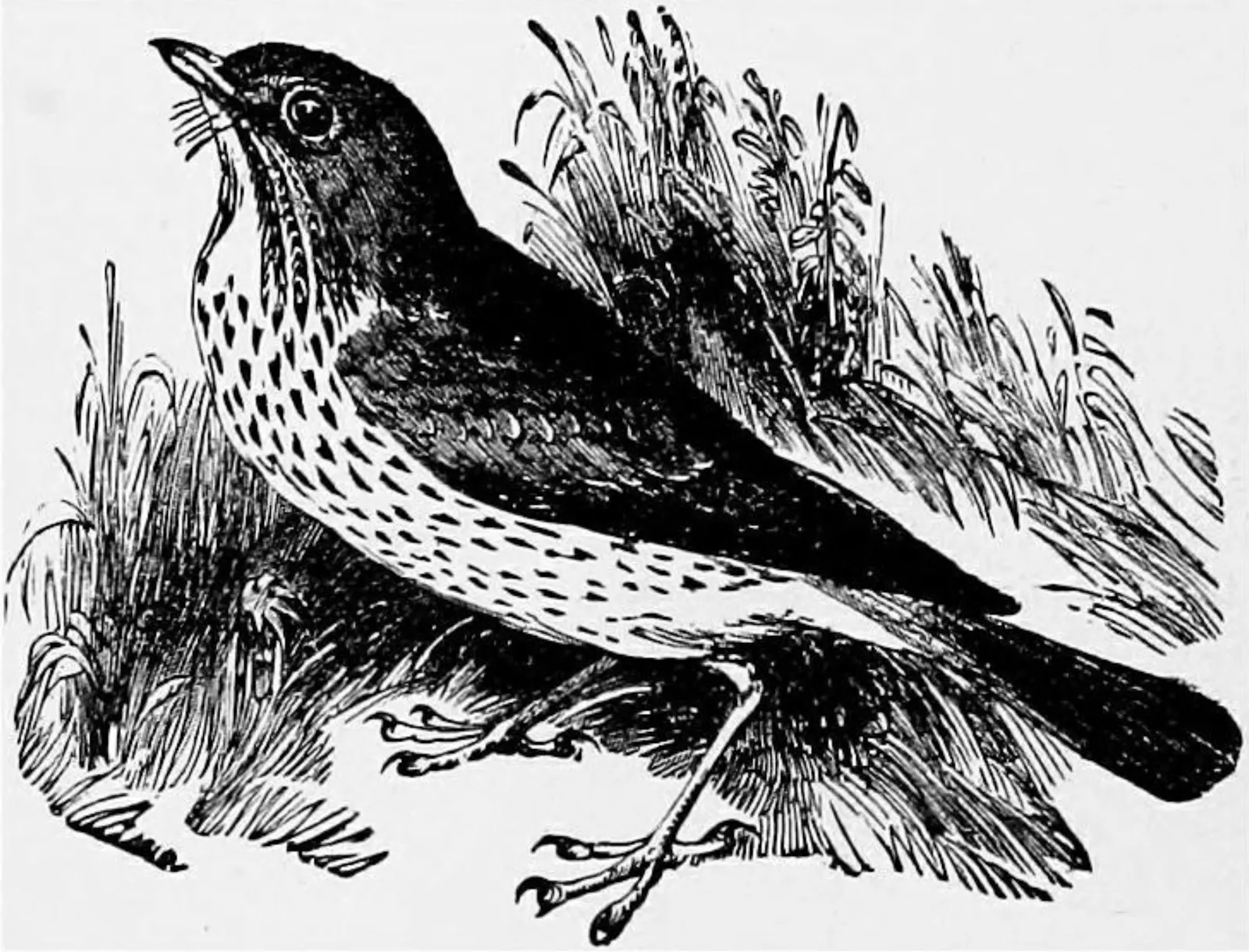
I’ve previously noted how the peculiar circumstances of the death of Smaug point to the inspiration of Longfellow’s Song of Hiawatha. Both feature bowmen battling gigantic monsters with protective jackets literally made of wealth. Both bowmen are at the end of their resources when a little bird suddenly appears and tells them the enemy’s secret weak spot. The point is more intriguing than I originally realised. Firstly, drafts show how Tolkien adopted the Hiawatha plotline (adapted from Native American myth) after rejecting a version of Smaug’s death inspired by the Germanic legend of Sigurd. Secondly, though, there are signs that Tolkien had Hiawatha at the back of his mind from much earlier in his story. Published in an issue of the journal ContactZone devoted to The Hobbit, my paper (Si apre in una nuova finestra) is in Italian, so it’s another one for the polyglots… for now.
Inspirations for the tengwar
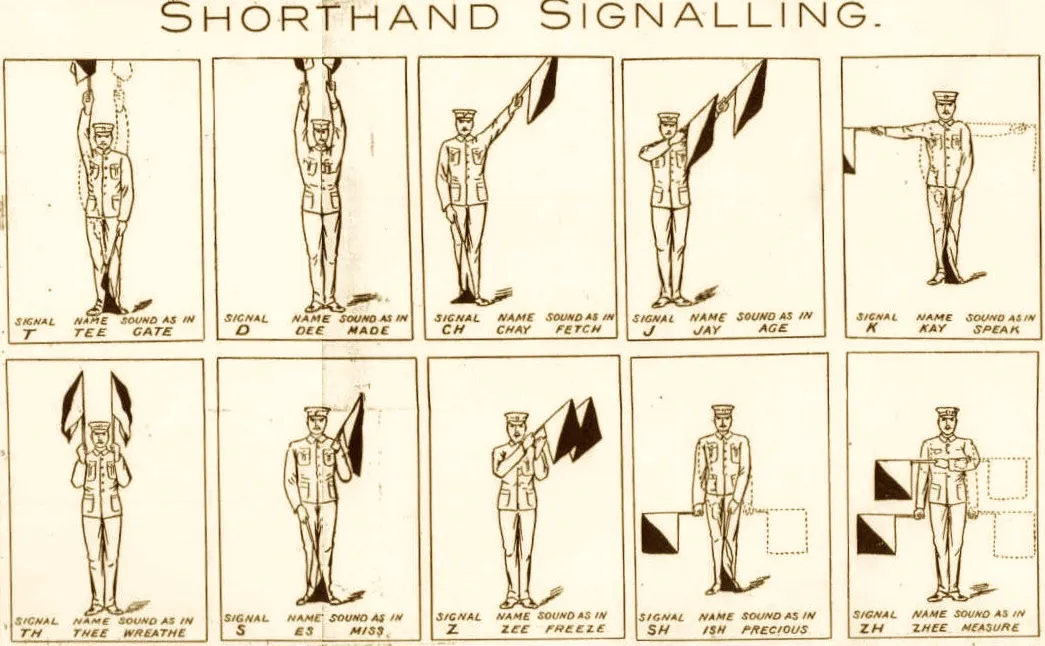
The last 2025 paper to mention is in English, but is particularly aimed at readers interested in Tolkien’s invented languages and scripts. I examine various attempts to relate the Elvish tengwar to real-world scripts in terms of form and function, including phonetic notation systems such as Alexander Bell’s Visible Speech. The first spur to the article was a discovery in the British Library long ago. While researching Tolkien and the Great War, I stumbled on a 1910 booklet titled Shorthand Signalling that describes a military semaphore on phonetic principles. This, its anonymous creator argued, would be more efficient than the conventional spelling-based semaphore. On the battlefield, signalling C-A-U-G-H-T instead of its three phonemes /kɔːt/ might cost a life or two. Nonetheless, the idea evidently never took off. As I show, it’s quite possible that Tolkien read about the booklet and searched it out. At any rate, shorthand signalling has some noteworthy crossovers with the tengwar. My paper is in Arda Philology volume 8 (Si apre in una nuova finestra).
Other activities
My review of The Bovadium Fragments, the latest Tolkien publication and final edition prepared by Christopher Tolkien before his death, appeared in The Times. I’ve also reviewed two landmark books about Tolkien for the Times Literary Supplement. But I’ll say more about that when the piece appears.

In March, I travelled to Winona, Minnesota, at the invitation of Joseph Tadie of St Mary’s University, to speak about Tolkien’s unexpected but important Minnesota influences – that Hiawatha inspiration. Remotely, I discussed Tolkien’s creation myth with students from George Fox University at the invitation of Jason Lepojärvi. In April, I attended the University of Vermont’s annual Tolkien conference, hosted by Chris Vaccaro. This year the theme was Tolkien and war. I gave an illustrated lecture titled ‘Quisling and prisoner: How the Second World War shaped the treason of Isengard’, which I’ll certainly be writing up in due course.
Back on this side of the Atlantic, Ireland put on its spring green for me when I took my talk on ‘The Epic History of The Lord of the Rings’ to Cork, Dublin, Limerick and Kilkenny for Seed Talks. I also delivered this talk at Oxford University’s Saïd Institute and in Liverpool. For a change in July, I talked to a Brixton Seed Talks audience about Tolkien’s Elves – their history, their symbolism, their language and, yes, the shape of their ears. In August I travelled to Great Malvern and spoke at the Coach House Theatre about Tolkien’s inspirations from real places, sharing (among other things) some new ideas about the influence of the Malvern Hills.
Perhaps my favourite talk was about Tolkien and the First World War, arranged at extremely short notice and therefore delivered off the cuff to Brigham Young University students in London. I still vividly remember my nervousness when I began speaking in public 25 years ago. For many years I hardly spoke without a meticulously written script. Now I find talking from notes just as satisfying, because flexibility and on-the-spot ideas make up for whatever may be lost in finesse. And talking without notes is immensely liberating and great fun.
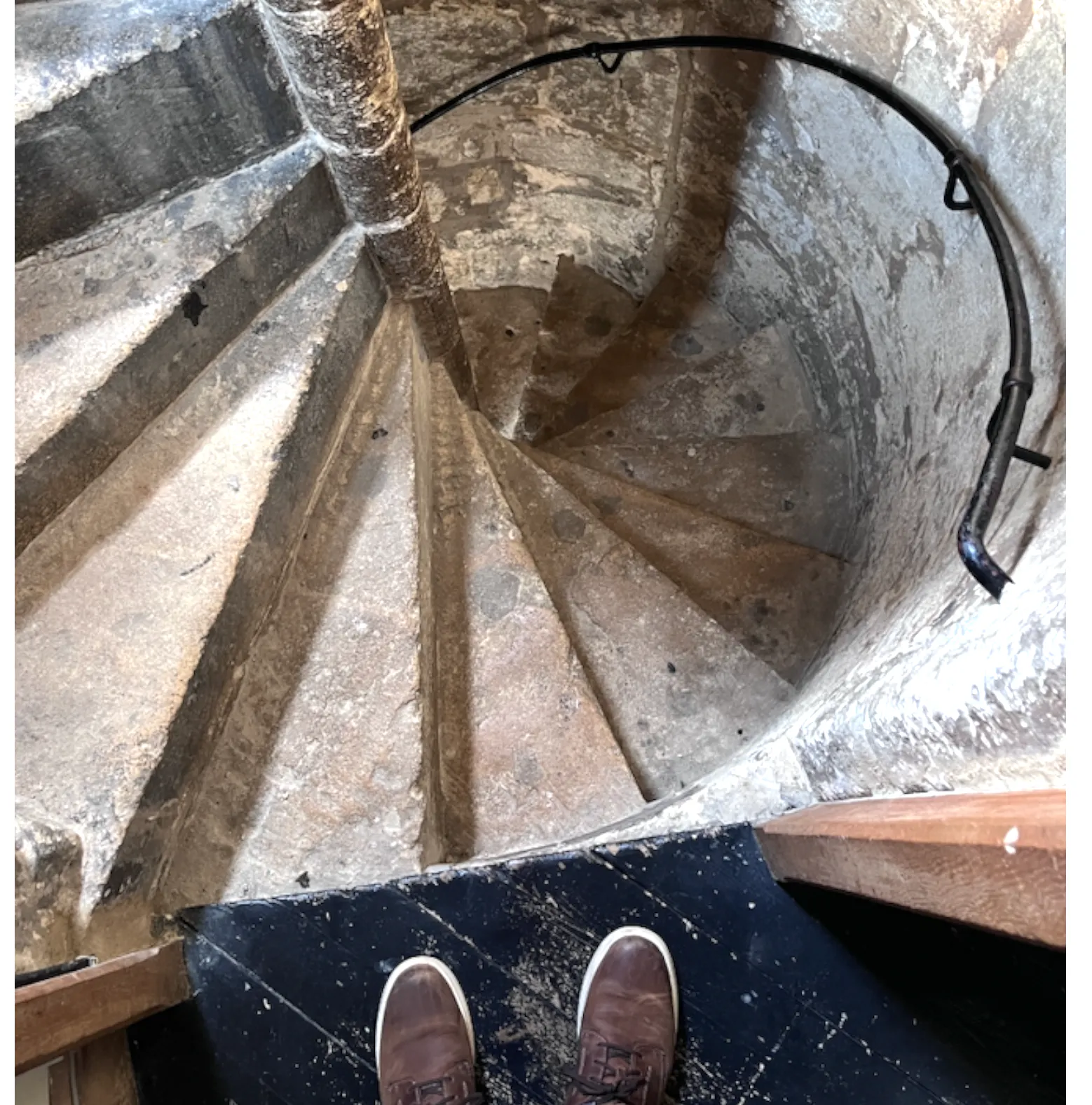
Summer found me teaching courses for Oxford Lifelong Learning (more formally the university’s Department for Continuing Education). As usual, at Christ Church for the Oxford Experience summer school, I led a course on ‘Tolkien and C.S. Lewis in Oxford’ and ‘An Introduction to Tolkien’s Mythology’. As usual, my students beat all my expectations for enthusiasm, engagement and insight. For the first time, I also taught a three-week course for the Berkeley-Merton summer school, this time on ‘Tolkien: Life, times, and The Lord of the Rings’. Here, at one of Tolkien’s own colleges, I had the extra good fortune to spend my nights up in a 17th-century turret. For the first time, I also led full-day guided tours outside Oxford, taking my class to Sarehole Mill and the Black Country Living Museum near Birmingham, the Imperial War Museum in London, and the Berkshire Downs’ two most famous ancient earthworks – the White Horse of Uffington and Wayland’s Smithy.

The White Horse also featured in a day-long private driving tour I gave, also taking in the Rollright Stones, Faringdon Folly, and Broadway Tower, on an exquisitely beautiful September day.
Income from most of my activities necessarily goes to support the necessities of life. It doesn’t stretch far enough to support my ongoing research and writing on Tolkien – on which I’ve also been very busy, above and beyond all the things I’ve mentioned here.
That’s where this crowdfunding blog comes in. I began the blog, simply titled John Garth on Tolkien’s life and works, in April 2023. By the end of a very challenging 2024, I had published 17 posts – fewer than I’d hoped before disaster and bereavement took over the final months of that year.
In 2025, I’ve worked hard to make up for lost time. I added 18 posts, more than doubling the total number. The new posts total 23,000 words. Hey, I like to get my teeth into things!
Actually more than a quarter of that word count belongs to one piece – a meditation on the deaths and mortal thought of C.S. Lewis, Aldous Huxley and John F. Kennedy (Si apre in una nuova finestra) which has previously only been available behind the Daily Beast paywall. I’ve also posted an alternative version of my review of The Bovadium Fragments (Si apre in una nuova finestra) (the Times version is also paywalled) and an excerpt from my preface to José Manuel Ferrández Bru’s biography of Father Francis Morgan, Uncle Curro.
Besides those, material freshly written for 2025 blog posts covers a wide range of topics, with emphasis on Tolkien and modernity. If you haven’t already, take a tour (Si apre in una nuova finestra)!
This blog began 2025 with 38 paying supporters. Naturally, some have left for whatever reason, but I’m delighted that more have joined. By the end of the year 44 kind and generous people were supporting the project. I can’t say how grateful I am to all of you who’ve contributed. But I can certainly say how vital this is for keeping my research and writing afloat. I hope to keep my supporters informed and entertained in 2026 – and I hope more people will decide to join!
My year wrapped up by closing the book on a literally disastrous period in my family life. Fifteen months ago, a hurricane sent a devastating flood through my mother-in-law’s house, as I blogged (Si apre in una nuova finestra) at the end of last year. But over this recent holiday season, I helped her and the rest of my family there move into a new home. I’m relieved to say that this house is well beyond the reach of storm surges, at 33 feet above sea level – virtually a mountaintop by Florida standards.
 (Si apre in una nuova finestra)
Words and pictures © John Garth, 2025. All rights reserved.
Data
02/02/2026
Argomento
News
1 commento
Vorresti vedere i commenti?
Abbonati a John Garth on Tolkien’s life and works e partecipa alla conversazione.