 (Si apre in una nuova finestra)
On a railway journey home to Oxford from Manchester on 26 June 1935, Tolkien wrote about the landscape passing by through the train window:
from Crewe to Wellington and Wrekin,
from Shropshire down into the black,
bleak, blasted country made of slack,
cinders, old iron, and poisoned water.
— ‘When Little Louis Came to Stay’ (Collected Poems, 1112)
It’s his only known description of England’s Black Country, which lies in southern Staffordshire and to the north-west of Birmingham, the city where Tolkien had spent his youth. It appears in The Collected Poems of J.R.R. Tolkien, which I reviewed last year for the Times Literary Supplement. It’s a verse addressed to his Manchester hosts, former Leeds University colleague E.V. Gordon and family.
In keeping with my Agatha Christiesque headline, I’ve sleuthed out what I think may be the train that Tolkien caught. The timetable appears in the closest edition of Bradshaw’s famous railway guide that I can find – early 1939 (before any wartime schedule changes). He’d have seen the Wrekin, a striking isolated height, on the right after Wellington. This train entered the Black Country at Wolverhampton and ran through it for half an hour before leaving it behind and entering Birmingham. For Tolkien, that was half an hour too much.
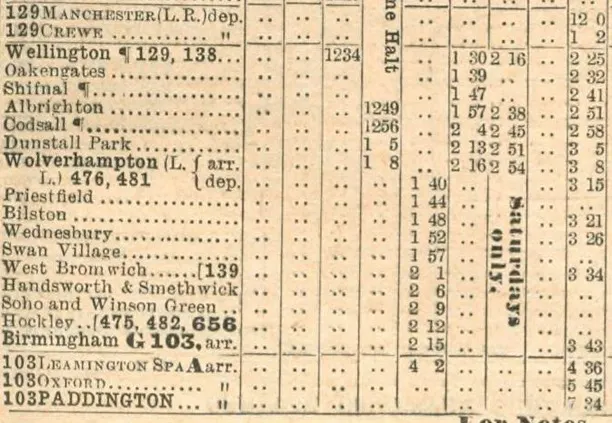
The poem at this point is self-reflexively about his inspiration to write it, personified in classical tradition as his ‘muse’. She starts ‘all stiff and hoarse’ until he reaches the Black Country.
And there a sudden frenzy caught her,
till by the time we came to Brum
she beat like a savage on a drum,
blaspheming the bright sun on high
proud and pitiless in clean sky
disdainful of the human blight
writhing in unaccustomed light.
‘Brum’ is Birmingham. His muse here is angry. You might say his muse is anger.
The lines describing the Black Country itself are a real nugget. It is often said that this very real Black Country was the inspiration for his fictional Mordor. Yet wherever anyone says this, you’ll probably find a Tolkien fan scoffing, spluttering or choking in disbelief. But I’ve argued that it’s a reasonable claim – and I think Tolkien’s 1935 poem adds a little to the picture.
Data
22/02/2025
Argomento
Inspirations
2 commenti
Vorresti vedere i commenti?
Abbonati a John Garth on Tolkien’s life and works e partecipa alla conversazione.