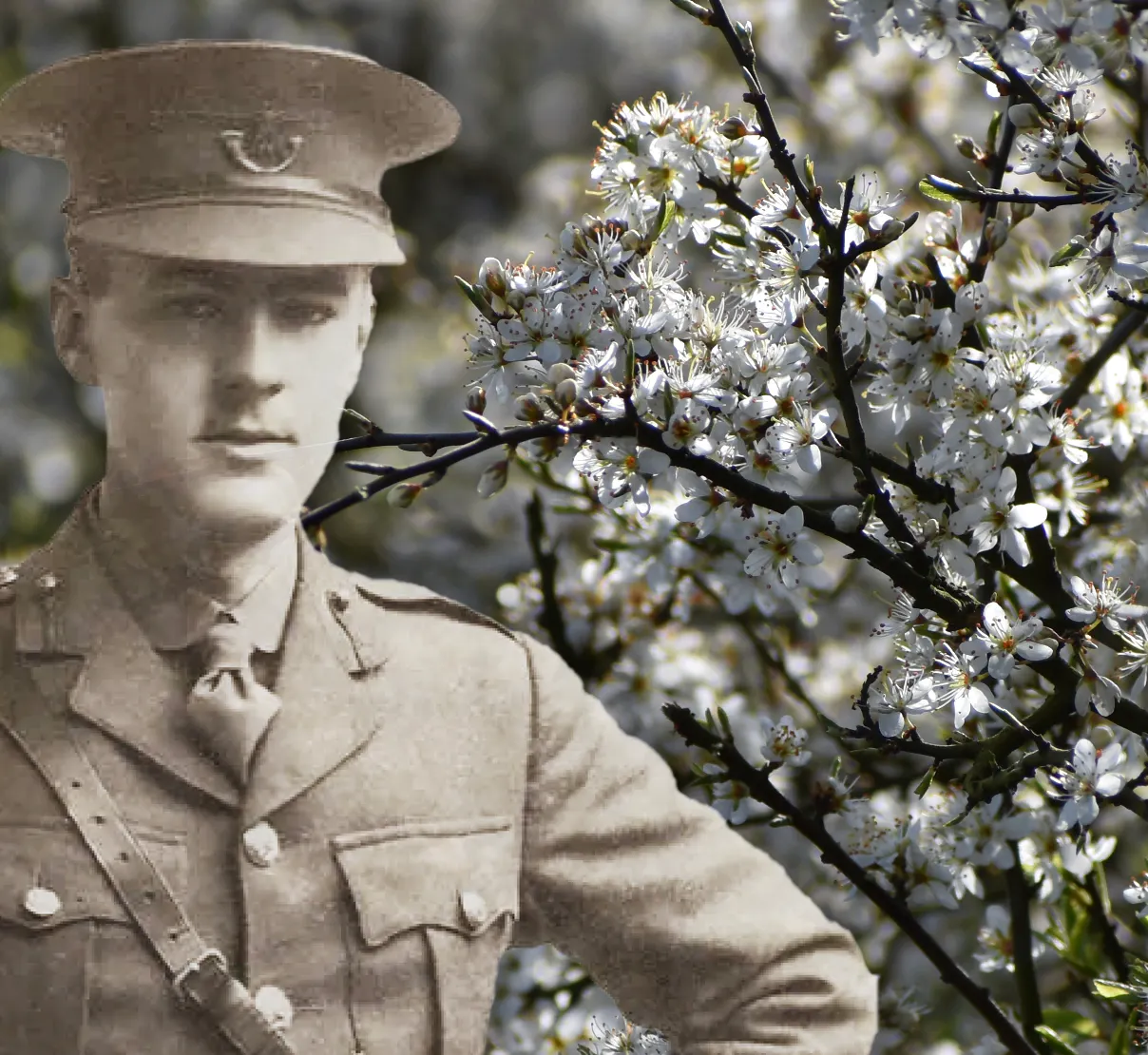
Geoffrey Bache Smith was the friend who persuaded J.R.R. Tolkien to begin writing poetry in earnest – putting him on the path to Middle-earth. Smith’s own earlier transformation into a poet arose in tragic circumstances.
To set the scene, the Smith family were living in a house on the fringes of West Bromwich, not far from the home ground of the local football team. Geoffrey Bache Smith was 16.
 (Opens in a new window)
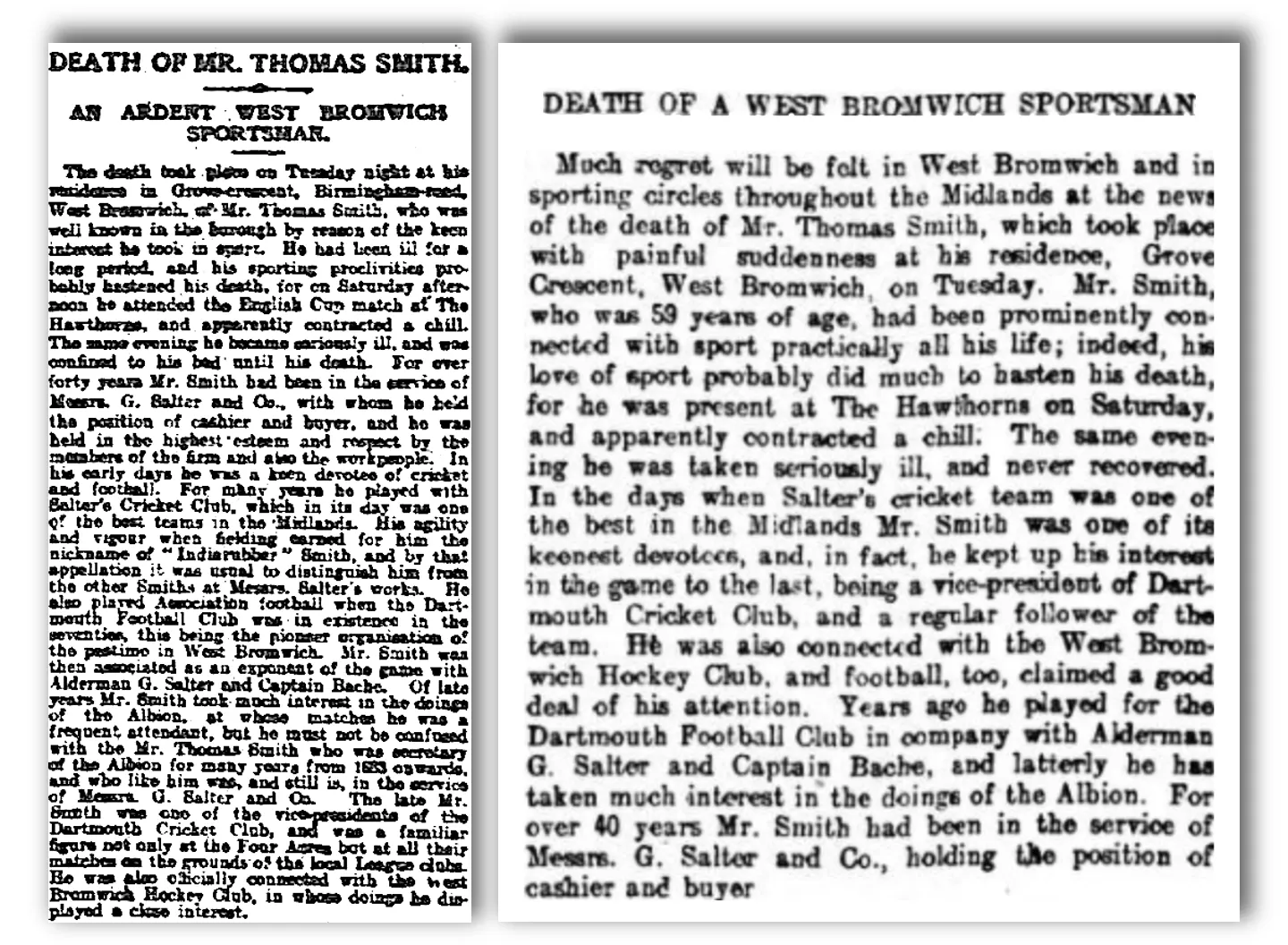
On the cold afternoon of Saturday, 14 January 1911, Tom Smith watched as West Bromwich Albion beat Fulham four-nil in the English Cup league. He had suffered ill health for some time and fell seriously ill on his return from the Hawthorns football ground that night. He died three days later, aged 59.
Geoffrey’s fledgling literary emergence at school later in 1911 is all the more striking because it followed closely on the sudden death of his father. His youthful poetry is haunted by a sense of mortality. It would be natural if reflection on a sudden bereavement found expression in this way. Perhaps the loss of his father also loosened some reticence in Smith and encouraged him to seize the day.
A short verse later published in A Spring Harvest, the posthumous selection of Smith’s poetry edited by Tolkien and Christopher Wiseman, is deceptive in its apparent simplicity:
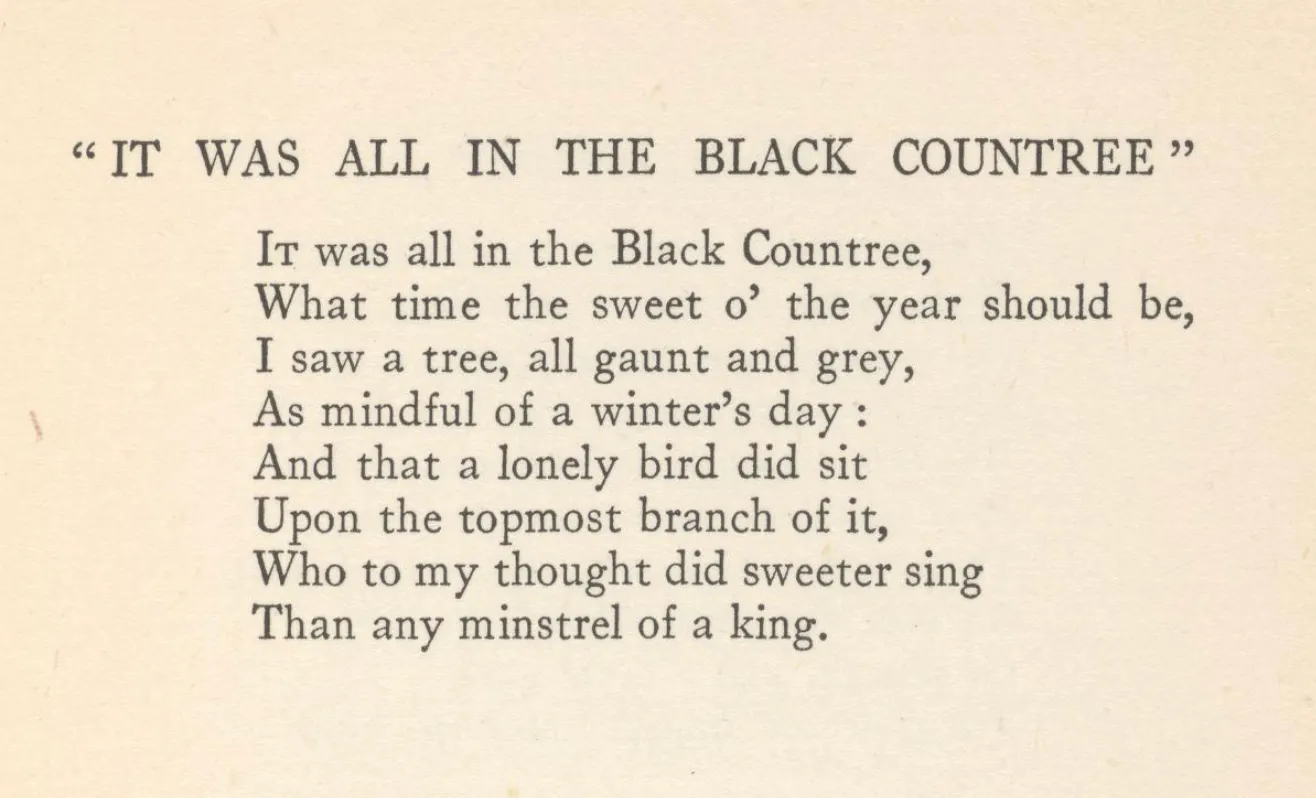
It was all in the Black Countree,
What time the sweet o’ the year should be,
I saw a tree, all gaunt and grey,
As mindful of a winter’s day:
And that a lonely bird did sit
Upon the topmost branch of it,
Who to my thought did sweeter sing
Than any minstrel of a king.
This is our only Smith poem to name the Black Country, the poet’s birthplace and homeland. With “the sweet o’ the year”, it quotes lines by another West Midland poet, Shakespeare, that celebrate spring “when daffodils begin to peer” and thrush, lark and jay sing “summer songs” (The Winter’s Tale, Act 4, Scene 3). But it also draws directly from the club badge of West Bromwich Albion: a throstle (song thrush) on a hawthorn branch. The team was known as the Throstles; their ground was the Hawthorns, named because hawthorn had previously grown there. The hawthorn’s fruits, haws, are an important part of the thrush’s diet.

Hawthorn blossom is one of the glories of the British spring, hence its bynames may-tree, mayflower and whitethorn. But Smith’s scene is springtime and the tree is barren: here is neither true spring nor harvest. Rather, readers of Tolkien may think of the White Tree of Gondor, its branches “barren and broken” in the centuries-long absence of the King.1
‘It was all in the Black Countree’ appears a mourning poem, “mindful of a winter’s day”—like the day his father fell fatally ill after the Hawthorns match, perhaps. But the poignancy lies in the lifeforce of the throstle’s song. Smith’s apparently slight and casual poem is a tribute to his hometown and home team and, as I think likely, an elegy for his father too.
 (Opens in a new window)
This has been an excerpt from ‘“A Perfect Genius”: G.B. Smith Among Family and Friends’, my chapter in the pioneering new collection J.R.R. Tolkien and G.B. Smith: With Wind in our Ears, edited by Professor Giuseppe Pezzini and published by Palgrave Macmillan.
You can read more about the book, and my portrait of the young G.B. Smith, in my accompanying blog post here (Opens in a new window).
© John Garth, 2026. All rights reserved. Excerpt reproduced courtesy of Palgrave Macmillan.
The Lord of the Rings, 50th anniversary edition (London: HarperCollins, 2004) 753. ↩
Date
May 23, 2026
Topic
Biography
0 comments
Would you like to be the first to write a comment?
Become a member of John Garth on Tolkien’s life and works and start the conversation.