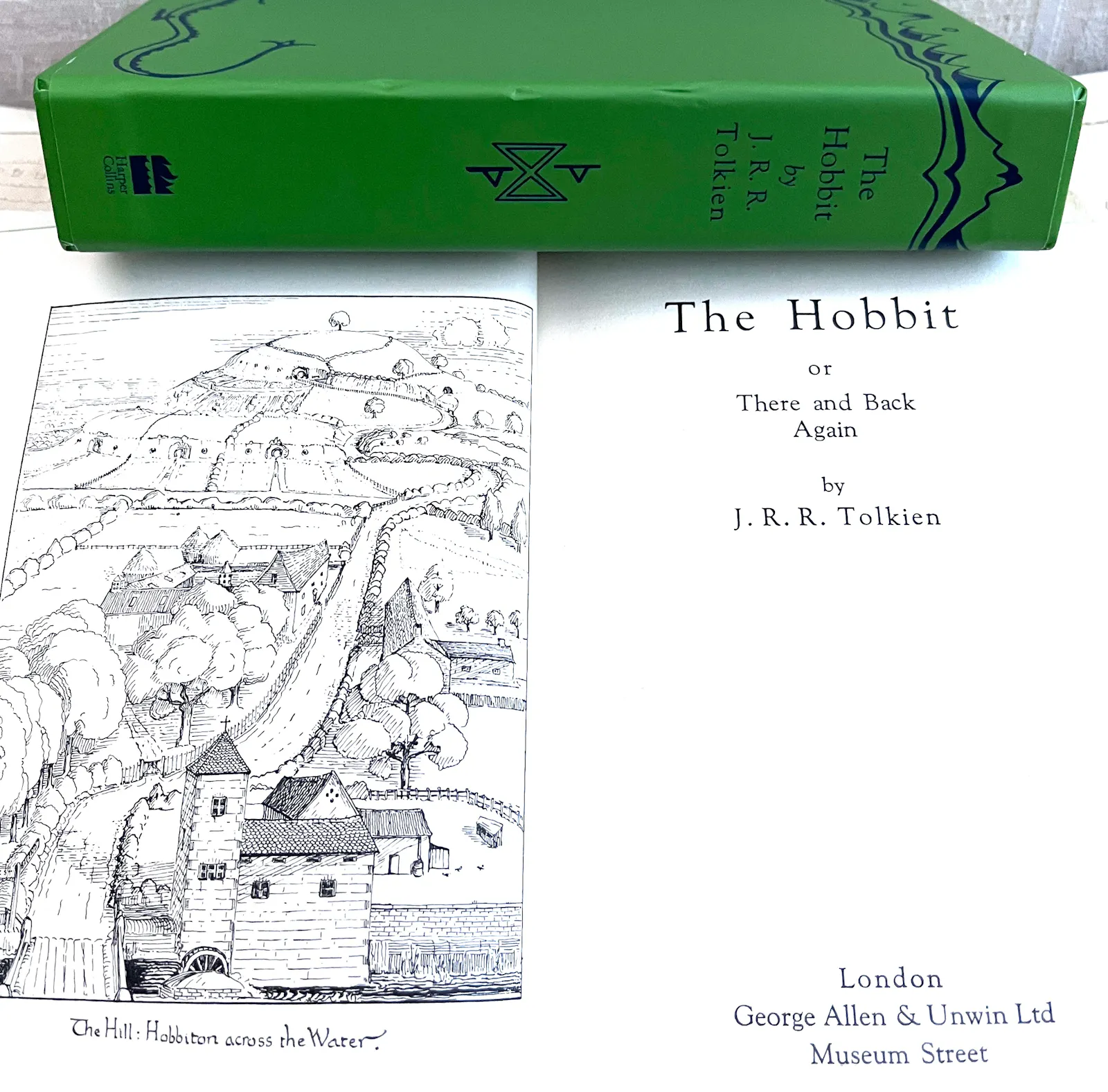
Tolkien hid all kinds of personal jokes and messages in his stories and – it turns out – in his pictures.
I often get asked to verify claims that such and such a place sparked his imagination. I suppose I have only myself to blame, since I’ve written a book called The Worlds of J.R.R. Tolkien: The Places that Inspired Middle-earth!
My usual response is that either he not known to have visited the place in question, or he visited too late for it to have inspired The Hobbit or The Lord of the Rings.
Such claims are ten a penny. Very few deserve serious consideration. Many are absurd. Tolkien is said to have written the whole of The Lord of the Rings in any number of places, from a table next to the walls of Merton College, Oxford, to the back rooms of various pubs around England. It stands to reason he can’t have done it all these places – and in fact, of course, he did it mostly at home in north Oxford.
Frankly, when the topic comes up I’m automatically wary. And so I was when a journalist, David Pittam from BBC Radio Nottingham, asked me to comment on the notion that a road in nearby Gedling appears in Tolkien’s picture The Hill: Hobbiton-across-the-Water.
This claim had one thing in its favour. Tolkien spent meaningful time in Gedling, Nottinghamshire, before he wrote The Hobbit. He visited several times and stayed at the farm that his aunt, Jane Neave, jointly ran between 1912 and 1922. His brother Hilary worked on the farm for a while. And in September 1914, Tolkien composed his first Middle-earth-related piece of writing there – the poem The Voyage of Éarendel the Evening Star.
As the conversation unfolded by phone, and he sent me images via WhatsApp, I also saw there was a real case to answer.
The result was a radio interview and a BBC news article (Öffnet in neuem Fenster) by David. In the blog post you’re reading now, however, I give further details and insights.
Datum
12.09.2025
Kategorie
Biography
4 Kommentare
Möchtest du die Kommentare sehen?
Werde Mitglied von John Garth on Tolkien’s life and works und diskutiere mit.