My basics are a reminder on the context of “How” we do things - sometimes because “it always has been like this”, sometimes we only realize later on that we should have known better. It’s okay. Let’s take some time to refresh.
On a recent monday I had nine meetings. Two-thirds of them I spent with more or less the same 2-3 people. They felt all necessary, keeping the moving carriage running:
process alignment with our new agile coach.
daily standup with the dev team.
preparations for live feature presentation for the next day.
we assessed the complexities of our domain, their implications for design, product visions, organizational strategic goals, project deadlines and general stakeholder handling.
regular weekly meeting to organize our business workloads of the upcoming week for a strategic initiative running for years.
broader discussion with the lead dev from our team to understand the broader context why we have problems tackling certain topics or why we don’t.
we tried getting a better grip on the course of action regarding the product of another department, which has volatile, partial backing by middle management.
Jour fixe with the leads of one of the most important three projects our division has set as goals and is currently working on.
preparing content for 1 ½ days of a division-wide workshop for said very important project.
All those meetings had perfectly valid reasons to happen. They all made sense. We have routines, projects, deadlines, milestones. They all need to happen sooner than later.
Still, it pains me to admit that the Return on Investment for the time spent feels horribly low.
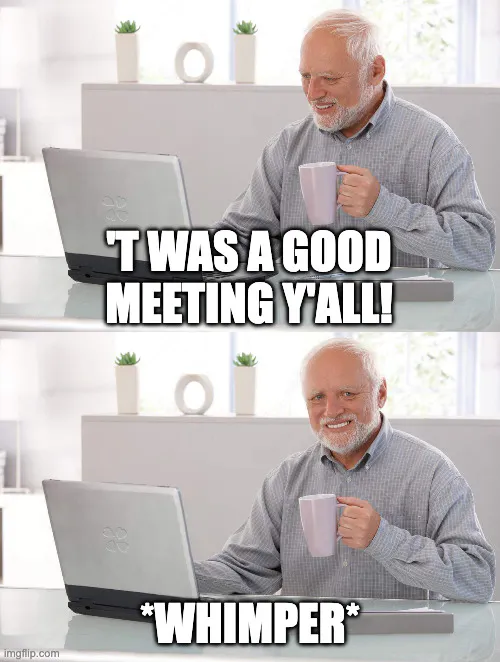
Industriously Low Quality ROI
Doing this for shorter time spans is okay, it’s inevitable especially in moments of crisis. Spending four of five days in your week like this over months, over years, just does not pan out.
But why?
The constant context switches are bad enough (Opens in a new window), but the main problem is elsewhere - if people just paste meeting after meeting they won’t have time to adequately reflect and process.
What is really going on in general and what just happened?
Which consequences stem from decisions and shared information?
Which problems and obstacles present themselves, which opportunities?
What is the impact of all those and which should be addressed first?
But the facts of the recent past are not sufficient, are they? You need a plan to move forward:
What would be the next course of action?
How would one proceed, which people to include, which expertise is required?
What needs to be documented?
What kind of materials need to be provided to communicate?
The past, the future – but what about the unseen and intangible:
Did people push own agendas, did they work together?
What happened in this meeting on several meta-levels?
Did everyone understood what had been discussed?
Which alignment/understanding needs to be established with whom?
And then the last question you always will coma across:
Who takes care that all those question can be answered?
Not all of those questions apply all the times. But good luck trying to sort the pieces of a puzzle in the 0-5 minutes between meetings and your calendar is filled to the brim - many people just put in overtime to be able to do that. You know, that silent agreement between you and your employer that if you want to successfully finish your tasks, you choose the time of the day when no one else can distract you. And if you are unable to pull the time management off, it’s entirely your fault. (one reason I became a night person was that no one would bother me.)
So, what is the counter-strategy for getting stuck between overtime and being chased like a headless chicken?
One of the worst choices people can come up with, is to activate the intelligence of the hivemind. Just run another meeting driven by the hope that the same bunch or more people are able to answer unknown questions and undefined problems:
Just give it an agenda, a short intro or re-cap, let’s pin some cards to a whiteboard, decide on some CTAs, et voilá. Might work on a new complex project but, oh boy, that can degrade fast.
If your modus operandi, your method, your strategy and what you need to accomplish in which scope is not clear - the group will probably miss relevant angles and pattern and communicate in a tangled mess of misunderstanding and personality traits. Your outcome then depends on luck and all possible combinations why a group of people excels one day and sucks the next.
One occasion is okay, dipping your toes into uncanny waters. But then take your time and reflect the shit out of your problem.
If you don’t, another meeting might be imposed on you. It just looms around the corner, essentially repeating the same pattern as before, increasing the effect that reflection won’t happen, making the wheel turn and turn and turn again.
Breaking the rhythm is in the org’s best interest.
As a company you should avoid this. I’d love to argue it’s because it’s the right thing to do, making sure your workers can make the qualified decision in the time they are given and are being paid for. But I very well understand that many orgs could give less than two shits about that, so the reason not to constantly rush is another one:
It hurts the company.
More decisions become fragile gambles, grounded in best intentions but unreliable data (aka gut feeling and group dynamics and power structures).
More projects become festering, uncontrollable abominations, where the performance theater of the project matters more than its outcomes.
You lose on more opportunities because you are investing in too many for longer duration.
You build the wrong stuff in the wrong place, generating opportunity costs.
Confusion and misalignment grows, implemented via a User Datagram Protocol of fire-and-forget. You said the right thing, didn’t you? It’s not your fault someone didn’t get it, right?
Your workers drop out constantly, sprinting and wasting their lives for ineffective returns. They only focus on the little things they can grasp and act upon. They start to care less.
This is not being on the edge of competition.
This is not rewarding merit.
This is not high-performance business.
All because individuals in your company fail to throw an exception. They simply do not have the time to even consider that. You’re like a hamster in an ever-turning wheel, no matter if you’re running or not. And then you realize it’s a blender.
“Slow is smooth, smooth is fast.”
I needed to be humbled by a very skilled agile master (kudos to Mr. Potapski) to learn that rushing in insecure and critical situations is actually counter-productive. It’s a crisis! We need to deliver! We need to fix everything! The next sprint planning is coming up and I have no tickets! The project lead wants me to fill out a new report! We must, we have to, they will it!
Stop then. Right there. Don’t let the automatron take over. It’s not about the right priority. It’s about the question if your next action is the one which makes the most sense from a more holistic viewpoint.

As a company you can at least implement countermeasures:
Have less of concurrent goals. This reduces task-switching and gives everyone more time to process.
Create safe spaces for honest feedback so you can counter power dynamics keeping people quiet.
Hire and team up diverse people. Slow and Quick Thinker, Enthusiastic and Reluctant, Convergent and Divergent, Generalists and Specialists. Yes, it generates friction.
Embrace friction.
Train people on basic moderation skills for workshops. It’s incredible what encouragement and silence can do for critical thinking.
Reward people who do not use criticism as an end in itself. There is a difference between people who are annoying and people who are annoyingly right. Learn the difference.
Strategies for the individual
If your company does not care, you should.
The main idea is always the same: Step out of the damn wheel. Pause, take your time. Don’t just jump from one thing to the next, because your to-do list and schedules and co-workers pressure you.
Take a step back and watch it from a afar and deeply process what’s going on. How can you reserve compute time for your brain for data it just got, if it will be overloaded with more just the next moment?
Seasoned people who are aware of this deliberately block their calendars in advance to have sufficient time to process. This is one way to do it. It’s the diplomatic solution. It’s the “I have a boyfriend”-excuse to aggressively flirting men.
Another is to actively manage your calendar and be brutally honest with yourself and everyone else. Kick all the fluff that does not help your work to advance. It may aggravate industrious people who love routines or have larger egos.
“Fear of missing out” (FOMO) is a thing you also need to let go. You cannot control the world, so choose your battles wisely and let go of those which matter less. It helps if you can trust and delegate to others – share the workload.
The most risky and spectacular boss move is to crash a meeting by asking fundamental questions or pointing at flaws in the foundation of the current (ideally very advanced) discussion. The final verdict of such an action depends very much on the impeding consequences for all people involved. You might be considered a clueless imbecile (no impact, no one gives a damn → no career) or the favorite pet demon of Satan eating babies in front of them all (heavy impact, all hate you for making their lives more complicated → no career) – or maybe you really play it well, point to the problem and present a viable solution, dear Metatron, messenger of god.

It’s the same thing always: If the circumstances are problematic and you have no possibility to change them – your self-preservation should make you adapt. Protect yourself.
Still, if this text resonates with you and you still ask yourself how you can protect yourself to reflect:
A simple search (Opens in a new window) will provide you with different ideas and time management techniques, Pomodoro, Eisenhower Matrix, 1-3-5 Rule, etc.
Or ask your favorite LLM. It can also support you in reflection. :)
Date
April 24, 2026
Topic
Tech & Product
0 comments
Would you like to be the first to write a comment?
Become a member of The Meandering Fray and start the conversation.


