
(Scroll down for English version)
Les couples sont les premiers à s’affronter en ce vendredi 19 décembre. Sans surprise, Camille et Pavel Kovalev prennent la tête avec un score de 63.79. Leur triple twist est bon, et seul un quarter sur le triple boucle parallèle et un petit accroc sur la pirouette combinée sont à noter.

Aurélie Faula et Théo Belle suivent leurs aînés de très près avec 62.70, soit deux points de mieux que leur record passé. Grâce à une exécution sans tache, leur score technique est supérieur à celui du couple Kovalev, mais les composantes restent encore à améliorer.

Belle performance pour Megan Wessenberg et Denys Strekalin qui ne patinent ensemble que depuis quelques mois, et qui améliorent leur score personnel de presque 5 points avec 55.23. Ils sont 3èmes, suivis de Louise Ehrhard et Matthias Pellegris (53.68). La lutte pour la troisième marche du podium promet d’être sévère demain.
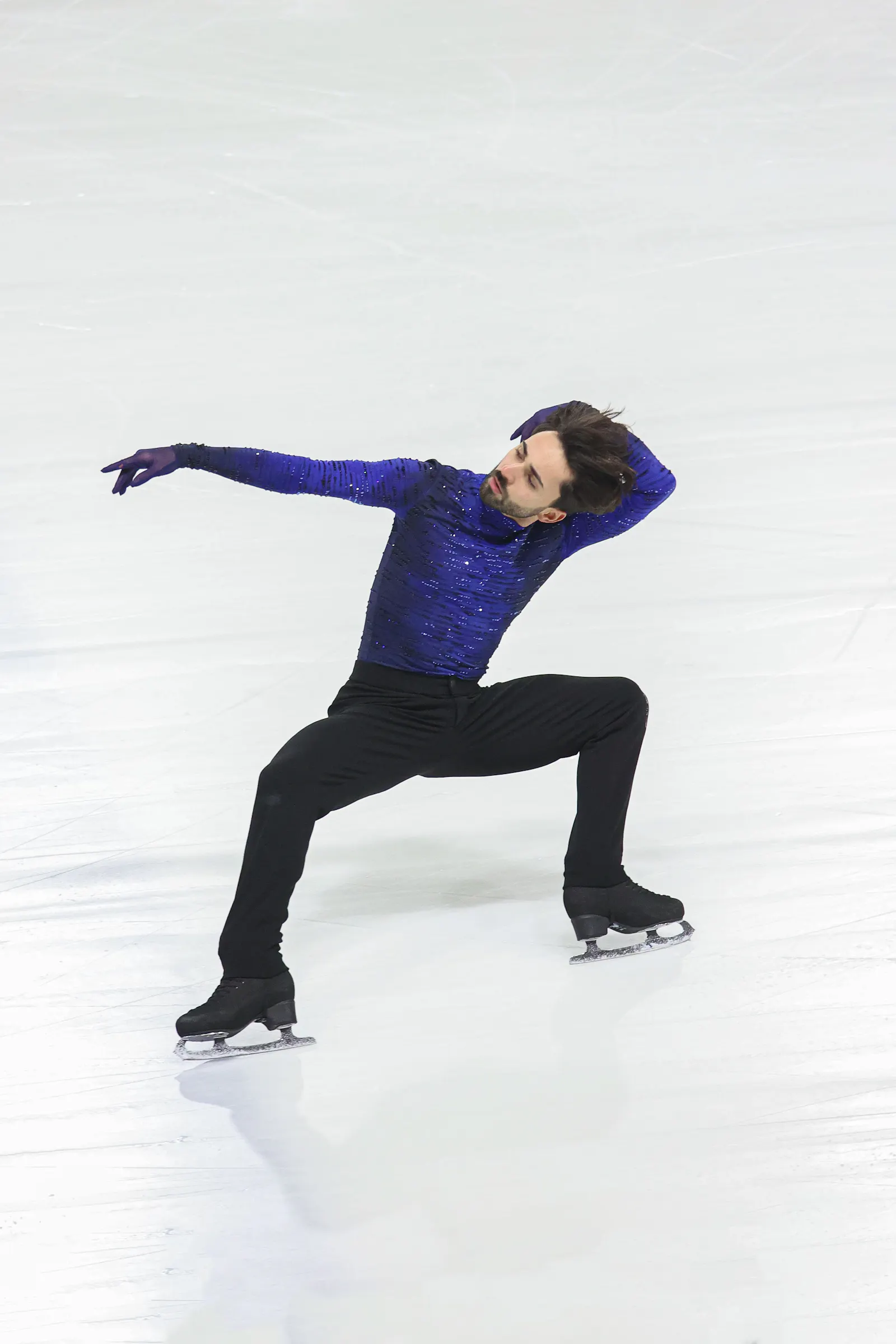
A l’exception d’un quad Salchow en sous rotation, le programme court de Kevin Aymoz est propre comme un sous neuf. Kevin a abandonné la seconde partie patinée sur le “Judas” de Lady Gaga en début de saison pour ne garder que le piano de Jean-Michel Blais (voir interview (Öffnet in neuem Fenster)). Même si le côté fun me manque un peu, la prestation gagne en cohérence et fluidité. Il prend la première place provisoire avec 88.01 points.
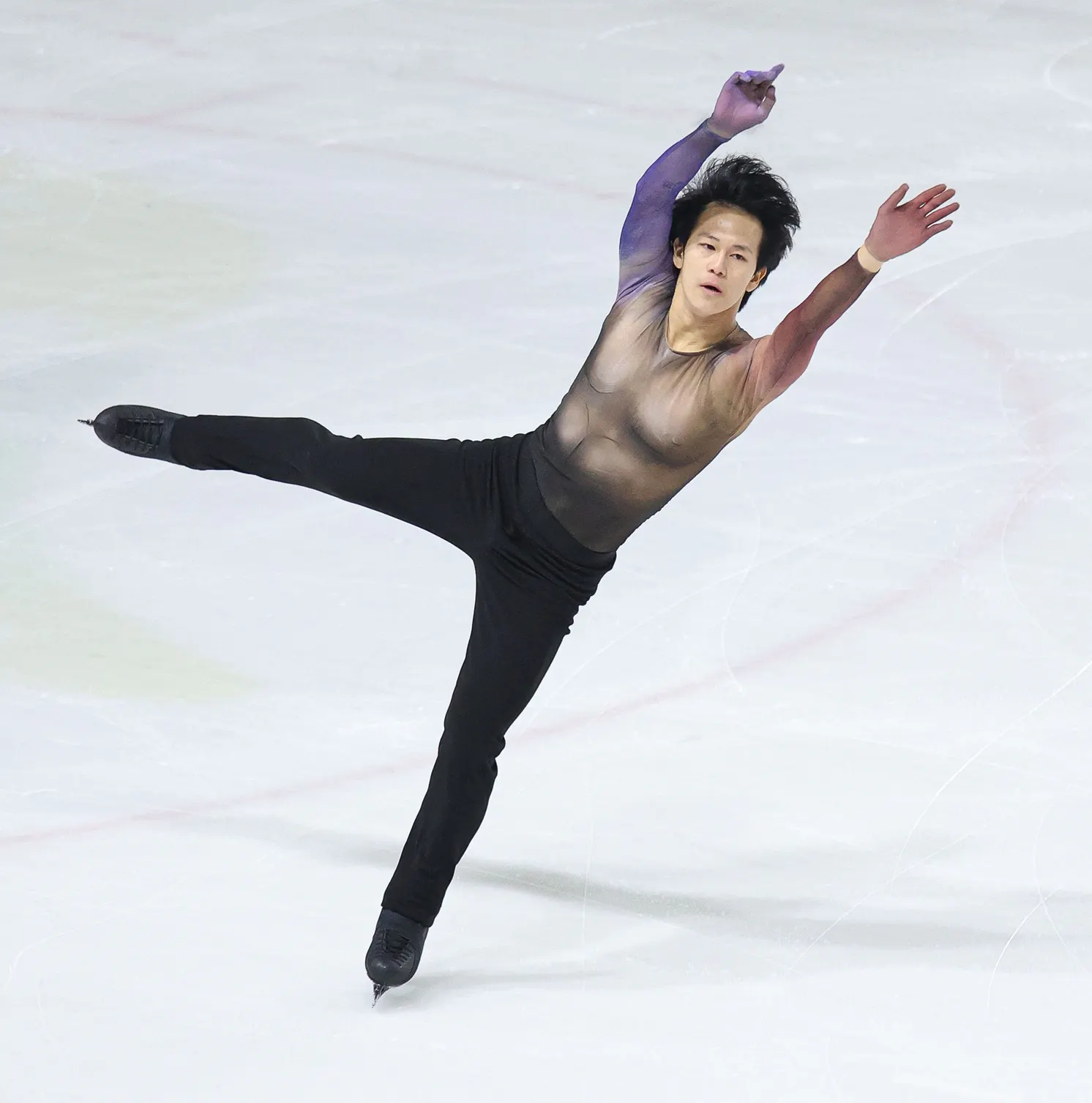
Tout commence bien pour Adam Siao Him Fa avec quad boucle piqué/triple boucle piqué. Première alerte avec un le triple Axel qui suit, très “raclé” et qui lui vaut des grades d’exécution négatifs. Il a récemment opté pour un plus sage quad Salchow remplaçant le quad Lutz, mais lui non plus ne veut pas passer. Une première pirouette à laquelle il manque des tours, et une seconde en fin de programme qui est invalidée, achèvent de faire descendre son budget points. Il est second avec 85.42. On connaît sa capacité à remonter dans les libres. Kevin la connaît aussi. Qui des deux va stresser l’autre ?
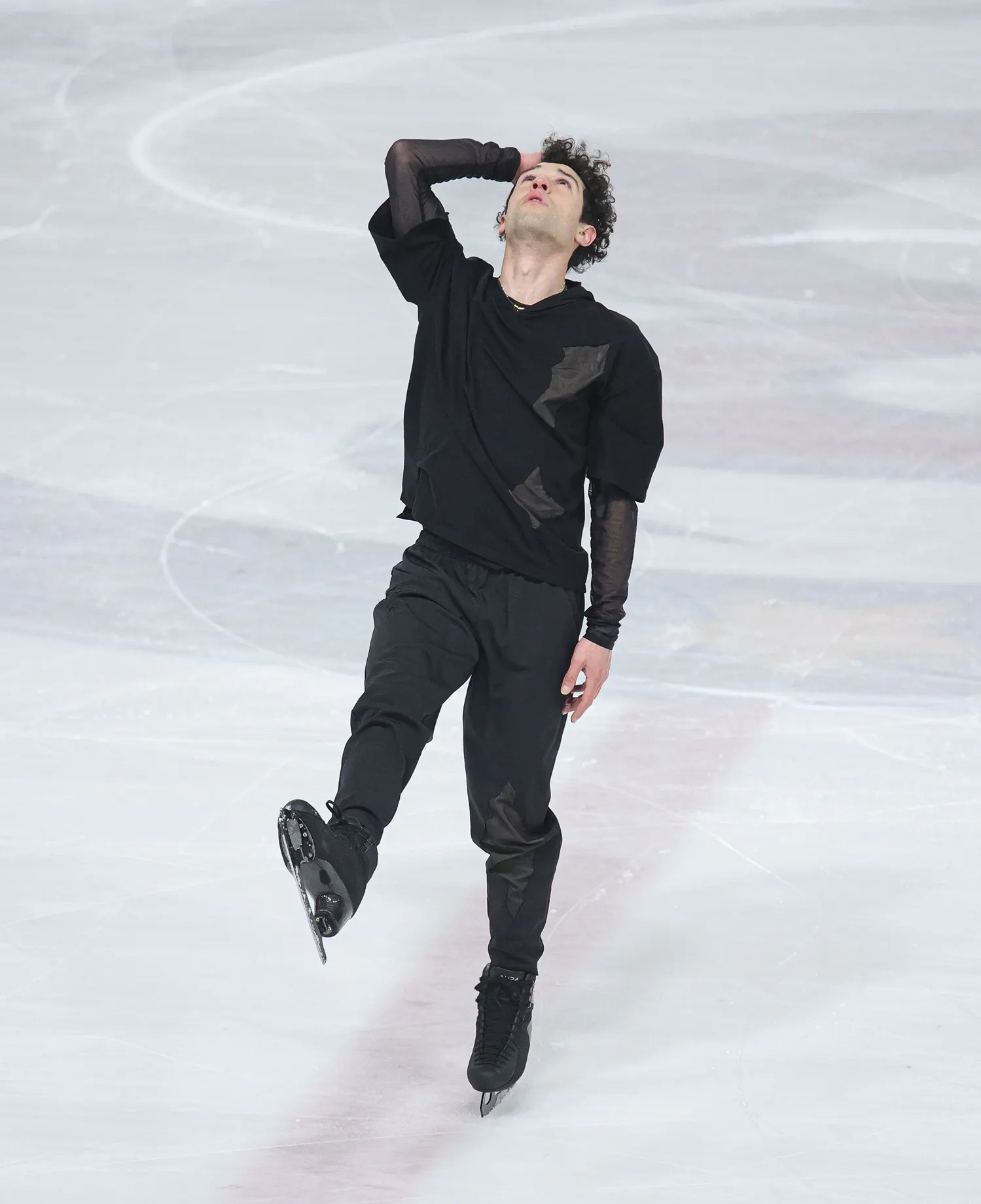
Luc Economidès, 3ème (83.01) présente un programme ultra propre, avec un T.E.S. supérieur à celui d’Adam. Il semble parfaitement bien dans sa tête et ses patins, et “Selah”, même si on commence à le connaître par coeur, est définitivement un morceau qui lui va bien. En ne passant qu’un double flip, François Pitot perd un saladier entier de points et le score s’en ressent tout de suite : 77.77 (4ème). Dommage car tout le reste du programme est nickel. Landry Le May se classe 5ème (74.49). J’ai toujours eu un faible pour son élégance naturelle, sa couverture de glace et son grand talent artistique. Techniquement, il prend de gros risques : quad boucle piqué/triple boucle piqué, tripe Axel, quad Salchow en deuxième partie de programme. Le problème, c’est que ces sauts, s’ils ne passent pas, coûtent cher. Il réussit pourtant ces difficultés techniques à l’entraînement. Mais hélas pas aujourd’hui en compétition. Déception aussi pour Samy Hammi qui loupe son tripe Axel d’entame (7ème, 68.95). Avec une chute sur sa combinaison et un score de 71.26, Xavier Vauclin s’intercale entre les deux patineurs précités. Corentin Spinar (8ème, 61.39) tente quad Salchow et chute, puis réalise un simple Axel donc invalidé avant de commettre une erreur sur une pirouette. Ian Vauclin (55.31), Daniel Verbat (55.13), Xan Rols (54.69) et Jean Médard (54.63) dans un mouchoir et enfin Sylvain Ritchie (48.06) ferment la marche.
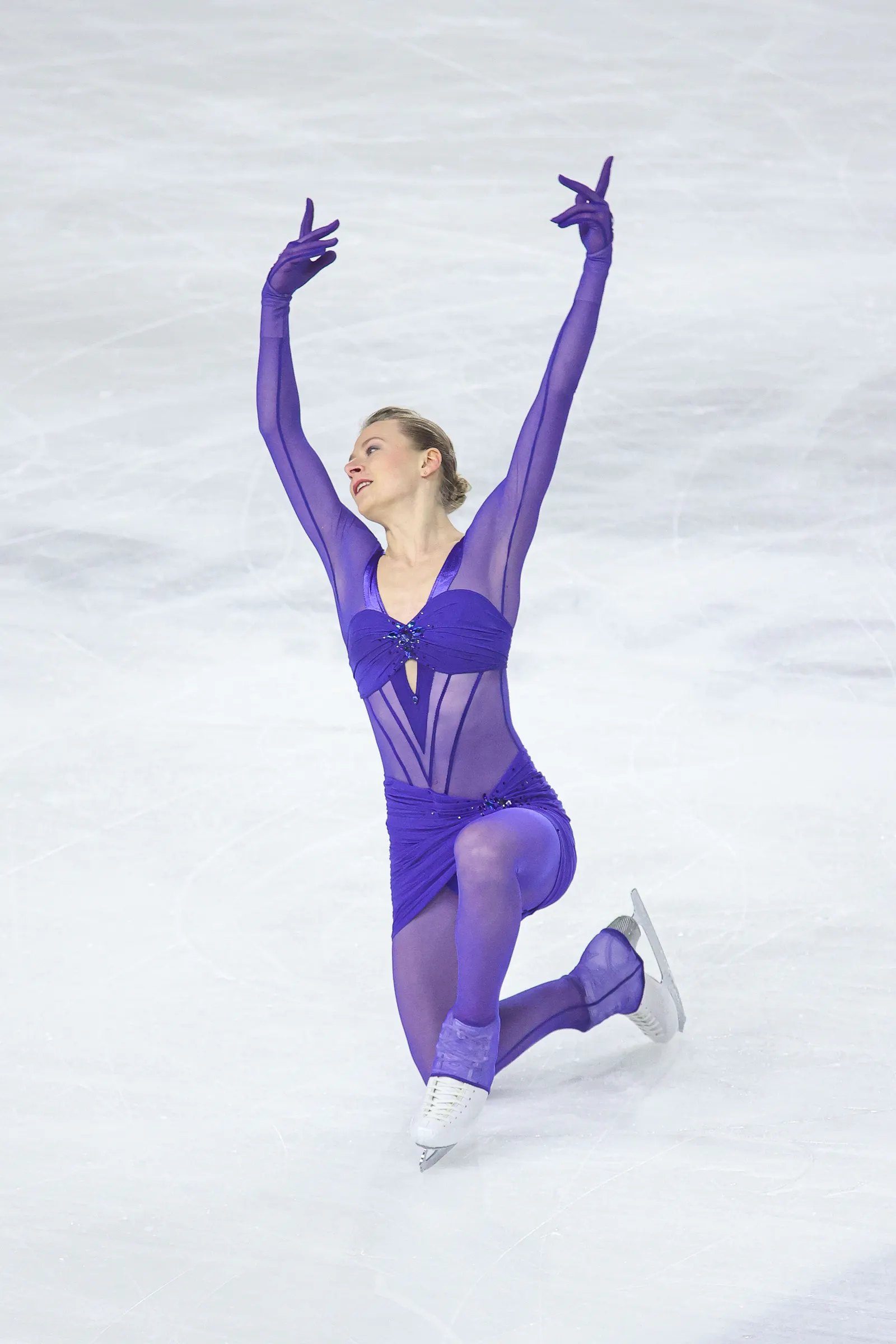
On attendait un duel Lorine Schild - Léa Serna et il n’aura pas lieu aujourd’hui. Léa rate d’entrée son triple Lutz et chute lourdement, ce qui va totalement la déstabiliser. Le reste du programme est tenu mais les dégâts sont dans la tête. Elle est seulement 4ème (56.43). Le “Stairway to Heaven” de Lorine est propre mais la partie rapide et rock à la fin mériterait une gestuelle plus incisive. Elle domine cependant ce programme court avec 65.45.
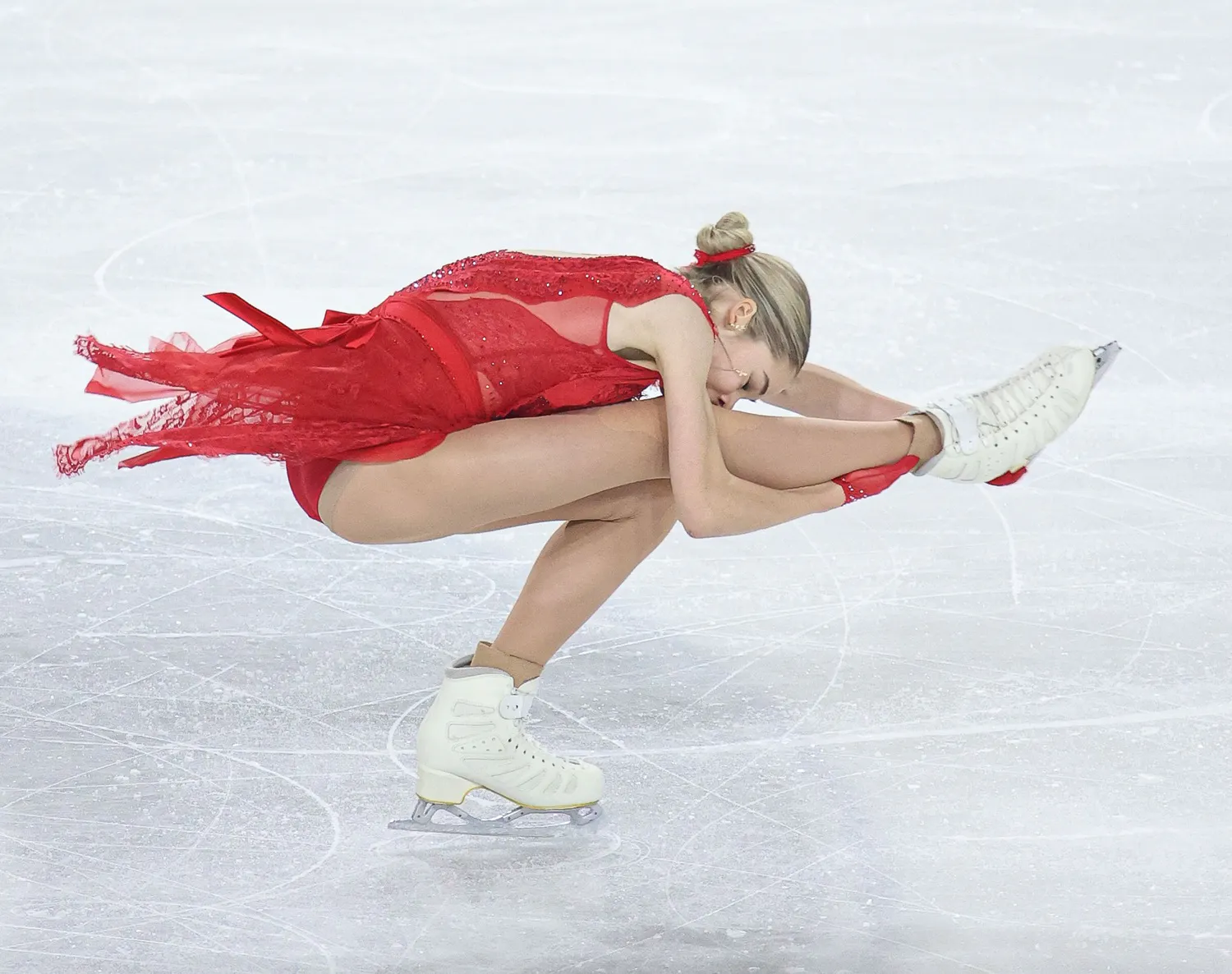
Avec 64.01, Stefania Gladki n’est pas loin. Elle est aussi est l’auteur d’un programme très propre. Le Concerto pour Piano N°1 de Chopin va comme un gant à la Franco-Russe qui beaucoup gagné en maturité et en délicatesse, sans pour autant perdre sa formidable technique.
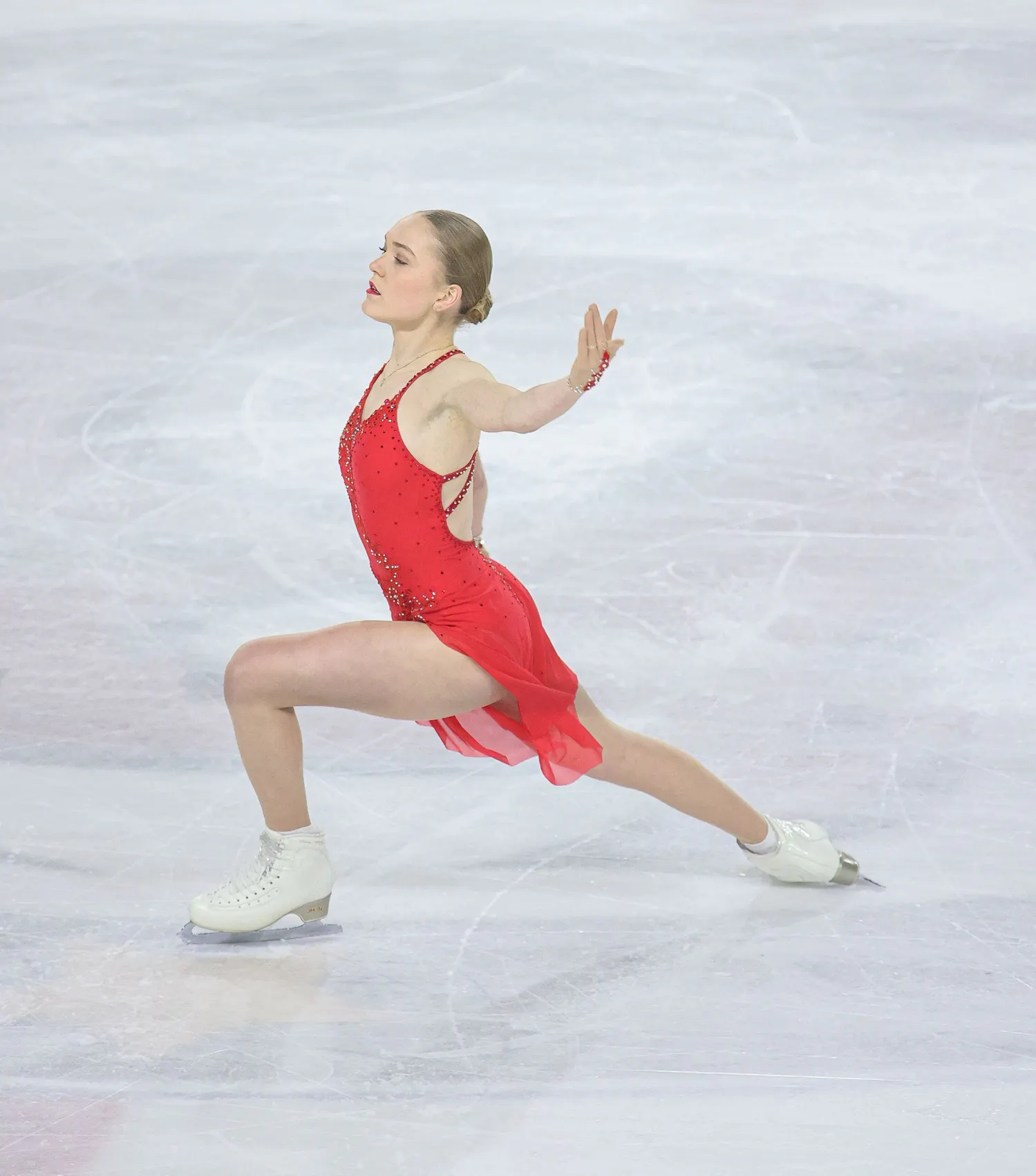
Toute vêtue de rouge comme Stefania, et avec 57.08, Eve Dubecq est un peu en deça techniquement, mais troisième de ces dames à exécuter une prestation sans la moindre scorie. On retrouve donc une Léa très déçue au 4ème rang, devant Clémence Mayindu (46.99).
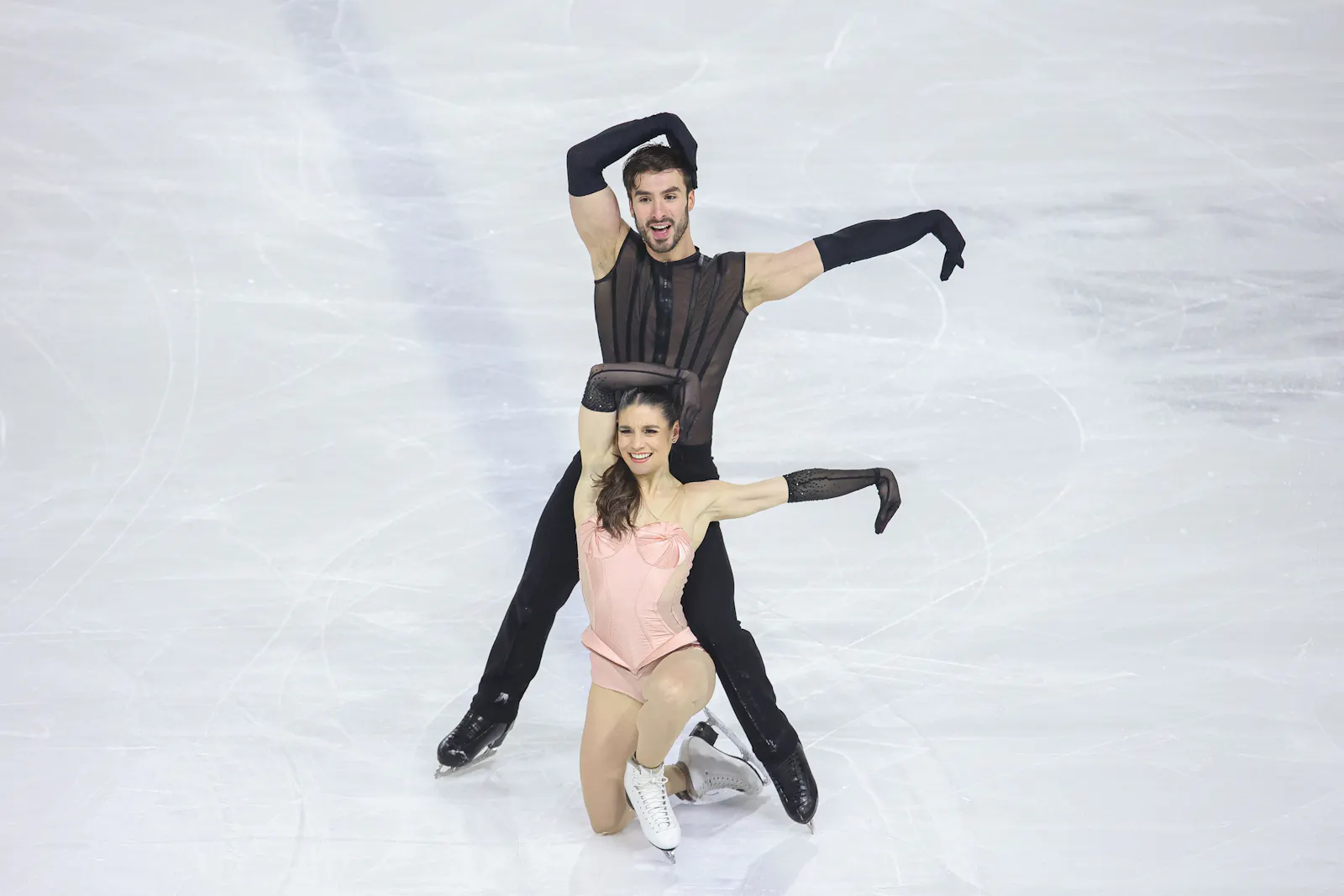
Ils sont attendus comme le messie partout où ils passent, ce qui n’a rien d’étonnant. Laurence Fournier-Beaudry et Guillaume Cizeron sont la sensation de cette saison olympique. On ne reviendra pas sur les errements des jurys de Grand Prix à leur égard. Ils écrasent leurs concurrents dès cette danse rythmique avec 94.31 points dopés à l’inflation locale, ce qui n’a pas d’importance en soi. Niveau 4 pour tous les éléments, sauf pour Laurence qui obtient 3 dans la médiane et trois +10 fleurissent en composantes. Je les trouve un tout petit peu moins vifs que lors de leurs premières compétitions, mais l’exécution est toujours aussi recherchée et aboutie. On peut lire beaucoup de critiques sur la tenue de Laurence sur les réseaux sociaux, du “indécent” des puritains coincés, au “mal adapté à la danse sur glace” des plus rétrogrades, or elle est en plein dans le thème et une jolie version de celle de Jean-Paul Gaultier dessiné pour Madonna. On ne patine pas “Vogue” avec une robe de bal !
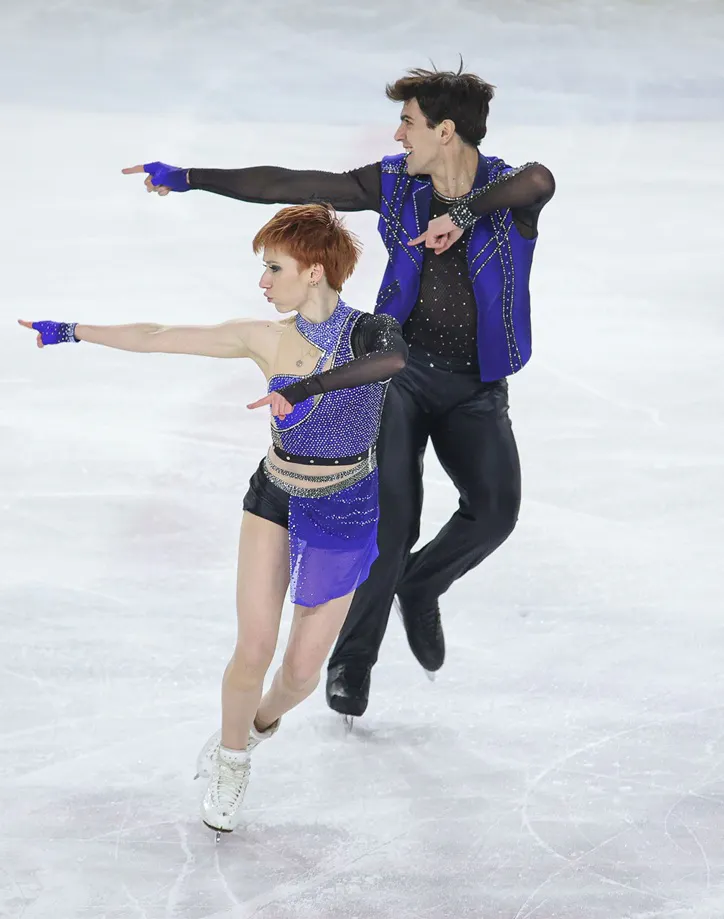
Evgeniia Lopareva et Geoffrey Brissaud sont les logiques seconds de cette danse rythmique. La performance est de qualité, enlevée, convaincante. Les niveaux sont bons : 4 pour twizzles et porté, 3 pour médiane et pattern. Les GOEs sont bons aussi avec une majorité de +3 et +4. Comme la plupart du temps, je trouve leurs composantes trop basses.
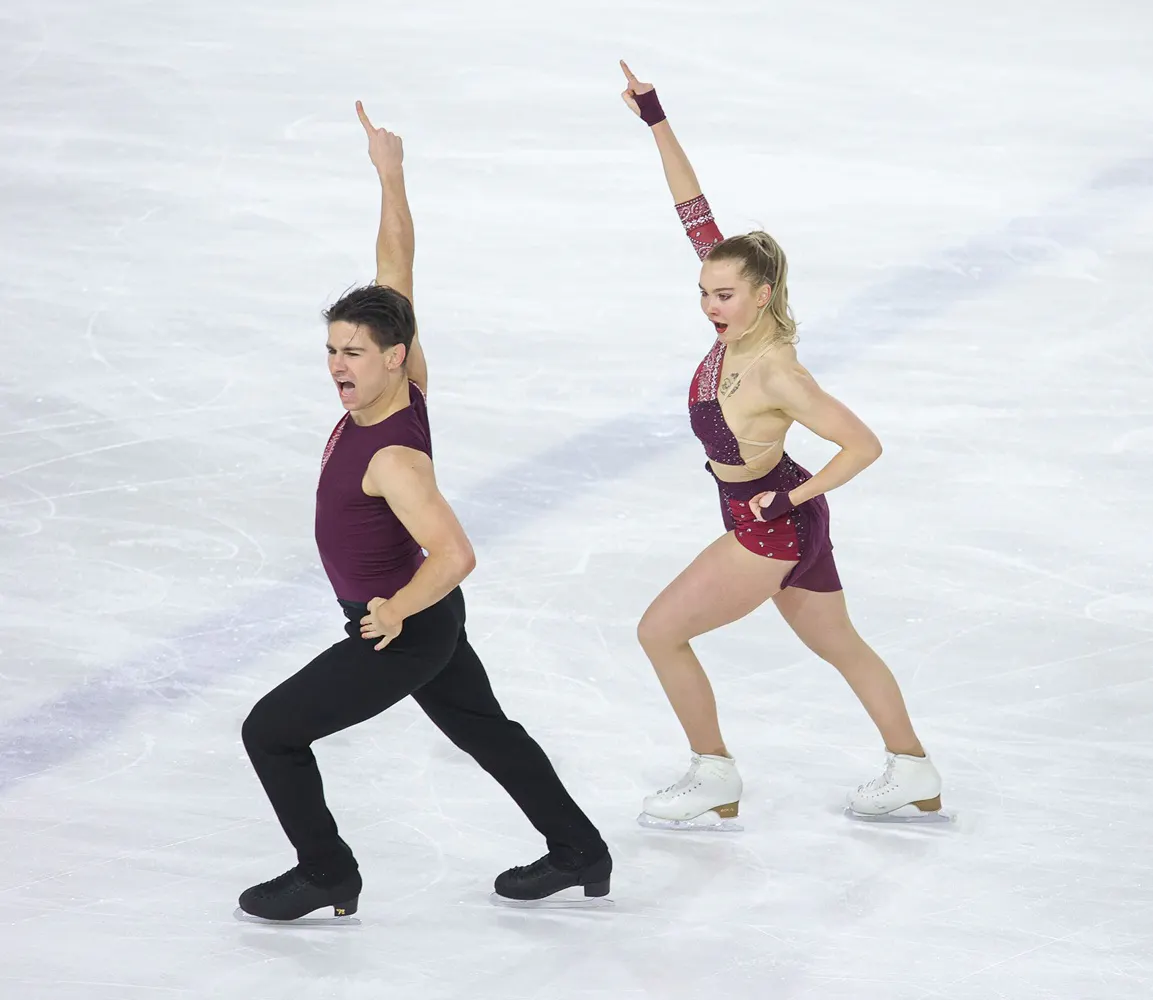
Loïcia Demougeot et Théo Le Mercier ont rarement été aussi proches de leurs aînés (80.30) : un peu plus d’un point de moins au total et un minuscule écart de 0.03 pour leur score technique alors que leur pattern n’est que de niveau 1 contre 3 pour Evgeniia et Geoffrey. Après la gifle qu’avaient pris les Villardiens l’an dernier aux Elites d’Annecy, on se demandait à quelle sauce ils allaient être mangés ici… Voici tout le monde rassuré, eux compris. Coller aux tout meilleurs est une sacrée motivation ! Natacha Lagouge et Arnaud Caffa n’ont rien perdu de leur enthousiaste. Ils ne peuvent pas le perdre, il est inné ! Mais leurs GOEs sont bas, même si les niveaux sont corrects, car ils ont du mal à passer ce cap technique qu’on voudrait les voir franchir depuis des années. Ils sont 4èmes avec 73.52.
5èmes du Lombardia Trophy, 5èmes du Nebelhorn et 6èmes de la Coupe de Varsovie cette saison, Marie Dupayage et Thomas Nabais n’ont pas effectué un mauvais début de saison. Alors qu’est-ce qui leur faire perdre leur légendaire explosivité ? Un horizon qui paraîtrait bouché par l’avènement d’autres couples ? Ou n’est-ce qu’un coup de fatigue à la mi-saison ? Si Thomas me semble fidèle à lui-même et enjoué, Marie me paraît un peu tristounette. Leur RD est pourtant très bien ficelée. Elle leur vaut 66.60, ce qui est un peu inférieur à leur meilleur score cette saison, mais pas alarmant. Allez, les petites bombes à neutron vertamicoriennes, reprenez de l’élan ! Célina Fradji et Jean-Hans Fourneaux continuent leur petit bonhomme de chemin avec talent et régularité. 64.84 les classe 6èmes. Ils ont déjà fait mieux niveau score et peuvent obtenir de meilleurs niveaux, mais leur prestation reste très enthousiaste et tonique. Leurs camarades villardiens Louise Bordet et Martin Chardain clôturent ce classement avec des petits soucis de twizzles et 58.60.
Par Kate Royan - Briançon le 19 décembre 2025
The pairs are the first to compete this Friday, December 19. Unsurprisingly, Camille and Pavel Kovalev take the lead with a score of 63.79. Their triple twist is good, and only a quarter is called on the triple toe loop and we note a minor slip on the combined spin. Aurélie Faula and Théo Belle are closely following their seniors with 62.70, which is two points higher than their previous record. Thanks to a flawless execution, their technical score is higher than the Kovalev’s, but the components still need improvement. Great performance by Megan Wessenberg and Denys Strekalin, who have only been skating together for a few months and have improved their personal best by almost 5 points with 55.23. They are in third place, followed by Louise Ehrhard and Matthias Pellegris (53.68). The battle for the third spot on the podium promises to be tough tomorrow.
For the exception of an under-rotated quad Salchow, Kevin Aymoz's short program is as clean as a whistle. Kevin dropped the second part of his performance to Lady Gaga's “Judas”, keeping only Jean-Michel Blais' piano. Even though I miss a bit of the fun side, the performance gains in coherence and fluidity. He takes the provisional first place with 88.01 points. Everything starts well for Adam Siao Him Fa with a quad toe loop/triple toe loop combination. The first warning comes with the following triple Axel, very “scraped,” which earns him negative grades of execution. He recently opted for a safer quad Salchow instead of the quad Lutz, but that one doesn't want to land either. A first spin missing some rotations, and a second one at the end of the program that is invalidated, further bring down his points total. He is in second place with 85.42. We know his ability to come back in the free skate. Kevin knows it too. Which of the two will stress out the other?
Luc Economidès, 3rd (83.01), presents an ultra-clean program, with a TES higher than Adam's. He seems perfectly comfortable in his mind and on his blades, and "Selah," even though we’re beginning to know it by heart, is definitely a piece that suits him well. By only landing a double flip, François Pitot loses a whole batch of points, and the score immediately reflects it: 77.77 (4th). A shame, because the rest of the program is flawless. Landry Le May ranks 5th (74.49). I’ve always had a soft spot for his natural elegance, his ice coverage, and great artistic talent. Technically, he takes big risks: quad loop/triple loop, triple Axel, quad Salchow in the second half of the program. The problem is, these jumps, if they aren’t landed, become costly. Yet he manages these technical difficulties in practice. But alas, not today in competition. Disappointment also for Samy Hammi, who misses his opening triple Axel (7th, 68.95). With a fall on his combination jump and a score of 71.26, Xavier Vauclin slots in between the two aforementioned skaters. Corentin Spinar (8th, 61.39) tries a quad Salchow and falls, then performs a single Axel which is therefore invalidated, before making a mistake on a spin. Ian Vauclin (55.31), Daniel Verbat (55.13), Xan Rols (54.69) and Jean Médard (54.63) who are very close in scores, and finally Sylvain Ritchie (48.06) rounds out the ranking.
We were expecting a duel between Lorine Schild and Léa Serna, and it will not take place today. Léa butchers her triple Lutz right at the start and falls hard, which completely unsettles her. The rest of the program is correct, but the damage is made in her head. She is only 4th (56.43). Lorine's 'Stairway to Heaven' is clean, but the fast, rock part at the end could use more incisive movements. She still dominates this short program with 65.45. With 64.01, Stefania Gladki is not far behind. She also has a very clean program. Chopin's Piano Concerto No. 1 fits the Franco-Russian perfectly. She has gained a lot in maturity and grace, without losing her formidable technique. All dressed in red like Stefania, and with 57.08, Eve Dubecq is a bit behind technically, but third among these ladies to deliver a flawless performance. So we find a very disappointed Léa in 4th place, ahead of Clémence Mayindu (46.99).
They are awaited like the messiah wherever they go, which is hardly surprising. Laurence Fournier-Beaudry and Guillaume Cizeron are the sensation of this Olympic season. There’s no need to rehash the attitude of the Grand Prix judges towards them. They crush their competitors right from the rhythm dance with 94.31 points, boosted by local inflation, but that doesn’t matter much. Level 4 for all elements, except for Laurence who gets a 3 on the median, and three +10s pop up in the components. I find them just a tiny bit less lively than in their first competitions, but the execution is still as precise and accomplished. You can read plenty of criticism about Laurence's outfit on social media, from the 'indecent' of the uptight puritans to the 'ill-suited for ice dance' of the more old-fashioned, yet it perfectly fits the theme and is a lovely version of the Jean-Paul Gaultier design made for Madonna. You don’t skate to 'Vogue' in a ball gown!
Evgeniia Lopareva and Geoffrey Brissaud are the logical seconds in this rhythmic dance. The performance is high quality, lively, and convincing. The levels are good: 4 for twizzles and lifts, 3 for step sequence and pattern. The GOEs are also good, with a majority of +3 and +4. As most of the time, I find their components too low. Loïcia Demougeot and Théo Le Mercier have rarely been so close to their seniors (80.30): just over one point less in total and a tiny gap of 0.03 for their technical score, while their pattern is only a level 1 compared to 3 for Evgeniia and Geoffrey. After the slap the Villardians took last year at the Annecy Elites, we wondered if they were going to be eaten alive here… Everyone, including them, can now be reassured. Keeping up with the very best is a huge motivation! Natacha Lagouge and Arnaud Caffa have lost none of their enthusiasm. They can’t lose it; it’s innate! But their GOEs are low, even though the levels are correct, because they struggle to overcome that technical barrier we’ve been hoping they would surpass for years. They are 4th with 73.52.
5th at the Lombardia Trophy, 5th at the Nebelhorn, and 6th at the Warsaw Cup this season, Marie Dupayage and Thomas Nabais haven’t had a bad start to the season. So what could be causing them to lose their legendary explosiveness? A future that seems blocked by the rise of other pairs? Or is it just a mid-season slump? While Thomas seems cheerful as usual, Marie looks a little sad. Their free dance, however, is very well put together. It earns them 66.60, which is slightly below their best score this season, but not alarming. Come on, little neutron bombs, pick up some momentum! Célina Fradji and Jean-Hans Fourneaux are going forward steadily with skill and consistency. 64.84 places them 6th. They have scored better before and can reach higher levels, but their performance remains very enthusiastic and lively. Their fellow Villardians Louise Bordet and Martin Chardain close this ranking with minor twizzle issues and 58.60.
By Kate Royan - Briançon, December 19 2025
Datum
20.12.2025

