Meowza hooman,
We cat owners know that cats are judgmental. Whenever cats are looking at us, they are judging us, and I don’t think that they think very highly of us. On the contrary, they have a very low opinion of us. Just like the cats, we, too, judge other people because we want to know who they are in relation to us. That’s psychology. When we form our judgements on the basis of language, that’s sociolinguistics.
So get comfy in your cardboard box 📦 and get your catnip 🌿 out. It’s time for this month’s newsletter, which is all about sociolinguistics.
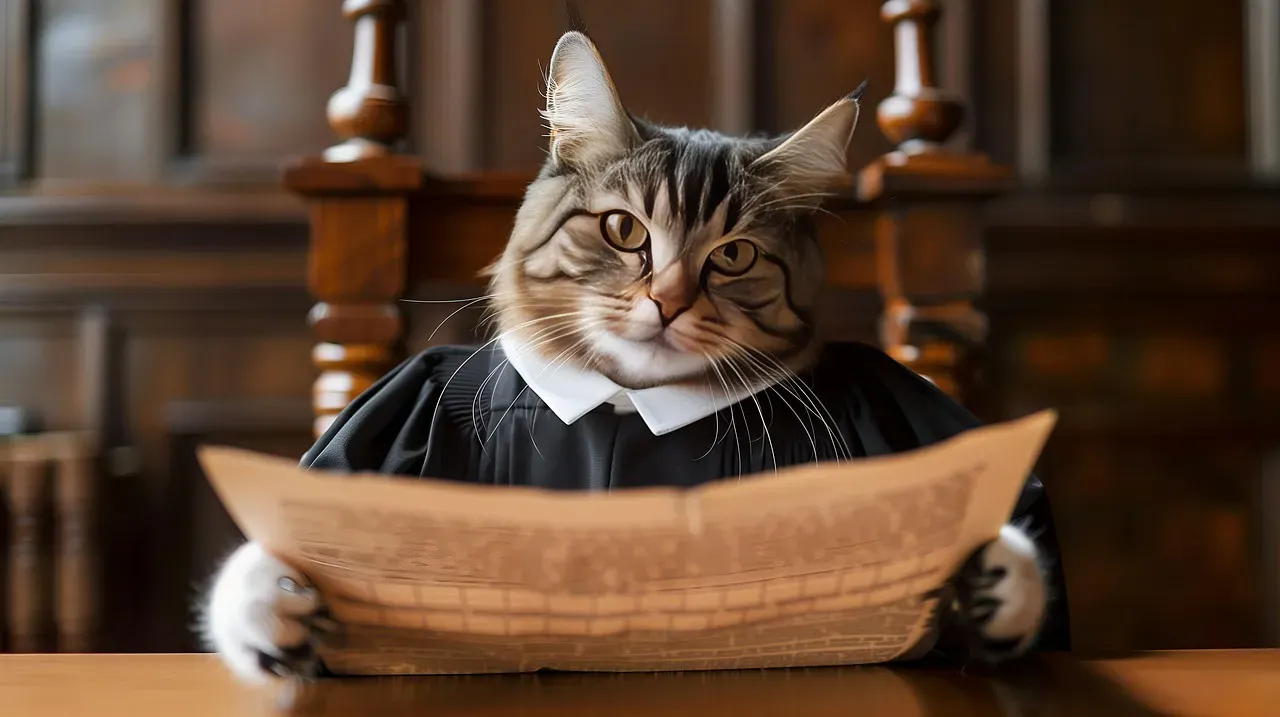
Judge me by my language
The reason why sociolinguistics is cool is that it explains why we judge people by looking at the way they speak and which kind of language they use. And why we know you’re a cat person the moment you say ‘hooman’ or ‘cattitude.’
When we meet other people we want to check out each other’s regional and social background, simply to find out who it is that we are dealing with. And people use various regional and social language varieties, which are really fascinating to analyse.
As we are getting information through the way other people speak or write, prejudice comes into play because we have a certain attitude towards certain types of language. We may like one accent but dislike another. We may like how a person writes but dislike another person’s writing style. All this is about how we perceive language, and in turn in sociolinguistics we analyse the perception of language and attitude towards language.
There is no right or wrong perception of language (how you perceive language is how your perceive it), there are, however, different attitudes towards it — at least that is what I as a sociolinguist think. I describe without prejudice one way or the other, while I do have my very own likes and dislikes in other people’s language. I am just observing speech and text — whatever people produce.
Cattitude rules
How is cat-inspired language connected to all that? Quite simply, people in the cat communities use certain types of catspeak that differ from each other and the language in cat communities is not the same as the language other people on social media use. And that is the reason why we can immediately conclude that, when we come across the word cattitude, a cat is present one way or the other. Cattitudeimmediately signals “this is about a cat”.
Now cattitude is just one example of one word that has been catified. There are many other catified words out there in the cat communities, like the word hooman, which I use for you at the beginning of my newsletter. We use cat-inspired words because we want to show that we see ourselves as part of the cat community or we do not use them because we are not or do not want to be part of the community.
Just to point out, while these words signal group membership, cat communities are generally very welcoming and friendly to newcomers. Unlike real cats. According to real cats, we humans rank way below our feline overlords and cat bosses. But that is just a sidenote Purr Reviewer 1 and Purr Reviewer 2 wanted me to include.
What is true for many cat communities might not be true for all communities. Other not-cat-related social groups have other words and accents they use, and group members may be judgmental and more or less sharply differentiate between those who belong to the in-group and those who are the outsiders in the out-group.
Hoomans and groups
A theory says that, when a group of humans is large enough, sub-groups develop, which means that also language varieties emerge. Again, linking this to the cats, different cat-related communities (I refer to them as cat-related digital spaces) have appeared, and there are different purr varieties they use: while one group may use standard English for the cat-related discussions, another uses a really strong catspeak variety. And again another group is inclined to use as many meowlogisms as possible.
Sociolinguistics also looks at how people perceive language varieties. As for cat-inspired varieties, some people adore catspeak, others don’t like it or even hate it. They do not like the infantilisation of cats and say that, if cats were actually able to speak, they would do so like adults.
As I have already said earlier in the newsletter, there is no right or wrong answer for you if I asked you about how you like meowlogisms. Whether you like them or not is personal — or actually purrsonal. On my purrsonal level, I might try to purrsuade you. As a sociolinguist, though, I would never do so. Let’s leave it at that, ok?
So, what’s your purrsonal take? Standard English or meowlogisms? Let me know, purrlease.
Catspeak Selection
ameowzing
supawvisor
meowsterpieces
chameowleon
scritch
Meowloween
pawception
meownager
Pawzzy Osbourne
Dolly Purrton
Elvis Purresley
Purrince
supurrnatural
Nosferpawtu
Datum
04.11.2025
Kategorie
Cat Linguistics


