In this month's antidote to the algorithm, Christian Eede shakes tQ with the heavy sounds of 90s and 00s Slovakian techno, and the scene around the U.Club (Öffnet in neuem Fenster) (pictured below)
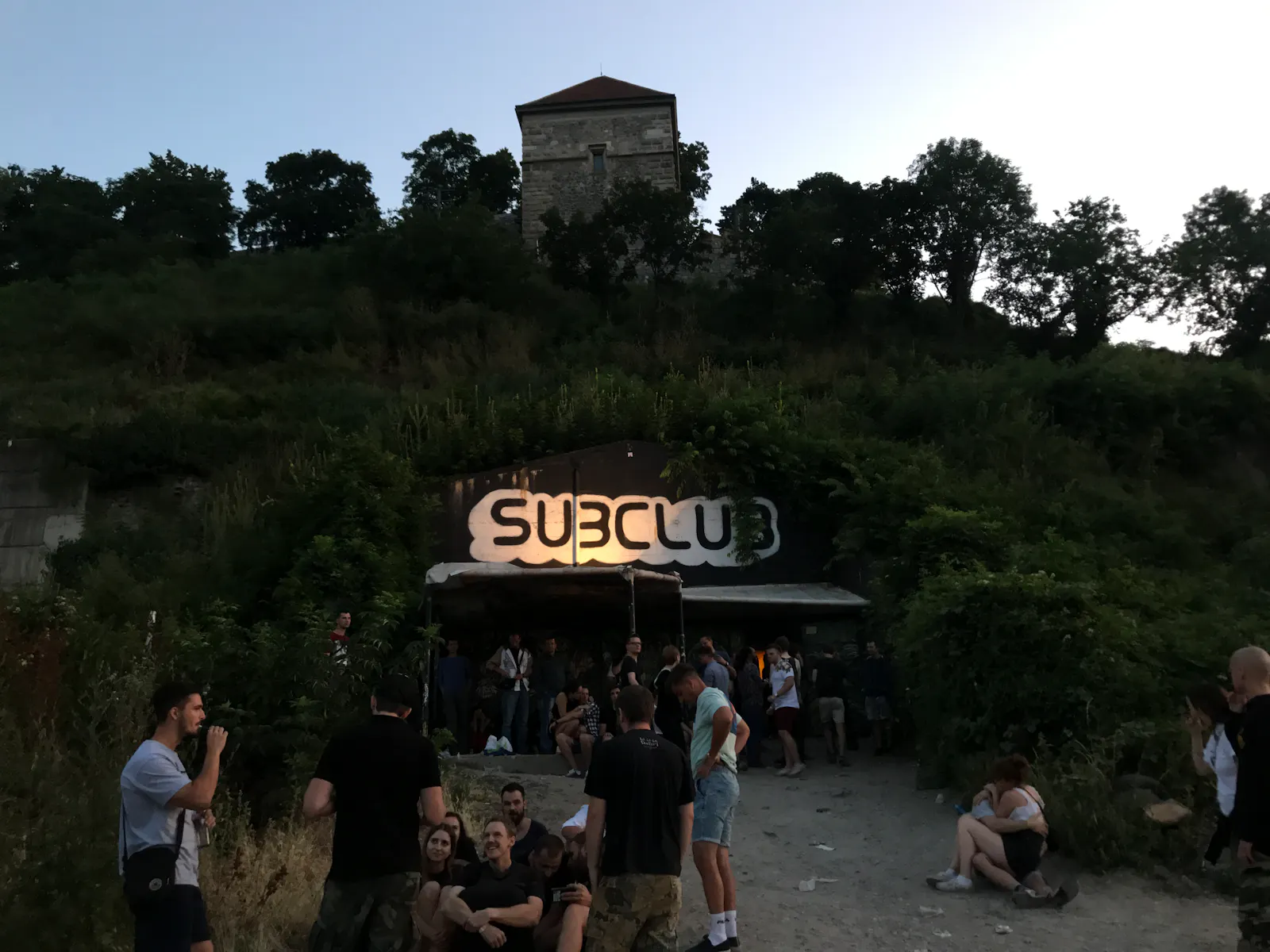
Any discussion about the history and evolution of techno over the past near-four decades will always naturally be dominated by two cities: Detroit and Berlin. For a period of around 10 years, though, beginning in the mid-90s, the capital of Slovakia, Bratislava, became a vital outpost for an austere, industrial-edged take on the genre that was cultivated at the now-closed U.Club (Öffnet in neuem Fenster).
Opened in 1993 by Tibor Holoda, the venue was situated inside a former underground nuclear bunker that was built by the ruling Communists to prepare for the possibility of Cold War-era apocalypse. Holoda and DJ partner Dalibor Kŕč – who was otherwise known under the monikers Loktibrada, Kre and Olga+Jozef – established a weekly residency at the club where they brought the techno of Detroit and Berlin, as well as the ‘Birmingham sound’ of figures like Regis and Surgeon, to tons of eager, young ravers for several years. Another key figure in the story of Slovakian techno, Juraj Tokár – otherwise known as Rumenige – joined the rotation towards the late 90s.
As the club’s reputation grew, various DJs on the global techno scene were invited to play, including the likes of Jeff Mills, Regis, Oscar Mulero and James Ruskin. In a 2012 interview with Electronic Beats (Öffnet in neuem Fenster), Regis described the venue (positively) as “cold, dark, sterile and brutal,” adding that “it all went hand-in-hand with the music”. The connections built with these touring circuit DJs would eventually carry over on record as Kŕč, Tokár and other U.Club (Öffnet in neuem Fenster)-affiliated figures took to putting out their own work in the late 90s via their own labels – such as Olga+Jozef, Palicavonzvreca, Numb and Antidandruff – and others based around Europe.
Theirs was a metallic sound that was heavily influenced by the stony, stripped-back and hypnotically repetitive nature of the techno coming out of Birmingham in the 90s. If you want a full-scale introduction to the sound, your best bet is to take an hour out of your day to listen to Loktibrada and Rumenige’s brutal 2004 mix CD Evergreens & Everblacks: A Standa DJ Mix (Öffnet in neuem Fenster). Coming off almost as a Slovakian techno greatest hits collection, it sees the two DJs combine to run through several of their own productions, as well as those of fellow key local figures like DJ Boss and HU, and international peers such as Mulero, Christian Wünsch, Takaaki Itoh and Female. Mixed at a dizzying pace, it’s thrillingly dour and yet imbued with the deep sense of groove that all of the best techno should have.
Rumenige, Loktibrada, DJ Boss and HU all disappeared for a decade or so towards the late 00s and U.Club (Öffnet in neuem Fenster) closed its doors in 2003, later rebranding under various different names before the space closed for good in 2019. In recent years, they’ve reappeared however, to self-reissue much of their respective back catalogues via Bandcamp, and share new music. Madrid DJ Héctor Oaks also used his OAKS imprint to shine a light on some of the best cuts from the short-lived Antidandruff label viaa pair (Öffnet in neuem Fenster)of reissues (Öffnet in neuem Fenster) in 2020. Sitting alongside hard-edged modern industrial techno records on OAKS by the likes of D.Dan, Peder Mannerfelt and the label owner himself, it served as a fitting cross-generational homage to a brief but significant point in techno’s history that had gone all too under-the-radar since the closure of U.Club (Öffnet in neuem Fenster).
Datum
19.02.2026
0 Kommentare
Möchtest du den ersten Kommentar schreiben?
Werde Mitglied von The Quietus und starte die Unterhaltung.