Spoiler: no.
Should it? Yes.
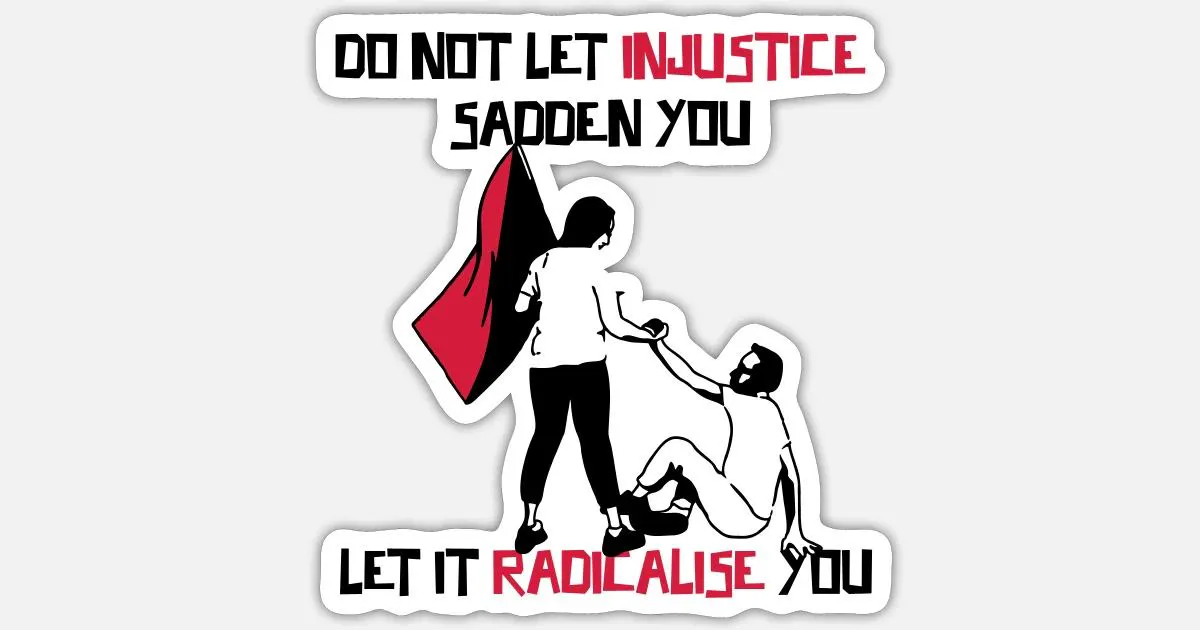
In the turmoil surrounding the events of the power outage in Berlin and the question of who was responsible, a journalist asked me exactly this question: are so called “Vulkan-groups” or sabotage actions themselves a sign of the radicalisation of the climate movement? No, it’s the exact opposite, was my answer to that, and because the topic and a few more thoughts on it are also a good way to draw a connection to what Tadzio Müller and I want to organise in September, this blog post will deal with it in a bit more detail.
The climate movement has not become radicalised
One of my main criticisms of the climate movement, as well as the critical examination of our forms of action, the sense and nonsense of certain ways to take action and the question of the purpose, usefulness and sense of actions themselves, is precisely this: the question of radicalisation. However, the climate movement alone is not the only one that needs to be included in this discussion, but the radical left in general. I have written two longer texts on this in the last two weeks. In Germany, there is no longer an organised, truly radical left and there is no radicalised climate movement. There are causes and reasons for this and it is merely a statement at this point, not a value judgment. What we see are individual people and smaller groups that radicalise themselves and do indeed sometimes take action. However, this has nothing to do with a fundamentally different organisation or orientation of “the movement” and “the radical left” in general but is probably often due to very individual emotions such as anger and a feeling of powerlessness and ineffectiveness. It is good and right that this is happening and before we talk about the radicalisation of a movement, it is necessary to be clear about this: more and more people who have been active in activism for years feel exactly this way and neither the climate movement nor the radical left as a space for our organisation and activism are taking this into account.
Often, structures (for very understandable reasons) are not even willing to acknowledge and address this. Not to mention creating spaces and integrating them into strategic considerations. Here, fear prevails – including, and unfortunately above all, the fear of one’s own courage and history. Some actors are trying, also because it has been recognised that we risk losing long-standing activists – due to trauma, burnout, and frustration over the constant repetition of what has not been successful. We cautiously call it civil disobedience+, find creative formulations in the annually updated versions of our action consensus, and at least try to agree that in the event of a crisis, there will be no disassociation. That was a start, happened two or three years ago, without this start having had a lasting or significant impact on our actions.
Even worse: these two or three years have created catastrophic realities at high speed and governments, and “societies” have taken paths that would probably make even the worst fears of many of us seem like a children’s birthday party. The need for radicalisation has not become smaller, but more urgent and necessary for the survival of a serious climate justice movement and a radical left.
Radicalisation is a prerequisite for the survival of the climate movement
We can turn it around as much as we like, we can deny it, be frustrated and sad about it, and we can also carry on as before. The honest conclusion that we have failed to achieve our goals of coal phase-out, fossil fuel phase-out and never-again- fascism is unavoidable, even though we have tried everything and even briefly fallen for the illusion of a majority. At the moment, the climate movement isn’t a relevant player in the public perception. There are also no levers on our side to gain any form of political influence, whether in parliaments or out in the streets. Anti-fascism is openly attacked and actively fought with all means at their disposal, and left-wing issues are ridiculed as utopian, sometimes even by us, sarcastically, but with the corresponding lack of confidence, bitterness and despair.
There are only a few points where we are noticed and seen as a relevant or at least potential threat, and the reaction is brutal in these cases: militant anti-fascism, solidarity with Palestine and, in connection with this, opposition to militarisation and armament. Yes, the brutal reaction to this intimidates – that is exactly what it is meant to do. But it also shows where we have (could have) leverage and where/with what means we are perceived as a threat to the existing system. Isn’t that what we as radical leftists want, if we take our slogans, our posters, ourselves and our history seriously? To bring the existing system to its knees and to shake it to its foundations? Well, then the reactions show us where and how we should start. Nobody said that it would be easy and without risk. We have been telling ourselves this for a long time and would like to continue to do so – absolutely understandable, because who wants to feel afraid and have to weigh up risks beyond a “we could end up in a kettle and the GESA”- scenario, which can also be a traumatic experience. But if we don’t face this and change our form of political work, then this is it for the climate movement and the like. We are no longer relevant, we are no longer perceived, and we can no longer make ourselves visible, remind people of our existence or take any lasting steps towards our big goals. How are we supposed to win over new people who are willing to invest their time and other resources to organise themselves on a long-term basis? Increasingly, we are no longer able to keep the people who have already organised themselves in our structures! We are not losing these people because their political views have changed, but because they see that we ourselves are light years away from achieving our minimum goals, without analysing this and adapting ourselves and our practice accordingly.
In my opinion, a radicalisation on a broad basis is the only way if the climate movement and the like want to continue and not just for their own entertainment and for symbolic politics. A broad radicalisation does not mean “blindly sabotaging to the point of stupidity”. Radicalisation means losing the fear of those who decide to take action, to create spaces, to define basic rules, to enable strategically clever actions and therefore to have clear options to quickly and clearly distance ourselves from actions that contradict this. Radicalisation means countering the rightward shift and the fascist seizure of power with a leftward shift. Just as society almost automatically shifts to the right because the far right is leading the way, the centre would only shift to the left if the far left were to take the lead. Reality shows us the way, it shows us what is needed. It shows it on the wrong side, the far right, which is increasingly making its utopias a reality, whether in parliaments and laws, at demonstrations, in attacks on the left and left-wing spaces, or in youth clubs and neighbourhood aid. Far-left utopias are invisible and, if they are real at all, are only real in very small contexts and within narrow limits. Radicalisation is much more than militancy and violence – but we also must stop denying that both are an absolutely necessary part of it. Not more, but also not less. Radicalisation enables new security structures for us, as well as the creation of spaces for practical neighbourhood organising, to provide people with food, hot meals, clothing, medicines and help with their homework (not just in the event of disasters). All of this is radical, but it also needs to be fought for and defended. The idea of neighbourhood organising needs to move beyond conversations such as “it would be nice if... let’s have some door-to-door conversations to see if others feel the same way” and to get things done. A radicalisation of the climate movement and the left-wing radicals means moving towards getting things done, away from dreaming, wishing and talking about it.
Direct action gets the goods
…is a universally valid sentence that left-wing radicals and activists must adopt in the context of actions and beyond. Fewer online conferences and strategy meetings, more practice, more practical experimentation and implementation than talking about it until it becomes impossible to achieve perfection. Left-wing radicalism and left-wing issues must no longer only take place in symbolic actions and after large mobilisations in one place. Left-wing radicalism must become everyday life, as is the case with right-wing extremism and fascism. All this is not possible without militancy and, in my opinion, also without sabotage. A radicalised movement itself offers corresponding niches and options for people who want to deal with these means, while others can focus on other issues. But the question of violence and militancy is one that, for security reasons too, the left can no longer ignore and keep hiding behind unicorns. If we succeed in making left-wing utopias a reality to any extent, we need protection. Housing projects, community centres, women’s shelters, soup kitchens, cold-weather buses, as the last few weeks have shown us, CSDs... all this is no longer just hypothetically exposed to attacks, all this needs protection and, in an emergency, protection structures that intervene when all precautionary measures have failed to prevent the Nazi attack. Who do you think should do this? There is a shortage of people and, even more, of organised structures that can do this and as long as such people and structures are labelled as violent, pushed away and separated from us, we are unprepared and defenceless in dangerous situations. People who do not shy away from the topic of militancy and violence do not do so for fun or because they enjoy violence, but out of necessity and solidarity. A fundamental radicalisation of a diverse movement ensures that those people are no longer marginalised and always on the verge of being left alone in the course of indignation and outrage.
Martin Luther King would only have been half as good without Malcolm X
A radicalisation also (but not only) in the sense of militancy and sabotage of climate movements and the like makes it possible to think about security and protection concepts that go beyond avoiding anything that might be a nuisance. As long as there is no need for such protection, we will not come up with measures that provide it. It opens new strategic and tactical horizons that do not even require the necessary implementation of militant actions by some. As with football (my guilty pleasure), even if I always want to pass the ball because that’s what I enjoy and what is easy for me, the opposing defence has to buy me off to be able to pull off a run play at any time. This makes us unpredictable and prevents our passes from being intercepted every time because all the receivers are covered twice and three times over.
Radicalisation also is a major step to actually involving and collaborating with BIPoC- groups beyond tokenism, because only then an honest exchange about strategies and possibilities can succeed. I think the climate movement still being an academic white movement, even after all these years, after much criticism and many adaptions, is also due to the question of militancy and violence. The total defensive attitude and denial of militancy often exclude experienced BIPoC.
Finally, radicalisation can prevent something like what happened in Berlin at the end of last year, because we would have spaces for exchanging dos and don’ts, as well as communication channels, because we could analyse and adapt. Individual actions can be integrated into a larger whole, which would influence visibility and impact. It would be possible to shape narratives, set topics and influence public discussions, and to achieve more with our usual forms of action again, because there would be a credible threat scenario for other escalation stages in the background. It is always important to understand that the radicalisation of a movement is not the same as militancy for everyone, but rather the possibility for some, which finally enables all of us to take steps and have room for manoeuvre again.
One example that I think is very apt and topical are once again the Black Panthers and what they are doing in Minneapolis and elsewhere. So here’s a tip and a request: learn about what the Black Panther Party for Self Defence is doing! Listen to what they say! Look at how they present themselves and act! Get an impression of what they organise in their communities and try to deny the role that militancy in the sense of relevant knowledge and external impact has in this. The actual use of violence is not the crucial point. However, their successes in various areas of community work speak for themselves and for their strategy. I would also like to recommend the following text, which I have already shared a few times on social media: It’s safer in the front (S'ouvre dans une nouvelle fenêtre), published on a platform that is always worth reading in general. This text takes the pressure off me to engage in a discussion about militancy that is mainly driven by fear, and I quote as follows:
“For members of affected, marginalised groups who are targeted by violence of any kind, the first impulse is often to retreat, to hide. But when it comes to individual and collective self-preservation, it may be wiser to act decisively at the outset, while it is still possible to influence the course of events. Even if this turns out badly, it may be better to bring the conflict to a head immediately, before the opponent gains power. This strategy at least has the advantage of not allowing one to lull oneself into a false sense of security while the threat grows. It does not always work, but sometimes it is safer to engage radically at the forefront.”
To conclude today, I can only say once again: anyone who has not yet been affected by violence does not owe this to a “not so bad reality”, a “non-violent, inclusive society” or to the functioning protection by laws and the relevant actors, but to their own privileges and, in some cases, to those who already practise counter-violence and protection. To reject and deny militancy and violence from this perspective is exclusive, selfish and arrogant, and certainly not something that protects others from violence. On the contrary! By excluding affected people and outsourcing “legal violence” to the police and others, you become an offender yourself and the risk for those affected and marginalised increases.
Radicalisation beyond actions and militancy
Aside from the struggle for activism, actions and a realistic approach to the issue of violence, radicalisation has many other aspects, as mentioned above, and it does not only affect the climate movement and the radical left. All of us who organise and engage in political and activist work must radicalise our approach to political work and activism. The fundamental risk increases, whether we want it to or not, whether we contribute to it through escalation or not. Not everyone is always and in every form able to do this, but some have already noticed that event-activism and the mere consumption of actions in the capitalist sense no longer work. Let us radicalise our practice in terms of actions and protest, let us focus on solidarity structures and forms of mutual aid, and let us also radicalise the way we prepare for them. Phone conferences will no longer be enough, camps on a weekend will not be the only form that can remain. We must learn things intensively and implement them permanently, without neglecting the idea of protection. Annika Brockschmidt has just published a TAZ article (S'ouvre dans une nouvelle fenêtre) on the ICE-terror and its consequences, which also makes it clear that “In neighbourhood groups, solidarity is being organised against authoritarian terror. Those who stand up for their fellow human beings risk a lot...” For exactly this reason, we need to radically rethink activism, commitment and preparation for it. If I can be reported, arrested, beaten up or even shot at for blocking a street or distributing food, then the solution is no longer weekend camps with panel discussions about the influence of lobbies on the current situation, nor are openly announced mass actions. In times of collapse, we need a new kind of activism, and we need to learn it. One that is aware of the fact that in the collapse even more risks will come our way and that this will require more preparation, intensive learning and practice than it was the case, for example, for a classic Ende Gelaende action. This is the direction in which Tadzio Mueller and I are heading for the late summer of 2026. We'll tell you more about this next week. As Tadzio Mueller put it today, it's about robust preparation, and this is just as relevant for climate activists, the collapse movement, and antifascists as it is for a wide range of activities: transport, logistics, communication, first aid, supplies, and security, to name just a few. This robust preparation also includes militancy in the form of self-defense and protection for what it is – a necessity and sometimes even a condition for everything else. We must overcome our fear of strong language and corresponding practices, also to realize that often, the credible option of escalation is enough to finally achieve something again using other means.
Date
20/01/2026
Sujet
English
2 commentaires
Souhaitez-vous voir les commentaires ?
Devenez membre de disrupt! pour rejoindre la conversation.

