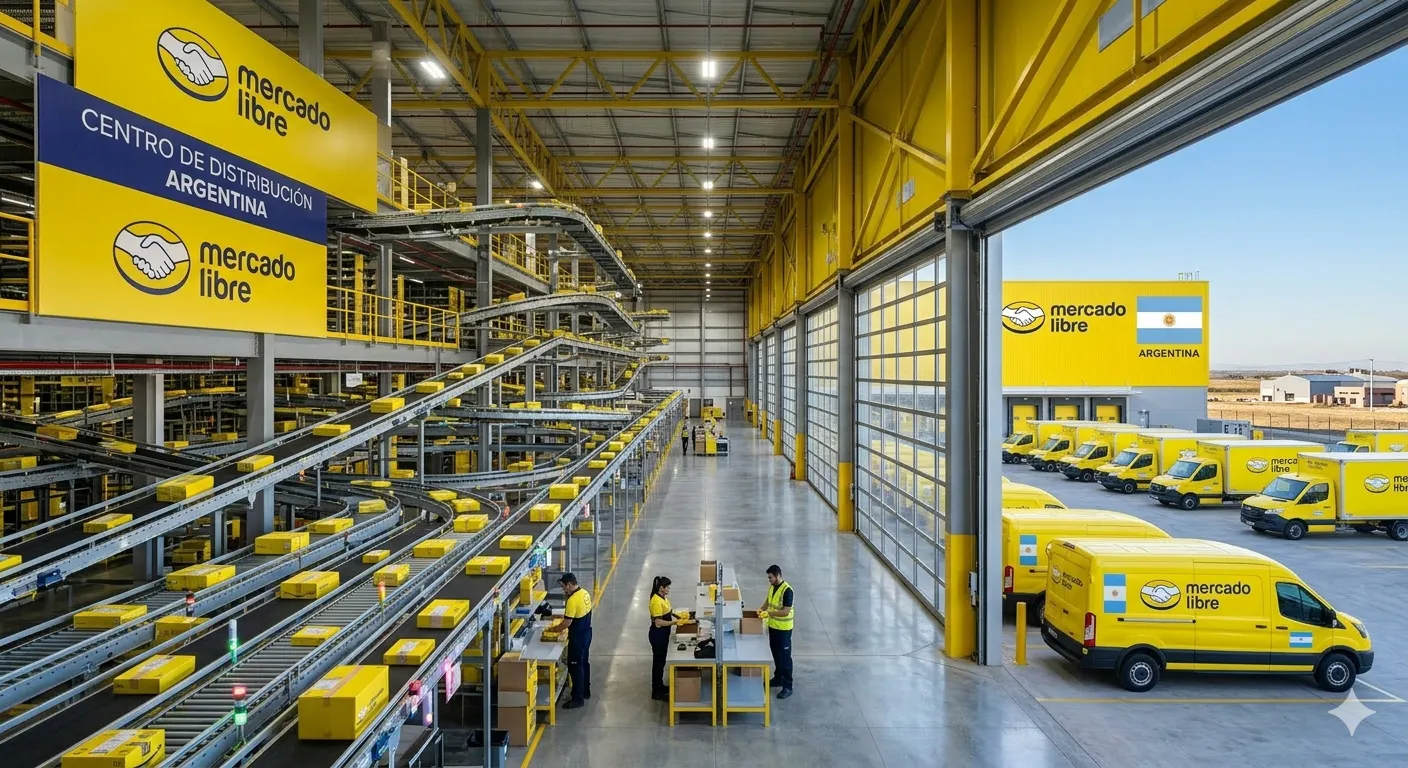
At a time when many global investors remain cautious about Argentina’s volatile economy, one company is doubling down. Latin America’s e-commerce powerhouse MercadoLibre is planning to invest a staggering $3.4 billion in the country this year, according to CEO Marcos Galperin.
The announcement sends a powerful signal—not just about the company’s ambitions, but about Argentina’s potential as a digital economy. For MercadoLibre, the move is both a statement of faith in its home market and a calculated bet on the future of online commerce and fintech in Latin America.
With competition rising and economic uncertainty lingering, the question now is whether this massive investment will strengthen MercadoLibre’s dominance or expose it to greater risks.
Company Overview
Founded in 1999 in Buenos Aires, MercadoLibre has grown into Latin America’s largest e-commerce and fintech ecosystem. Often compared to Amazon and PayPal combined, the company operates an integrated platform that includes online marketplaces, digital payments through Mercado Pago, logistics services, consumer credit, and advertising.
Today, MercadoLibre operates in more than a dozen countries across Latin America, with Brazil and Mexico representing its largest markets. Yet Argentina remains the company’s symbolic and strategic home base.
The company has built a powerful network that connects millions of buyers and sellers. Its fintech arm, Mercado Pago, has become a crucial digital wallet for consumers who historically had limited access to traditional banking services.
Over the past decade, MercadoLibre has steadily expanded its logistics infrastructure, warehousing capabilities, and payment solutions—creating a platform that is increasingly difficult for competitors to replicate.
Key Recent Developments
The planned $3.4 billion investment marks one of the largest private-sector commitments in Argentina in recent years. According to the company’s leadership, the funds will be directed toward logistics expansion, technology infrastructure, and workforce growth.
MercadoLibre has been aggressively building fulfillment centers, delivery networks, and last-mile logistics capabilities across the region. The new capital will further accelerate these efforts, particularly within Argentina.
At the same time, the company continues to expand its fintech ecosystem. Mercado Pago has grown rapidly, offering digital wallets, QR payments, credit products, and merchant services. This financial layer increasingly drives engagement across MercadoLibre’s commerce platform.
The strategy reflects a broader trend in emerging markets: platforms that combine e-commerce, payments, and logistics often gain powerful network effects.
The Company's Competitive Moat
MercadoLibre’s moat lies in the deep integration of its ecosystem. Unlike many competitors that focus on a single vertical, the company has built a tightly connected platform that combines marketplace activity with payments, financing, and logistics.
Mercado Pago is particularly important in this equation. By embedding payments directly into transactions and expanding into everyday financial services, the company creates strong customer retention.
Logistics infrastructure further strengthens this advantage. Faster deliveries and reliable fulfillment services improve the user experience for both buyers and sellers, making it harder for rival platforms to attract merchants away.
Finally, MercadoLibre benefits from a powerful brand and first-mover advantage in many Latin American markets. Decades of investment in local infrastructure and consumer trust have created barriers that are difficult for international entrants to overcome.
SWOT Analysis
MercadoLibre’s strengths lie in its dominant market position across Latin America, its integrated ecosystem combining commerce and fintech, and its strong brand recognition in emerging markets where digital adoption is still accelerating. The company also benefits from powerful network effects, where more buyers attract more sellers, further strengthening the platform.
However, weaknesses remain. MercadoLibre operates in regions that frequently experience currency volatility, inflation, and political instability. Heavy investments in logistics and technology also require continuous capital expenditure, which can pressure margins.
Opportunities are substantial. Latin America remains significantly underpenetrated in e-commerce compared to the United States or China. Digital payments adoption continues to rise rapidly, creating further growth potential for Mercado Pago and related financial services.
At the same time, threats are real. Global competitors such as Amazon are gradually expanding in the region, while local fintech startups are aggressively targeting digital payments and lending markets. Economic downturns could also impact consumer spending and transaction volumes.
Conclusion
MercadoLibre’s planned $3.4 billion investment in Argentina highlights the company’s long-term conviction in the region’s digital transformation. Few companies understand the complexities of Latin American markets as deeply as MercadoLibre.
Yet the strategy also carries risk. Argentina’s economic volatility remains a constant challenge, and scaling infrastructure investments requires careful execution.
For investors, the story is ultimately about scale and resilience. If MercadoLibre can continue expanding its ecosystem while navigating macroeconomic headwinds, the company could strengthen its position as the dominant digital platform in Latin America.
The coming years will reveal whether this bold investment marks the next chapter of sustained growth—or a test of the company’s ambitious vision.
Support independent financial journalism. If you value clear, analytical reporting like this, consider becoming a supporter of this project.
Disclaimer:
This article is for informational purposes only and does not constitute investment advice.
Data
11/03/2026
Argomento
Growth
0 commenti
Vuoi essere la prima persona a commentare?
Abbonati a Dividends Paradise🚀 e avvia una conversazione.