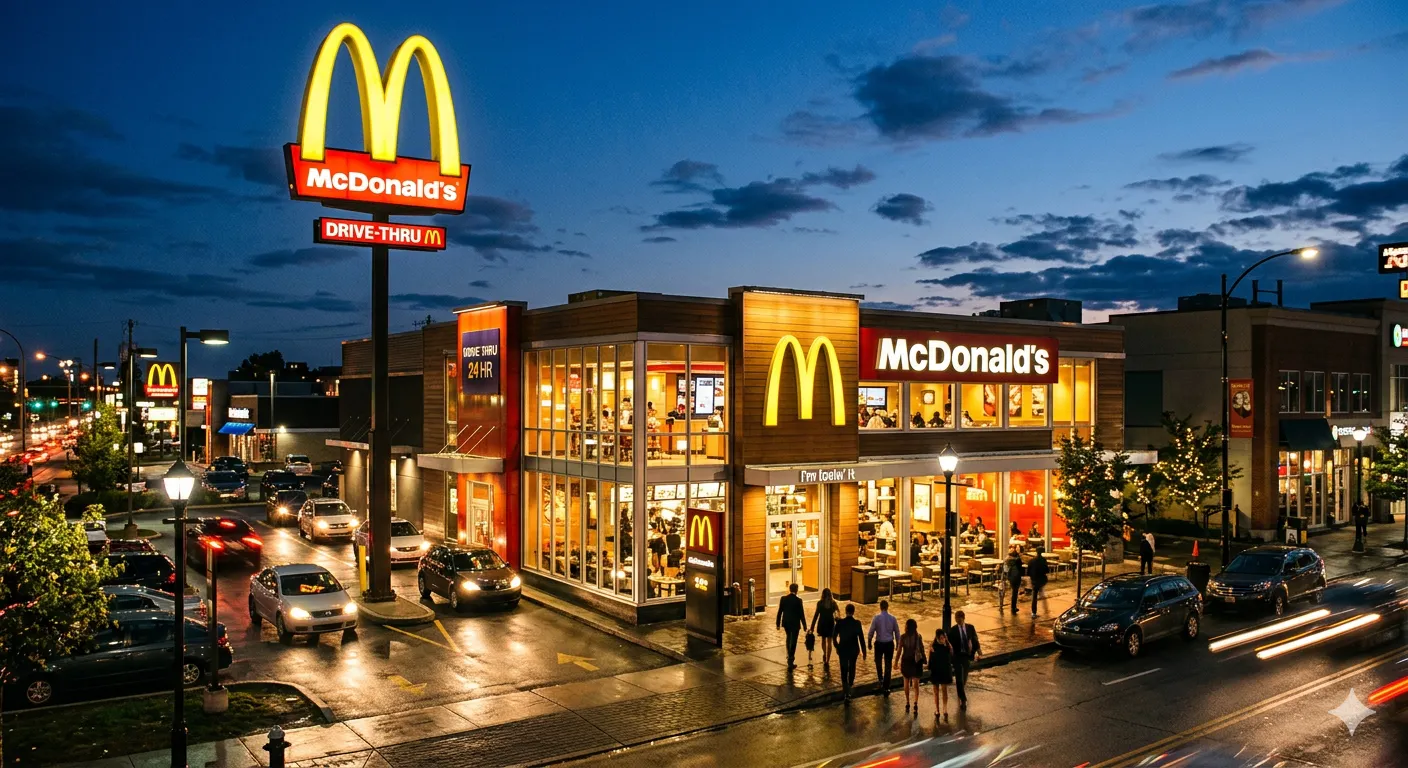
For millions of Americans, fast food is no longer the cheap, reliable option it once was. Over the past two years, menu prices across major chains have climbed sharply, pushing budget-conscious diners to rethink where—and how often—they eat out. Now, one of the world’s most recognizable brands appears ready to respond.
According to a report by the Wall Street Journal, McDonald’s plans to introduce new $3 value menu items across the United States starting in April. The move signals a renewed push toward affordability at a time when consumers are increasingly sensitive to price. For investors and industry observers, the strategy raises an important question: can the fast-food giant reclaim its reputation as the king of value while protecting its margins?
Company Overview
McDonald’s is the largest quick-service restaurant chain in the world, serving tens of millions of customers daily across more than 100 countries. Founded in 1940 and headquartered in Chicago, the company operates a predominantly franchise-based business model, with roughly 95% of its restaurants run by franchisees.
This structure allows McDonald’s to generate stable revenue streams through franchise fees, rent, and royalties while limiting operational risks. Its global scale, iconic branding, and operational efficiency have made the company a cornerstone of the fast-food industry for decades.
From the Big Mac to Chicken McNuggets, the brand’s menu staples have become cultural symbols. Yet the company’s real strength lies in its ability to adapt to changing consumer habits—from digital ordering and delivery to evolving price expectations.
Key Recent Developments
The planned launch of new $3 menu items comes amid growing scrutiny over fast-food prices. Social media users and consumer surveys have increasingly pointed out that meals at major chains can now rival casual dining prices.
McDonald’s management has acknowledged the pressure on lower-income consumers, a core customer base. The new value offerings appear designed to address this shift while boosting traffic at U.S. locations.
The strategy also fits within a broader industry trend. Competitors such as Burger King, Wendy’s, and Taco Bell have recently leaned into promotional pricing and value bundles to lure customers back into stores.
At the same time, McDonald’s continues to invest heavily in digital infrastructure, loyalty programs, and delivery partnerships—areas that are rapidly reshaping the fast-food business.
The Company’s Competitive Moat
McDonald’s competitive advantage rests on several powerful pillars. First is its unmatched global brand recognition. Few companies in the world command the instant familiarity of the golden arches.
Second is the company’s scale. McDonald’s enormous supply chain allows it to negotiate favorable terms with suppliers, keeping costs lower than many rivals.
Third is its franchise model, which generates consistent cash flow while transferring much of the operational responsibility to franchise owners. This system has historically allowed McDonald’s to expand rapidly while maintaining strong profitability.
Finally, the company has built a sophisticated digital ecosystem that includes mobile ordering, loyalty rewards, and data-driven marketing—tools that help drive repeat visits and personalized promotions.
SWOT Analysis
McDonald’s strengths lie primarily in its brand power, massive global footprint, and highly efficient franchise-driven business model. These factors provide resilience even during economic downturns, when consumers often shift toward lower-cost dining options. The company’s technological investments and loyalty programs also strengthen customer engagement and operational efficiency.
However, the company faces notable weaknesses. Its reliance on franchisees can create tensions over pricing strategies and cost pressures. Additionally, rising labor and ingredient costs can squeeze restaurant-level margins, particularly when the company pushes aggressive value promotions.
Opportunities remain substantial. Expanding value offerings, strengthening digital channels, and innovating menu items can drive traffic growth. International markets, particularly in Asia and emerging economies, also offer long-term expansion potential.
Threats, meanwhile, include intensifying competition in the quick-service sector, shifting consumer preferences toward healthier options, and economic uncertainty that could reduce discretionary spending. Public scrutiny over pricing and perceived value could also influence brand perception.
Conclusion
The upcoming $3 value items represent more than just a promotional campaign—they reflect McDonald’s attempt to reconnect with the affordability that helped build its empire. In a market where consumers are increasingly price-sensitive, reinforcing that value proposition may prove essential.
For investors, the strategy highlights both the strength and the complexity of McDonald’s position. The company must balance traffic growth with profitability while navigating inflationary pressures and franchisee dynamics.
If executed well, the return to value could strengthen customer loyalty and protect market share. But the long-term investment story will depend on whether McDonald’s can maintain its pricing power without alienating the very customers who made it the world’s largest fast-food chain.
Enjoy this type of analysis?
Consider becoming a supporter of this project to help fund independent, high-quality business journalism.
Disclaimer:
This article is for informational purposes only and does not constitute investment advice.
Data
12/03/2026
Argomento
Value Stocks
0 commenti
Vuoi essere la prima persona a commentare?
Abbonati a Dividend Growth Stocks🚀 e avvia una conversazione.