2026/02/11
For those who don’t know him, Anders Puck Nielsen is a defence analyst and commentator par excellence — arguably the most credible in Europe with a significant public presence (Abre numa nova janela).
He is one of the very few analysts whose videos I immediately watch when they appear. If you want to understand what is happening on the battlefields in Ukraine, he is an essential voice to listen to.
Countless people working in the field including geopolitics, military experts and Russia specialists, and even individuals as prominent as European leaders and security officials of the highest level did not see the Russian invasion coming in 2022.
All the evidence was out there for the whole world to see. It was predictable, and openly predicted by many. And besides that, we were all warned by the United States government, which choose to be particularly public about it.
Why so many missed it is a topic for another day. What concerns me more is that many of the same people who failed to foresee the invasion now confidently predict what Russia’s next steps might be.
Often these are voices friendly or more conciliatory to Russia and would frequently argue that Putin has no intention or capabilities to ever attack any other European country besides Ukraine.
There is nothing wrong with coming to that conclusion. But those who were caught off guard by the full-scale invasion should wear their track record as a disclaimer on any prediction about Russia’s future moves.
This is particularly important when they seek to downplay the danger Russia poses to Europe and its citizens. They rarely add that disclaimer themselves, so it’s our responsibility to do it for them.
Anders was definitely not one of those. He was firmly in the camp of reliable experts who clearly saw the full-scale invasion coming and warned others step by step as it was unfolding.
He understands the Russian threat to the Baltics, Eastern Europe, and Europe as a whole. What he says about Russian objectives and capabilities must be taken seriously.
His case for why Russia might invade the Baltics sooner than we think
Today, the prevailing viewpoint of most experts is that Russia could freeze the war and start rebuilding its military for a future attack on Europe and NATO. There are different time horizons for how long this might take, but the estimates usually range from three to ten years.
Nielsen’s base assumption is that, as the war drags on, it becomes increasingly likely that at some point Russia will be unable to further advance on the frontline. Putin will recognise that what is between him and victory in Ukraine is the European Union, and his only way forward not to lose the war will be to prevent further European support.
If he could achieve that, Ukraine might lose the war in a couple of months.
He thinks that the more realistic scenario today and what he is currently more concerned about comes out of Putin’s desperation. A situation where, for him, it would look preferable to take massive risks to avoid losing the war.
He envisions a potential scenario where Russia will try to escalate its way out of a defeat by putting pressure on us to stop supporting Ukraine. In this way, Russia would not need to rebuild its military, it could simply divert part of the fighting forces to the Baltics.
One example he uses was Russia deploying 170,000 soldiers just in the offensive against Pokrovsk, a small city with a pre-war population of 60,000 people. This is such a considerable size that it’s in the same ballpark with which Russia attempted to occupy all of Ukraine just four years ago.
According to Ukraine, (Abre numa nova janela) Russia currently has more than 700,000 troops deployed in the country. What if it rerouted some portion of these forces to the Baltics, something that would be akin to the size of the full invasion force of 2022? They could do this just by taking up defensive positions instead of conducting never-ending meat-wave assaults.
The pressure on Europe — he argues — would be enormous.
With the tanks still in storage and the new drone technologies they developed, they could inflict huge pain on us. Russia is way ahead of NATO in drone warfare, they have way more drones and more pilots with tactical and battlefield experience. The only country that matches that is Ukraine.
The way he illustrates how the situation might unfold in reality is Russia opening a front in the Baltics, while simultaneously striking western European infrastructure with long-range drones, including power plants. The aim would be to apply sustained political pressure on governments to cut a deal, or otherwise they would just keep on doing it.
He is not sure how Europe would react in this situation, or if we would be ready for this.
My view
For the most part, European societies are willing to do nearly anything to avoid war, and that is the most reasonable of human reactions. Ordinary citizens are categorically against sending their troops to fight Russia.
But once actually attacked, everything flips. Europe would have no choice but to respond with force and no reason to hold back. The choice would be either to surrender and accept whatever the enemy wants to impose on us, or to fight to defend our freedom, our homes, our families, and our way of life.
The EU and its member states would not treat Ukraine and an attack on the Baltics as separate issues. If anything, we would be pushed into a corner and end up supporting Ukraine even more.
Today, most don’t even want to think about the level of destruction and casualties Russia just shrugs at. But Ukraine has already faced that reality. It is the only country in Europe with the necessary battlefield experience and the most willingness to fight Russia.
Even if attacked, Europeans would still prefer that Ukraine did most of the dirty work for us, while putting as few of our own citizens as possible in harm’s way. So the natural reaction would be to throw more money and resources to Ukraine, while simultaneously mobilising our economies and troops for the defence of the Baltics and our own home countries.
Putin’s long-term strategic goal is to dismantle the European Union, so countries would have to negotiate separately with Russia, and accept their small power status. Basically, his strategic wet dream would be a Europe led by individual Orbáns in every country, aligning themselves politically with Russia in exchange for cheap resources.
A military invasion would achieve the opposite. People would become extremely suspicious of anyone who ever supported Russia and wanted to wreck the EU. Any such political position would disappear the moment the first bomb fell on us.
450 million people would perceive it as an attack on all of us, rally around the flag and unite in a way that would be a geopolitical catastrophe for Russia. Much bigger than the collapse of the Soviet Union, which Putin still laments.
Governments and the EU would be given an unprecedented mandate to go hard on Russia, with everything they have. It would be Europe's Bismarck Moment (Abre numa nova janela).
Putin would create a monster he cannot control, and would put a brutal end to any of his aspirations to have any sort of influence in Eastern Europe. It might even threaten not only his regime, but the very survival of the Russian state as we understand it today.
A more plausible scenario
To be fair, Anders is nowhere near alone with his view in the expert community. Many of his peers who think deeply about Russia and the war in Ukraine see this as a very real possibility. Which means that it’s not impossible that some in the Russian leadership might see this as a viable strategy that could work.
Just because the likely outcome would be catastrophic for Russia, it doesn’t mean Putin will not do it.
We can only look at the miscalculation and false assumptions he made invading Ukraine. He and most Russians genuinely believed that Ukrainians would not only surrender, but welcome and treat them as liberators.
This was combined with delusions about the strength of the Russian army, and the complete disregard or silencing of opinions who could have told him that this was a terrible idea.
It is entirely possible that he would make another huge strategic blunder like this.
I would not discount this potentiality at all. There are reasons for Putin to start an invasion as soon as possible. He could believe that this war is inevitable and thus it would be a mistake to wait for Europe to rearm. But in my opinion, a few things would have to align for him to think the risk is worth it.
Firstly, I doubt that it would come from a place of desperation, rather from overconfidence and emboldenment by potential factors:
Some sort of decisive military breakthrough
A diplomatic success over Ukraine and Europe that rewards his aggression
A Chinese invasion of Taiwan
This would likely lead to a rupture between China and the EU, and to pressure Europe, China might support Russia escalating its conflict.
A more direct support from Trump or at least his distraction and destabilization of Europe
A situation in which Europe appears to have very few resources or little political bandwidth to focus on the Baltics, leading him to assume he could get away with an invasion.
Something similar was demonstrated with his Greenland folly (Abre numa nova janela).
He was able to completely divert Europe’s attention from Ukraine at a critical time when the country was dried of air defence ammunition and Russians escalated the bombardment of its power infrastructure.
Millions of Ukrainians were without electricity and heating in freezing temperatures. The country was on the brink of a humanitarian crisis, yet all of Europe’s focus was concentrated on Greenland.
A situation that did not have to happen and did not achieve anything for anyone.
Trump could no doubt escalate something to an even higher degree, where Europe would be distracted in a major crisis for months after endless months. He could even do this just by accident or more dangerously in coordination with Putin.
Significant enough European states end up led by Putin-friendly governments akin to Orbán’s
The AfD in Germany, Le Pen in France, or Farage in the UK. If he knew that Germany, France, and the UK along with other European countries would sit a war out together with the US, he might calculate that it’s the perfect historic moment to take such a gamble.
A black swan event in Europe, the US, or the world
Something that we simply cannot foresee. A situation in which Europe appears unable or unwilling to respond.
Personally, I was most concerned that a Russian invasion might come during the early months of Covid. I imagined Putin might take advantage of the mixture of a world in chaos distracted by their home affairs and Trump being in the White House.
Perhaps his famous fear of the virus might have saved Ukraine from facing the war in that dangerous combination.
Other sudden geopolitical shifts or events
Any one of these conditions might not be sufficient in themselves. Or maybe yes, we just cannot know. It all depends on Putin’s state of mind. But a couple of these factors put together would exponentially increase the likelihood of an escalation.
What if it did happen
If an already weakened Russia would do something like this, then it is likely to be among the last catastrophic miscalculations Putin makes.
All the Baltic countries, Finland, Sweden, and Poland would see this as an existential threat. Geopolitical realities don’t allow the luxury of complacency. They know that they’d be next.
They would have immediate wide public consensus to mobilise, respond, and engage. There is absolutely no question about this.
 (Abre numa nova janela)
As of 2026, Sweden and Finland have been EU members for 32 years, while the Baltics and Poland joined 22 years ago. There are generations of Europeans who grew up being in one Union together with them. It’s all they ever knew, they don’t remember a time when they were not part of the same club.
Europeans from all over the continent have travelled to these countries, spent time on Erasmus with their folks. They have friendly, professional, and family ties with the people living there, or coming from there.
This comes on top of the clear and widely recognised treaty obligations to regard an attack against them as an attack against themselves, both within NATO and the EU, which is in reality stronger and more precise than Article 5. We are like a family, connected on several levels.
 (Abre numa nova janela)
Once they are forced to watch these countries under siege while the invader threatening their cities with bombardments, or even actual bombs landing on them, every pacifism would fly out the window.
Maybe not immediately. The countries that are bordering the Baltics would react first, but then they’d start pressuring their own neighbours to follow suit.
Norway and Denmark couldn’t sit out a war involving Sweden and Finland for too long. Germany and Czechia would not be able to watch on the sidelines while Poland bleeds. The political pressure would be enormous. And once they’re in, they would put further pressure on the more distant countries to contribute their fair share. Every domino would end up falling in line.
Moreover, all Western European countries have soldiers in the Baltics. A Russian attack would immediately threaten and most likely kill many of them.
At that point, the citizens back home would not blame their government for deploying troops there, or be scared that more death would follow. They would want revenge for their soldiers who were killed, and to finally deal with the all-encompassing Russian threat.
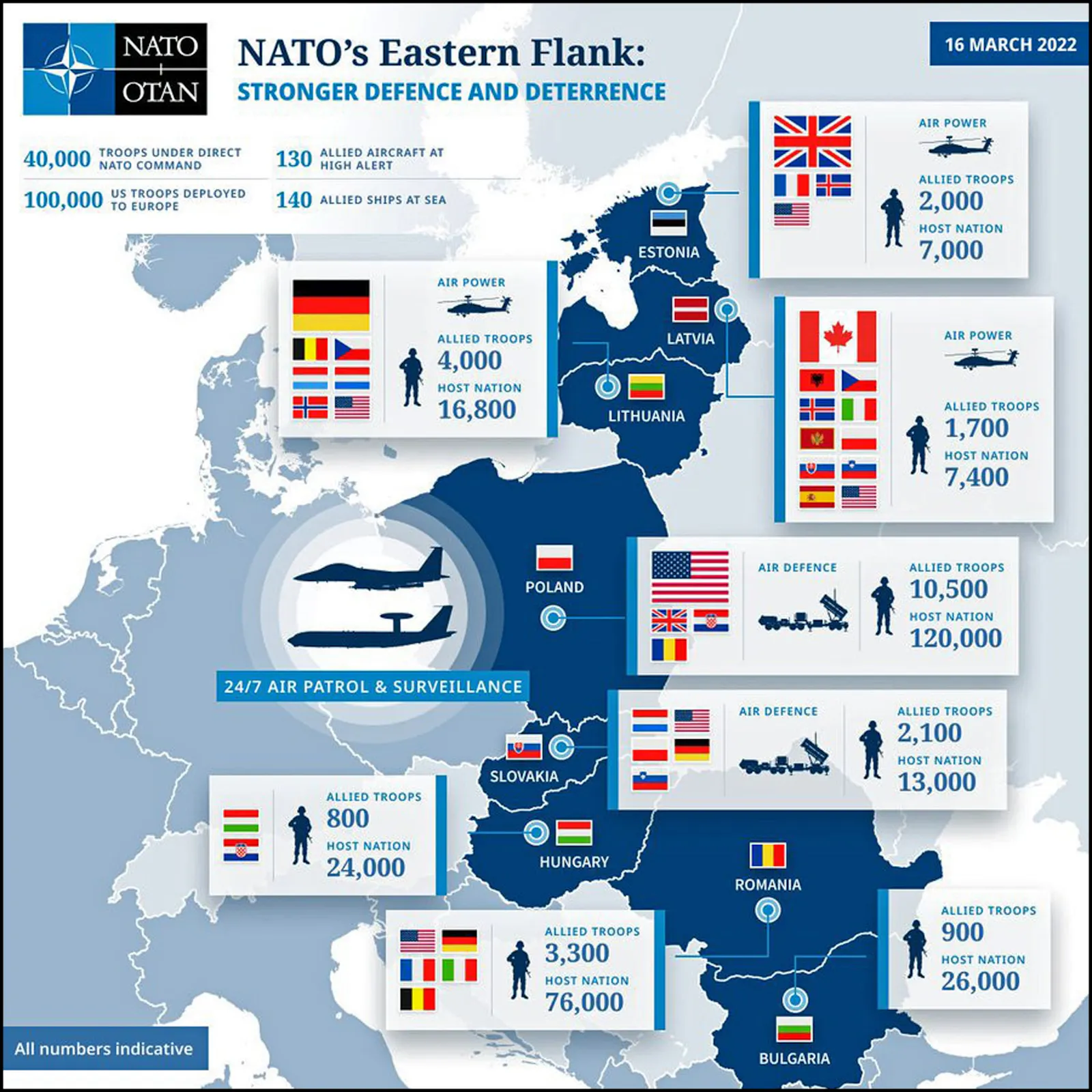
The European Union would find a new legitimacy to become more effective and unified to deal with the situation.
For the EU, this would be an existential war. As such, it would not be bogged down in arguments, and try to be cute with accommodating everyone. In such an urgency, the organization would centralise to be able to do what is necessary.
This has been demonstrated numerous times before. The European Union is forged in emergencies. Eurozone crisis, Brexit, Covid, Ukraine. In every do-or-die moment, the EU does.
And the member states would likely react similarly. Realising that their economic prosperity and freedom are at stake, they would be more willing than ever to give up some sovereignty in order to defend their interests more effectively.
A European army would be created, together with a centralized foreign policy without individual veto rights, and a more rapid economic integration.
In hearts and minds, this could mark the true beginning of a solidified European identity. These things always forge hardest in common wars and struggles.
Finally, the dream of Immanuel Kant, Victor Hugo, Giuseppe Mazzini, Monnet, and Spinelli would eventually become reality. The United States of Europe would be born.
Why am I so confident about this?
With the European Union, we already have the mechanisms; we just need a final push. Other than Bismarck, history is full of precedents where a foreign threat unified a people.
The fragmented, forever competing and often warring Greek city states uniting against an existential threat from the east. Not only sowing the seeds of the idea of Greece in the process, but creating the foundation myth of the European civilization.
We don’t even have to go back in history to find similar instances, we can find contemporary examples right here.
Ukraine was a painfully divided country even after 2014. With large segments of the population still viewing Russia favourably, and preferring closer ties.
 (Abre numa nova janela)
Large cities like Odesa and Kharkiv had pro-Russian mayors, even on the eve of the full-scale invasion. These leaders immediately flipped their position, and started organising the defence of their cities in the face of the approaching Russian army.
Greenland just last month beautifully demonstrated the same mechanism at work.
Instead of fracturing and giving in to Trump’s threats against Denmark, Europe finally stood up to the bully. Even while threatened by a potential American invasion, and unimaginable economic consequences.
This reaction was all for a piece of icy landmass most citizens didn’t even know was part of the Kingdom of Denmark.
And this stance wasn’t forced on the European people by their governments. Quite the opposite.
Disdain for Trump’s antics has been growing across the continent, and many have become increasingly frustrated with how our leaders praised, caved, and submitted to accommodate him—until a breaking point finally came. I doubt that the same population would suddenly become servile to Putin in the face of his threats.
The other reason stems from my personal experience.
All my life I was sure that if a war broke out in Europe, I’d flee to South America until the continent became safe again. There was no doubt in my mind. I valued my life above all else, and I wanted to enjoy it.
Then, in 2022 February, something changed in me as I watched a country I know and care for, a country where I have friends and people I love, was brutally invaded.
I was watching Ukrainians without any prior military training standing in line to enlist, to obtain a weapon, or preparing Molotov cocktails ready to defend their country.
There was a moment when I realised I could not live with myself if I fled and watched from the sidelines. I would be one of them.
It’s something one cannot control. Similar to how mothers reevaluate their whole lives after childbirth.
War changes people. It makes us willing to do things we never thought we would ever do otherwise.
Today, many in Europe say they are unwilling to risk their lives to defend their way of life. That they would simply move. I think if the situation called for it, a lot of them would be surprised how different their actual reaction would be.
I can see millions of Europeans standing up in the face of the danger, and speak to Putin with one defiant voice. Do you want a piece of us? Molon labe!
Source:
Data
11/02/2026
Tópico
Europe