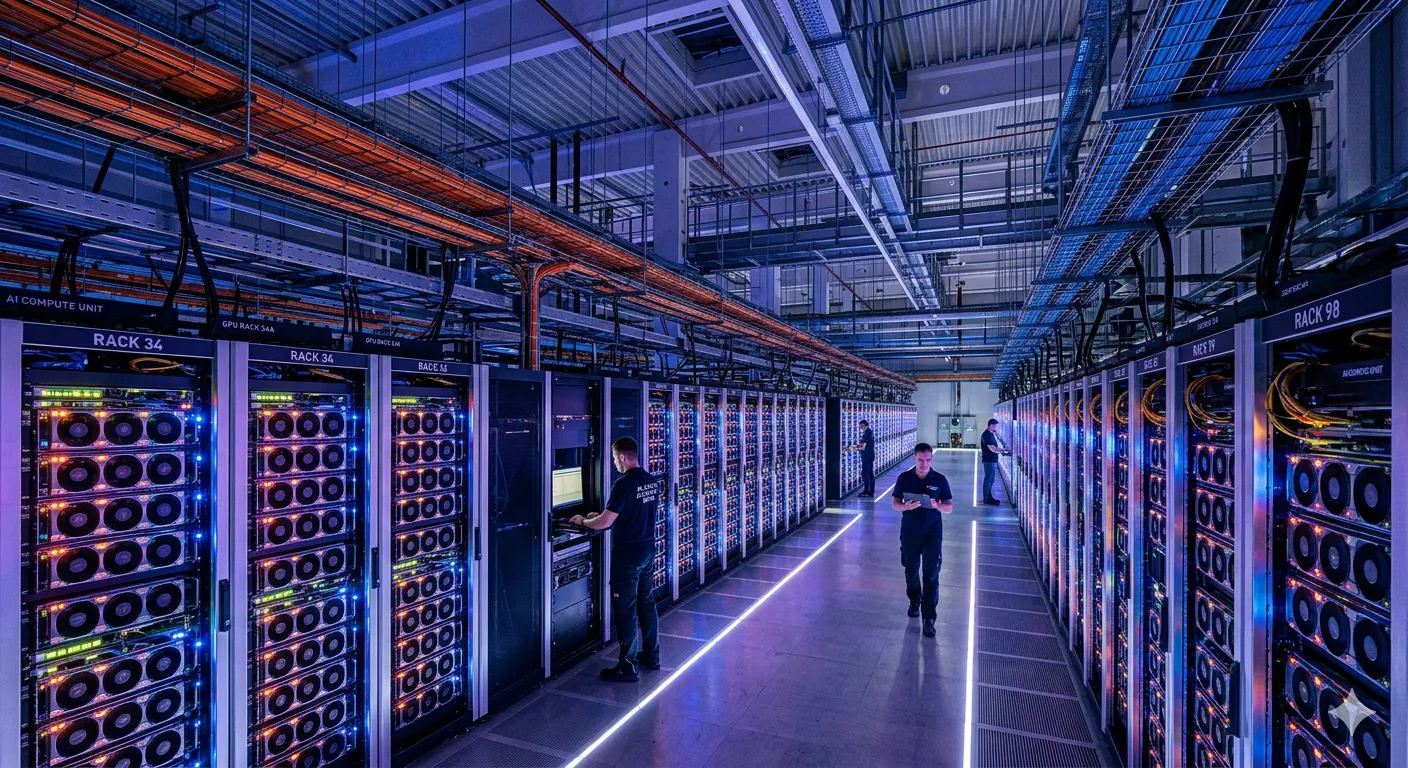
Artificial intelligence is entering a new phase—one defined not just by algorithms, but by the massive infrastructure needed to power them. In a striking move that signals how intense the race has become, Meta has reportedly agreed to a $27 billion AI infrastructure pact with Nebius. The deal underscores a broader transformation across the technology sector, where compute capacity is quickly becoming the most valuable resource.
Before diving deeper: if you enjoy independent financial journalism like this, consider supporting my work. Even small contributions through programs like Coffee-Break help keep in-depth analysis accessible to everyone.
Company Overview
Nebius is emerging as one of the most intriguing infrastructure players in the artificial intelligence ecosystem. The company focuses on providing high-performance cloud computing, specialized AI data centers, and advanced GPU clusters designed for large-scale machine learning workloads. As demand for training and deploying advanced models surges, companies like Nebius are becoming essential partners for major technology firms.
Meta, meanwhile, hardly needs an introduction. The social media giant has aggressively repositioned itself as an AI-first company over the past few years. From recommendation algorithms across Facebook and Instagram to generative AI tools and virtual assistants, Meta’s future strategy increasingly revolves around artificial intelligence. However, developing cutting-edge AI systems requires enormous computing power—something that even the world’s largest tech companies cannot always build quickly enough on their own.
This is where the partnership with Nebius comes into focus. By securing large-scale infrastructure capacity through a multi-year agreement, Meta gains a powerful boost in the race to train and deploy next-generation AI systems.
Key Recent Developments
The reported $27 billion agreement marks one of the largest AI infrastructure partnerships in the industry to date. Under the deal, Nebius is expected to expand its data center capacity significantly, building clusters optimized for high-performance AI workloads. These facilities are designed to host tens of thousands of GPUs capable of training large language models and running advanced inference tasks.
For Meta, the timing is critical. Competition in generative AI is intensifying, with major players investing heavily in compute resources. Securing dedicated infrastructure capacity not only ensures reliability but also accelerates the development cycle for new AI products.
The deal also highlights a broader trend: the shift from traditional cloud services toward specialized AI infrastructure providers that focus exclusively on performance, scale, and efficiency for machine learning.
The Company's Competitive Moat
Nebius’ advantage lies in its specialization. Unlike general cloud providers, the company focuses almost entirely on AI workloads, optimizing data center architecture, networking, and cooling systems specifically for GPU-intensive tasks. This specialization allows Nebius to operate highly efficient AI clusters that appeal to companies developing large-scale models.
Another key advantage is flexibility. While hyperscalers operate massive platforms with standardized services, emerging AI infrastructure providers can tailor systems more directly to the needs of cutting-edge research teams and AI developers.
If you enjoy insights like this, you can receive more deep-dive analysis by subscribing to my free email newsletter, where I regularly cover emerging tech companies and major market shifts.
Deep Analysis
From a strategic perspective, the partnership presents a fascinating SWOT profile. The primary strength lies in the alignment of two powerful trends: the explosion in AI demand and the growing scarcity of high-performance computing capacity. Nebius benefits from securing a major anchor customer in Meta, while Meta gains rapid access to large-scale infrastructure without the full burden of building it internally.
However, the deal also introduces notable risks. Infrastructure investments at this scale require enormous capital expenditures, and profitability depends on sustained demand for AI computing. Should the pace of AI adoption slow, capacity utilization could become a challenge. For Meta, relying on external infrastructure partners also introduces a degree of dependency that major tech firms traditionally prefer to avoid.
Opportunities remain substantial. If AI adoption continues accelerating across industries, Nebius could position itself as a critical backbone provider for the global AI economy. At the same time, Meta could leverage the expanded computing power to launch more advanced AI products, strengthening its ecosystem across social media, messaging, and immersive technologies.
Threats primarily revolve around competition. Hyperscale cloud providers are investing billions in their own AI infrastructure, and the market may eventually consolidate around a few dominant platforms. Regulatory scrutiny, energy consumption concerns, and geopolitical tensions around advanced chips could also influence the long-term trajectory of the sector.
Conclusion
The $27 billion AI infrastructure pact between Nebius and Meta represents more than a simple partnership—it is a sign of how critical computing power has become in the artificial intelligence era. For Nebius, the deal could accelerate its rise as a specialized infrastructure powerhouse. For Meta, it is a strategic investment in the computational foundation required to remain competitive in the global AI race.
Yet the scale of the investment also highlights the stakes. Building the backbone of the AI economy is capital-intensive, technologically complex, and highly competitive. Whether this partnership ultimately becomes a defining success story or an expensive experiment will depend on how quickly the AI revolution continues to unfold.
If you value independent financial journalism and deep tech analysis, consider becoming a supporter of this project. Your support helps keep high-quality, accessible market insights available to everyone.
Disclaimer:
This article is for informational purposes only and does not constitute investment advice.
Date
16/03/2026
Sujet
Growth
0 commentaire
Vous voulez être le·la premier·ère à écrire un commentaire ?
Devenez membre de Dividend Growth Stocks🚀 et lancez la conversation.